

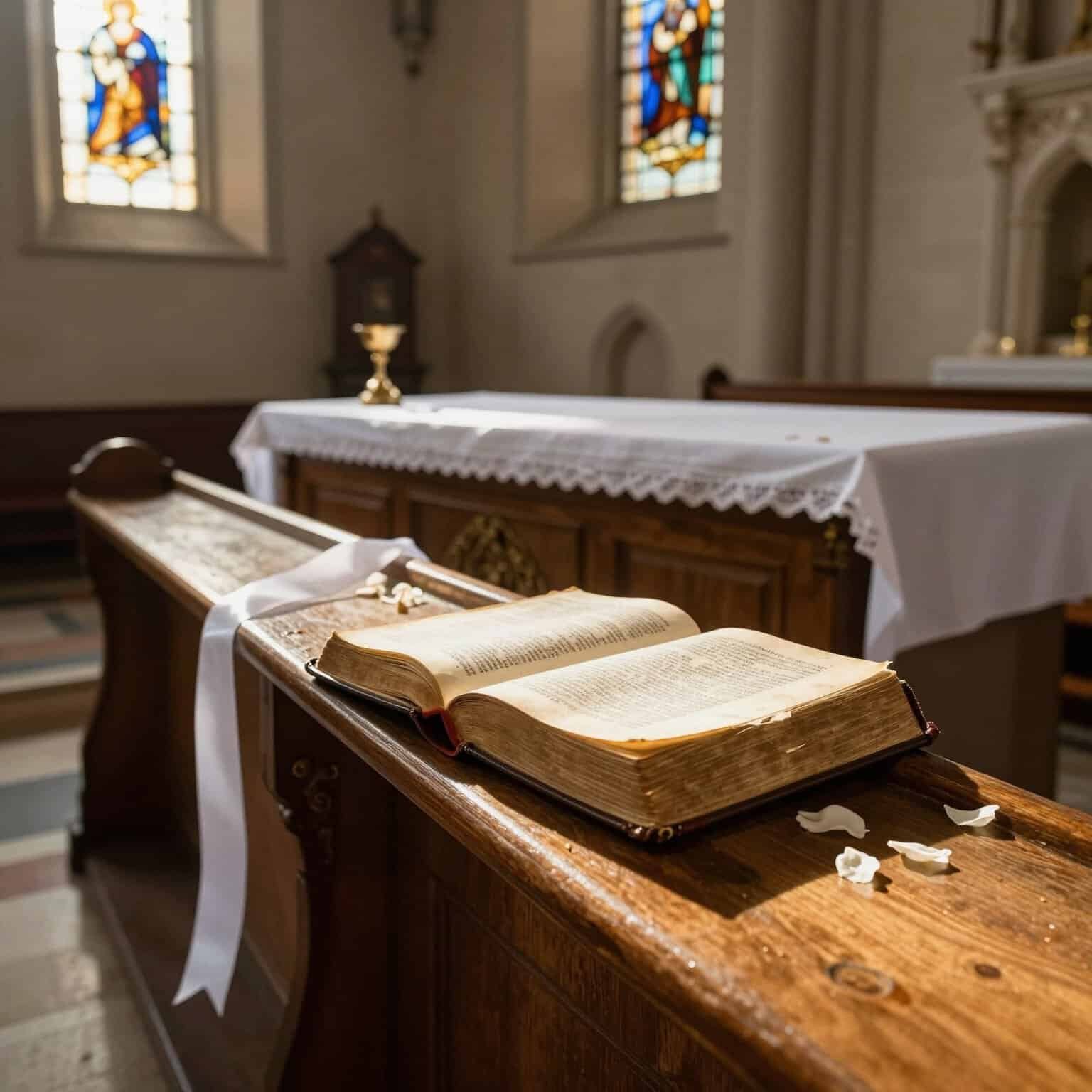
08 May Wedding Ceremony Bible Verse Readings — For Christians
You’ll want a verse that matches each ceremony moment and fits your timing. For a 40‑second opening, use 1 Corinthians 13:4‑8 (NIV) to define love. Pair the unity candle or cord with Ecclesiastes 4:9‑12 (ESV) for partnership wisdom. Choose Ruth 1:16‑17 (NRSV) or Song of Solomon 8:6‑7 (KJV) for a 25‑second personal vow. Finish with Genesis 2:24 (NIV) for the pronouncement. Follow the guide for translations, pauses, and rehearsals, and you’ll see how to craft a seamless, heartfelt ceremony.
Table of Contents
Choose the Best Wedding Scripture for Each Ceremony Moment
Which scripture best captures the mood of each ceremony moment? You’ll pick 1 Corinthians 13:4‑8 for the opening love definition; its 40‑second cadence sets a tender, inclusive tone. For the vows and unity pronouncement, choose Genesis 2:24—its 30‑second rhythm underscores the covenant foundation. When you light the unity candle or braid cords, Ecclesiastes 4:9‑12 fits perfectly; its 35‑second flow highlights partnership wisdom without losing attention. If you want poetic devotion during personal vows, Ruth 1:16‑17 works well, delivering loyalty in about 25 seconds. For a romantic, outdoor setting, Song of Solomon 8:6‑7 adds passion in a similar 25-second window. Match each verse to the segment’s length, test it aloud with the officiant, and note the translation (NIV for modern clarity, ESV for formal liturgy) on the program. This alignment keeps the ceremony cohesive, meaningful, and on schedule.
Match Wedding Scripture Length to Timing Guidelines
Ever wondered how to keep your ceremony flowing smoothly while honoring Scripture? You’ll match each verse to its ideal time slot, so the audience stays engaged and the program stays on track. For opening readings, aim for 30‑90 seconds; 1 Corinthians 13:4‑8 fits nicely at about 40 seconds. If you’re planning a vow exchange, pick a 25‑second piece like Ruth 1:16‑17 or Song of Solomon 8:6‑7—short enough to feel intimate but long enough to convey depth. Unity‑candle or cord ceremonies benefit from 35 seconds, making Ecclesiastes 4:9‑12 a perfect choice. When you need a quick invitation or transition, use verses under 15 seconds such as Colossians 3:14. Slightly longer passages, up to 60 seconds, work for Philippians 2:1‑4 if you have a dedicated segment. Always rehearse aloud with your officiant, marking natural pauses, to ensure the pacing feels natural and the timing aligns with your overall schedule.
Select a Translation That Fits Your Ceremony’s Tone
Now that you’ve matched each verse to the right time slot, the next step is choosing a translation that matches the tone you want for your ceremony. If you’re aiming for a relaxed, contemporary vibe, the NIV’s plain‑language phrasing will resonate with most guests and keep the reading under the 30‑ to‑90‑second sweet spot. For a formal, liturgical atmosphere, the ESV offers a dignified, word‑for‑word rendering that feels reverent without sounding archaic. When heritage matters—say, a Southern‑US family tradition—the KJV’s majestic cadence adds historic weight, though its “thee” and “thou” may slow pacing. If your wedding includes interfaith or academic participants, the NRSV provides gender‑neutral language and scholarly credibility. Whichever version you select, print the exact wording on the program, note the translation, and rehearse aloud to ensure rhythm aligns with your ceremony’s flow.

Blend Translations for an Inclusive Program
How can you honor diverse preferences while keeping your ceremony seamless? Blend translations by pairing a modern version with a classic one for each reading. For a love definition, quote 1 Corinthians 13:4‑8 in the NIV, then follow with the same verses in the KJV to highlight poetic rhythm. When you recite Genesis 2:24, add a brief NRSV footnote that uses inclusive language, letting guests see both traditional and contemporary phrasing. Use side‑by‑side columns on the program so readers can compare without scrolling. Keep each pair under 45 seconds, matching the timing guidelines for your segment. Include a small legend—“NIV/KJV” or “NRSV/ESV”—to clarify sources. Test the flow with your officiant; the dual versions should feel like a single, harmonious voice rather than a disjointed collage. This approach respects varied denominational tastes while preserving a smooth, unified ceremony.
Assign Popular Verses to Each Ritual (Candle, Cord, Vows)
After blending translations to honor varied preferences, you can match each popular verse to the specific ritual that best highlights its theme.
For the unity candle, pair Genesis 2:24 (≈30 seconds) with the lighting, letting its covenant language frame the flame’s symbolism.
If you prefer a longer, wisdom‑rich moment, Ecclesiastes 4:9‑12 (≈35 seconds) works well for a cord‑braiding ceremony, emphasizing partnership and mutual support.
When couples exchange personal vows, Ruth 1:16‑17 (≈25 seconds) offers poetic devotion that feels intimate and heartfelt.

For a romantic, outdoor setting, Song of Solomon 8:6‑7 (≈25 seconds) adds passionate romance to the vow exchange.
Finally, open the ceremony with 1 Corinthians 13:4‑8 (≈40 seconds) to define love before any ritual begins.
Choose NIV for modern clarity, ESV for formal tone, or KJV for tradition, and mark natural pauses to keep each segment smooth and within the 30‑90 second optimal window.
Rehearse Timing With the Officiant
During the rehearsal, coordinate with the officiant to sync each reading and ritual to its allotted 30‑90‑second window, marking natural pauses and adjusting tempo as needed. Walk through the program step‑by‑step, letting the officiant speak the verse aloud while you follow the cue cards. Time 1 Corinthians 13:4‑8 at roughly 40 seconds, then pause for a breath before the next element.
Practice the 25‑second Ruth 1:16‑17 or Song of Solomon 8:6‑7, ensuring the couple can respond without rushing.
For the 35‑second Ecclesiastes 4:9‑12, cue a gentle transition into the unity‑candle lighting.
Use a stopwatch or phone timer, noting any overruns and trimming non‑essential remarks. Confirm the officiant’s pacing matches the ceremony flow, and rehearse any hand‑offs—such as moving from vows to the benediction—so the entire sequence feels seamless and reverent.
Print Verses for Easy Reading and Visual Appeal
Now that you’ve rehearsed the timing, focus on making the printed verses clear and inviting. Choose a legible serif or clean sans‑serif font at 12‑14 pt for body text, and bump headings to 16‑18 pt so guests spot the passage instantly. Use generous line spacing (1.3‑1.5) to avoid crowding, and left‑align the scripture while centering the reference underneath for visual balance. Highlight natural pause points with subtle ellipses or a light shading bar; this guides the reader without breaking flow. Print each verse on its own card or a dedicated program page, leaving a margin for a brief translation note (e.g., “NIV”). If you include multiple translations, stack them side‑by‑side with a thin divider, keeping column width consistent. Finally, test readability under ceremony lighting—what looks crisp on a screen may blur in dim candlelight. This ensures every guest can follow the reading effortlessly.
Finalize the Program Layout and Double‑Check Details
How will you ensure every element of the ceremony program looks polished and error‑free? Begin by reviewing the master template on your computer, confirming fonts, margins, and line spacing match your design guide. Insert each verse exactly as it will be read, using the chosen translation label (e.g., “NIV”) beneath the text. Align verse references with the appropriate section—opening love definition, covenant foundation, partnership wisdom—so guests can follow the flow. Proofread for typographical errors, misplaced punctuation, and correct verse numbers; a quick read‑aloud catches awkward phrasing. Verify that timing cues (30‑90 seconds) correspond to the selected passages, adjusting length if needed. Cross‑check that all printed copies include the same page order and that digital versions display correctly on tablets or projectors. Finally, ask the officiant and a trusted friend to review the final layout, confirming that every detail feels seamless and ready for the big day.
Frequently Asked Questions
Can We Include a Non‑Biblical Poem Alongside the Verse?
Yes, you can pair a non‑biblical poem with the verse. Choose a short, resonant piece that mirrors the Scripture’s theme—love, covenant, or partnership—and keep it under 30 seconds so it fits the ceremony flow. Print both texts, mark pause points, and rehearse with the officiant to ensure smooth transitions. A poem adds personal flair while the verse grounds the moment in tradition.
What if My Partner Isn’T Christian—How to Choose a Neutral Reading?
Pick a piece that reflects shared values—love, commitment, partnership—without religious language. Look for secular poems, literary excerpts, or vows from classic authors like Shakespeare, Rumi, or Maya Angelou. Choose something brief (25‑40 seconds) so it fits the ceremony flow. Read it together or have a friend deliver it, and note the source on the program to keep everyone comfortable and included.
Are There Copyright Concerns Using Modern Translations in Printed Programs?
You can use modern translations, but you’ll need permission for any text beyond 90 characters.
Most publishers—NIV, ESV, NRSV—require a licensing fee or a written agreement for printed materials, especially if you reproduce the verse verbatim. Check the publisher’s copyright policy, request a print‑use license, and include a proper citation.
If you want to avoid fees, stick to public‑domain versions like the KJV or use a short excerpt under fair‑use guidelines.
Should We Repeat the Same Verse for Both Ceremony and Reception?
You don’t have to repeat the same verse, and it’s usually better not to. Choose a concise, impactful passage for the ceremony—like 1 Corinthians 13:4‑8—to set the tone, then pick a shorter, complementary verse for the reception—perhaps 1 John 4:18‑19—to keep the atmosphere fresh. Switching verses adds variety, avoids redundancy, and lets you highlight different aspects of love throughout the day.
How to Handle a Verse That Contains Culturally Sensitive Language?
You should first check the verse’s wording against your audience’s cultural norms. If it includes idioms or references that could offend, consider a modern translation or a paraphrase that preserves the meaning but softens the language. Discuss options with the officiant and couple, then choose the version that feels respectful and inclusive while still honoring the scriptural intent.
Conclusion
By now you’ve got the perfect verses matched to each part of your ceremony, timed just right, and presented in a translation that reflects your style. You’ve rehearsed with your officiant, printed clear, beautiful cards, and double‑checked every detail. So when the day arrives, the readings will flow seamlessly, adding meaning and elegance to every moment of your wedding celebration.








No Comments