

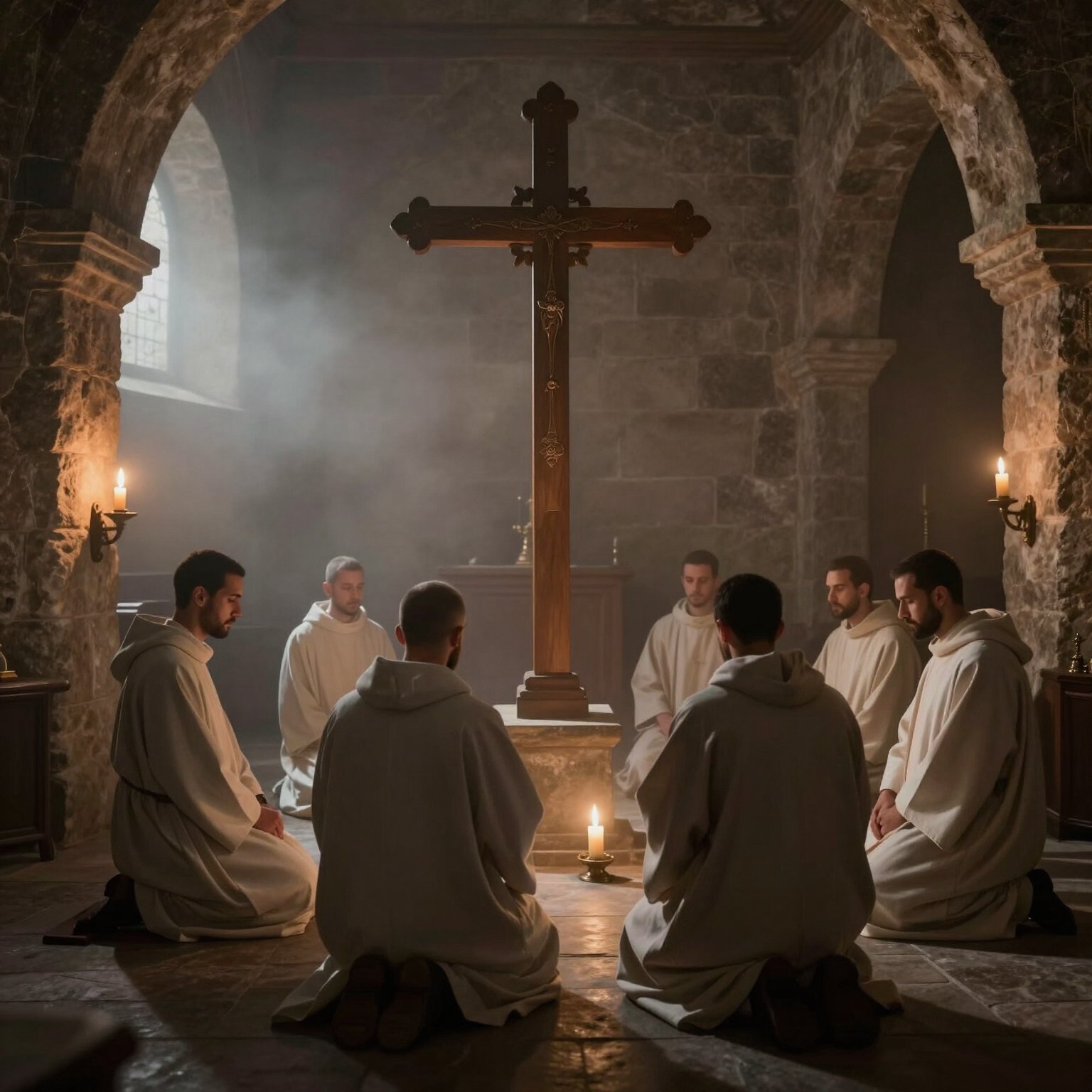
30 Apr How the Early Church Fasted Before Major Decisions
You’ll find the early church routinely fasted before big decisions, mirroring Moses’ forty‑day mountain retreat, Elijah’s desert fast, and Jesus’ wilderness trial. Apostles gathered for communal abstinence before sending missionaries (Acts 13:2‑3) and before ordinations (Acts 14:23). Weekly fasts, like the Didache’s Wednesday/Friday practice, combined simple meals, silence, and Scripture meditation to seek the Spirit’s guidance. Continue and and you’ll discover how to structure a modern decision‑making fast for your congregation.
Table of Contents
Biblical Foundations of Church Fasting for Decision‑Making
Why do we keep fast‑thinking before big choices? You look to Scripture for a model. Jesus spent forty days in the wilderness, denying himself food while confronting temptation (Matt 4:1‑11). That period set a precedent for preparatory fasting, showing that denying the flesh sharpens spiritual discernment. Moses, before receiving the Law, fasted for forty days on the mountain (Ex 34:28), a typology that links fasting to divine revelation. Elijah’s own forty‑day fast on Horeb (1 Kings 19:8‑9) reinforces the ascetic pattern, proving that solitude and abstention can precede prophetic insight. The early church echoed this rhythm: before ordination, Acts 14:23 records communal fasting and prayer, and before missionary sending, Acts 13:2‑3 shows believers seeking the Holy Spirit’s direction through fasting. Apostolic letters (2 Cor 6:5; 11:27) treat frequent fasting as normative, further embedding fasting as a spiritual tool for decision‑making.
The Didache’s Weekly Fast: Steps for Wednesday/Friday Decision‑Making
Ever wondered how to turn Wednesday’s and Friday’s fasts into a practical decision‑making ritual? Start by setting a clear intention: write the specific choice you need guidance on, then pray for humility and openness. On Wednesday, fast from meat and rich foods, keep a simple bowl of water and a few nuts, and read the Didache’s short instruction on “not with the hypocrites.” While you fast, silence distractions, then meditate on Scripture that speaks to your dilemma. After the fast, journal any insights that emerged. Repeat the process on Friday, this time adding a brief communal prayer if possible, remembering the day commemorates Christ’s crucifixion. Conclude each session by offering a small act of charity, embodying the Didache’s call to humility. This rhythm trains your heart to listen, aligns your will with God, and makes decisive moments less frantic and more grounded.
Moses, Elijah, and Jesus: Models for Corporate (Community) Fasting
What can Moses, Elijah, and Jesus teach a community about fasting before a major decision? You see Moses climbing Sinai for forty days, alone with God, to receive the Law; Elijah wandering the desert for forty days, sustained by divine provision; and Jesus enduring a forty‑day wilderness trial, confronting temptation.
Each model shows that corporate fasting isn’t about self‑denial alone—it’s a strategic pause that aligns the community’s heart with divine will. When you gather your board or congregation, you mirror their focus: set aside meals, pray collectively, and silence distractions. The shared hunger creates humility, exposing hidden agendas and inviting the Spirit to guide the outcome.
Early Councils’ 40‑Day Lenten Fast: Shaping Doctrine & Decision‑Making Leadership
How did the early councils wield the forty‑day Lenten fast to shape doctrine and guide leaders? You’ll find they treated the fast as a communal cruc, a deliberate pause before deliberations. By entering a period of intensified prayer, confession, and abstention, bishops and lay delegates cultivated humility, allowing the Holy Spirit to surface amid personal ambition. In Nicaea, the fast preceded debates on Christ’s nature, ensuring that theological arguments emerged from a shared, Spirit‑filled mindset rather than political maneuvering.
The fast also functioned as a decision‑making filter: those who couldn’t sustain the discipline were gently excluded, preserving doctrinal integrity. You see how the rhythm of daily vigils, scriptural meditation, and charitable almsgiving forged a disciplined leadership class, adept at discerning truth under pressure. This disciplined preparation made the councils’ rulings resilient, uniting the church around a common, spiritually‑grounded vision.
Fast Types for Major Decisions: Full, Partial, Seasonal
Why distinguish between full, partial, and seasonal fasts when a major decision looms? A full fast—total abstention from food and drink—mirrors the 40‑day wilderness and law‑giving precedents, sharpening your mind for divine discernment. You surrender bodily comfort, creating space for the Holy Spirit to speak plainly.
A partial fast permits bread, fruit, nuts, and water, allowing enough sustenance to maintain clarity while still curbing indulgence; it’s the early church’s weekday model, useful when you need prolonged reflection without collapse.
Seasonal fasts align with liturgical cycles—Nativity, Apostles’, Dormition—each imposing specific lengths and restrictions that frame your decision within the broader ecclesial rhythm. By matching the fast type to the decision’s weight and timeline, you harness the tradition’s spiritual medicine, ensuring prayer, humility, and focus guide your choice. This disciplined approach transforms hunger into a conduit for God’s guidance.
Monastic Meal Rules & Spiritual Focus for Mission Planning
Ever wondered how a monk’s strict meal schedule sharpens his missionary vision? You’ll find that monastic rules limit you to two modest meals, usually eaten after sunset, and only a small amount of bread or broth in the early morning. This disciplined intake curtails distractions, turning every bite into a prayerful pause.
While you fast, you focus on silence, lectio divina, and communal discernment, allowing the Holy Spirit to guide mission planning. The rule of abstaining from meat, dairy, and luxury foods during Lent or a 40‑day preparation period reinforces humility, reminding you that success depends on divine provision, not personal comfort.
When you gather with brothers to discuss sending a new evangelistic team, the shared hunger creates solidarity and a heightened sense of purpose. Ultimately, the meal regimen becomes a spiritual filter, sharpening your vision and aligning your strategies with God’s will.
Step‑by‑Step Guide to Implementing a Decision‑Making Fast in Your Congregation
Moving from the monk’s disciplined meals to the whole congregation, you can now introduce a decision‑making fast that aligns prayer, fasting, and communal discernment. First, announce the purpose and date range during a worship service, linking it to the upcoming decision. Next, choose a fast type—partial (bread, fruit, water) works for most members—and share a simple schedule. Then, set a daily prayer focus: begin with Scripture, move to silent meditation, and end with a brief group confession. Encourage participants to journal insights and questions, keeping entries visible in a shared folder. Mid‑week, hold a brief check‑in meeting to hear themes without judgment. On the final day, gather for a communal worship and a structured discussion, allowing the Spirit‑guided reflections to shape the decision. Conclude by thanking God, offering almsgiving, and documenting the outcome for future reference.
Modern Structured Fast for Church Decision‑Making
How can you lead a congregation through a modern, structured fast that balances ancient wisdom with today’s decision‑making needs? Start by announcing a clear purpose—whether selecting a pastor, launching a ministry, or revising a vision statement. Choose a 48‑hour partial fast: water, fruit, and nuts only, allowing participants to stay alert for prayer and discussion. Schedule three touchpoints: an opening worship service, a mid‑fast corporate prayer, and a closing gathering where insights are shared. Provide a brief study packet that links Jesus’ 40‑day wilderness, the Didache’s Wednesday‑Friday fasts, and St. Basil’s call to abstain from greed. Encourage journaling, limiting media, and a simple almsgiving act to embody the “scorned things” principle. After the fast, convene a decision‑making session where each member presents a concise, prayer‑filled recommendation. This structure honors early‑church precedent while fitting contemporary church rhythms.
Frequently Asked Questions
Can Fasting Be Combined With Other Spiritual Disciplines?
Yes, you can combine fasting with prayer, Scripture reading, and almsgiving. When you deny yourself food, you free mental space for deeper prayer, letting the Holy Spirit guide your thoughts. Pairing fasting with daily Bible study sharpens your focus on God’s word, while giving to the needy turns the discipline into tangible love. This integrated practice mirrors early‑church habits, turning physical abstinence into a holistic spiritual workout.
How Long Should a Partial Fast Last for a Major Decision?
You should fast for three to seven days, keeping the intake light—just fruit, nuts, water, and perhaps a small amount of broth.
That span gives you enough time to pray, reflect, and let the Holy Spirit speak without exhausting yourself.
Keep the focus on humility and discernment, and avoid distractions.
If you feel led, extend it a bit, but stay within a week for practical clarity.
Do Children Participate in Corporate Fasting?
You’ll find that children did join corporate fasting, though their role was adjusted. The early community let them partake in the prayerful atmosphere, often limiting their abstinence to simple meals or reduced portions rather than full deprivation.
Parents and leaders guided them, emphasizing humility and spiritual focus over strict dietary rules. This inclusive approach taught the young to share in communal discernment while protecting their health.
What Foods Are Permitted During a Seasonal Fast?
You can eat simple, plant‑based foods like bread, fruits, vegetables, nuts, legumes, and water.
Olive oil and wine are usually limited to weekends or special occasions, while meat, dairy, and eggs stay off the table.
Some traditions allow a little honey or dried fruit for energy, but the focus stays on modest, unprocessed fare that keeps your spirit humble and your body light during the seasonal fast.
How Is Fasting Measured in Contemporary Church Surveys?
You’ll see surveys asking participants to tick how many fast days they observed, usually in percentages of the liturgical calendar.
Researchers count strict versus partial fasts, then calculate average days per year and compliance rates.
They often break results into categories—Lent, weekly fasts, seasonal fasts—and compare self‑reported adherence to official church guidelines, producing figures like “70 % observe major fasts.”
Conclusion
By grounding your congregation’s decision‑making in biblical precedent, you’ll tap a timeless source of wisdom and unity. Embrace the fast as a communal discipline, clear your hearts, and invite the Holy Spirit to guide every choice. When you combine prayerful restraint with thoughtful planning, you’ll see God’s direction emerge more clearly and your church’s mission move forward with renewed purpose and confidence.










No Comments