

22 Apr 10 Women of the Bible Who Still Inspire Today
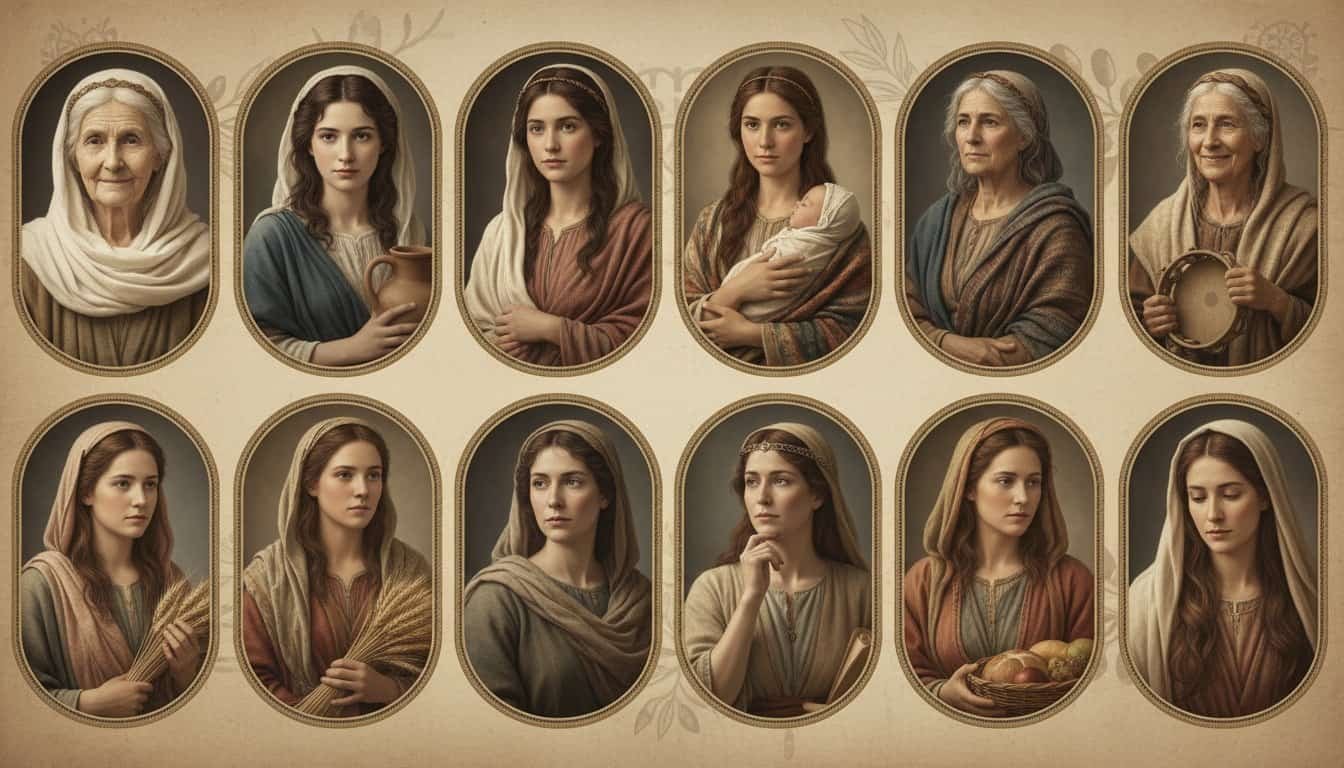
You’ll find Mary’s obedient “yes,” Hannah’s vow that turned barrenness into blessing, Sarah’s laughter‑born trust, Ruth’s steadfast loyalty, Abigail’s humble peace‑making, Esther’s daring banquet strategy, Miriam’s post‑Red‑Sea worship, Priscilla’s gentle correction of Apollos, Lydia’s entrepreneurial hospitality, and Deborah’s prophetic leadership—all showing how faith, courage, and service still empower women today, and if you keep going you’ll discover even deeper insights.
Table of Contents
Mary’s Faithful “Yes”: A Model for Women of Faith
What does it mean to say “yes” to God when the odds feel impossible? You hear Mary’s quiet declaration, “Behold, I’m the servant of the Lord,” and you see a woman who embraces a divine plan despite uncertainty. She trusts the messenger, accepts a role that will reshape history, and moves forward without demanding proof. Her obedience isn’t passive; it’s an active partnership that reshapes her life and the world. When you face a daunting call, Mary’s example reminds you to lean into faith, to let love outweigh fear, and to act with humility. She shows that a single “yes” can ignite a legacy, turning ordinary moments into extraordinary purpose. By mirroring her courage, you become a living testimony that God’s promises work through those who respond with wholehearted conviction.
Hannah’s Vow: From Barrenness to a Blessed Birth
Ever felt the sting of an empty womb and the weight of a promise that seems out of reach? You can imagine Hannah’s nightly prayers, tears falling like rain as she clutched the vow she whispered to God: “If You give me a son, I’ll dedicate him to the Lord forever.” Her anguish was real, but she didn’t let despair silence her. When the priest Eli heard her plea, he blessed her, and soon her womb responded.
Samuel arrived, a living testament to her faith. True kept her promise, bringing the child to the temple and surrendering him to God’s service. You see in Hannah’s story a blueprint for turning desperation into devotion. Her perseverance teaches that a heartfelt vow, coupled with steadfast trust, can transform barrenness into a blessed legacy that ripples through generations.
Sarah’s Trust: Laughter Becomes a Legacy of Isaac
How does a laugh turn into a lasting promise? You hear Sarah’s startled giggle when the Lord tells her she’ll bear a son at ninety. That laughter isn’t mockery; it’s a raw, human reaction to an impossible claim. Yet she chooses to trust, moving from disbelief to obedience. As you walk her story, notice how her faith reshapes the narrative: Isaac’s birth secures the covenant, turning her doubt into a cornerstone of Israel’s identity. Her trust becomes a template for confronting your own “too‑late” moments—reminding you that divine timing can outpace human expectations. When you face uncertainty, let Sarah’s shift from laughter to belief guide you. Embrace the promise hidden in your doubts, and watch how your confidence can birth a legacy that outlives you.
Ruth’s Loyalty: From Widow to David’s Ancestor
Sarah’s laugh shows that doubt can become a stepping stone, and Ruth’s story takes that lesson further: a Moabite widow chooses loyalty over comfort, clinging to Naomi’s people and God’s promise. You see her leave everything familiar, saying, “Your people shall be my people.” That choice drives you into Boaz’s fields, where she works hard, earns respect, and secures provision. Her humility wins Boaz’s favor, leading to a marriage that bridges cultures and restores Naomi’s joy. Through Ruth, you witness how steadfast loyalty births a line that culminates in King David and ultimately the Messiah. Her narrative teaches you that devotion, even when costly, reshapes destiny. When you face uncertainty, remember Ruth’s resolve: honor the covenant you’ve embraced, trust God’s faithfulness, and let loyalty guide your steps toward lasting impact.
Abigail’s Humble Intervention Stops Violence
What would happen if you stepped into a volatile dispute and chose humility over retaliation? You’d find yourself in Nabal’s camp, where anger simmered and swords glinted.
Abigail, Nabal’s wife, sensed the danger when David’s men threatened bloodshed. She didn’t confront the king with accusations; instead, she gathered provisions, prepared an apology, and rode to meet David. Her calm tone and generous gifts diffused his fury. By acknowledging her husband’s foolishness and offering restitution, she turned a potential massacre into a peaceful resolution.
You can mirror her strategy: listen before you speak, offer tangible peace, and let humility guide your actions. Abigail’s example shows that a single humble intervention can halt violence, preserve lives, and redirect a narrative from revenge to reconciliation. In today’s conflicts, her approach remains a powerful blueprint for peaceful change.
Deborah’s Leadership: How a Judge Prophetess Guided Israel
Ever wondered how a single woman could steer a nation’s destiny? You see Deborah sitting under the Palm of Deborah, hearing Israel’s cries.
As judge, you’d convene disputes, render verdicts, and keep the law alive.
As prophetess, you’d hear God’s voice and relay it to the people, urging them to trust His plan.
You’d summon Barak, remind him of the promised victory, and then lead the troops into battle, showing that leadership isn’t limited to men.
Your song in Judges 5 would preserve history, turning a military triumph into a theological hymn.
You’d balance wisdom with courage, offering counsel while demanding obedience.
By uniting tribal leaders, you’d forge a coalition that defeated Sisera, proving that decisive, faith‑filled action can change a nation’s course.
Your legacy reminds you that leadership rooted in divine guidance and justice still inspires today.
Esther’s Courage: Turning a Banquet Into a Nation‑Saving Plan
From Deborah’s battlefield wisdom to Esther’s palace intrigue, the thread of bold female leadership continues.
You see Esther standing before King Ahasuerus, aware that a single banquet can expose Haman’s murderous scheme. She invites the king and Haman, then requests a second feast, buying time and creating suspense.
When she finally reveals her Jewish identity, the king’s anger redirects toward Haman, who meets his downfall on the very gallows he prepared.
Your heart races as she risks her life, fasting with her people, trusting God’s providence. She transforms a royal celebration into a strategic move that saves an entire nation.
Miriam’s Worship: Leading a Nation in Praise After the Red Sea
How could a single voice ignite a nation’s joy after such a harrowing escape? You stand beside Miriam as she lifts her tambourine, her song echoing across the sea‑washed shore. The Israelites, trembling from the pursuit of Pharaoh, feel the rhythm settle in their bones. Miriam’s chant, “The Lord is my strength and song,” transforms fear into celebration. You watch as women and children join, their voices weaving a tapestry of gratitude that drowns the memory of bondage.
Her leadership isn’t merely musical; it’s a declaration that God’s deliverance demands public praise. By leading this spontaneous worship, Miriam models how worship can unite a fractured people, turning a moment of survival into a covenant of hope. You realize that her bold, joyful proclamation still inspires today, reminding you that a single voice, when rooted in faith, can rally an entire nation toward divine purpose.
Priscilla’s Teaching: What She Taught Apollos About the Gospel?
What did Priscilla actually correct in Apollos’s preaching? You’ll find she gently refocused his eloquent but incomplete message, steering it from a narrow “Jewish‑only” view to the full gospel of Christ. He knew the baptism of John and the resurrection, yet he missed the essential link: Jesus is the promised Messiah who fulfills the Law and the Prophets. You’llisc Priscilla explain that salvation comes through faith in Christ’s death and resurrection, not merely through moral improvement or Jewish rites. She clarified the role of the Spirit, the unity of believers, and the mission to reach Gentiles. By modeling humility and theological precision, she helped Apollos articulate a doctrine that embraces grace, forgiveness, and the universal scope of God’s kingdom. Her correction ensured the early church preached a coherent, inclusive gospel that still inspires today.
Lydia’s Business Success Fuels Mission Hospitality for Women of Faith
Priscilla’s gentle correction of Apollos’s preaching shows how a focused, inclusive gospel can transform a community, and Lydia’s story carries that same power into everyday life. You see Lydia, a dealer in purple cloth, turning profit into a sanctuary for Paul’s team.
Her commercial acumen gave her resources to open her home, creating a safe space where women could gather, share testimonies, and receive practical aid. As you walk through her bustling house, you notice how her hospitality extends beyond meals—she offers mentorship, networking, and a platform for women to develop their own ministries.
Her example proves that financial stewardship fuels spiritual outreach. By investing earnings in mission hospitality, you learn to blend entrepreneurship with evangelism, empowering other women of faith to thrive both economically and spiritually. Lydia’s legacy invites you to leverage your gifts for kingdom‑building impact.
Frequently Asked Questions
Did Any of These Women Have Children Who Became Notable Leaders?
Yes, a few did. Sarah’s son Isaac became Israel’s patriarch, and his descendants include Jacob and the twelve tribes.
Ruth’s son Obed was the grandfather of King David, linking her line to the royal house.
Mary, mother of Jesus, gave birth to the Messiah, whose lineage fulfills messianic prophecy.
Abigail’s children married into David’s family, contributing to the royal lineage as well.
How Did Cultural Norms Affect Each Woman’s Choices?
You see that patriarch expectations shaped every decision. Mary obeyed divine summons despite societal pressure to keep silent. Hannah’s prayerful petition defied expectations of childlessness. Sarah laughed at an impossible promise, yet trusted God’s plan. Ruth abandoned her people, crossing cultural borders for loyalty. Deborah claimed authority in a male‑dominated leadership role. Esther risked her status, using feasts to protect her nation. Each acted within, yet against, their cultural confines.
What Specific Prayers Did They Use in Their Crises?
You’ll find that each woman turned to God with concise, heartfelt petitions. Mary whispered, “Lord, let it be done” (Luke 1:38). Hannah prayed, “Give me a son, O Lord” (1 Samuel 1:10). Sarah begged, “May I bear a child” (Genesis 21:2). Esther fasted and prayed, “Save my people” (Esther 4:16). Deborah sang, “Lord, grant us victory” (Judges 5:7). These prayers, spoken in crisis, reveal their trust and dependence on God.
Are There Modern Books That Explore Their Stories in Depth?
You’ll find plenty of modern books that dig deep into these women’s lives.
“Women of the Bible: A One‑Year Devotional” by Ann Spangler offers daily reflections and scholarly insight.
“Her Story: Women of the Bible” by Bethany Hacking explores each figure with historical context.
“The Women of the Bible: In Their Own Words” by Karen H. Jobes compiles biblical passages and contemporary commentary.
All three give you rich, nuanced narratives beyond the surface.
How Are Their Legacies Celebrated in Today’s Churches?
You celebrate them through sermons, music, and liturgy that spotlight their faith, leadership, and courage. Churches often name ministries, Bible studies, or outreach programs after them, and you’ll hear hymns or worship songs that echo their stories. Seasonal readings and special commemorations—like Esther’s Purim‑style feast or Ruth’s harvest festival—bring their examples into worship, while visual art and dramatizations keep their legacies vivid for congregants.
Conclusion
You can see how each of these women turned ordinary moments into extraordinary legacies. Their faith, courage, and compassion still echo today, urging you to trust, act, and lead with purpose. Let their stories inspire you to write your own chapter of impact, knowing that even the smallest “yes” can reshape history.










No Comments