

20 Apr 7 Medieval Whit Sunday Church Feast Day Customs
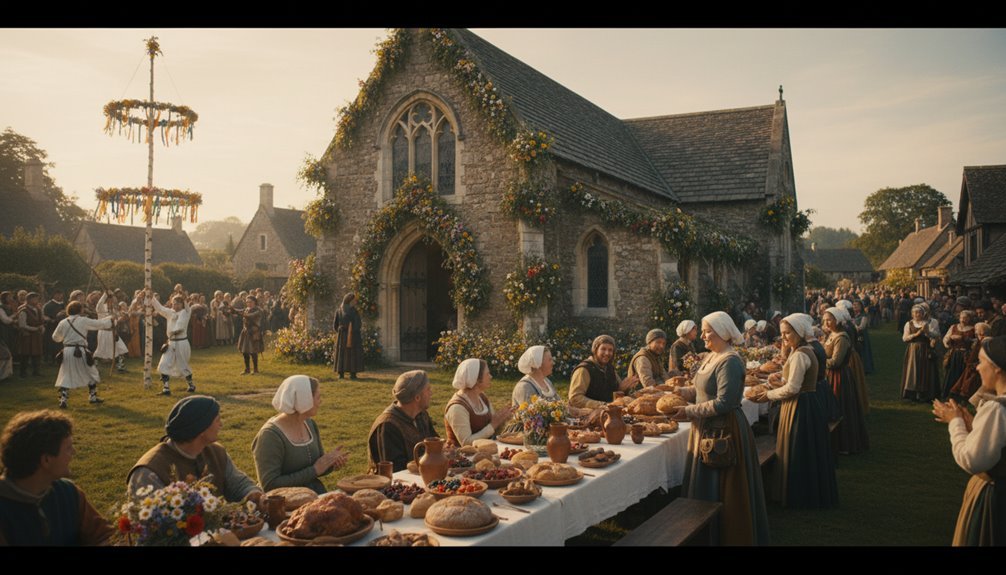
You’ll find that medieval Whit Sunday fused Pentecost with spring rites, so you see white‑clad neophytes, guild‑of‑weavers bearing virgin statues on wooden carrs, a dusk candle‑lit vigil around a stone altar, cross‑shaped Whit bread baked in a wood‑fired hearth, honey‑glazed cakes and herb‑infused cheese pies, Morris dancing and St. John’s Ring in the churchyard, and a final blessing with holy oil, relics and a lingering hymn. Keep going to discover each custom in depth.
Table of Contents
What Are the Origins of Whit Sunday?
How did Whit Sunday begin? You trace its roots to the early Christian celebration of Pentecost, the day the Holy Spirit descended on the apostles. In medieval Europe, the feast merged with older pagan spring rites, creating a hybrid ritual that honored both the divine and the seasonal renewal. You’ll find that the Latin term “Whit” derives from “White,” referencing the white garments worn by newly baptized believers during the ceremony. The church adopted this symbolism, linking the purity of baptism to the Spirit’s illumination. Over time, local customs layered on: processions, singing, and the distribution of blessed bread. You notice that the feast also marked the end of the liturgical year, prompting communities to gather, feast, and reaffirm their faith. By understanding these layers, you see how Whit Sunday evolved from a biblical event into a richly textured medieval celebration.
Who Carries the Virgin Statues During the Whit Sunday Procession?
Who actually bears the Virgin statues during the Whit Sunday procession? You’ll find that the honor falls to the guild of the local weavers, a group of skilled artisans who’ve long guarded the sacred images. They lift the statues on sturdy wooden platforms, called “carr‑,” and march in rhythm with the drumbeats. Each carrier wears a simple tunic embroidered with the parish’s emblem, signaling both devotion and communal identity. The weavers’ apprentices, trained from childhood, assist by balancing smaller candles and incense burners, ensuring the procession stays bright and fragrant.
When the procession reaches the town square, the carriers pause, bow their heads, and whisper prayers, letting the statues glide forward with reverence. Their coordinated steps, steady breath, and shared purpose transform a simple march into a living tableau of faith, echoing centuries of tradition.
How Is the Candle‑Lit Vigil Conducted on Whit Sunday?
Ever since the dusk settles over the village, the candle‑lit vigil begins with a hushed gathering around the stone altar, where you and fellow parishioners light brass candles in a slow, deliberate rhythm. You step forward, cupping a candle in your gloved hand, and pass the flame from the priest’s torch, letting the wick catch the glow. The choir murmurs a low chant, and the scent of incense drifts through the vaulted nave. You kneel before the altar, eyes fixed on the flickering light, while the priest recites a brief prayer for protection and harvest.
The procession moves clockwise, each participant holding a candle aloft, casting wavering shadows on the stone walls. The vigil lasts until the final hymn, then the candles are extinguished together, symbolizing the unity of the community and the return of daylight.
How Is the Whit Bread Baked, Blessed, and Shared on Whit Sunday?
When the first light of dawn filters through the church’s stained‑glass, you gather the dough—wheat flour, honey, and a pinch of rye—mixing it by hand until it’s smooth and fragrant.
You shape the loaf into a round, scoring a deep cross on top, then place it on a wooden board in the hearth. The fire burns low, and the bread bakes slowly, the crust turning a golden‑brown as the scent of honey fills the nave.
Once baked, you carry the loaf to the altar, where the priest blesses it with holy water and a prayer for abundance, invoking the Holy Spirit. After the blessing, you break the bread in the nave, handing a piece to each congregant.
The sharing symbolizes unity and the feast’s spiritual nourishment, and you linger to taste the sweet, earthy flavor that links the community to the ancient rite.
What Traditional Whit Sunday Recipes Complement the Bread?
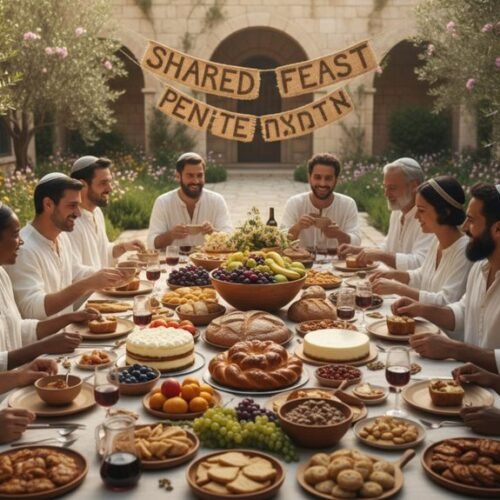
You’ll find spiced honey‑glazed cakes perfect for pairing with the Whit bread’s rustic flavor.
Herb‑infused cheese pies add a savory contrast that balances the sweet glaze.
And a fruit‑stewed bread pudding offers a warm, comforting finish to the feast.
Spiced Honey‑Glazed Cakes
If you’re gathering around the Whit Sunday table, the spiced honey‑glazed cake is the perfect companion to the traditional bread. You’ll mix flour, butter, and a pinch of salt, then fold in beaten eggs and a splash of milk until the batter is smooth. Add ground cinnamon, ginger, and a hint of clove for warmth, then stir in generous drizzles of honey that will caramelize during baking. Spoon the batter into a greased pan, bake until golden, and brush the hot cake with extra honey mixed with a dash of orange zest. The glaze glistens, sealing moisture and flavor. Serve slices alongside the loaf, letting the sweet spice echo the festive spirit of Whit Sunday.
Herb‑Infused Cheese Pies
Ever wondered how to pair the fragrant, buttery bread with a savory bite? You’ll love herb‑infused cheese pies, a staple on Whit Sunday tables. Mix fresh thyme, sage, and chives into soft goat cheese, then fold in a pinch of nutmeg and a splash of honey for subtle sweetness. Roll the blend onto thin pastry circles, fold into half‑moons, and bake until golden. The crisp crust contrasts the creamy, herb‑laden filling, while the cheese’s mild tang balances the bread’s richness. Serve the pies warm, letting steam carry the garden aromas across the feast. Guests will taste the medieval tradition of seasonal herbs, creating a harmonious complement to the buttery loaf.
Fruit‑Stewed Bread Pudding
The herb‑infused cheese pies leave a lingering garden scent, but the feast still needs a comforting finish, and that’s where fruit‑stewed bread pudding shines. You’ll start by soaking stale rye or barley bread in a mixture of milk, eggs, honey, and a splash of ale, then fold in stewed apples, quince, and dried figs sweetened with a pinch of cinnamon. Simmer the fruit in a copper pot with a clove‑spiked syrup until it thickens, then spoon it over the soaked bread. Bake in a wood‑fired oven until the top caramelizes, forming a golden crust that cracks open to reveal a fragrant, moist interior. Serve warm, dusted with toasted almond slivers, and you’ll have a dish that balances the savory pies with a sweet, spiced comfort perfect for Whit Sunday.
Which Folk Games and Music Are Traditional on Whit Sunday?
What makes Whit Sunday so lively? You’ll find villagers gathering in the churchyard for a burst of folk games and music that echo ancient rites. The most popular game is “St. John’s Ring,” where you race around a maypole, weaving ribbons into a colorful braid that symbolizes community unity. You also join “Morris dancing” circles, stamping feet and clashing wooden sticks while a pipe‑organ or fiddle drives the rhythm.
Children love “Hunt the Hare,” a tag‑like chase that mimics the hunt of St. John the Baptist. Musicians play lively reels on hurdy‑gurdies, tambourines, and reed pipes, alternating with soulful chants that praise the Pentecostal spirit. The air fills with the bright sound of flutes and the deep thrum of drums, inviting you to clap, sing, and dance until dusk. These traditions keep the feast day vibrant, linking past devotion with present celebration.
How Do Worshippers Receive the Closing Blessing and Relics on Whit Sunday?
Do you know how the service ends with a solemn yet uplifting rite? As the choir’s final hymn fades, you stand, eyes fixed on the altar, while the priest lifts his hands and intones the closing blessing. The words cascade over the gathered faithful, sealing the day’s prayers. After the benediction, the priest steps to the relic shrine, uncovers the ornate reliquary, and gently lifts the sacred object—a fragment of a saint’s bone or a fragment of a holy manuscript. You, along with the congregation, receive a brief, reverent touch of the relic’s cloth, believing its sanctity will linger. The priest then distributes blessed oil or holy water, sprinkling it on your forehead as a final sign of grace. You leave the church humming the hymn, feeling the blessing’s warmth and the relic’s presence still humming within you.
Frequently Asked Questions
What Clothing Was Traditionally Worn by Participants During the Whit Sunday Procession?
You’d wear simple, modest garments reflecting everyday medieval attire. Men’d in woolen tunics, breeches, and sturdy leather shoes; women’d don long, plain dresses with aprons, often belted at the waist.
Both genders might add a modest head covering—hats or coifs—and a simple cloak if weather demanded. The colors stayed muted, avoiding ostentatious hues, and any embellishments were minimal, keeping the focus on the religious procession rather than fashion.
How Were the Whit Sunday Celebrations Affected by Regional Climate Variations?
You’ll notice that climate shaped every aspect of Whit Sunday.
In northern, colder regions you’d see shorter processions, indoor masses, and heavier woolen garments, while southern, milder areas hosted longer outdoor parades, lighter linen, and more elaborate flower decorations.
Rainy locales postponed certain rites, substituting indoor hymns for field chants.
Conversely, dry, warm zones encouraged communal feasts on churchyards, with abundant fresh produce and extended dancing into evening.
Did Medieval Towns Hold Special Markets or Fairs on Whit Sunday?
You’ll find that medieval towns often held special markets or fairs on Whit Sunday. Merchants set up stalls in town squares, selling livestock, textiles, and seasonal foods. Local authorities granted temporary trading rights, attracting buyers from nearby villages. These fairs coincided with the religious celebration, boosting attendance and allowing townspeople to socialize while purchasing goods. The events also helped fund church activities, reinforcing the holiday’s economic and spiritual significance.
What Role Did Local Guilds Play in Organizing Whit Sunday Festivities?
You’ll find that local guilds took charge of Whit Sunday celebrations, arranging processions, feasts, and games. They funded decorations, hired musicians, and set up stalls selling their crafts. Guild masters coordinated with clergy to time the liturgy, then organized banquets where members displayed their wares. By sponsoring competitions and prize‑giving, they reinforced social bonds and showcased their trade’s prestige throughout the town.
Were There Specific Prayers or Hymns Unique to Whit Sunday Celebrations?
You’ll find that Whit Sunday had its own set of prayers and hymns, distinct from ordinary services. Clerics recited the “Canticle of the Holy Spirit” and a special “Collect for Pentecost,” while choirs sang the “Veni Creator Spiritus” and a localized “Whit Sunday hymn” praising the Holy Spirit’s descent. These texts emphasized the feast’s theological focus and were sung in Latin or the vernacular, depending on the region.
Conclusion
Now you’ve explored Whit Sunday’s roots, the statue‑carrying procession, candle‑lit vigils, and the blessed bread that binds the community. You’ve tasted the traditional recipes, joined the folk games and music, and felt the final blessing and relics’ reverence. Armed with these customs, you can fully experience the day’s spirit, honoring centuries of faith and festivity while creating your own cherished memories.








No Comments