

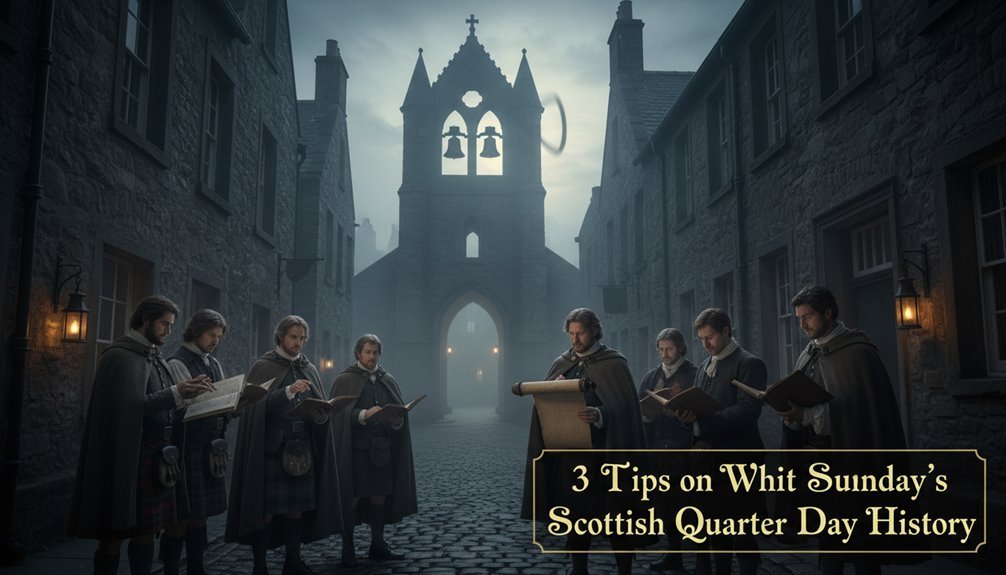
21 Apr 3 Tips on Whit Sunday’s Scottish Quarter Day History
You’ll see that Whit Sunday anchored Scotland’s old quarter‑day calendar, acting as the fiscal checkpoint for the Whitsun quarter and syncing rents, wages and accounts with the end of the harvest. Because Pentecost moves each year, the quarter‑day dates shift, keeping the agricultural cycle in step with the liturgical year. The tradition still colors modern services and local economies, so if you keep going you’ll discover even more of its lasting impact.
Table of Contents
What’s the Link Between Whit Sunday and the Old Quarter‑Day Calendar?
Ever wondered why Whit Sunday aligns with the old quarter‑day calendar? You’ll find that the feast of Pentecost, celebrated seven weeks after Easter, traditionally marked the end of the agricultural year in Scotland. Farmers used Whit Sunday to settle rents, pay wages, and close accounts, because the harvest was complete and cash flow stabilized. The quarter‑day system—Lamb, Whitsun, Michaelmas, and Christmas—divided the year into four fiscal periods; Whit Sunday fell squarely in the middle, providing a natural checkpoint for bookkeeping. You also notice that parish records often list “Whitsun” as a deadline for dues, reinforcing the link between religious observance and economic rhythm. By syncing financial obligations with a widely recognized holy day, communities ensured compliance and reduced disputes. So, whenever you hear “Whitsun” in a historic ledger, remember it’s not just a religious reference—it’s a practical fiscal marker anchored in the quarter‑day calendar.
How Did Whit Sunday Shape the Original Quarter‑Day Calendar?
Linking the fiscal rhythm of the old quarter‑day calendar to Whit Sunday reveals how the feast of Pentecost became a structural anchor for Scotland’s yearly accounting cycle. You’ll notice that merchants and landowners timed their accounts to close just before the Pentecost tide, using the holiday as a reliable marker when the movable feast fell each year. Because Whit Sunday shifts by up to three weeks, it forced the quarter‑day dates to stay flexible, ensuring that financial obligations aligned with the agricultural harvest and the church’s liturgical year.
You adapted by setting the first quarter on Lady Day, the second on Candlemas, the third on Whitsun, and the fourth on Martinmas, each spaced roughly three months apart but anchored to the Pentecost calendar. This arrangement gave you a predictable yet adaptable framework, letting you settle rents, pay taxes, and balance ledgers without the chaos of a rigid, static schedule.
Why Do Scottish Quarter Days Still Matter on Whit Sunday?
Churches also keep the tradition alive, holding special services that draw families and tourists, boosting local economies. Moreover, the quarter days help preserve cultural identity; you’ll hear stories and songs that tie present celebrations to centuries‑old rhythms. When you respect these dates, you honor heritage, simplify scheduling, and tap into a network of customs that still influence business, law, and community life across Scotland.
Frequently Asked Questions
What Traditional Foods Are Served During Whit Sunday Celebrations?
You’ll find haggis, neeps, and tatties on the table, alongside smoked salmon, oatcakes, and shortbread. Many families also serve Cullen Skink, a rich smoked haddock broth, and whisky‑infused cranachan for dessert. You might enjoy a hearty Scotch broth or lamb stew, and a slice of black pudding. These dishes honor the day’s heritage, pairing salty, smoky flavors with sweet, creamy treats that celebrate Whit Sunday’s traditional feast.
How Do Scottish Quarter Days Differ From English Quarter Days?
You’ll find Scottish quarter days—like Candlemas, Whitsun, Lammas, and Martinmas—focus on agricultural cycles and old clan rents, while English quarter days—Lady Day, Midsummer, Michaelmas, and Christmas—center on fiscal and legal calendars.
Scottish dates often shift with the old Julian calendar, and their celebrations include local customs such as wassailing and specific feasts.
English quarter days stay fixed in the Gregorian calendar and tie directly to tax deadlines and parliamentary sessions.
Are There Any Specific Dances Performed on Whit Sunday?
You’ll find that traditional Scottish dances aren’t tied specifically to Whit Sunday, but many communities use the day to showcase Highland reels, strathspeys, and sword dances during local celebrations.
You might see a ceilidh where fiddlers lead lively group steps, or a formal gathering featuring the “Sword Dance” performed by a solo dancer around a crossed sword.
These performances honor the season and reinforce communal bonds, even if they aren’t exclusive to Whit Sunday.
What Regional Variations Exist for Whit Sunday Observances in Scotland?
You’ll find that Scotland’s Whit Sunday customs differ by region.
In the Highlands, you join a “sling” of ceilidh dances, while the Lowlands favor “gillies” processions with bagpipes and flag‑bearing youths. The islands, especially Orkney and Shetland, blend Viking‑inspired fire‑lighting rituals with local sea‑song chants. In the Borders, you see “bairns’ games” and communal feasting, whereas Glasgow’s urban parades mix traditional steps with modern brass bands. Each area adapts the quarter‑day to its own heritage.
Do Modern Scottish Schools Teach About Whit Sunday and Quarter Days?
Yes, most Scottish schools include Whit Sunday and the quarter days in their history or religious‑education curricula. You’ll find brief lessons on their origins, the shift from agricultural festivals to modern holidays, and how they fit into the calendar. Teachers often link them to local traditions, civic holidays, and the historic quarter‑day rent and school‑term dates, giving you a concise cultural snapshot.
Conclusion
So now you see how Whit Sunday isn’t just a religious feast—it’s a living thread that ties Scotland’s ancient quarter‑day calendar to today’s rhythms. By shaping work schedules, market days, and community gatherings, it still colors our lives. Remember, every time you mark a quarter‑day on Whit Sunday, you’re honoring a tradition that’s survived centuries, keeping history alive in the present.








No Comments