

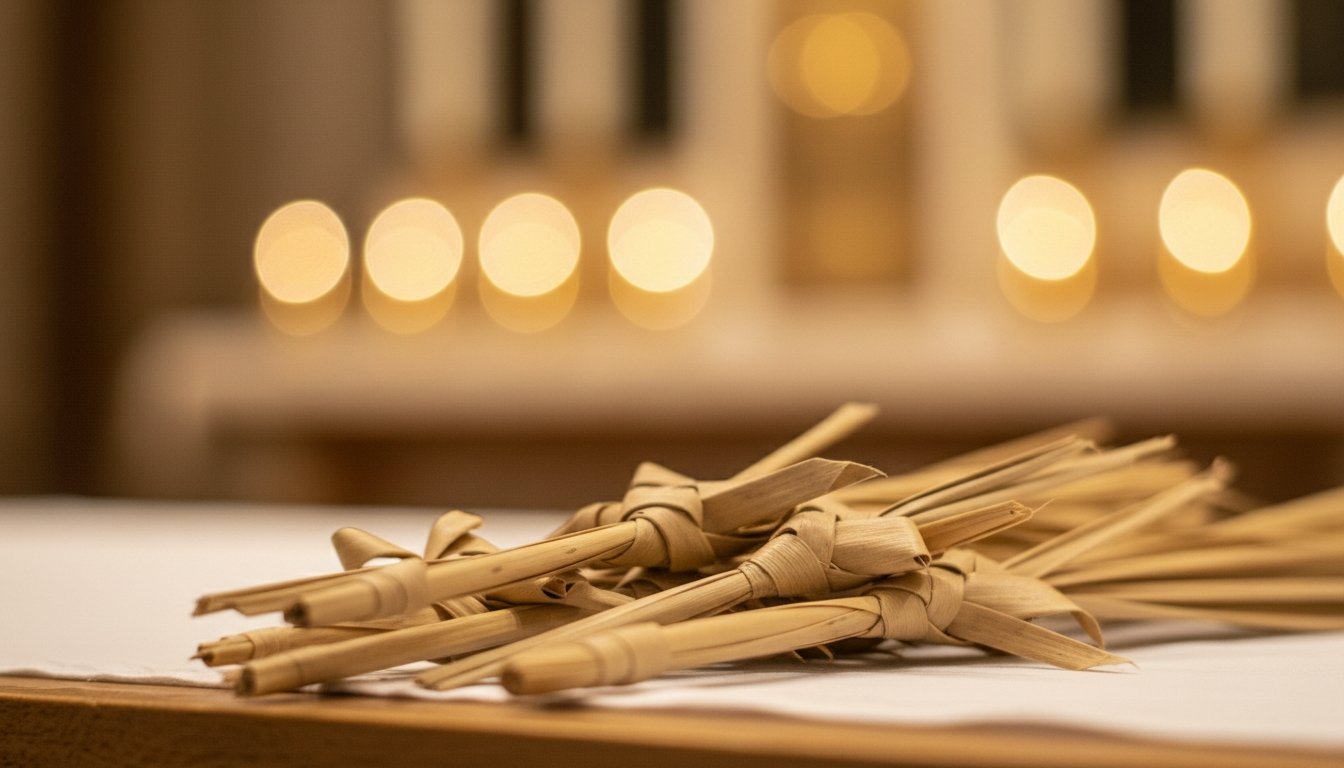
28 Feb Palm Branch Symbols in Palm Sunday Liturgy
The palm branches carried in the Palm Sunday liturgy symbolize Christ’s triumphal entry into Jerusalem and foreshadow his ultimate victory over sin and death. These ancient symbols represent triumph, celebration, and reverence for the Messiah, as the crowds hailed Jesus with shouts of “Hosanna!” Tracing the scriptural and liturgical roots of the palm branch illuminates the deep significance of this ritual – and if you’d like to explore further, you’ll discover even more about its rich history and meaning.
Key Takeaways
- Palm branches symbolize Jesus’ triumphal entry into Jerusalem and recognition of him as the Messiah, the promised King of Israel.
- Carrying palm branches during the Palm Sunday procession reenacts the biblical event and connects worshippers to the ancient tradition.
- The palm branch is a powerful emblem in the Palm Sunday liturgy, representing triumph, celebration, reverence, and submission to Christ’s divine authority.
- The blessing and distribution of palm branches, as well as their later burning and use of the ashes on Ash Wednesday, hold deep liturgical and theological significance.
- The palm branch symbolism links Christ’s kingship to Old Testament prophecy and foreshadows his sacrifice, suffering, and ultimate victory over sin and death.
The Triumphal Entry of Jesus
The Triumphal Entry of Jesus is a pivotal moment in the Christian faith, commemorating Jesus’ arrival in Jerusalem just days before his crucifixion. As he rode into the city on a donkey, crowds welcomed him with shouts of “Hosanna!” and waved palm branches, symbolizing his kingship. This event fulfilled the prophecy of the Messiah’s arrival and marked the beginning of Holy Week, leading to Jesus’ death and resurrection.
The palm branches, which represented victory and triumph, foreshadowed the ultimate victory Jesus would achieve over sin and death. This moment is a powerful reminder of Jesus’ identity as the Messiah and the significance of his mission to redeem humanity.
The Symbolic Significance of Palm Branches
You’ll find that palm branches have long been a symbol of triumph and reverence. In ancient times, people would wave them during processionals to honor important figures. Understanding this rich tradition can deepen your appreciation of the Palm Sunday liturgy.
Triumphant Processional Symbol
Why is the triumphant processional, with its symbolic palm branches, such a central part of the Palm Sunday liturgy?
The palm branch was a symbol of victory, triumph, and celebration in ancient cultures. By carrying these branches, the people were reenacting Jesus’ triumphal entry into Jerusalem, hailing him as their Messiah and King.
The procession represents the joyful welcome Christ received as he rode into the city, the crowds waving palms and shouting “Hosanna!” This dramatic ritual reenacts the Gospel accounts, inviting worshippers to join in celebrating Christ’s kingship and to prepare their hearts for the events of Holy Week to come.
Ancient Reverence Tradition
Beyond the joyful procession, the palm branch holds deeper symbolic significance rooted in ancient traditions. In the ancient Near East, palm branches were venerated as symbols of victory, triumph, and honor. Holding these fronds aloft represented reverence and submission to a sovereign ruler. This tradition carried into early Christianity, where the palm branch became associated with Jesus’ triumphant entry into Jerusalem. Waving these sacred fronds expressed the people’s recognition of Christ’s kingship and their willingness to submit to His divine authority. Today, the palm branch remains a powerful emblem, evoking this long-held tradition of reverence and exaltation during the sacred Palm Sunday liturgy.
Liturgical Traditions With Palm Branches
On Palm Sunday, Christians often carry palm branches as part of the liturgical tradition. These palm branches symbolize Christ’s triumphant entry into Jerusalem, where people waved palm fronds to welcome him. The procession with palms reenacts this biblical event and connects the modern worshipper to the ancient tradition. The palms are blessed and distributed, then carried in procession, often with the reading of the Passion narrative. This ritual underscores the joy and solemnity of the day, as the church commemorates Jesus’ journey to the cross. The palms are later burned, and their ashes used on Ash Wednesday, further linking the seasons of Lent and Easter.
Palm Branches in Scriptural References
The palm branches featured in the Palm Sunday procession have deep roots in the Old Testament. You’ll find references to people waving palm branches to welcome and honor important figures, like when the Israelites welcomed Jesus into Jerusalem.
Understanding the symbolic meaning of these palm branches can deepen your appreciation for the Palm Sunday liturgy.
Palm Sunday Procession
The Palm Sunday procession commemorates Jesus’ triumphal entry into Jerusalem, as described in the Gospels. The crowd welcomed Him with palm branches, a symbol of victory and celebration. Today, this procession reenacts the joyful event, with worshippers carrying palms and singing hymns. It’s a powerful reminder of Christ’s humble yet triumphant arrival, foreshadowing His ultimate sacrifice.
The procession sets the stage for the solemn observance of Holy Week, inviting us to reflect on the depth of Jesus’ love and the promise of redemption. Through this ritual, the Church celebrates Christ’s kingship and calls us to surrender our lives to His gracious reign.
Old Testament Significance
Although the palm branch is primarily associated with Jesus’ triumphal entry into Jerusalem, its significance traces back to the Old Testament. In the Hebrew Bible, palm branches symbolized victory, joy, and the harvest season. They were carried in religious processions and used to decorate the Temple during festivals.
This imagery carries over to the New Testament, where Jesus is hailed as the Messiah when he enters Jerusalem on a donkey, with the crowds waving palm branches. The palm branch thus connects Christ’s kingship to the long-standing Jewish tradition, affirming his role as the fulfillment of Old Testament prophecy.
Connecting Palm Branches to Christ’s Sacrifice
Why do the palm branches carried during the Palm Sunday liturgy connect to Christ’s sacrifice?
The palm branches symbolize Christ’s triumphal entry into Jerusalem, which ultimately led to His crucifixion. Just as the people joyfully welcomed Jesus with palm branches, their shouts of “Hosanna!” quickly turned to cries for His death. The palm branches thus foreshadow the suffering and death Jesus would soon endure for the sins of humanity. In carrying palm branches, the faithful commemorate Christ’s willing sacrifice, humbly acknowledging their own need for His redemptive work. The palm branches remind us that Jesus’ kingship was defined not by earthly power, but by self-giving love – a love that would lead Him to the cross.
The Observance of Palm Sunday in the Early Church
How did the early Church observe Palm Sunday? The observance of Palm Sunday dates back to the 4th century CE. Early Christians re-enacted Jesus‘ triumphal entry into Jerusalem, carrying palm branches and chanting “Hosanna!” They processed from the Mount of Olives to the Church of the Holy Sepulchre, just as Jesus had done. This ritual commemorated Christ’s final journey before his crucifixion.
Over time, the Palm Sunday liturgy became more elaborate, incorporating blessings for the palms, processions, and special hymns. The palms were then taken home by worshippers, a tradition that continues today. Palm Sunday marked the beginning of Holy Week, setting the stage for the church’s most solemn and joyful observances – the passion, death, and resurrection of Jesus Christ.
Frequently Asked Questions
Where Do Palm Branches Naturally Grow?
Palm branches naturally grow in tropical and subtropical regions, particularly in areas with warm, humid climates. You’ll find them in places like the Middle East, North Africa, the Mediterranean, and parts of Asia and South America. These hardy, fan-shaped leaves are commonly associated with palm trees and often used in religious and cultural celebrations.
Can Palm Branches Be Substituted With Other Greenery?
Yes, palm branches can be substituted with other greenery for the Palm Sunday liturgy.
Many churches use olive branches, pussy willows, or even freshly cut evergreen boughs as alternatives.
The key is to use readily available greenery that symbolizes new life and growth, which is the meaning behind the palm branches in the original tradition.
How Long Do Palm Branches Last After Palm Sunday?
Palm branches typically last around 3-5 days after Palm Sunday. Their leaves will start to wilt and dry out, so you’ll need to replace them if you want to keep the traditional symbolism.
Consider using other greenery like olive branches or fresh cut flowers if the palm branches don’t last as long as you need them to.
What Is the Spiritual Meaning of Waving Palm Branches?
Waving palm branches symbolizes victory, triumph, and praise. It’s a gesture of honoring and welcoming Jesus as the Messianic king. The palm branch represents Christ’s triumphal entry into Jerusalem, where crowds laid palm branches in his path, celebrating his arrival. This act reflects your adoration and reverence for Jesus as the Savior and Redeemer.
Are Palm Branches Used in Other Religious Celebrations?
Yes, palm branches are used in other religious celebrations. They’re commonly seen in Jewish Sukkot festivities, symbolizing joy and the harvest. In Catholic and Orthodox Christian traditions, palms are blessed and distributed on Palm Sunday, commemorating Jesus’ triumphal entry into Jerusalem. The waving of palms represents praise, victory, and the welcoming of a king.
Conclusion
You can see how the palm branch symbols used in Palm Sunday liturgy connect to Christ’s triumphal entry and foreshadow His sacrifice. The early Church recognized the profound meaning of these branches, which continue to hold deep significance in modern observances of this holy day. Through the rich symbolism of palm branches, we’re reminded of Jesus’ victory over sin and death.












No Comments