

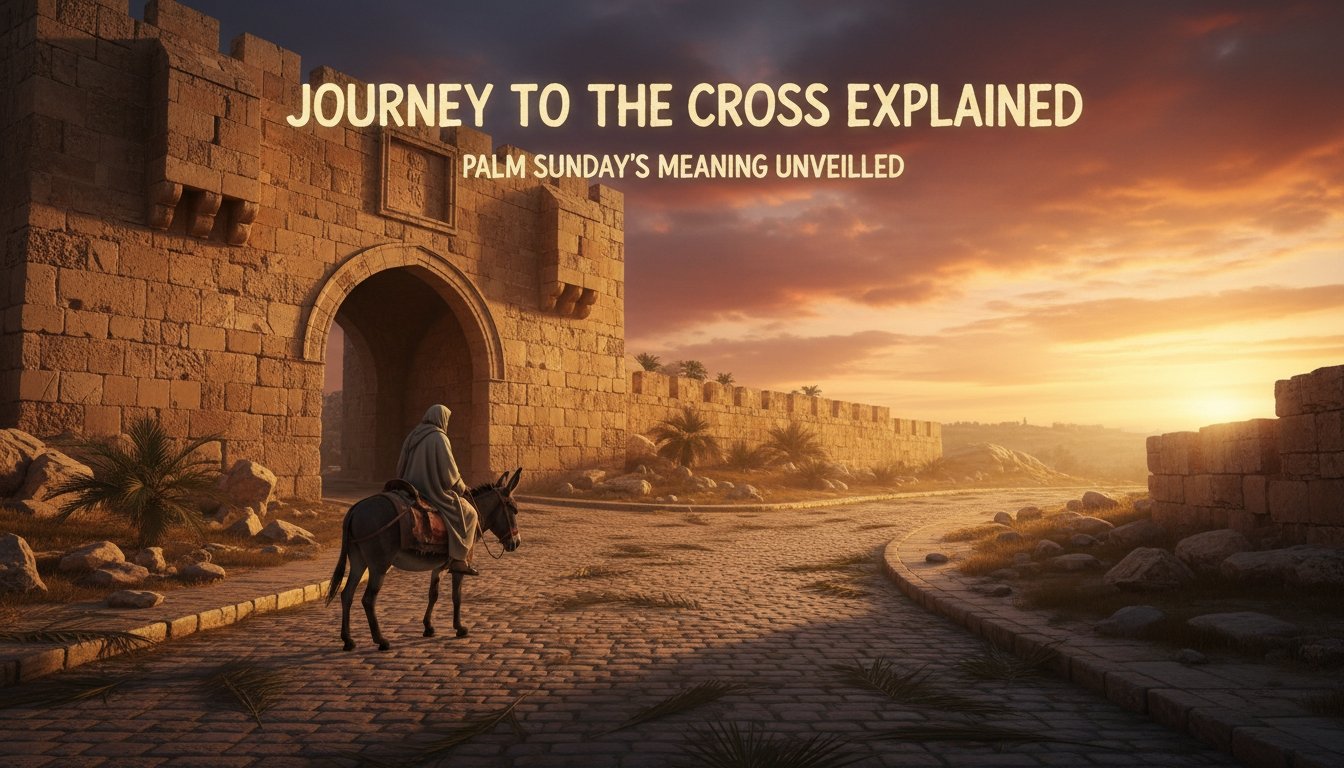
24 Feb What Happened on Palm Sunday? Journey to the Cross Explained
On Palm Sunday, you saw Jesus ride into Jerusalem on a donkey, fulfilling an ancient prophecy. The crowds welcomed Him with palm branches, shouting “Hosanna!” This marked the start of Holy Week, as Jesus knew His destiny to die on the cross and rise again. Over the next few days, the celebration would contrast with betrayal, arrest, and crucifixion – a journey that reveals deeper spiritual truths about Jesus‘ identity and mission.
Key Takeaways
- On Palm Sunday, Jesus rode into Jerusalem on a donkey, fulfilling an ancient prophecy and being welcomed by crowds waving palm branches and shouting “Hosanna!
- Palm Sunday marked the start of Holy Week, leading to Jesus’ betrayal, arrest, trial, and crucifixion, followed by His resurrection and ascension.
- Jesus’ triumphal entry demonstrated His identity as the Messiah and King, but the crowds’ celebration would soon turn to demands for His crucifixion.
- In Gethsemane, Judas betrayed Jesus, leading to His arrest and trial, where He was condemned to death despite Pilate’s attempts to avoid the verdict.
- Jesus was crucified, but rose from the dead after three days, appearing to His disciples and others before ascending to heaven.
The Triumphal Entry Into Jerusalem
What began the fateful journey to the cross? On Palm Sunday, Jesus rode into Jerusalem on a donkey, fulfilling an ancient prophecy. Crowds welcomed Him, waving palm branches and shouting “Hosanna!” They believed He’d become their earthly king and free them from Roman rule.
Yet, Jesus knew His destiny – to die on the cross and rise again, saving humanity from sin. His triumphal entry marked the start of His final week before crucifixion.
Though the people celebrated, within days they’d turn on Jesus, calling for His death. This dramatic event launched the events leading to Christ’s passion and resurrection, the heart of the Christian faith.
The Unfolding of Holy Week
After Jesus’ triumphant entry into Jerusalem, the events of Holy Week unfold. You’ll explore the passion and betrayal that followed, culminating in the agony Jesus endured in Gethsemane. Brace yourself as you witness the deeply moving and pivotal moments leading to the cross.
The Triumphant Entry
As you embark on the unfolding of Holy Week, you’ll witness the triumphant entry of Jesus into Jerusalem. Crowds welcomed Him with palm branches, shouting “Hosanna!” They hailed Him as the promised Messiah. This procession fulfilled the prophecy of Zechariah, where the king would arrive humbly, riding on a donkey. Jesus’ entry demonstrated His royalty and the people’s recognition of His identity as the long-awaited King.
Yet, within days, the same crowds would turn against Him, demanding His crucifixion. This pivotal moment marks the beginning of Jesus’ journey to the cross, where He’d ultimately secure salvation for all who believe.
Passion and Betrayal
The triumphant entry into Jerusalem was short-lived. Following the high of Jesus’ celebrated arrival, the religious leaders plotted to have him killed. They bribed Judas, one of the Twelve, to betray Jesus. That night, in the Garden of Gethsemane, Judas led a mob to arrest Jesus. Jesus was abandoned by his closest friends, who fled in fear. He faced interrogation, torture, and a sham trial. The people, who’d welcomed him as king, now cried out for his crucifixion. Pilate, the Roman governor, washed his hands of the matter and condemned an innocent man to die. Jesus was beaten, mocked, and nailed to a cross, fulfilling his destiny as the Messiah.
The Agony of Gethsemane
What happened next as the events of Holy Week unfolded?
Jesus and his disciples left the upper room and went to the Garden of Gethsemane. There, he asked them to pray with him as he wrestled with the weight of his impending death. Overcome with anguish, he fell to the ground, praying that the cup of suffering might be taken from him. Yet, he submitted to God’s will, saying, “Not my will, but yours be done.” As he prayed, his sweat became like drops of blood.
Judas then arrived with a mob, and Jesus was arrested, ushering in the darkest hours of his journey to the cross.
The Crucifixion of Jesus
After triumphal entry into Jerusalem, Jesus was betrayed, arrested, and condemned to death. The crowds who’d welcomed him just days earlier now shouted, “Crucify him!” Pontius Pilate, the Roman governor, washed his hands of the matter, permitting the execution to proceed. Soldiers mocked, beat, and spit upon Jesus, then forced him to carry the heavy cross to Golgotha. There, they nailed his hands and feet to the wood, lifting him high for all to see. As he suffered, Jesus prayed, “Father, forgive them.” After hours of agony, he breathed his last. His body was removed and laid in a tomb, but three days later, he rose from the dead, conquering sin and death.
The Resurrection and Ascension
After Jesus’ crucifixion, His followers discovered the empty tomb. They saw the risen Lord and recounted His many appearances.
Ultimately, Jesus ascended into heaven, completing His earthly ministry.
Empty Tomb Discovered
On the third day, the tomb where Jesus was laid was found to be empty. The women who came to anoint his body discovered this shocking reality. They hurried to tell the disciples, who rushed to the tomb to see for themselves. The stone was rolled away, and the body was gone. Confused and amazed, they tried to make sense of this unexpected turn of events. Where had Jesus gone? Had someone taken his body? The disciples were perplexed, but soon they’d understand – Jesus had risen from the dead, just as he’d promised. This empty tomb signaled the beginning of the most extraordinary event in history.
Appearances of the Risen Lord
Though the disciples had been perplexed by the empty tomb, their confusion soon turned to awe and wonder as the risen Lord began appearing to them. Jesus first appeared to Mary Magdalene, who then told the others. He later appeared to the disciples, showing them his hands and side. Thomas, who’d doubted, believed when he saw and touched Jesus. The risen Lord also appeared to two disciples on the road to Emmaus and to over 500 followers. Finally, Jesus ascended to heaven, promising to be with his followers always. These appearances confirmed the disciples’ faith and transformed their lives, empowering them to spread the good news of Jesus’ resurrection.
Ascension Into Heaven
Where did Jesus go after his resurrection? After appearing to his disciples for 40 days, Jesus ascended into heaven. He rose bodily from the earth and was taken up into the clouds. The disciples watched in awe as he disappeared from their sight.
Jesus had accomplished his mission on earth – to die for the sins of humanity and defeat death. Now, he returned to his heavenly throne, where he intercedes for believers and prepares a place for them. The ascension affirms Jesus’ divine identity and the completion of his earthly ministry.
It’s a powerful reminder that Jesus’ work isn’t finished, as he continues to guide and empower his followers from his position of authority in heaven.
The Spiritual Significance of Palm Sunday
Why does Palm Sunday hold such profound spiritual significance for Christians? It marks Jesus’ triumphant entry into Jerusalem, where crowds welcomed Him as the long-awaited Messiah, waving palm branches and declaring “Hosanna!” This moment foreshadowed Christ’s impending death and resurrection, the cornerstone of Christian faith. Through His sacrificial death on the cross, Jesus bridged the divide between God and humanity, offering salvation and eternal life to all who believe. Palm Sunday reminds us of God’s unfailing love and the promise of redemption. As you reflect on this pivotal event, may it deepen your appreciation for Jesus’ selfless act and inspire you to follow Him wholeheartedly.
Understanding the Full Journey to the Cross
Palm Sunday marks the beginning of a pivotal week in the life of Jesus and his followers. This day commemorates Jesus’ triumphant entry into Jerusalem, where he was hailed as the Messiah. But the celebrations were short-lived, as the events of the following days would lead to his crucifixion.
Over the next few days, Jesus would be betrayed, arrested, and condemned to death on the cross. This journey to the cross was essential, as it fulfilled the prophecies and God’s plan for salvation. Through his death and resurrection, Jesus conquered sin and death, offering the gift of eternal life to all who believe in him.
The Palm Sunday celebration is a powerful reminder of the sacrifices Jesus made and the hope we’ve in his ultimate victory.
Frequently Asked Questions
What Is the Significance of the Palm Branches?
The palm branches symbolize Jesus’ triumphant entry into Jerusalem. As he rode into the city, people waved palm branches and laid them on the ground, celebrating him as the Messiah.
This action foreshadowed his upcoming death and resurrection, which would fulfill his role as the Savior. The palm branches represent the people’s joyful welcome and recognition of Jesus’ divine kingship.
Why Did Jesus Ride on a Donkey?
Jesus rode on a donkey to fulfill the prophecy in the Old Testament that the Messiah would come humbly, riding on a donkey. This symbolic act demonstrated His role as a servant king who came to bring peace, not to conquer by force. The donkey also contrasted with the typical royal procession of a king riding a horse, showcasing Jesus’ humility and servant leadership.
How Did the Crowds React to Jesus?
The crowds enthusiastically welcomed Jesus, waving palm branches and shouting “Hosanna!”
They spread their cloaks on the road as he rode into Jerusalem on a donkey, fulfilling an ancient prophecy.
The people recognized him as the long-awaited Messiah and expressed their hope that he’d establish a new earthly kingdom.
What Happened to Judas After the Triumphal Entry?
After Jesus’ triumphal entry, Judas betrayed him to the religious authorities. Judas accepted 30 pieces of silver to identify Jesus, leading the guards to arrest him. Overcome with guilt, Judas later hanged himself, unable to live with his actions. His betrayal of the Messiah he once followed set in motion the events that led to Jesus’ crucifixion.
How Did the Disciples Feel During the Holy Week?
The disciples must’ve felt a range of emotions during Holy Week. They were likely overjoyed on Palm Sunday as Jesus entered Jerusalem to cheers, but soon grew anxious as the religious leaders plotted against Him.
By Maundy Thursday, they were confused and frightened, not understanding Jesus’ words about His coming death.
Their hope turned to despair as they watched their beloved Teacher suffer and die on Good Friday.
Conclusion
You’ve now followed Jesus’ journey from his triumphal entry into Jerusalem on Palm Sunday to his crucifixion and resurrection. This powerful narrative reminds you of God’s love and sacrifice. Reflect on how you can live out the spiritual significance of Palm Sunday in your own life, honoring Christ’s ultimate gift.











No Comments