

01 Mar Palm Sunday Meaning: Symbols, Traditions, and Why It Matters
Palm Sunday marks Jesus’s triumphant entry into Jerusalem, where people welcomed Him by waving palm branches as a symbol of victory, peace, and Christ’s kingship. Worshippers reenact this joyous event by carrying or waving palms during services, then preserving or burning them for Ash Wednesday. This celebration foreshadows Jesus’s Passion, inviting reflection on His sacrifice and the call to surrender our hearts to Him. Explore further to delve into the deeper theological significance of Palm Sunday.
Key Takeaways
- Palm Sunday commemorates Jesus’s triumphant entry into Jerusalem, marking the start of Holy Week and leading to his crucifixion and resurrection.
- Palm branches symbolize victory, peace, and Christ’s kingship, as the crowd welcomed Jesus as the long-awaited Messiah and Savior.
- Worshippers participate in traditional celebrations, such as waving palm fronds and using them throughout the year, connecting believers to the biblical event.
- The joyous Palm Sunday celebration foreshadows the Passion of Christ, reminding us of the price of salvation and Jesus’s sacrifice for humanity.
- The theological significance of Palm Sunday highlights Jesus’s role as Messiah and King, inviting reflection on surrendering one’s heart to Christ and preparing for Good Friday.
The Meaning and Significance of Palm Sunday
What’s the meaning and significance of Palm Sunday? It commemorates Jesus’s triumphant entry into Jerusalem, when people welcomed him by waving palm branches. This event marked the start of Holy Week, leading to Jesus’s crucifixion and resurrection. The palms symbolize victory, peace, and Christ’s kingship.
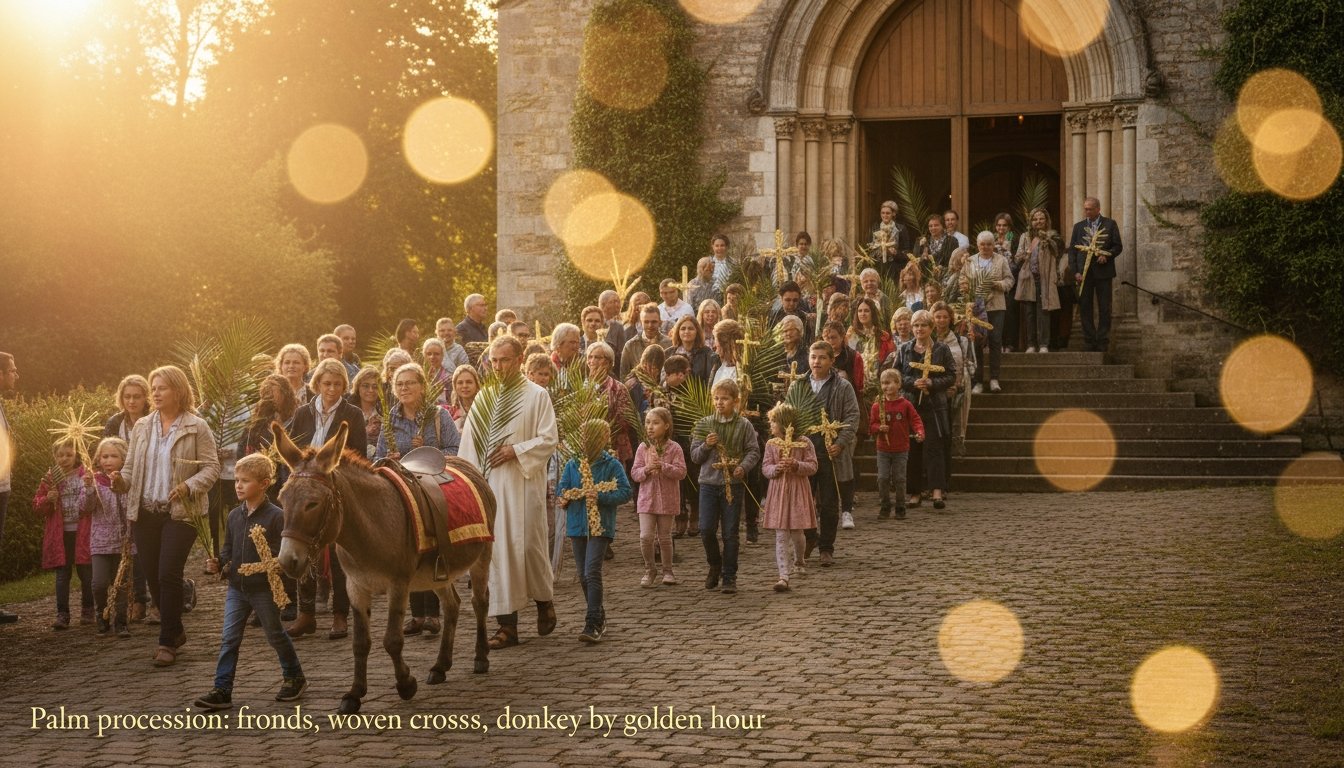
Observing Palm Sunday reminds us of Jesus’s sacrifice and the promise of eternal life. Churches often distribute blessed palm fronds, which are kept and used throughout the year. Some people weave the palms into crosses or other shapes.
Participating in Palm Sunday traditions helps deepen your faith and connect with the broader Christian community as you reflect on this pivotal moment in Jesus’s life and ministry.
The Symbolic Importance of Palm Branches and the Triumphal Entry
The palm branches carried by the crowd during Jesus’ triumphal entry into Jerusalem symbolized victory, joy, and celebration. This symbolic gesture welcomed Jesus as the Messianic King, the long-awaited Savior.
Explore how the triumphal entry and palm branches reveal the deeper meaning behind this pivotal event in the life of Jesus.
Palm Branches and Symbolism
Palm branches hold deep symbolic significance in the Christian faith, particularly during the triumphal entry of Jesus into Jerusalem on Palm Sunday. These green, leafy branches represent victory, triumph, and salvation. They were strewn before Jesus as he rode a donkey, fulfilling the prophecy of the Messiah’s arrival. This humble procession contrasted with earthly notions of power, showcasing Jesus’ kingdom as one not of this world.
Today, worshippers often wave palm branches or hold them aloft, reenacting the joyous welcome given to Christ. This symbolic act reminds us of the hope and promise embodied in Jesus’ journey to the cross and his ultimate triumph over sin and death.
Triumphal Entry Significance
Why did the people welcome Jesus with palm branches during his triumphal entry into Jerusalem? They recognized him as the promised Messiah, the king who’d establish God’s kingdom. Waving palm branches was a traditional symbol of celebration and victory. By laying them on the ground, the people honored Jesus as a conquering hero. This triumphal entry foreshadowed Jesus’ ultimate victory over sin and death through his death on the cross and resurrection. The people’s joyful welcome pointed to the eternal reign of the Messiah, whose kingdom would have no end. Though the crowd soon turned against Jesus, the triumphal entry remains a powerful symbol of Christ’s identity and mission.
Traditional Palm Sunday Celebrations and Rituals
Although Palm Sunday commemorates Jesus’ triumphal entry into Jerusalem, many traditional celebrations and rituals have emerged over the centuries. You’ll often see worshippers waving palm branches, a symbolic gesture recalling the palm branches laid before Jesus as he rode into the city. Some churches distribute blessed palm fronds to their congregants, which they may take home and display. Another common ritual is the burning of last year’s palm fronds to produce the ashes used on Ash Wednesday. These traditions help Christians connect with the biblical event and its enduring significance. Ultimately, Palm Sunday rituals reinforce the hope and joy of Christ’s triumphant arrival, even as they point toward the somber events of Holy Week to come.
How Palm Sunday Connects to the Passion of Christ
How exactly does Palm Sunday connect to the Passion of Christ? Palm Sunday marks Jesus’ triumphant entry into Jerusalem, where he was hailed as the Messiah. Yet, this celebration would soon turn to sorrow as the same crowds who welcomed him would later call for his crucifixion. Jesus knew his death was imminent, and his journey to Jerusalem set the stage for his Passion. His entry symbolized the beginning of Holy Week, the final days leading up to his death and resurrection. Through the waving of palm branches and shouts of “Hosanna!”, Palm Sunday foreshadows the Passion and serves as a poignant reminder of the price Jesus paid to save humanity.
Exploring the Theological Significance of Jesus’ Entry Into Jerusalem
What’s the theological significance behind Jesus’ triumphant entry into Jerusalem on Palm Sunday? This pivotal moment marks the start of Holy Week, the final days leading to Christ’s crucifixion and resurrection. Jesus’ procession into the city, hailed as the Messiah, foreshadows His role as the promised King who’ll establish God’s eternal kingdom. The crowds’ adoration and the waving of palm branches symbolize Jesus’ rightful claim to the throne.
Yet, His journey leads not to an earthly crown, but to a crown of thorns – a reminder that His kingdom transcends human expectations. This bittersweet entrance underscores the paradox of Christ’s mission: to save humanity through self-sacrifice. Ultimately, Jesus’ entry into Jerusalem signifies His willing obedience to the Father’s plan, paving the way for His redemptive work on the cross.
Celebrating and Reflecting on the Meaning of Palm Sunday Today
Palm Sunday is a time to celebrate Jesus’ triumphant entry into Jerusalem. Reflect on the symbolic meaning of the palms and how these traditions continue today.
Consider how the significance of Palm Sunday remains relevant in your life and faith.
Significance of Palms
Why do the palms hold such profound significance on this holy day? Waving palm branches was a common way to welcome important figures in ancient times. When the crowds greeted Jesus as he entered Jerusalem, they were honoring him as the Messianic King, the long-awaited Savior. The palms symbolize Christ’s triumphal entry and the people’s joyful recognition of him.
Today, palms remind us of Jesus’ humble yet regal nature and the crowds’ hopeful yet fleeting adoration. As you hold the palms, let them inspire your own devotion to the King of kings, who willingly went to the cross to secure your salvation.
Traditions and Customs
How do Christians around the world celebrate and reflect on the meaning of Palm Sunday today? Many churches have Palm Sunday processions, with worshippers waving palm branches and singing hymns to reenact Jesus’ triumphal entry into Jerusalem. Some decorate their churches with palms, while others distribute palm crosses. Families may gather for special meals, and children often make palm crosses. Christians may also reflect on the significance of Jesus’ journey to the cross and the hope of resurrection. Though customs vary, the day invites all to remember Christ’s humble yet powerful arrival and to prepare their hearts for the sacred days ahead.
Relevance Today
Though the customs and traditions of Palm Sunday have evolved over the centuries, the core meaning remains profoundly relevant for Christians today. You can still connect with the joy and awe of welcoming Jesus as the Messianic King. By reflecting on His humble entry into Jerusalem, you’re reminded to surrender your heart to Him. The palm branches symbolize your willingness to worship and follow Christ, no matter the cost. And the somber realization that the crowds’ praise soon turned to cries for crucifixion challenges you to steadfastly stand by your faith, even in the face of adversity. Palm Sunday calls you to celebrate Christ’s kingship and prepare your soul for the profound sacrifice of Good Friday.
Frequently Asked Questions
What Is the Significance of the Donkey in the Palm Sunday Story?
The donkey in the Palm Sunday story symbolizes Jesus’ humility and lowly status as he entered Jerusalem, fulfilling the prophecy of the Messiah arriving on a donkey. It contrasts with the pomp and circumstance typically associated with a king, emphasizing Jesus’ identity as a servant-king who came to humbly serve and save the people.
How Do Churches Distribute Blessed Palm Branches on Palm Sunday?
On Palm Sunday, churches distribute blessed palm branches to congregants. The palms are typically woven into crosses or other shapes, and are handed out as people enter the church.
The palms commemorate Jesus’ triumphal entry into Jerusalem, when people waved palm branches to welcome him.
Taking the blessed palms home is a tradition, and they’re often kept throughout the year as a symbol of faith.
Why Is the Color Purple Associated With Palm Sunday?
The color purple is associated with Palm Sunday because it symbolizes royalty and penitence. This color is used to represent Jesus’ kingship as the Messiah and the solemnity of the day, which marks the beginning of Holy Week and the path to His crucifixion. The purple hues remind believers of Christ’s suffering and the need for repentance during this sacred time.
What Is the Meaning Behind the Waving of Palm Branches?
The waving of palm branches symbolizes Jesus’ triumphal entry into Jerusalem before his crucifixion. It represents the people’s celebration and recognition of him as the Messiah.
The palms were laid down as a sign of honor and respect, welcoming him as a king. This tradition continues today, reminding Christians of Jesus’ sacrifice and the hope of his resurrection.
How Does Palm Sunday Connect to the Last Supper and Good Friday?
Palm Sunday marks Jesus’ triumphant entry into Jerusalem, just days before His Last Supper and crucifixion on Good Friday. The waving of palm branches symbolizes His kingship and the people’s joyful welcome. This foreshadows the coming events – the Last Supper, where Jesus institutes the Eucharist, and His sacrificial death on the cross, which redeems humanity.
Conclusion
You’ve contemplated the meaning and significance of Palm Sunday. You’ve explored the symbolic importance of the palm branches and Jesus’ triumphal entry. You’ve learned about the traditional celebrations and rituals. Now, you can connect Palm Sunday to the broader story of Christ’s passion and reflect on its deep theological significance. As you celebrate this holy day, may it deepen your faith and draw you closer to the one who entered Jerusalem to offer himself for your salvation.











No Comments