

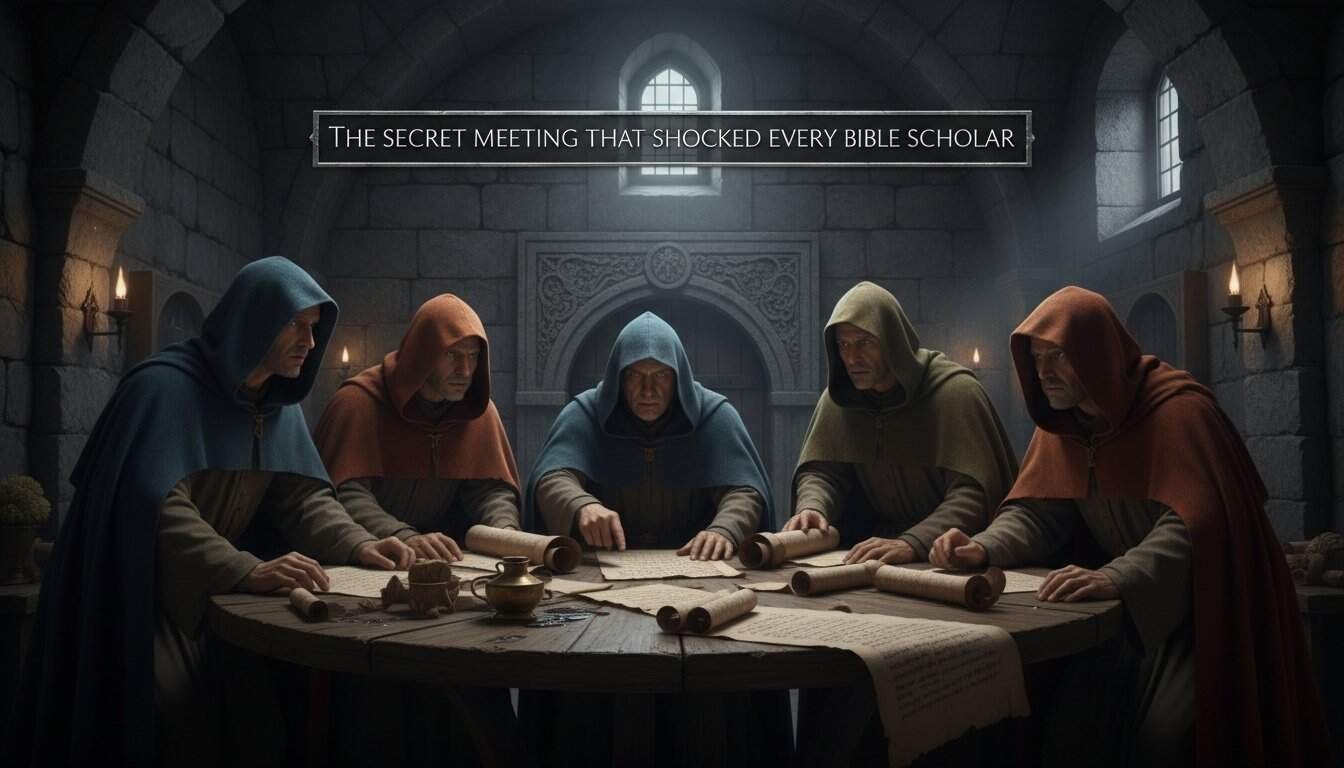
07 Feb The Secret Meeting That Shocked Every Bible Scholar
You’re likely thinking of Morton Smith’s 1960 Society of Biblical Literature announcement, where he revealed discovering fragments of a “Secret Gospel of Mark” at Mar Saba monastery. This purported 18th-century manuscript contained letters from Clement of Alexandria describing Jesus conducting nocturnal initiation rituals with disciples wearing linen garments. Smith’s claims about secret Christian mysteries ignited fierce scholarly debate over authenticity versus forgery that continues today, fundamentally challenging how biblical scholars approach manuscript authentication and transforming methodological standards across the discipline.
Table of Contents
Key Takeaways
- Morton Smith announced his discovery of Secret Mark at the 1960 Society of Biblical Literature meeting, shocking attendees.
- The manuscript revealed Jesus conducting nocturnal initiation rituals with disciples wearing only linen garments over naked bodies.
- Secret Mark described mystery religion practices and esoteric teachings previously unknown in early Christian literature.
- Smith’s announcement divided scholars into camps believing the text was either authentic ancient scripture or modern forgery.
- The discovery forced biblical scholars to reexamine authentication methods and manuscript provenance standards across the entire field.
Morton Smith’s Controversial Secret Gospel of Mark Discovery
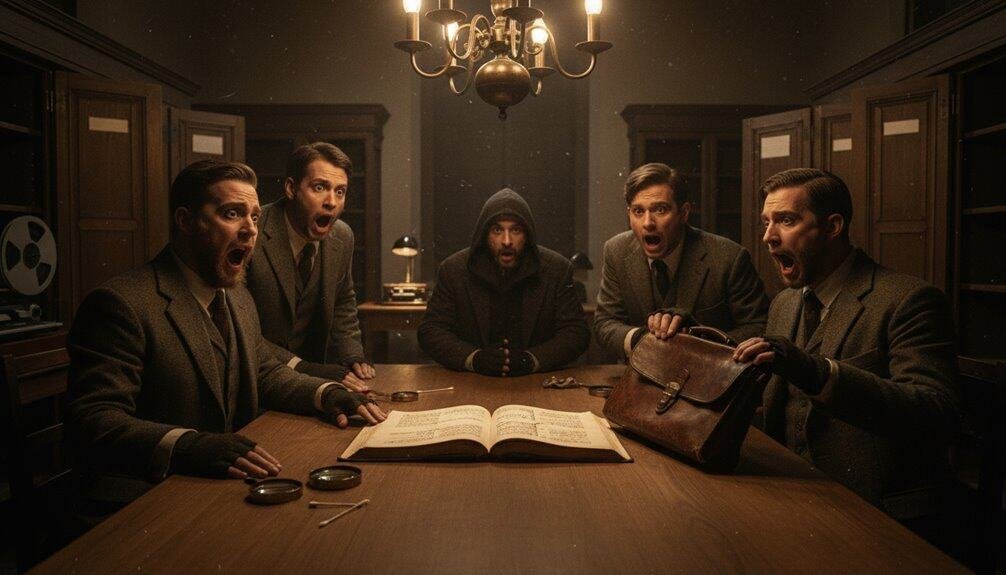
How does a single manuscript discovery fundamentally challenge two millennia of biblical scholarship? You’ll find the answer in Morton Smith’s 1958 discovery at Mar Saba monastery, where he uncovered what appeared to be a letter from Clement of Alexandria describing a secret version of Mark’s Gospel.
During his three-week research period, you’d witness Smith photographing an 18th-century manuscript copied onto blank pages of a 17th-century Ignatius volume. The contradictory dating immediately raised questions—an ancient Clement letter preserved in relatively modern handwriting.
When Smith announced his findings at the 1960 Society of Biblical Literature meeting, you’d observe the academic world’s stunned reaction. The manuscript described mystical initiation rituals involving Jesus, fundamentally challenging canonical interpretations. According to the letter, the secret Gospel was kept in Alexandria church and read only to those undergoing initiation into higher mysteries.

However, manuscript integrity became central to debates when the original vanished after 1990. You’re left examining only photographs, unable to conduct crucial ink analysis that could resolve authenticity questions surrounding this controversial discovery.
What the Secret Mark Fragments Say About Jesus’s Rituals
When you examine the Secret Mark fragments, you’ll encounter a narrative sequence that fundamentally reframes Jesus’s ministry through ritualistic initiation practices. The text describes nocturnal ceremonies where Jesus teaches “the mystery of the Kingdom of God” to chosen disciples wearing ritual linen garments over naked bodies—attire paralleling Levitical priestly installations.
You’ll notice the youth’s sindona garment directly echoes Leviticus 16:4 high priest vestments, suggesting ancient rites adapted for Christian initiation. The overnight teaching sessions between Mark 10:34-35 represent transformative experiences involving mystical union with Jesus’s spirit and ascent to heavenly realms.
These two word discussion ideas—baptismal initiation and priestly installation—converge in Secret Mark’s portrayal of Jesus as mystery religion magus. The fragments reveal systematic ritual practices where disciples transcend Mosaic Law constraints through hallucinatory experiences, fundamentally challenging conventional Gospel interpretations and suggesting Alexandrian ceremonial influences on early Christianity. The timing follows a distinctive six-day frame that mirrors ancient ordination protocols found throughout Tanakh ritual sequences.
The Case for and Against Secret Gospel Forgery
Where does scholarly consensus actually stand on the Secret Gospel’s authenticity after decades of heated academic debate? You’ll find the field remains deeply divided, with compelling evidence supporting both sides of this speculative controversy.

Authenticity proponents cite handwriting analysis revealing genuine 18th-century Greek script and textual instability patterns consistent with ancient manuscript transmission. Clement scholars haven’t universally accepted forgery claims, while mystical interpretation frameworks position the text within documented early Christian initiation practices.
Handwriting analysis and textual patterns support authenticity claims despite ongoing scholarly resistance to forgery arguments.
Forgery theorists point to suspicious manuscript provenance—the document’s disappearance into Jerusalem’s Greek Orthodox Patriarchate library prevents independent verification. Prominent academics like Ehrman and Evans advance powerful forgery arguments, noting the text’s derivative relationship to canonical gospels and lack of independent attestation.
Key evidentiary disputes center on handwriting expert disagreements and paleographic assessment challenges. Stephen Carlson’s “forger’s tremor” analysis initially supported forgery claims but faces methodological critiques, illustrating how forensic standards complicate authentication efforts.
How the Secret Mark Debate Shaped Biblical Scholarship
Why has a single disputed manuscript fragment generated more methodological soul-searching within biblical scholarship than perhaps any discovery since the Dead Sea Scrolls? You’ll find the Secret Mark controversy fundamentally transformed how scholars approach manuscript provenance and textual authentication.
The debate exposed critical weaknesses in traditional paleographic methods. When handwriting experts couldn’t definitively resolve disputed authorship, you witnessed biblical scholarship grappling with its evidentiary standards. Smith’s discovery forced scholars to develop more rigorous protocols for evaluating manuscript authenticity.
You’ll notice how the controversy split the field along methodological lines. Brown’s monograph demonstrated sophisticated literary analysis supporting authenticity, while Carlson’s forensic approach suggested forgery. This methodological pluralism became Secret Mark’s lasting legacy.
The debate accelerated digital humanities adoption in biblical studies. You’re now seeing enhanced imaging techniques, computational textual analysis, and interdisciplinary collaboration becoming standard practice. Secret Mark didn’t just challenge one text’s authenticity—it revolutionized how scholars authenticate ancient manuscripts.
Frequently Asked Questions
What Was the Eranus Club and How Did It Influence Bible Translation?
You’ll find the Eranus Club remains historically obscure, with only fragmentary evidence showing Westcott founded it in 1872. Your discovery methods will encounter significant gaps in documentation regarding its membership and activities. The club’s influence on Bible translation can’t be substantively verified through rigorous methodology. You’ll need to examine manuscript ethics carefully, as sensationalized claims about secret meetings lack textual analysis support from primary sources.
Why Did Westcott Threaten to Quit Over Including Vance Smith?
Westcott threatened resignation because he’d built his entire revision strategy around maintaining control over textual decisions. His Westcott influence depended on keeping allies like Smith who’d support departures from traditional readings. Through Hort collaboration, they’d already invested heavily in promoting their Greek text manuscript preferences.
Removing Smith would’ve undermined their theological agenda and potentially exposed their coordinated efforts to reshape biblical translation away from received texts.
What Specific Occult Practices Were Members of the Secret Society Involved In?
You’ll find that secret societies like the Golden Dawn engaged in numerous occult practices including alchemy, astral travel, and ceremonial conjuration. Members studied Kabbalistic texts extensively, performed scrying and geomantic divination, and conducted spirit communication rituals. They interpreted Tarot cards ceremonially, explored Hermetic traditions, and sought gnosis through esoteric knowledge systems. These practices directly contradicted biblical prohibitions against necromancy, soothsaying, and familiar spirit consultation found throughout scripture.
How Did Quesnell’s Secret 1983 Visit Impact the Forgery Investigation?
Quesnell’s visit fundamentally transformed the forgery investigation by providing crucial high-quality color photographs that became the primary evidence base for subsequent scholarly analysis.
You’ll find his covert examination produced the definitive visual documentation scholars still reference today, since the manuscript disappeared after 1983.
His secrecy paradoxically advanced the investigation he’d initially criticized, though it prevented direct scientific testing that could’ve resolved authenticity questions definitively.
What Evidence Links the Westcott-Hort Text to Spiritualism and Secret Societies?
You’ll find allegations linking Westcott Hort to spiritualism through their founding of Cambridge’s Ghostly Guild, which allegedly pursued spirit encounters and evolved into the Society for Psychical Research. Critics cite Westcott’s “Communion of Saints” practices and Hort’s reliance on “inner consciousness” for textual decisions. However, defenders argue these secret societies claims lack substantive evidence, emphasizing their orthodox theological affirmations regarding text transmission methodology.
Conclusion
You’ve witnessed how Morton Smith’s Secret Mark discovery fundamentally challenged biblical scholarship’s methodological foundations. Whether you accept the fragments as authentic or dismiss them as sophisticated forgery, you can’t ignore their transformative impact on textual criticism. The controversy forced scholars to develop more rigorous authentication protocols and reassess assumptions about early Christian practices. Smith’s claims remain unresolved, but they’ve permanently altered how you approach ancient manuscript evaluation and scholarly verification processes.









No Comments