

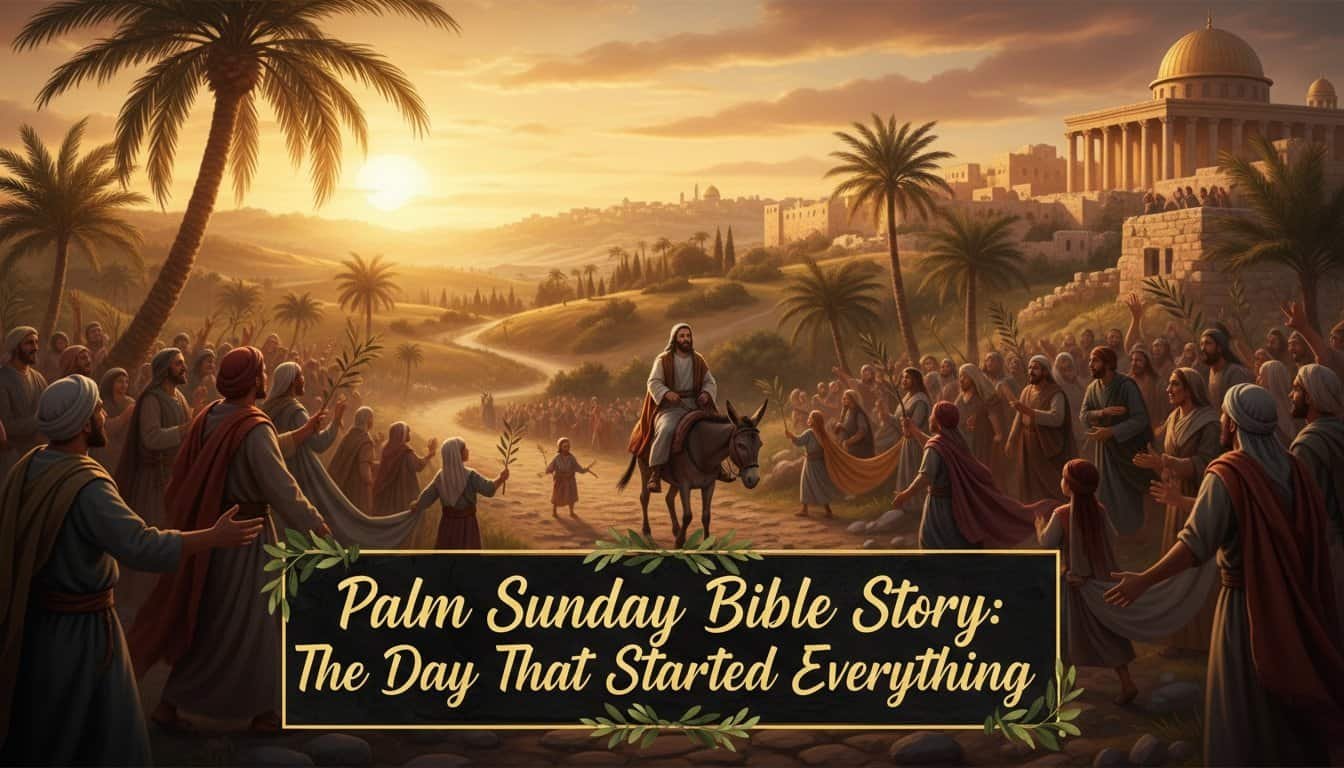
28 Jan Palm Sunday Bible Story: The Day That Started Everything
You’re witnessing Jesus’s deliberate fulfillment of Zechariah’s prophecy as He rides a donkey into Jerusalem, claiming His messianic identity before cheering crowds shouting “Hosanna.” While the people expected a political deliverer to overthrow Rome, Jesus demonstrated humble kingship that subverted earthly power. This royal entry forced a confrontation with religious authorities who perceived His claims as threatening their control. What began with triumphant praise would culminate in crucifixion within five days, revealing the profound theological tensions this moment unleashed.
Table of Contents
Key Takeaways
- Jesus deliberately rode a donkey into Jerusalem, fulfilling Zechariah’s ancient prophecy about the Messiah’s humble arrival.
- Crowds shouted “Hosanna” and praised Jesus as king, expecting a political deliverer to overthrow Roman rule.
- The public messianic demonstration forced a direct confrontation with religious authorities who felt threatened.
- Jesus subverted expectations by modeling servant leadership rather than displaying conquering military power.
- This royal entry set in motion the events leading to crucifixion within the same week.
What Palm Sunday Means: Jesus’s Royal Entry Into Jerusalem
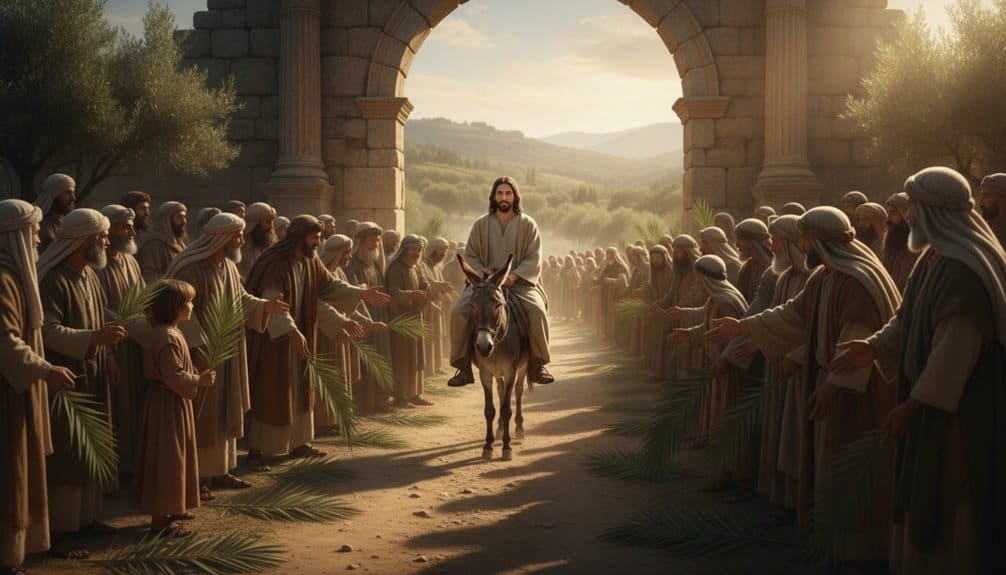
Why does this particular Sunday carry such profound significance in Christian tradition? You’re witnessing the fulfillment of Zechariah’s prophecy as Jesus deliberately enters Jerusalem on a donkey, presenting himself as Israel’s promised king. This isn’t mere symbolism—it’s a calculated messianic claim that transforms everything.
You’ll notice the crowd’s response reveals deep theological tension. They shout “Hosanna,” meaning “save now,” spreading cloaks and palm branches in royal recognition. Yet within days, these same voices will cry “Crucify him!” This paradox illustrates humanity’s fickle nature and God’s sovereign plan.
For preacher prompts, consider exploring the contrast between earthly and heavenly kingship. Jesus’s humble entrance subverts Roman imperial pageantry, establishing his kingdom through service rather than conquest.
Worship ideas might include processional elements that reenact the crowd’s celebration while acknowledging the coming passion. You’re experiencing the pivotal moment when Jesus publicly accepts his messianic identity, knowing it leads directly to Calvary.
The Prophecies That Came True on Palm Sunday
How precisely did ancient prophecies align with Christ’s triumphal entry? Zechariah 9:9 foretold the Messiah’s arrival: “Rejoice greatly, Daughter Zion! See, your king comes to you, righteous and victorious, lowly and riding on a donkey.” Jesus’s deliberate choice of a donkey fulfilled this prophecy fulfillment with stunning accuracy.
You’ll notice the crowds’ response reflected deep Messianic expectations. Their “Hosanna” cries echoed Psalm 118:26: “Blessed is he who comes in the name of the Lord.” This wasn’t coincidental—they recognized prophetic significance unfolding before them.
The timing itself was prophetic. Daniel’s seventy weeks pointed to this moment when the Messiah would be “cut off.” Jesus entered Jerusalem during Passover, when the nation gathered expecting deliverance.
Multiple prophecies converged: the King’s humble arrival, the people’s praise, and the precise timing. You’re witnessing how God orchestrated centuries of prophetic promises into one extraordinary day that would reshape human history forever.
What the Crowds Expected vs. What Jesus Delivered
The crowds who welcomed Jesus that day carried centuries of pent-up longing for a political deliverer who’d shatter Roman oppression and restore Israel’s earthly kingdom. Their crowds expectations centered on a conquering Messiah who’d wield military might, overthrow foreign rulers, and establish Israel’s dominance. They envisioned liberation through force, prosperity through power, and victory through violence.
Yet Jesus embodied a profound paradox that subverted every assumption. He rode a humble donkey, not a warhorse. He spoke of service, not supremacy. His kingdom operated through sacrifice, not sword. You see Jesus’ paradox unfolding as the week progressed—instead of crushing enemies, he’d embrace suffering. Rather than claiming a throne, he’d accept a cross.
The crowds’ enthusiastic “Hosanna!” would transform into “Crucify him!” when they realized he wouldn’t fulfill their earthly expectations. Jesus delivered something infinitely greater than political freedom—he offered spiritual redemption that transcends temporal kingdoms.
How Palm Sunday Led Directly to the Cross
What seemed like Jesus’ greatest moment of public acclaim actually sealed his fate with the religious establishment. You’ll notice that Palm Sunday’s royal demonstration forced the Pharisees and Sadducees into immediate action. They couldn’t ignore Jesus’ messianic claims any longer.
The crowds’ declarations of “Hosanna to the Son of David” weren’t just enthusiastic praise—they were politically charged statements that threatened both religious and Roman authority. Jesus’ deliberate fulfillment of Zechariah’s prophecy created an unmistakable messianic declaration that demanded response.
This public coronation raised urgent reconciliation questions for Jerusalem’s leaders: How could they maintain their authority when thousands proclaimed another king? Jesus’ entry demonstrated his commitment to fulfilling covenant promises, but not through military conquest as expected.
The religious elite recognized that Jesus’ growing influence threatened their power structure. Within days, they’d orchestrate his crucifixion, believing they were protecting their nation while unknowingly fulfilling God’s redemptive plan.
Frequently Asked Questions
What Type of Palm Branches Did People Lay Down for Jesus?
You’ll find the Gospel accounts don’t specify the exact palm species, but they were likely date palm fronds (Phoenix dactylifera) common in Jerusalem’s region. The palm symbolism represented victory, triumph, and righteousness in Jewish culture. When you examine the crowd dynamics, people spontaneously grabbed available branches, creating a royal carpet. This wasn’t orchestrated—it reflected genuine messianic expectation as Jesus entered David’s city during Passover season.
How Many People Were in the Crowd During Jesus’s Entry?
The Gospels don’t specify exact crowd size numbers for Jesus’s triumphal entry. You’ll find references to “multitudes,” “great crowd,” and “whole city” being stirred, suggesting thousands participated.
Matthew mentions crowds going before and following Jesus.
The donkey symbolism was crucial—you’re witnessing messianic fulfillment of Zechariah’s prophecy, where Israel’s king arrives humbly, not as conquering warrior, distinguishing Jesus’s kingdom from earthly expectations.
Why Did Jesus Choose to Ride a Donkey Instead of Walking?
You’ll find Jesus chose the donkey for its profound donkey symbolism—fulfilling Zechariah’s messianic prophecy about a humble king arriving peacefully, not militaristically on a warhorse. This deliberate choice shaped audience reception, communicating his spiritual kingship rather than political revolution. The donkey embodied humility, peace, and servanthood, distinguishing Christ’s mission from earthly expectations while declaring his divine authority through prophetic fulfillment.
What Happened to the Donkey After Jesus’s Triumphant Entry?
The donkey’s fate isn’t recorded in Scripture after Jesus’s triumphant entry. You’ll find the Gospel accounts focus on Jesus’s subsequent temple activities rather than the animal’s whereabouts. This silence reflects ancient palm customs where borrowed animals were typically returned to owners after ceremonial use. The donkey fulfilled its prophetic purpose in Zechariah 9:9, symbolizing messianic humility rather than maintaining narrative significance beyond that theological moment.
Did Jesus Celebrate Palm Sunday in Previous Years Before This Event?
No, this was Jesus’s unique, one-time triumphant entry. You’ll find no Gospel evidence that Jesus and disciples previously celebrated Palm Sunday, as this specific event fulfilled distinct Messianic prophecies.
The palm sunday symbolism wasn’t an annual tradition but represented Jesus’s deliberate revelation of His kingship. This moment marked His intentional, public claim to Messiahship before His passion week, making it unrepeatable and historically singular in salvation history.
Conclusion
You’ve witnessed prophecy fulfilled as Christ entered Jerusalem—not as the conquering king crowds expected, but as the suffering servant Isaiah foretold. The same hosannas that welcomed Him would turn to crucifixion cries within days. This wasn’t contradiction but divine design. Palm Sunday reveals God’s kingdom operates through sacrifice, not force. When you celebrate this day, you’re remembering the moment Jesus chose the cross over earthly crown—choosing you over His own life.







No Comments