

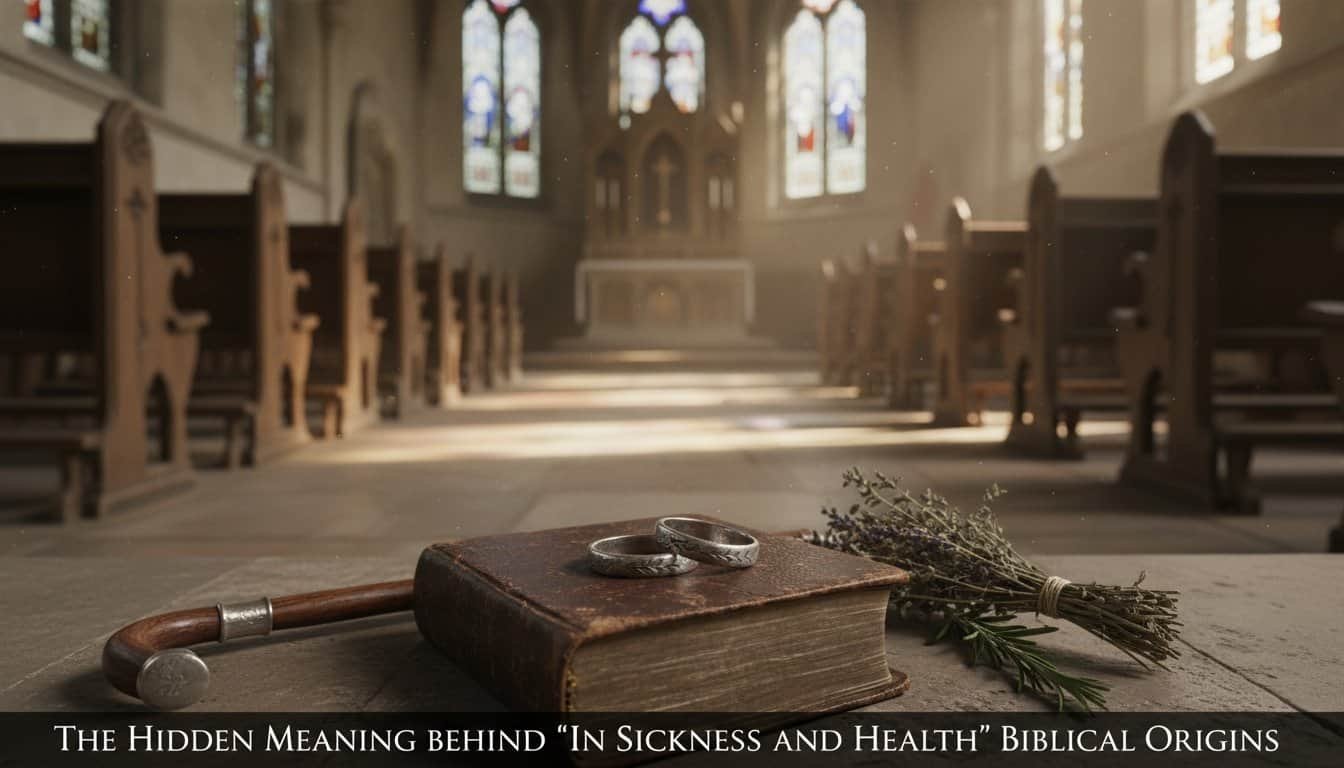
28 Jan The Hidden Meaning Behind “In Sickness and Health” Biblical Origins
Disclosure: Some of the links on this website are affiliate links. If you click a link and make a purchase, the Website Operator may earn a small commission at no extra cost to you.
Table of Contents
You’re hearing ancient Hebrew covenant language when you encounter “in sickness and in health” during weddings, though this exact phrase doesn’t appear in Scripture. The 1662 Book of Common Prayer crafted these words by weaving together biblical concepts like *hesed* (steadfast love) from Psalms and Christ’s unconditional commitment to the church in Ephesians 5:25-33. The “health” referenced encompasses spiritual, emotional, and relational wholeness—not just physical wellness—reflecting God’s faithful covenant love that transcends circumstances. Understanding these deeper theological foundations reveals how your wedding vows connect to millennia of divine relationship patterns.
Key Takeaways
- The phrase doesn’t appear verbatim in Scripture but originates from the 1662 Anglican Book of Common Prayer.
- Biblical covenant theology, particularly Hebrew hesed (steadfast love), provides the theological foundation for these marriage vows.
- Ephesians 5:25-33 links marital commitment to Christ’s unwavering faithfulness toward the church through all circumstances.
- Biblical “health” encompasses spiritual vitality, emotional wholeness, and relational harmony beyond mere physical well-being.
- The vow reflects divine covenant faithfulness, calling spouses to mirror God’s unchanging love during seasons of struggle.
Where “In Sickness and In Health” Actually Comes From

Where does this solemn wedding vow actually originate, and does it truly stem from biblical scripture? You’ll discover that “in sickness and in health” doesn’t appear verbatim in biblical text. Instead, this phrase emerged from the 1662 Book of Common Prayer, crafted by Anglican liturgists who drew inspiration from biblical covenant theology.
The vow’s theological foundation rests in passages like Ephesians 5:25-33, where Paul describes marriage as reflecting Christ’s unwavering commitment to the church. When you examine the Hebrew concept of *hesed* (steadfast love) and the Greek *agape* (unconditional love), you’ll understand how these biblical principles shaped liturgical language.

The phrase “in sickness” and “in health” mirrors the divine covenant’s permanence—God’s faithfulness transcends circumstances. You’re witnessing how Anglican reformers translated scriptural marriage theology into accessible vows. While not directly biblical, these words embody covenantal love’s essence, reflecting divine commitment patterns throughout scripture.
The Biblical Scriptures Behind Modern Wedding Vows
Though modern wedding ceremonies feature vows that sound distinctly biblical, you’ll find their scriptural foundations span both testaments through carefully woven theological principles rather than direct quotations.
Genesis 2:24’s “one flesh” concept establishes marriage’s covenantal nature, while Ruth’s declaration to Naomi in Ruth 1:16-17 provides linguistic precedent for unconditional commitment. The Hebrew term *hesed*, meaning steadfast love, appears throughout Psalms and prophetic literature, emphasizing trustworthy commitment between covenant partners.
Biblical marriage foundations emerge from Genesis’s “one flesh” unity and Ruth’s unwavering loyalty, unified through *hesed*—the Hebrew concept of covenant faithfulness.
New Testament passages deepen these foundations. Ephesians 5:25-33 parallels marital love with Christ’s sacrificial devotion to the church, establishing theological justification for enduring fidelity. First Corinthians 13:4-8‘s description of love’s persistence through trials directly influences “in sickness and health” phraseology.
These scriptural threads weren’t randomly assembled. Medieval liturgists deliberately synthesized biblical themes of covenant faithfulness, sacrificial love, and permanent union to create vows reflecting divine-human relationship patterns. Your modern vows echo centuries of exegetical development, transforming scattered biblical principles into cohesive liturgical expression.

How “In Sickness and In Health” Reflects Divine Covenant Love
Your devotional reading reveals how covenant symbolism permeates biblical relationships. In Hosea’s marriage to Gomer, God illustrates His unwavering commitment to Israel despite their unfaithfulness.
Similarly, Ruth’s declaration to Naomi—”where you go I’ll go”—exemplifies covenant love that endures through adversity.
The marriage covenant reflects the *brit* between God and His people, characterized by steadfast love (*hesed*) and faithfulness (*emet*). When illness strikes, you’re called to embody divine love that doesn’t waver based on changing circumstances.
This covenant symbolism transforms your marriage vow from mere human promise into sacred *brit*—mirroring God’s eternal commitment to His covenant people through every season of blessing and trial.
Why This Biblical Phrase Means More Than Physical Health
How does Scripture’s understanding of health transcend the physical realm to encompass the totality of human flourishing?
When you examine the biblical conception of wellness, you’ll discover it encompasses spiritual vitality, emotional wholeness, and relational harmony. The Hebrew concept of *shalom* represents complete peace—not merely absence of disease, but flourishing in every dimension of existence.
Your marriage vows reflect this comprehensive understanding. “In sickness and in health” doesn’t merely address physical ailments but encompasses seasons of spiritual drought, emotional turmoil, and relational strain. Scripture demonstrates that true health involves your soul’s alignment with God’s purposes.
True health transcends physical wellness—it encompasses the soul’s complete alignment with God’s divine purposes for flourishing.
This covenant language transforms your motivation from obligation to inspiration. You’re called to demonstrate spiritual fidelity during your spouse’s struggles with depression, doubt, or discouragement—not just physical illness. Biblical health includes mental clarity, emotional stability, and spiritual vibrancy.
When you embrace this holistic perspective, you’ll understand that supporting your spouse’s complete well-being mirrors Christ’s comprehensive care for His bride, the church.
Frequently Asked Questions
When Did “In Sickness and in Health” First Appear in Wedding Ceremonies?
You’ll find “in sickness and in health” first appeared in Thomas Cranmer’s 1549 Book of Common Prayer during England’s Protestant Reformation. This pivotal moment in wedding traditions established standardized marriage vows across Anglican churches. Cranmer’s liturgical innovation drew from earlier medieval practices but codified the phrase’s biblical foundation in Ephesians 5:25-29, where husbands must love wives as Christ loves the church through all circumstances.
Do Other Religions Besides Christianity Use Similar Marriage Vows?
You’ll find similar commitment vows across diverse religious traditions. Judaism’s ketubah includes mutual care obligations, while Islamic nikah ceremonies emphasize spousal support through adversity. Hindu marriage rites invoke lifelong partnership through seven sacred steps. Buddhist ceremonies stress compassionate devotion regardless of circumstances. Even non religious spouses often incorporate these universal themes into secular vows, demonstrating humanity’s cross-cultural recognition that marriage requires unwavering dedication through life’s inevitable challenges.
What Happens if Spouses Can’t Fulfill This Vow Due to Circumstances?
When you face circumstances beyond your control that prevent fulfilling marriage vows, biblical scholars recognize vow flexibility within covenant relationships. You’re not bound by impossible standards when genuine illness impact creates insurmountable barriers. Scripture emphasizes grace and understanding—God doesn’t demand what you can’t provide. Your marriage covenant adapts through seasons of inability, maintaining its essence while acknowledging human limitations and divine compassion.
Are There Different Versions of This Phrase in Various Bible Translations?
You’ll find significant etymology differences across biblical translations regarding covenant language that parallels “in sickness and health.” Translation variants emerge from Hebrew *hesed* (steadfast love) and Greek *agape* (unconditional love) in passages like Ruth’s commitment and Christ’s sacrificial devotion. Each translation’s hermeneutical approach affects how covenant fidelity appears—whether emphasizing temporal endurance, spiritual permanence, or relational steadfastness through life’s circumstances.
How Do Divorced Christians Reconcile Breaking This Biblically-Inspired Promise?
You’ll find divorced Christians approach divorce reconciliation through careful covenant interpretation, distinguishing between ceremonial vows and biblical marriage theology. You’re examining how they differentiate human promises from divine ordinances, often citing Mosaic divorce provisions and Christ’s exception clauses. You’ll discover they reconcile through pastoral counseling, theological study, and community discernment, viewing broken vows as forgivable sin rather than permanent spiritual condemnation within redemptive grace.
Conclusion
You’ve discovered that “in sickness and in health” transcends mere physical ailments—it’s rooted in covenant theology that mirrors God’s hesed love. When you speak these words, you’re invoking the same unconditional faithfulness Scripture attributes to divine-human relationships. This isn’t simply about enduring illness; you’re committing to sacrificial love that remains constant through spiritual, emotional, and relational seasons. Your vow reflects Christ’s unwavering commitment to His bride, the church.









No Comments