

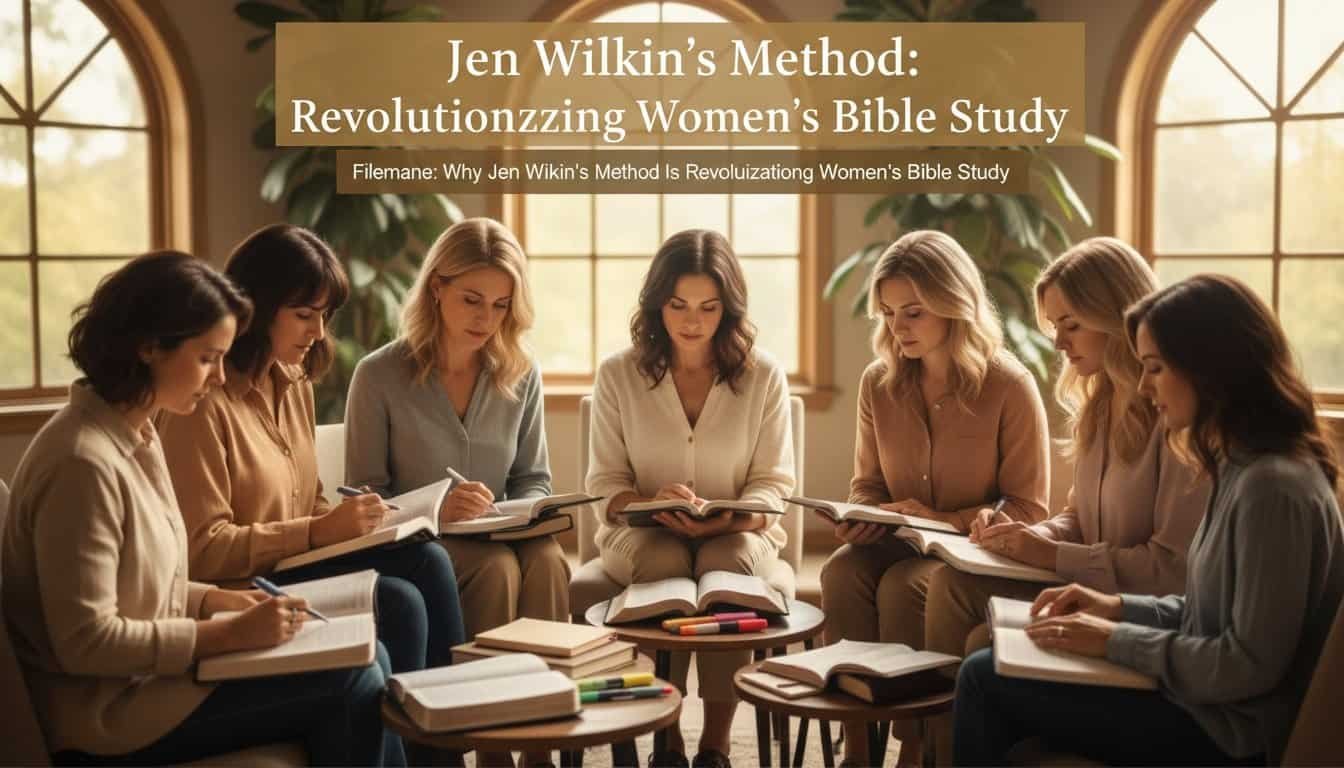
18 Jan Why Jen Wilkin’s Method Is Revolutionizing Women’s Bible Study
Jen Wilkin’s five-pillar method revolutionizes women’s Bible study by replacing shallow emotional applications with rigorous exegetical analysis. You’ll engage with historical-grammatical interpretation, prioritize authorial intent over personal feelings, and master systematic theology that traditional studies avoided. Her approach—comprehension, interpretation, application, correlation, and contemplation—transforms you from passive devotional reader into competent biblical interpreter. Women are rejecting patronizing feel-good spirituality for theological literacy that elevates their voice in church leadership, teaching roles, and doctrinal discussions where pastors now trust their scriptural discernment and exegetical competence.
Key Takeaways
- Wilkin’s five-pillar method prioritizes comprehension and interpretation before application, preventing shallow eisegesis common in traditional women’s studies.
- The approach emphasizes historical-grammatical exegesis and authorial intent rather than extracting verses from context for emotional comfort.
- Women are rejecting condescending assumptions about handling complex theology, demanding systematic doctrine over therapeutic spirituality.
- Theological competence transforms women’s voices from emotional reactions to substantive discourse within church communities and leadership roles.
- Rigorous biblical study produces deeper spiritual formation and ministry opportunities than devotionals focused on feelings and personal experiences.
What Was Wrong With Traditional Women’s Bible Study?

Why did countless women leave Bible study groups feeling spiritually malnourished despite their earnest participation?
Traditional women’s Bible studies often prioritized emotional connection over exegetical rigor, creating a pattern of shallow analysis that left participants spiritually stunted.
You’ve likely encountered studies that reduced Scripture to personal application without establishing textual meaning first.
These approaches emphasized feelings and life experiences while bypassing critical interpretive work.
Historical context received minimal attention, and systematic theology was virtually absent.
The doctrinal neglect became particularly evident when complex theological concepts were oversimplified or avoided entirely.
You’d discuss how a passage made you feel rather than what it actually taught about God’s character or redemptive plan.
This methodology inadvertently communicated that women couldn’t handle rigorous biblical scholarship.
The result? You gained temporary encouragement but missed transformative understanding.
Without solid exegetical foundations, spiritual growth remained superficial, leaving you hungry for deeper engagement with God’s Word that traditional formats simply couldn’t provide.
How Jen Wilkin’s Five-Pillar Method Works
How does Wilkin’s revolutionary approach transform superficial Bible study into rigorous theological engagement? Through her systematic five-pillar structure that prioritizes Scripture’s inherent authority over subjective interpretation.
You’ll encounter the first pillar—comprehension—which demands careful reading before rushing to application.
The second pillar establishes interpretation through historical-grammatical exegesis, examining original context and authorial intent.
Pillar three focuses on application, but only after thorough textual analysis prevents eisegesis.
The fourth pillar emphasizes correlation, connecting passages across Scripture’s unified narrative.
You’ll trace themes from Genesis to Revelation, understanding how texts illuminate each other within redemptive history.
Finally, contemplation forms the fifth pillar, where you reflect on God’s character revealed through rigorous study.
This pillar structure transforms your study from emotion-driven devotions into systematic theology.
Rather than asking “What does this mean to me?” you’ll ask “What does this reveal about God?”
The practical application emerges naturally from sound hermeneutics, grounding spiritual growth in biblical truth.
Why Women Are Choosing Serious Theology Over Feel-Good Devotionals
When did Christian women begin abandoning devotionals that promised quick emotional fixes in favor of demanding theological study? You’re witnessing a seismic shift in women’s Bible study culture, where surface-level inspiration yields to doctrinal rigor.
This movement reflects women’s growing hunger for scriptural literacy rather than therapeutic spirituality. You’re no longer satisfied with devotionals that extract verses from context to create feel-good moments. Instead, you’re demanding exegetical precision that honors the original authors’ intentions and historical circumstances.
Women are rejecting the condescending assumption that they can’t handle complex theology. You’re choosing systematic studies that require homework, memorization, and intellectual engagement. This isn’t anti-emotional; it’s recognizing that authentic spiritual growth emerges from understanding Scripture’s actual meaning.
You’re discovering that rigorous Bible study produces deeper, more sustainable spiritual formation than emotional manipulation. When you understand doctrine correctly, your feelings align with truth rather than driving your theology.
How Wilkin’s Approach Changed Women’s Confidence And Church Roles
The theological competence you’ve gained through rigorous biblical study naturally transforms your voice within church communities.
Deep biblical knowledge elevates your contributions from emotional reactions to substantive theological discourse that commands respect.
When you understand covenant theology, eschatology, and systematic doctrine, you contribute substantively to theological discussions rather than defaulting to emotional responses or personal anecdotes.
This confidence growth manifests in tangible ways: you ask deeper questions during sermons, engage pastoral staff on exegetical matters, and offer biblical perspectives in small group settings.
Your contributions carry weight because they’re grounded in careful textual analysis rather than subjective interpretation.
Churches are experiencing leadership shifts as women demonstrate theological literacy.
You’re increasingly invited to teach adult Sunday school classes, lead Bible studies that attract both genders, and serve on committees requiring scriptural discernment.
Pastors recognize your ability to handle complex theological concepts and trust your judgment on doctrinal matters.
This isn’t about usurping traditional roles but about maximizing your God-given intellectual capacity for kingdom advancement.
Frequently Asked Questions
What Specific Bible Study Materials Does Jen Wilkin Recommend for Beginners?
You’ll find Jen Wilkin recommends starting with her foundational study guides like “Women of the Word” and “None Like Him” as essential beginner resources.
She emphasizes you should master observation, interpretation, and application skills before tackling complex texts.
Her structured approach guides you through careful exegesis, ensuring you understand historical context and theological foundations rather than rushing into advanced doctrinal studies without proper hermeneutical groundwork.
How Long Does It Typically Take to Complete One of Wilkin’s Studies?
You’ll typically complete Wilkin’s studies in 8-12 weeks, depending on your chosen format.
Her duration expectations emphasize thorough biblical engagement rather than rushed completion.
Study pacing deliberately allows time for deep textual analysis, historical context examination, and theological reflection.
You can’t rush sound exegesis—Wilkin’s timeline ensures you’re wrestling with Scripture’s original meaning before application, maintaining scholarly rigor while building foundational biblical literacy skills.
Can Jen Wilkin’s Method Be Adapted for Mixed-Gender Bible Study Groups?
Yes, you can adapt Wilkin’s method for mixed-gender groups while maintaining its exegetical precision.
You’ll need to adjust gender dynamics by establishing clear leadership roles that honor biblical complementarian principles.
Her emphasis on theological rigor and historical context translates seamlessly across group compositions.
You’d modify discussion formats and accountability structures while preserving the method’s core commitment to systematic verse-by-verse study and inductive biblical analysis.
What Theological Training or Background Does Jen Wilkin Have?
You’ll find Wilkin’s theological foundation stems from formal academic credentials including seminary training, though she emphasizes practical application over institutional pedigree.
Her mentorship networks connect her with respected biblical scholars and theologians who’ve shaped her exegetical approach.
She’s developed rigorous hermeneutical methods through disciplined study of Scripture’s historical context, prioritizing textual accuracy and theological precision rather than experiential interpretation in her teaching methodology.
Are Jen Wilkin’s Bible Studies Suitable for New Christians or Non-Believers?
Wilkin’s studies excel in newcomer accessibility through systematic verse-by-verse exposition that doesn’t assume prior biblical knowledge.
You’ll find her methodology particularly effective for seekers because she emphasizes observation before interpretation, allowing Scripture to speak clearly.
Her gospel clarity emerges through careful attention to historical context and authorial intent, making complex theological concepts comprehensible.
You can confidently use her materials with non-believers seeking understanding.
Conclusion
You’ve witnessed how Wilkin’s exegetical framework dismantles the false dichotomy between accessible and rigorous Scripture study. Her method doesn’t simply critique traditional approaches—it reconstructs them through careful hermeneutics and theological precision. You’re part of a movement that’s reclaiming women’s intellectual capacity for biblical scholarship, moving beyond experiential interpretation toward textual authority. This isn’t trendy reformation; it’s theological maturation. You’re equipped now to approach Scripture with both reverence and rigorous methodology, transforming how you engage God’s Word permanently.











No Comments