

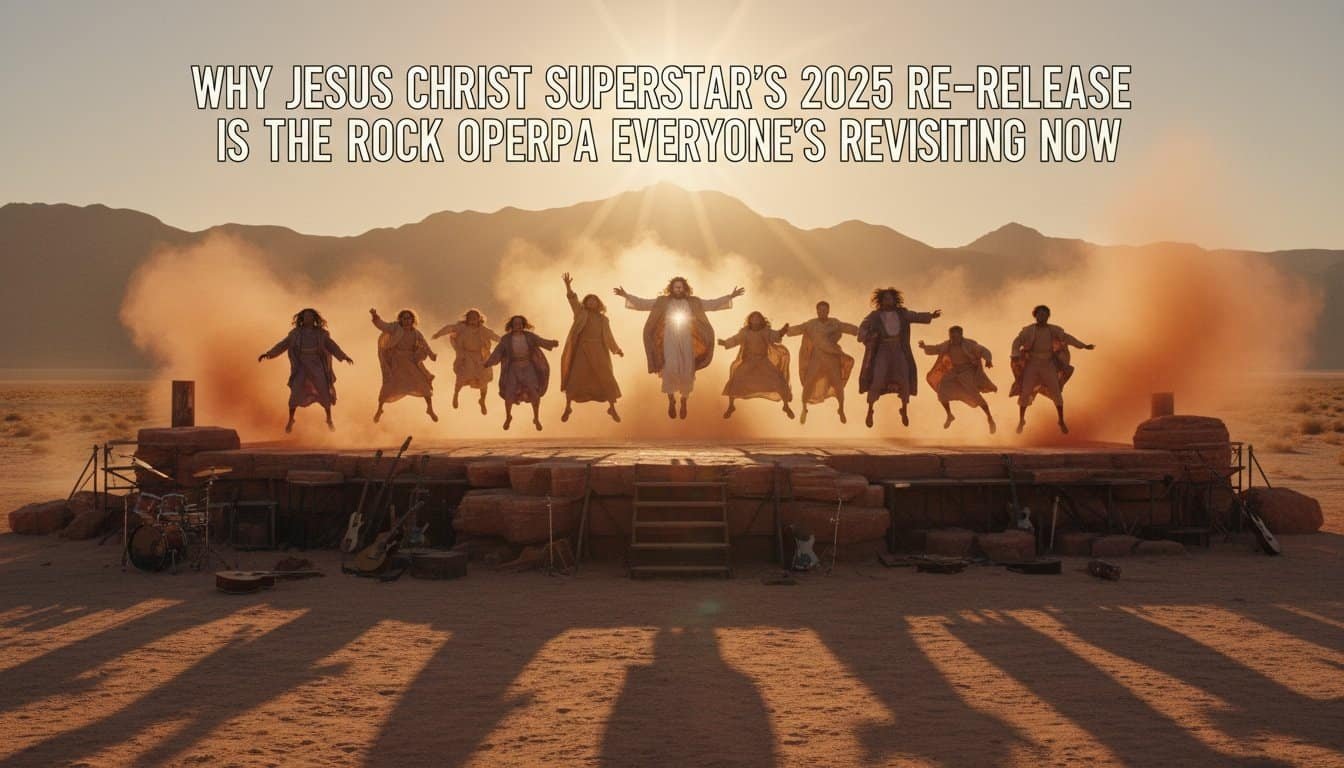
20 Dec Why Jesus Christ Superstar 2025 Re-Release Is the Rock Opera Everyone’s Revisiting Now
You’re seeing Jesus Christ Superstar’s 2025 revival dominate because it strategically combines star-powered casting like Cynthia Erivo with contemporary political resonance. The production’s concert-style presentation at venues like Hollywood Bowl leverages modern staging technology while reframing Lloyd Webber’s countercultural critique through today’s civil rights discourse. This calculated approach transforms the 54-year-old rock opera into urgent resistance theater that speaks directly to current cultural tensions and expands beyond traditional theater demographics through celebrity appeal and cross-platform distribution strategies.
Table of Contents
Key Takeaways
- Cynthia Erivo’s casting as a Black female Jesus reframes the original countercultural critique for contemporary social justice movements.
- Star-powered cast including Phillipa Soo, Josh Gad, and John Stamos expands audience demographics beyond traditional theater consumers.
- Modern staging depicts temple merchants selling controversial items, creating pointed parallels to current political and cultural tensions.
- Concert-style presentation at Hollywood Bowl with LED screens and rock-band energy makes the production accessible to mainstream audiences.
- Openly queer lead casting transforms the narrative into resistance theater amid contemporary attacks on LGBTQ+ rights and civil liberties.
Star-Powered Casting Brings New Energy to the Classic Rock Opera
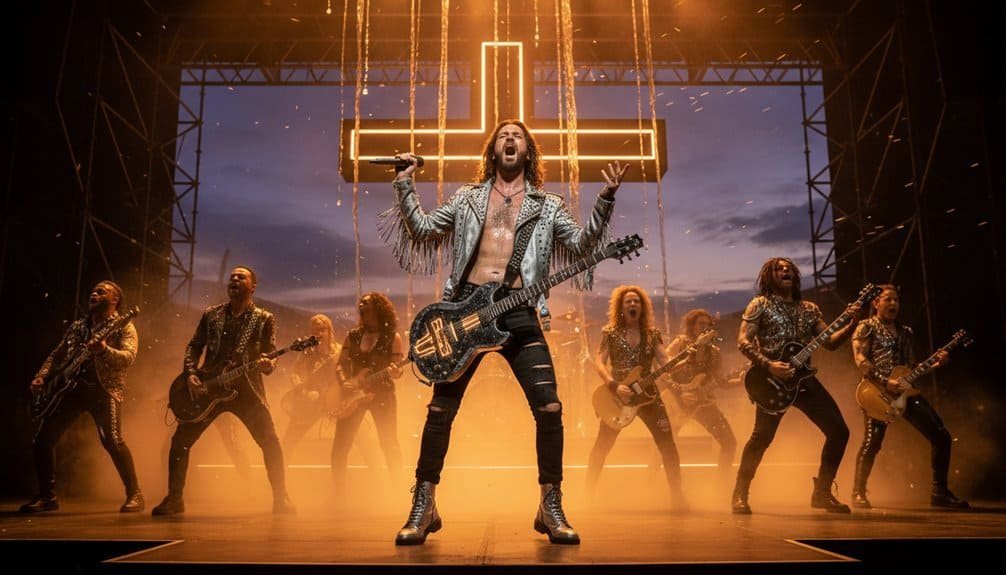
The production strategically positions multi-hyphenate performers—Phillipa Soo’s Hamilton pedigree, Josh Gad‘s Disney mainstream appeal, John Stamos‘s television crossover potential—to expand audience demographics beyond traditional theater consumers.
Supporting players like four-time Tony nominee Raúl Esparza and returning Superstar veteran Tyrone Huntley provide institutional theatrical gravitas. The casting includes Cynthia Erivo as Jesus, bringing her acclaimed vocal power and dramatic range to the titular role.
This casting architecture demonstrates how revivals can simultaneously honor source material while leveraging star power to generate cultural relevance across generational and platform boundaries. The Hollywood Bowl engagement offers a unique outdoor amphitheater setting that enhances the rock opera’s concert-style presentation. Under the direction of Tony Award-winning Sergio Trujillo, the revival emphasizes the original rock heritage that defined the 1970 concept album.
From Broadway Stages to Hollywood Bowl: How 2025 Productions Are Redefining the Experience
Star power alone can’t guarantee theatrical success—productions must also reimagine how audiences experience live performance within evolving venue contexts and technical frameworks.
The 2025 Hollywood Bowl staging demonstrates sophisticated concertization techniques that transform Jesus Christ Superstar‘s traditional theatrical presentation into stadium-scale spectacle.
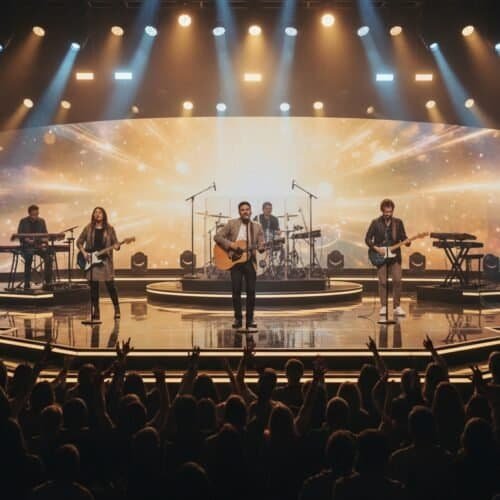
You’ll notice how concert-style infrastructure—handheld microphones, LED screens, projection design by Peter Nigrini—creates pop-concert visual language while maintaining the rock opera’s dramatic intensity.
These technical adaptations fundamentally alter audience dynamics.
Sound designer Jonathan Burke’s reinforcement system balances rock-band energy with sung-through vocal demands across bowl acoustics, while high-intensity lighting and theatrical smoke convey intimate dramatic moments to 17,500+ seats.
Sergio Trujillo’s choreography employs rock-concert movement vocabulary and confrontational staging that directly addresses audiences, creating immediacy within the amphitheater setting. Regional productions like The REV Theatre Company’s Auburn staging further demonstrate how venues across different scales are embracing this material during the 2025 season.
This modular approach enables rapid load-in/load-out while preserving technical assets for touring iterations. The production’s emphasis on rock elements aligns with the show’s origins as a concept album that sparked a global phenomenon spanning multiple decades.
Why Modern Audiences Are Connecting With Andrew Lloyd Webber’s Timeless Story
When contemporary audiences witness Cynthia Erivo’s Black female Jesus confronting temple merchants hawking modern contraband—bongs, ammunition, BDSM paraphernalia—they’re experiencing Andrew Lloyd Webber’s rock opera through radically altered cultural optics that amplify its original countercultural critique.
The 2025 production’s political resonance strikes differently when Romans label Jesus “dangerous” amid current discourse surrounding civil rights curtailments and DEI restrictions.
You’re watching Judas urge caution while societal excuses for oppression multiply, creating uncomfortable parallels with contemporary governance.
Erivo’s Jesus, overwhelmed by impossible expectations and fame pressures, provides emotional accessibility that mirrors modern celebrity culture’s psychological toll.
The casting of openly queer leads during attacks on LGBTQ+ rights transforms biblical narrative into resistance theater.
This temporal convergence—1970s rock rebellion meeting 2025’s political turbulence—generates interpretive layers that weren’t visible in previous productions.
The timeless story’s exploration of betrayal, societal pressure, and personal struggle resonates because today’s audiences recognize these dynamics within their lived experience.
The Strategic Revival: How Licensing and Distribution Are Fueling the Comeback
How does a forty-five-year-old rock opera suddenly dominate contemporary entertainment landscapes?
You’re witnessing a masterclass in strategic intellectual property management through The Really Useful Group’s centralized licensing architecture.
This centralized licensing framework eliminates bureaucratic bottlenecks while maintaining rigorous brand control.
You’ll notice tiered fee structures democratizing access—professional companies pay premium rates while educational institutions access affordable licensing, exponentially expanding market penetration.
Venue-specific permissions enable everything from intimate theatrical runs to massive arena spectacles.
Digital distribution channels amplify this strategy’s effectiveness.
Concert-format residencies at prestigious venues like Hollywood Bowl function as simultaneous live events and promotional platforms.
You’re seeing coordinated single releases—Adam Lambert’s track exemplifies this—generating streaming momentum before major performances.
Cross-platform partnerships with heavyweight producers enable synchronized promotion across television, streaming services, and live entertainment.
Pre-cleared recording permissions create evergreen catalog assets while celebrity casting drives social media engagement.
This systematic approach transforms nostalgic revival into contemporary cultural phenomenon.
Frequently Asked Questions
What Is the Runtime of the 2025 Cinema Release Version?
The 2025 re-release Running Time shows conflicting data: Box Office Mojo lists 106 minutes while Vue Cinemas reports 115 minutes.
You’ll need distributor verification since Scene Differences between restoration cuts versus theatrical padding could explain this nine-minute variance.
Exhibitor runtimes often include pre-show elements, while database entries reflect actual film length.
The discrepancy suggests either expanded content or scheduling inconsistencies across distribution channels.
Who Owns the Licensing Rights for Jesus Christ Superstar Productions?
Rights Ownership for Jesus Christ Superstar rests with creators Andrew Lloyd Webber and Tim Rice, who control underlying copyright interests.
You’ll find that Licensing Agencies handle distribution differently: ALW Show Licensing serves as primary theatrical licensor, while Concord Theatricals manages certain territorial markets.
Film rights operate separately—historically through MCA/Universal.
Professional productions require direct negotiations with ALW, whereas amateur licenses flow through authorized regional agents under their authority.
How Many Performances Did the Original West End Run Have?
The Original Run’s Performance Count totaled 3,358 performances across its eight-year tenure at London’s Palace Theatre from 1972-1980.
You’ll find this figure consistently documented in Andrew Lloyd Webber’s official records and theatre databases like Ovrtur.
This performance count established the production’s record-holding status as the West End’s longest-running musical until Cats surpassed it in 1989, demonstrating the rock opera’s commercial viability.
What Year Did Jesus Christ Superstar First Premiere on Broadway?
You’ll find that Jesus Christ Superstar‘s Broadway Premiere occurred in 1971 Debut on October 12th at the Mark Hellinger Theatre.
You’re examining a pivotal theatrical moment when Lloyd Webber and Rice’s rock opera transitioned from concept album to legitimate Broadway production.
This premiere established crucial precedents for marketing musicals through recordings first, fundamentally altering Broadway’s commercial strategies and legitimizing rock opera as a viable theatrical form.
Are There Any Original Creators’ Family Members Involved in 2025 Productions?
You’ll find limited direct family legacy involvement in major 2025 productions, with Donald Rice (Tim Rice’s son) directing at The REV representing the most notable instance. The Hollywood Bowl staging relies on estate approval through Really Useful Group licensing rather than hands-on family participation.
Most regional productions operate under standard licensing agreements, emphasizing corporate oversight over familial creative control in contemporary revivals.
Conclusion
You’re witnessing a calculated cultural recalibration where Lloyd Webber’s rock opera leverages contemporary casting strategies and venue diversification to penetrate modern entertainment ecosystems. The 2025 revival‘s success stems from its ability to synthesize nostalgic theatrical frameworks with current audience expectations, creating cross-generational appeal. This isn’t mere nostalgia marketing—it’s strategic IP repositioning that exploits both theatrical heritage and multimedia distribution channels, demonstrating how classic properties can achieve contemporary relevance through deliberate reimagining rather than superficial updates.






No Comments