

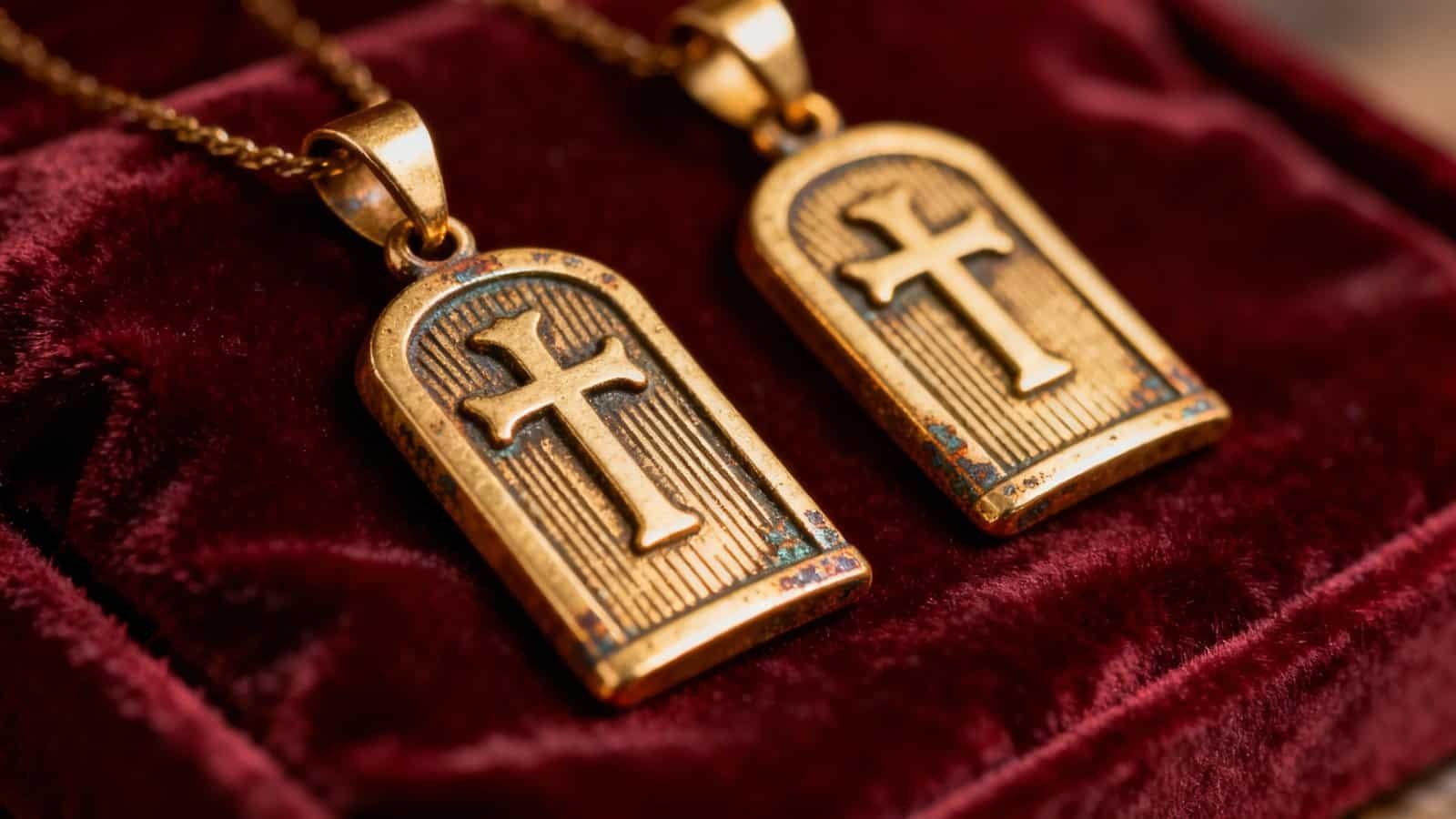
24 Nov 10 Commandments Jewelry: Symbols of Faith and Their Meanings
You’re wearing thousands of years of moral tradition when you put on 10 Commandments jewelry—a practice that transforms ancient religious law into a daily cognitive tool reshaping how your brain processes ethical decisions. These pieces blend historical significance across Jewish, Christian, and Islamic traditions with contemporary minimalist design. Whether you choose rings, pendants, or bracelets, you’re creating a tangible spiritual anchor connecting personal faith with communal identity. Understanding each symbol’s deeper purpose reveals how these wearable pieces function as portable prayers.
Table of Contents
Key Takeaways
- 10 Commandments jewelry symbolizes divine law and moral commitment, serving as wearable spiritual anchors grounded in Jewish, Christian, and Islamic traditions.
- Tablet designs encode meaning through geometric forms, Hebrew letters, and Roman numerals, transforming abstract divine authority into tangible, personal faith expressions.
- Ring and bracelet formats function as daily ethical reminders, triggering cognitive reflection and self-regulation through tactile presence and visible symbolism.
- Contemporary designs blend minimalist aesthetics with traditional religious symbolism using mixed metals, negative space, and subtle inscriptions for individualized spiritual connection.
- Material choices—gold, sterling silver, or eco-conscious alternatives—reflect personal values while ensuring durability for daily wear and long-term spiritual devotional practice.
The Historical Significance of the Ten Commandments in Religious Traditions
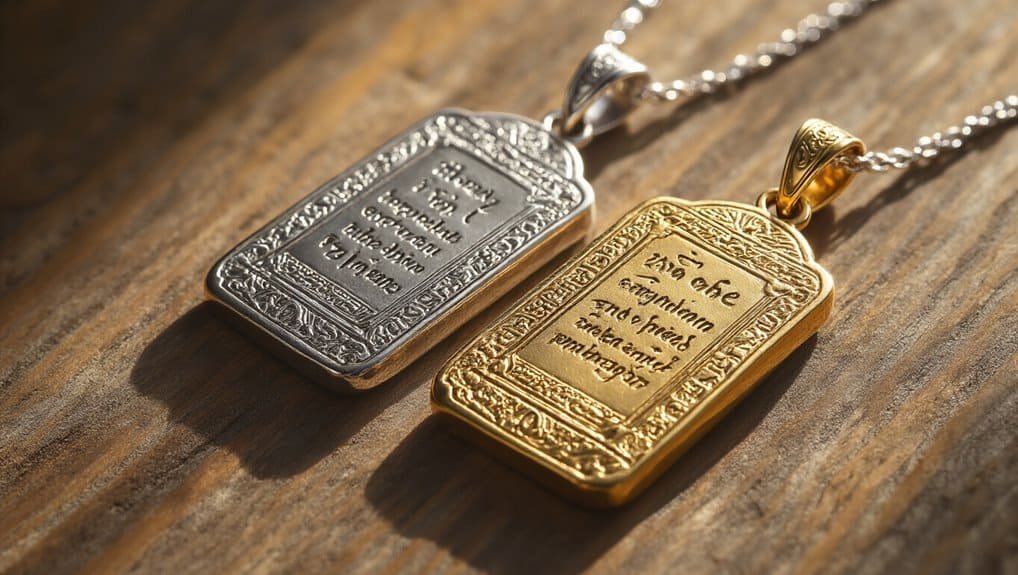
Whether you’re examining Jewish Torah, Christian scripture, or Islamic tradition, you’ll find that the Ten Commandments have shaped moral and legal frameworks across millennia. This foundational text establishes the cornerstone of biblical jurisprudence, influencing legal systems and ethical standards in Western civilization.
The Ten Commandments have profoundly shaped moral and legal frameworks across Jewish, Christian, and Islamic traditions throughout history.
You’ll recognize how these commandments function as instruments of cultural transmission, passing fundamental values across generations and societies. They’re not merely religious doctrine; they’re embedded in governance structures, criminal codes, and social norms.
When you trace their evolution, you’ll see how different traditions interpret and emphasize specific commandments differently. Jewish scholars developed extensive Talmudic commentary, Christians integrated them into theological frameworks, and Islamic jurisprudence incorporated parallel ethical principles.
You should understand that the Ten Commandments transcend singular religious ownership. They’ve become universal moral reference points that inform secular legal systems and contemporary ethical debates. Their historical significance lies in their ability to bridge theological and practical domains.
Understanding the Symbolism Behind Sacred Tablet Designs
As sacred tablet designs evolved across religious traditions, they’ve become powerful visual representations of divine law and covenant. You’ll find that sacred tablet symbolism operates on multiple interpretive levels, functioning simultaneously as historical artifact and spiritual anchor.
The Two Tablets motif carries ritualistic iconography that transcends mere decoration. When you examine these designs, you’re observing how artisans translate abstract divine authority into tangible form. The Roman numerals, Hebrew letters, and geometric arrangements aren’t arbitrary—they’re deliberate choices encoding spiritual meaning.
You’re engaging with symbolism that communicates commandments as foundational principles rather than restrictions. The tablet shape itself evokes permanence and weight, grounding abstract moral concepts in material reality. This visual language allows wearers to externalize internal commitment to ethical living.
The iconography bridges personal faith expression with communal religious identity, making abstract commandments visible and wearable. You’re essentially carrying concentrated theological meaning, transforming jewelry into miniature monuments of devotion and principle.

Popular Styles of 10 Commandments Jewelry for Modern Believers
You’ll find that contemporary design interpretations of 10 Commandments jewelry blend traditional religious symbolism with modern aesthetic principles, allowing you to express faith through pieces that reflect current visual trends.
Minimalist faith expressions offer you an alternative approach, stripping away ornamental excess to emphasize the core message through subtle geometric forms, negative space, and understated materials.
These divergent styles enable you to select pieces that align with your personal beliefs while maintaining relevance within today’s fashion landscape.
Contemporary Design Interpretations
Modern believers who seek to express their faith through jewelry aren’t limited to traditional representations anymore. You’ll find that contemporary designers blend spiritual symbolism with minimalist aesthetics, creating pieces that resonate with today’s sensibilities.
Geometric motifs—clean lines, angular shapes, and abstract forms—replace ornate Victorian styles, appealing to those valuing understated elegance. Modern reinterpretations incorporate mixed metals, asymmetrical designs, and interchangeable components that reflect individualized faith expressions.
Designers draw from architecture, mathematics, and art movements to reimagine the Ten Commandments’ visual language. You might wear a pendant featuring fragmented text or a bracelet with symbolic markers rather than explicit religious imagery.
This interdisciplinary approach allows you to maintain spiritual connection while aligning with contemporary fashion sensibilities, making faith-based jewelry authentically yours.
Minimalist Faith Expressions
Stripped of elaborate ornamentation, minimalist Ten Commandments jewelry strips spiritual symbolism down to its essential visual and conceptual components.
You’ll find that contemporary minimalist pieces employ geometric simplicity—clean lines, understated proportions, and refined materials like sterling silver or brushed gold.
These designs utilize minimalist icons, such as the Roman numeral “X” representing the Ten Commandments or abstract tablets rendered as negative space.
Subtle inscriptions appear etched discreetly along pendant edges or band interiors, requiring intimate proximity to decipher their sacred meaning.
This aesthetic approach appeals to modern believers seeking authentic faith expression without ostentatious display.
The restraint itself becomes theologically significant, emphasizing interior conviction over external proclamation.
You’re drawn toward pieces that communicate devotion through understated elegance, where meaning resides in minimized form rather than decorated surfaces.
The Spiritual Meaning of Wearing Commandment Pendants
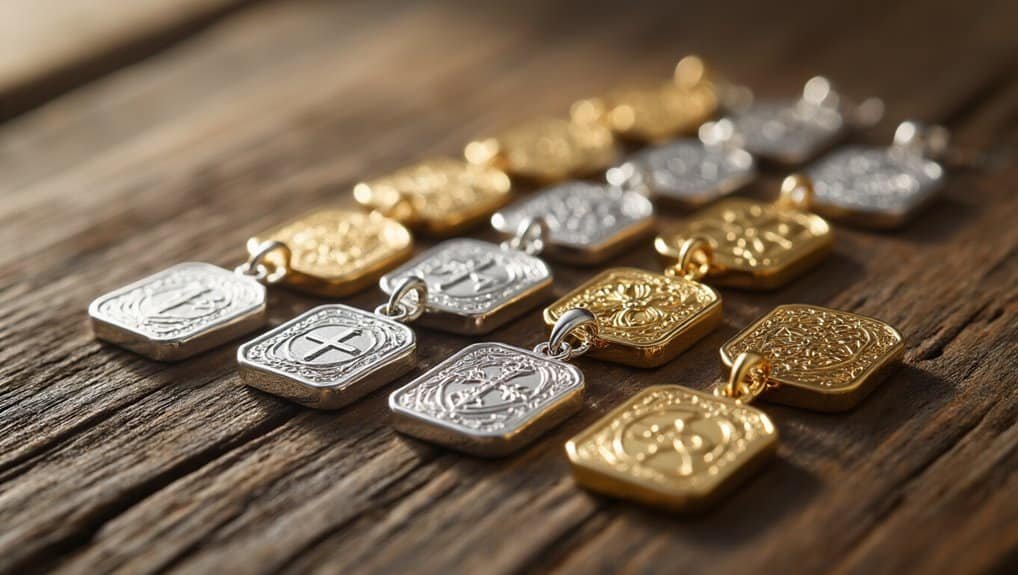
When you wear a commandment pendant, you’re anchoring spiritual principles to your physical form, transforming abstract religious doctrine into a tangible daily touchstone.
This practice intersects theology, psychology, and material culture—your jewelry serves simultaneously as personal reminder and public declaration of faith commitments.
Daily Spiritual Reminder
You’ll find that wearing commandment pendants functions as a tangible spiritual anchor, bridging the abstract realm of faith with daily physical experience. When you touch your pendant during morning routines, it serves as a morning mantra—a physical touchstone reinforcing your spiritual commitments before navigating daily challenges.
This pocket talisman operates through psychological and theological mechanisms simultaneously. You’re engaging cognitive frameworks that strengthen intention-setting while honoring sacred principles. The pendant’s tactile presence activates mindfulness, interrupting autopilot moments and redirecting your consciousness toward ethical consideration.
From an interdisciplinary perspective, wearing commandment jewelry leverages embodied cognition—your body’s physical interactions reinforcing mental states. You’re essentially encoding spiritual values into muscle memory. This practice transforms abstract moral teachings into embodied practices, making faith operationally present throughout your day rather than compartmentalized to designated worship times.
Faith Expression Through Jewelry
At the intersection of personal identity and religious devotion, commandment jewelry functions as a visible declaration of faith—a semiotic statement that communicates your spiritual commitments to both yourself and others. When you wear a commandment pendant, you’re engaging in personal testimony, externally manifesting internal convictions through material form. This practice transcends mere aesthetic choice; it represents deliberate engagement with sacred principles.
Your jewelry participates in communal rituals, creating shared visual language among believers. The pendant becomes both protective amulet and conversation catalyst, prompting dialogue about values and beliefs. By adorning yourself with commandment symbols, you reinforce daily devotional practice while signaling belonging to faith communities. This wearable spirituality serves psychological functions—strengthening resolve, prompting reflection—while simultaneously establishing cultural identity and religious affiliation within broader social contexts.
Hebrew Inscriptions and Their Role in Devotional Jewelry
Because Hebrew carries profound spiritual significance in Jewish tradition, inscriptions in this ancient language’ve become central to devotional jewelry‘s function and meaning. When you wear pieces featuring Hebrew calligraphy, you engage directly with sacred texts and divine names, transforming jewelry into a tangible spiritual practice.
Devotional inscriptions typically feature passages from the Torah, psalms, or protective phrases like “Shema Yisrael.” You’ll find these inscribed on bracelets, pendants, and rings, each letter meticulously crafted to honor the text’s sanctity. The visual artistry of Hebrew calligraphy serves dual purposes: aesthetic appeal and spiritual potency.
You connect with centuries of Jewish tradition when selecting Hebrew-inscribed jewelry. These pieces function as constant reminders of faith commitments and divine protection. The language itself carries inherent spiritual energy within Jewish theology, making each inscription more than decorative—it becomes a portable prayer, embedding your devotional intentions into wearable form.
Selecting the Right Material: Gold, Silver, and Beyond
When you’re selecting material for your 10 Commandments jewelry, you’ll weigh gold’s timeless luxury against silver’s more accessible elegance, each offering distinct aesthetic and economic trade-offs.
Beyond these traditional metals, you can explore alternative materials like stainless steel, titanium, and gemstone settings that provide modern versatility and align with contemporary design preferences.
Your choice ultimately depends on balancing your budget, desired durability, maintenance requirements, and the visual impact you want to achieve with your devotional piece.
Gold: Timeless Luxury Choice
Gold stands as the most coveted material for 10 Commandments jewelry, blending aesthetic appeal with practical durability and investment value. When you select gold pieces, you’re investing in timeless elegance that transcends fleeting trends.
The metal’s malleability enables intricate gold craftsmanship, allowing artisans to create detailed commandment engravings and ornamental designs that capture spiritual significance.
You’ll find that gold’s inherent resistance to tarnishing maintains your jewelry’s luminosity across decades. Equally important, ethical sourcing practices ensure your purchase aligns with responsible mining standards and fair-trade principles.
By choosing responsibly mined gold, you’re supporting sustainable industry practices while acquiring a piece imbued with both faith and conscience.
The investment potential further distinguishes gold from alternative materials, making your 10 Commandments jewelry both spiritually meaningful and financially prudent.
Silver: Affordable Elegance Option
Silver offers a compelling alternative for those seeking spiritual jewelry without the premium investment that gold demands.
You’ll discover that sterling silver provides authentic affordable elegance while maintaining sophisticated aesthetics.
This material’s sterling appeal lies in its versatility—it complements various skin tones and wardrobe styles effectively.
You can wear silver Commandments pieces daily without sacrificing durability or appearance.
The metal’s natural luster creates an understated spiritual statement that doesn’t compromise on quality.
Unlike gold’s steep pricing, you’ll access premium craftsmanship at accessible price points.
You should note that sterling silver requires occasional polishing to maintain its brilliance, yet this minimal maintenance effort yields substantial returns.
When you select silver Commandments jewelry, you’re choosing a practical option that balances faith-centered symbolism with financial sensibility, making meaningful spiritual expression genuinely attainable.
Alternative Materials: Modern Versatility
Beyond traditional precious metals, contemporary Commandments jewelry encompasses diverse materials that expand both aesthetic possibilities and accessibility.
You’ll find options like recycled resin offering eco-conscious alternatives without compromising visual appeal.
Lab grown gemstones provide ethically sourced brilliance, eliminating concerns about mining practices while delivering identical optical properties to mined stones.
These modern materials democratize faith-based jewelry, allowing you to express spiritual devotion across various budget ranges.
Recycled components reduce environmental impact, aligning your purchase with sustainability values.
Lab grown gemstones ensure transparency in sourcing, appealing to conscientious consumers.
You’re not sacrificing quality or meaning when selecting these alternatives. Instead, you’re accessing innovative materials that reflect contemporary values while honoring ancient spiritual principles.
This interdisciplinary approach merges faith expression with environmental responsibility and technological advancement.
How 10 Commandments Rings Serve as Daily Spiritual Anchors
As you navigate daily routines, a 10 Commandments ring functions as a tangible reminder of moral principles, operating at the intersection of psychology, spirituality, and material culture.
The ring becomes your moral compass—a physical object that interrupts habitual thinking and prompts ethical reflection during moments of decision-making.
A physical reminder that interrupts habit, prompting ethical reflection when decisions demand your attention.
This mindful gesture works through embodied cognition, where tactile sensations trigger cognitive associations. When you touch or notice the ring, you’re prompted to consider your values and conduct.
The jewelry doesn’t impose morality but rather activates internal frameworks already established through faith and upbringing.
Wearing these rings creates consistent behavioral anchoring. Research suggests visible reminders of personal principles influence choices and self-regulation.
You’re essentially calibrating your actions against a symbolic standard you’ve chosen to carry.
The ring’s effectiveness stems from its dual nature: simultaneously personal and visible, it serves as both private motivation and public commitment, strengthening spiritual discipline through daily practice.
Bracelets Featuring Commandment Phrases and Their Messages
While rings concentrate spiritual intention on a single focal point, bracelets expand this practice across your wrist’s surface, creating an extended canvas for commandment messaging.
You’ll find bracelets inscribed with phrases like “Honor thy father and mother” or “Thou shalt not steal,” offering constant visual reminders of ethical principles throughout your day.
These bracelets serve practical functions beyond personal devotion.
You can utilize them for interfaith outreach, sparking meaningful conversations about shared moral values across religious communities.
Organizations increasingly incorporate commandment bracelets into charitable collaborations, distributing them during community service initiatives and spiritual education programs.
The extended format allows you to display multiple commandments simultaneously, creating a holistic ethical framework on your wrist.
Material choices—from leather to beaded designs—accommodate various aesthetic preferences while maintaining spiritual authenticity.
This accessibility makes commandment bracelets particularly effective tools for fostering spiritual commitment and community engagement among diverse populations.
Gifting 10 Commandments Jewelry: Occasions and Intentions
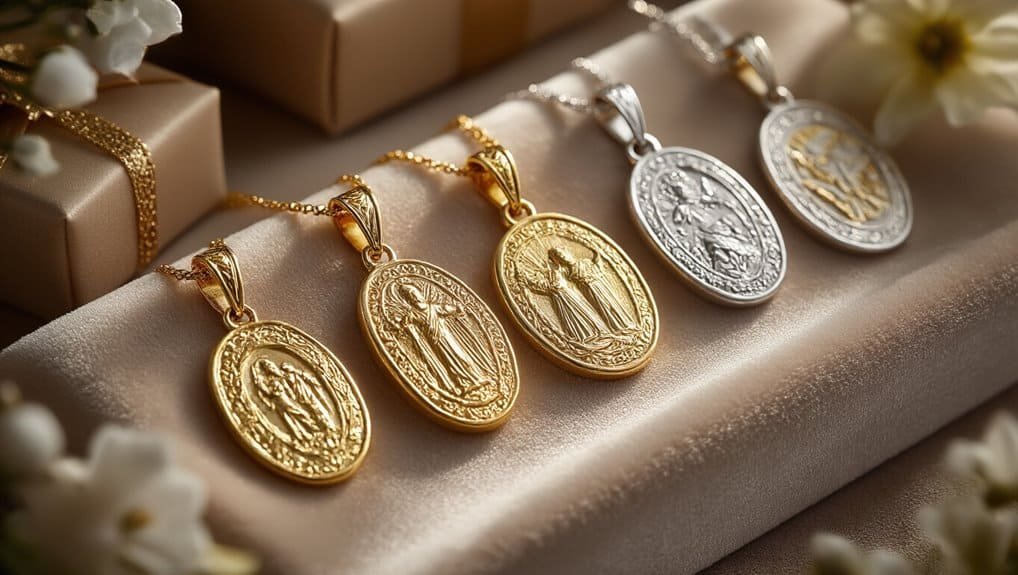
Commandment jewelry functions as a meaningful gift vehicle because it bridges personal spirituality with tangible expression of shared values.
You’ll find that occasion matching determines the selection’s appropriateness—confirmations and bar mitzvahs align naturally with pieces emphasizing moral foundation, while recovery milestones benefit from jewelry reinforcing specific commandments about honor or truthfulness.
Intentional messaging shapes your gift’s impact.
You’re not merely presenting an object; you’re communicating recognition of the recipient’s faith journey.
A bracelet featuring “Thou shalt not bear false witness” carries weight during professional transitions, signaling support for ethical navigation.
Similarly, pieces highlighting commandments about parental respect suit intergenerational celebrations.
You should consider the recipient’s denominational background and personal interpretation of commandments.
Protestant, Catholic, and Jewish traditions emphasize different nuances.
Your thoughtfulness in matching the specific commandment to life circumstances transforms jewelry from decoration into spiritual anchor—a wearable reminder of covenant and commitment during pivotal moments.
Caring for Your Sacred Jewelry: Maintenance and Preservation Tips
Since sacred jewelry carries spiritual significance beyond aesthetic value, proper maintenance preserves both its physical integrity and symbolic potency.
You’ll protect your pieces through systematic care practices grounded in material science and conservation principles.
Implement routine inspection monthly, examining clasps, settings, and engravings for wear or damage.
This proactive approach prevents minor issues from compromising structural stability.
Store your jewelry in separate compartments to minimize friction-induced deterioration.
Control humidity in your storage environment, as fluctuating moisture levels accelerate tarnishing and corrosion, particularly in silver and copper pieces.
Maintain levels between 30-50% relative humidity using silica gel packets or specialized jewelry boxes.
Clean your sacred jewelry gently with appropriate solutions matched to specific materials—soft cloths suffice for most items.
Avoid harsh chemicals that compromise delicate engravings or gemstone adhesives.
Professional cleaning annually ensures thorough restoration while maintaining authenticity and spiritual resonance of your devotional pieces.
Frequently Asked Questions
Are 10 Commandments Jewelry Pieces Appropriate for Non-Religious Individuals or Secular Wearers?
You can wear Ten Commandments jewelry as personal expression regardless of religious affiliation. From a cultural standpoint, you’re engaging with historical and artistic symbolism rather than strictly religious practice.
However, consider whether you’re appropriating sacred meaning from another tradition. If you’re drawn to the aesthetic or ethical principles, secular wear is defensible. Ultimately, your intent and respect for the symbol’s origins determine appropriateness—wearing it as personal statement differs significantly from dismissing its spiritual significance.
What Is the Average Price Range for Authentic 10 Commandments Jewelry at Retail?
You’ll find authentic 10 commandments jewelry typically ranges from $50 to $500 at retail, depending on materials comparison between sterling silver, gold, and gemstone variants.
Market trends show affordable acrylic or base metal pieces starting around $20, while premium solid gold pieces exceed $1,000.
Mid-range options in 14k gold or quality silver average $150–$300. Pricing fluctuates based on craftsmanship, brand reputation, and whether pieces feature engravings or additional decorative elements.
Can 10 Commandments Jewelry Be Worn Alongside Other Religious or Spiritual Jewelry Pieces?
You can absolutely layer Ten Commandments jewelry with other religious pieces.
When considering layering guidelines, you’ll want to examine symbolic compatibility between items.
Different faith traditions often complement rather than conflict when worn intentionally.
Your personal spiritual beliefs should guide these choices.
Mixing Christian, Jewish, or interfaith symbols works well if you’re honoring multiple traditions.
Consider aesthetic balance and the deeper meanings you’re expressing through these combined pieces.
Do Different Religious Denominations Have Varying Interpretations of Commandments Jewelry Symbolism?
You’ll find that denominational symbolism significantly shapes how different religious groups interpret commandments jewelry.
Protestant, Catholic, and Orthodox traditions apply distinct liturgical variations when assigning meaning to these pieces.
Your understanding of commandments jewelry depends on recognizing these theological differences.
Catholics might emphasize sacramental significance, while Protestants focus on personal covenant relationships.
Orthodox denominations incorporate Byzantine artistic traditions into their interpretations, creating unique symbolic frameworks that reflect each tradition’s doctrinal priorities.
Is 10 Commandments Jewelry Considered Appropriate Professional Attire in Workplace Settings?
You’ll find that 10 commandments jewelry’s workplace appropriateness depends on your organization’s HR Guidelines and company culture.
When you’re considering such pieces, subtle styling proves essential—opt for understated designs rather than prominent displays.
You’re navigating legal protections for religious expression balanced against professional expectations.
Your workplace’s specific policies, industry norms, and client-facing roles ultimately determine acceptability.
You should consult HR directly regarding jewelry policies before wearing faith-based accessories professionally.
Conclusion
You’re wearing more than jewelry when you choose Ten Commandments pieces—you’re integrating religious history, linguistic tradition, and personal spirituality into daily practice. These items function simultaneously as aesthetic expressions, behavioral reminders, and cultural statements. Your selection reflects broader patterns in contemporary faith practice: the humanization of abstract doctrine and the individualization of religious observance through material culture. You’re participating in a centuries-old tradition that adapts ancient wisdom to modern contexts.


No Comments