


05 Nov 10 Amazing Bible Verses for Thanksgiving
You’ll find powerful thanksgiving verses throughout Scripture that transform your perspective and anchor your soul during both blessings and trials. Psalm 107:1 calls you to thank God for His goodness, while 1 Thessalonians 5:18 challenges you to give thanks in all circumstances—not for the pain, but in it. Philippians 4:4-6 promises God’s peace when you present requests with thanksgiving, and Colossians 2:6-7 shows how gratitude naturally overflows when you’re rooted in Christ. These ten verses reveal how thanksgiving becomes your pathway to deeper intimacy with God.
Table of Contents
Key Takeaways
- Psalm 107:1 calls believers to give thanks to the Lord for His goodness and enduring mercy.
- 1 Thessalonians 5:18 commands giving thanks in all circumstances as God’s will in Christ Jesus.
- Psalm 100:4 instructs entering God’s presence with thanksgiving and praise as the pathway to worship.
- James 1:17 reminds that every good gift comes from God, the unchanging Father of lights.
- Psalm 136:1 emphasizes thanksgiving rooted in God’s eternal love that endures through every season.
Give Thanks to the Lord, for He Is Good – Psalm 107:1

Gratitude transforms your perspective from what’s missing to what’s already present in your life.
Gratitude shifts your focus from what you lack to the abundance you already possess.
When you declare “Give thanks to the Lord, for He’s good,” you’re acknowledging God’s unchanging character despite life’s circumstances. This verse isn’t suggesting you ignore hardship—it’s inviting you to recognize God’s goodness even amid struggles.
You’ll find this praise practice becomes more natural as you make it daily. Start your mornings declaring His goodness before your feet hit the floor. When anxiety creeps in, return to this truth: He’s good, always has been, always will be.
Your gratitude reflection doesn’t need to be complicated. Simply pause and consider: Where have you seen God’s goodness today? Maybe it’s in your breath, your loved ones, or that unexpected blessing. Psalm 107:1 reminds you that thanksgiving isn’t based on perfect circumstances but on God’s perfect nature. His goodness remains constant when everything else shifts.
Enter His Gates With Thanksgiving – Psalm 100:4
Through thanksgiving, you’re invited into God’s presence with confidence and joy. Psalm 100:4 reveals a profound truth: “Enter his gates with thanksgiving and his courts with praise; give thanks to him and praise his name.” You’re not approaching God as a stranger but as someone welcomed home.
These sacred thresholds aren’t physical boundaries but spiritual doorways opened by gratitude. When you come with thankful hearts, you’re acknowledging God’s sovereignty and goodness. You’re recognizing that every blessing flows from His hand. This verse shows thanksgiving isn’t just polite behavior—it’s your access point to divine fellowship.
Notice the progression: gates lead to courts, thanksgiving leads to praise. You can’t truly worship without first being grateful. Your thankfulness transforms ordinary moments into encounters with the living God. He’s waiting for you to approach, not with perfect words or flawless faith, but with genuine appreciation for who He’s and what He’s done.
Give Thanks in All Circumstances – 1 Thessalonians 5:18
When life’s storms rage around you, God’s Word calls you to give thanks in all circumstances—not because every situation is good, but because He’s working through it all.
You’re invited to practice gratitude even during hard times, knowing that thanksgiving aligns your heart with God’s perfect will for your life in Christ Jesus.
This radical thankfulness doesn’t deny pain but acknowledges God’s sovereign presence in every season you face.
Why Give Thanks Always
Life doesn’t always unfold according to your plans, yet Scripture calls you to maintain a thankful heart regardless of your circumstances. When Paul wrote to give thanks in everything, he wasn’t dismissing your pain or minimizing life’s difficulties. He’d experienced imprisonment, beatings, and shipwrecks, yet understood something profound: thanksgiving transforms your perspective.
You’ll find that gratitude habits anchor your soul during storms. They remind you that God’s working even when you can’t see it. A thankful mindset doesn’t deny reality—it acknowledges God’s sovereignty over it.
When you’re grateful in hardship, you’re declaring trust in His wisdom. You’re choosing to believe He’ll bring beauty from ashes. This isn’t toxic positivity; it’s biblical faith that recognizes God’s presence in every season.
Gratitude During Hard Times
Even though suffering surrounds you and grief threatens to overwhelm, God’s Word doesn’t offer thanksgiving as a suggestion—it’s His will for you in Christ Jesus. You’re not called to thank God for the pain, but in it. There’s a profound difference. Your hidden struggles don’t disqualify you from worship; they’re the very soil where authentic gratitude grows deepest.
When you can’t see past today’s burden, quiet praise becomes your lifeline. It’s whispering “thank you” through tears, acknowledging His presence when answers don’t come. You’ll discover that gratitude during hardship isn’t denial—it’s defiance against despair. It declares God’s faithfulness transcends your circumstances. This thanksgiving doesn’t depend on feelings but anchors in truth: He who began a good work in you’ll complete it.
God’s Will Through Thanksgiving
Because thanksgiving shapes your spiritual life more than you might realize, Paul’s command to “give thanks in all circumstances” reveals something profound about God’s design for you. This isn’t merely positive thinking—it’s God’s expressed will for your life in Christ Jesus.
When you practice surrendered gratitude, you’re aligning your heart with heaven’s perspective, acknowledging that God works through every situation for your ultimate good.
Thankful obedience transforms complaining into worship and bitterness into blessing. You’re not thanking God for evil or suffering itself, but trusting His sovereignty over all circumstances. This radical thanksgiving doesn’t deny pain; it declares God’s faithfulness within it.
As you cultivate this discipline, you’ll discover that gratitude isn’t just your response to God’s will—it’s actually part of fulfilling it.
Every Good and Perfect Gift Comes From Above – James 1:17
When you trace every blessing in your life back to its source, you’ll discover they all flow from the same unchanging Father of lights who doesn’t shift like shadows. James 1:17 reminds you that whether it’s the breath in your lungs, the relationships you cherish, or the provisions on your table, each good gift originates from God’s generous hand.
As you recognize His fingerprints on every blessing, your heart can’t help but overflow with genuine thanksgiving to the One who remains constant in His goodness toward you.
God’s Unchanging Nature
As seasons change and circumstances shift around you, God remains the same yesterday, today, and forever—and this truth forms the bedrock of your thanksgiving. When life’s uncertainties threaten to overwhelm you, you can anchor your gratitude in God’s immutable character. His eternal constancy means the One who blessed Abraham still blesses you today. You’re not serving a God who changes His mind or withdraws His promises.
His steadfast faithfulness doesn’t waver with your circumstances. While your feelings fluctuate and your strength fails, His sovereign presence remains unshakeable. You can thank Him knowing He won’t suddenly become distant or cruel. The God who provides today will provide tomorrow because His nature doesn’t shift like shadows. This unchanging reality transforms thanksgiving from wishful thinking into confident worship.
Recognizing Divine Blessings
From the morning light streaming through your window to the breath filling your lungs, every blessing flows from God’s generous hand. James 1:17 reminds you that “every good and perfect gift is from above, coming down from the Father of the heavenly lights.” When you’re counting blessings, you’re actually tracing God’s fingerprints throughout your day.
You’ll discover His providence in both extraordinary miracles and ordinary moments—the friend who called at just the right time, the unexpected provision that met your need. Recognizing providence transforms your perspective from coincidence to divine care. God isn’t distant; He’s actively involved in your life’s details. Train your eyes to see His gifts everywhere. They’re not random—they’re purposeful expressions of His love for you.
Responding With Gratitude
Recognizing God’s gifts naturally stirs something within you—a desire to respond. James 1:17 reminds you that every good gift flows from your heavenly Father, and this truth transforms how you’ll express thanksgiving.
You can develop gratitude rituals that anchor your days in appreciation. Start mornings acknowledging three specific blessings. Before meals, pause to thank God for His provision. End evenings reflecting on where you’ve seen His hand.
Thank you journaling becomes your spiritual discipline. Write down daily gifts—both grand and simple. Record answered prayers, unexpected joys, and moments of grace. You’ll discover patterns of God’s faithfulness as pages fill.
When you’re intentional about responding with gratitude, you’re following Scripture’s call to “give thanks in all circumstances” (1 Thessalonians 5:18). Your thankful heart honors God and deepens your joy.
Rejoice Always and Give Thanks – Philippians 4:4-6
When life’s circumstances threaten to overwhelm you, Paul’s words in Philippians 4:4-6 offer a transformative approach to finding peace through thanksgiving. “Rejoice in the Lord always,” he writes, not suggesting mere happiness but joyful endurance rooted in God’s unchanging character. You’re called to rejoice even when situations don’t warrant celebration.
Paul doesn’t stop there. He instructs you to present your requests to God with thanksgiving, establishing a prayer practice that shifts your focus from problems to provision. This isn’t denial of hardship; it’s choosing a grateful mindset that acknowledges God’s sovereignty over your circumstances.
The promise attached to this thankful anticipation is profound: God’s peace will guard your heart and mind. When you combine rejoicing with grateful prayer, you’re not just managing anxiety—you’re replacing it with divine peace that transcends understanding. This spiritual discipline transforms worry into worship, turning your thanksgiving into a pathway to supernatural peace.
Let the Peace of Christ Rule Your Hearts – Colossians 3:15
The peace that guards your heart in Philippians finds its ultimate source in Christ himself, as Paul reveals in Colossians 3:15. “Let the peace of Christ rule in your hearts,” he writes, using the Greek word for “rule” that means to act as an umpire or referee in your decision-making.
When you’re facing difficult choices or navigating conflicts, Christ’s peace becomes your internal arbitrator. This Christ centered calm isn’t passive—it’s an active force that settles disputes within your soul and guides you toward God’s will.
You were called to this peace as one body, Paul reminds you, connecting personal tranquility with communal harmony.
Your Peace practice begins with surrender. You can’t manufacture this peace through willpower; you receive it by letting Christ reign. And notice Paul’s final instruction: “be thankful.” Gratitude isn’t separate from peace—it’s the natural response when Christ’s shalom governs your heart.
Overflow With Thankfulness – Colossians 2:6-7

As you’ve received Christ Jesus as Lord, you’re called to continue walking in Him with the same faith that first drew you to His grace. Your life becomes like a deeply rooted tree—established in His truth, built up through His Word, and naturally overflowing with thanksgiving.
When you’re firmly planted in Christ’s love, gratitude isn’t forced or occasional; it becomes the abundant fruit that springs from a heart transformed by His presence.
Rooted in Christ Jesus
Walking in faith means you’re continually growing deeper in your relationship with Christ, and Colossians 2:6-7 reveals how this spiritual rootedness naturally produces thanksgiving.
When you’ve received Christ Jesus as Lord, you’re called to walk in Him—rooted, built up, and established in faith.
Your Gospel rooted thanks flows from understanding what Christ has accomplished for you.
Just as a tree’s roots determine its fruit, your Christ centered gratitude springs from being firmly planted in His truth.
You can’t manufacture genuine thanksgiving through willpower alone; it overflows when you’re drawing life from Him.
As you deepen these roots through prayer, Scripture, and fellowship, you’ll find thankfulness isn’t forced but natural.
Your gratitude becomes unshakeable because it’s anchored in Christ’s unchanging character rather than shifting circumstances.
Walking in His Ways
Living out your faith requires more than just being planted in Christ—you’re called to actively walk in His ways, allowing thanksgiving to overflow from every step. Colossians 2:6-7 reminds you that just as you received Christ Jesus as Lord, you must continue walking in Him, rooted and built up in Him.
This walking isn’t passive; it’s obedient living that mirrors Christ’s example. When you choose humble service over self-promotion, you’re demonstrating genuine gratitude for His sacrifice. Your thankfulness becomes visible through daily decisions to follow His commands, serve others without recognition, and submit to His will even when it’s difficult. Each act of obedience strengthens your faith and deepens your gratitude, creating a beautiful cycle where thanksgiving naturally overflows from a heart aligned with His purposes.
Abounding in Gratitude Daily
Every morning presents you with a fresh opportunity to let thanksgiving overflow from your heart, transforming ordinary moments into worship. Colossians 2:7 calls you to be “overflowing with thankfulness” as you’re rooted in Christ. You don’t need grand gestures—daily gratitude flourishes through simple rituals that anchor your soul.
Start gratitude journaling with three blessings you’ve noticed. Whether it’s your child’s laughter or morning coffee’s warmth, mindful thanksgiving helps you recognize God’s fingerprints everywhere. You’ll discover that practicing gratitude isn’t about forcing positivity but acknowledging His faithfulness in all circumstances.
As you cultivate this discipline, you’re training your heart to see beyond temporary struggles. Each recorded blessing becomes a stone of remembrance, building an altar of praise that strengthens your faith during difficult seasons.
Everything God Created Is Good – 1 Timothy 4:4-5
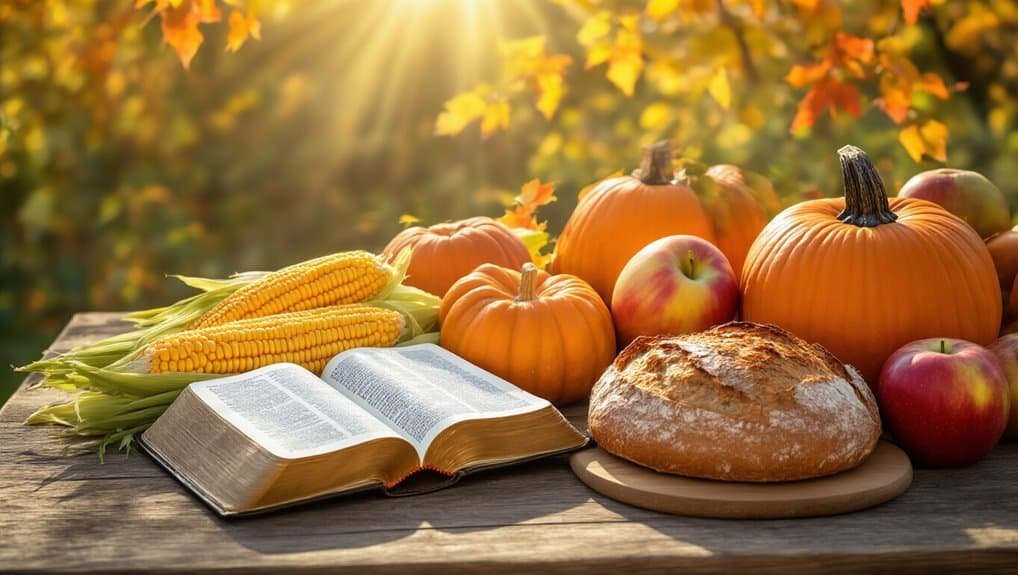
The world around you bursts with God’s creative goodness—from the food on your table to the relationships that enrich your life. Paul’s words in 1 Timothy 4:4-5 remind you that “everything God created is good, and nothing is to be rejected if it’s received with thanksgiving.” This truth transforms how you’ll view every aspect of creation.
When you recognize the inherent value in God’s handiwork, you’re called to thankful stewardship of these gifts. You don’t need to feel guilty about enjoying good food, beautiful sunsets, or meaningful work. Instead, you can embrace them with joyful appreciation, knowing they’re sanctified through gratitude and prayer.
This Thanksgiving, look beyond the obvious blessings. See God’s created goodness in simple moments—morning coffee, autumn leaves, children’s laughter. When you receive everything as a gift consecrated by thanksgiving, you’ll discover that gratitude isn’t just a response; it’s what makes all things holy.
Offer a Sacrifice of Thanksgiving – Psalm 50:14
Bringing your thankfulness before God requires more than casual acknowledgment—it demands intentional sacrifice. Psalm 50:14 calls you to “offer to God a sacrifice of thanksgiving and perform your vows to the Most High.” This isn’t about empty rituals but about sacrificial gratitude that costs you something—your time, pride, or comfort.
When you bring a thankful offering, you’re declaring God’s worthiness above your circumstances. Your vocal praise becomes a spiritual sacrifice, especially when you don’t feel like praising. Scripture shows that thanksgiving transforms your perspective and honors God’s character. It’s an act of heart surrender that acknowledges His sovereignty over every detail of your life.
You’ll find that sacrificial thanksgiving breaks the chains of entitlement and complaint. As you choose gratitude over grumbling, you’re offering God what He desires most—a heart that recognizes His goodness regardless of your situation. This sacrifice of praise becomes your pathway to deeper intimacy with Him.
Give Thanks for His Unfailing Love – Psalm 136:1
God’s unfailing love stands as the foundation for all thanksgiving, and Psalm 136:1 captures this truth beautifully: “Give thanks to the Lord, for he’s good; his love endures forever.” While sacrificial thanksgiving demonstrates your heart’s surrender, recognizing God’s steadfast love reveals why you can trust Him completely.
You’ll discover that God’s love isn’t conditional or temporary—it endures through every season of life. When you make thanksgiving your daily praise practice, you’re acknowledging this unchanging truth. Consider keeping a mercy memoir, recording specific ways God’s love has sustained you through difficulties and blessed you in abundance.
His unfailing love pursued you before you knew Him, saved you when you couldn’t save yourself, and continues to guide you today. It’s the love that forgives your failures, heals your wounds, and transforms your heart. This divine love never runs dry, never gives up, and never lets go.
Frequently Asked Questions
How Can I Teach Children to Practice Biblical Thanksgiving?
You can teach children biblical thanksgiving through simple, meaningful activities.
Start gratitude journals where they’ll write three blessings daily, connecting each to God’s goodness.
Have them create thank you letters to God during prayer time, expressing appreciation for His gifts.
Read Psalms together, highlighting David’s thankful heart.
Model grateful attitudes yourself, pointing out God’s provisions throughout your day.
You’re planting seeds that’ll grow into lifelong habits of praise and thanksgiving.
What’s the Difference Between Thanksgiving and Praise in the Bible?
You’ll find thanksgiving focuses on gratitude vs praise‘s worship contrast throughout Scripture.
When you thank God, you’re expressing gratitude for what He’s done—His blessings, provision, and answered prayers.
Praise, however, centers on who God is—His character, holiness, and attributes.
While thanksgiving says “Thank you, Lord, for healing me,” praise declares “You are the Great Physician.”
Both honor God, but they’re distinct expressions that deepen your relationship with Him.
Are There Specific Thanksgiving Prayers or Blessings for Meals?
Yes, you’ll find beautiful grace prayers throughout Scripture for meals. Jesus modeled blessing rituals by giving thanks before breaking bread (Matthew 14:19).
You can pray simply like Christ did or use traditional blessings such as “Bless us, O Lord, and these Thy gifts.” Whether you’re offering spontaneous gratitude or following established blessing rituals, God delights when you acknowledge Him as your provider before meals.
How Did Biblical Characters Celebrate Thanksgiving in the Old Testament?
You’ll find Old Testament characters celebrated thanksgiving through harvest offerings and victory feasts that honored God’s provision.
They brought firstfruits to the temple during harvest festivals like Sukkot.
After military triumphs, they’d hold victory feasts with singing and dancing, as Miriam did after crossing the Red Sea.
David offered thanksgiving sacrifices when bringing the ark to Jerusalem.
These celebrations weren’t just rituals—they were heartfelt expressions of gratitude to God.
What Thanksgiving Traditions Can Families Start Based on Scripture?
You can establish meaningful thanksgiving traditions rooted in Scripture by creating a family altar where everyone shares testimonies of God’s faithfulness.
Start Scripture gratitude journals, recording verses alongside answered prayers.
You’ll find blessing in reading Psalm 100 together before meals, taking prayer walks to thank God for creation, and hosting “stone of remembrance” nights where you share how God’s moved in your lives, just as Israel did in Joshua 4.
Conclusion
As you’ve discovered through these powerful verses, thanksgiving isn’t just a seasonal practice—it’s a way of life that transforms your heart. Whether you’re in a season of abundance or facing challenges, God’s Word calls you to cultivate gratitude. Start today by choosing one verse to meditate on and watch how thanksgiving shifts your perspective. Remember, you’re never alone in this journey. God’s unfailing love surrounds you, and His goodness never changes. Let gratitude overflow from your heart daily.





No Comments