

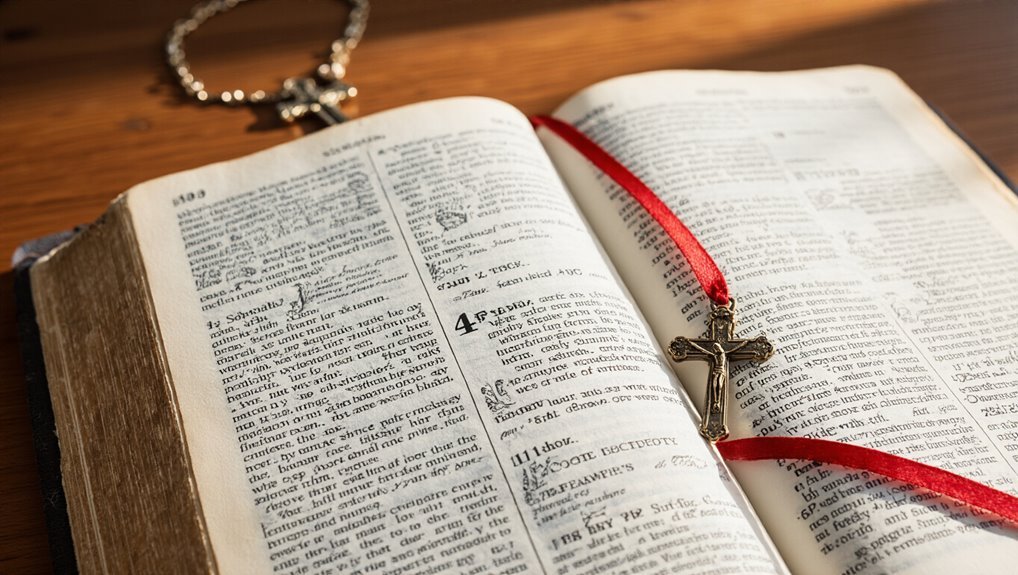
27 Mar What Salvation Verses Should Christians Memorize?
Memorize the core salvation verses so they become your spiritual anchor. Start with John 3:16, Romans 10:9‑10, Ephesians 2:8‑9, 1 John 5:11‑13, and Philippians 2:12‑13; these New‑Testament passages spell out God’s love, confession, grace, assurance of eternal life, and empowered living. Add Isaiah 53:5, Psalm 130:7‑8, Jeremiah 31:33, and Exodus 14:14 for Old‑Testament echoes of healing, hope, new covenant, and divine advocacy. By internalizing these words, you’ll strengthen faith, guide prayer, and speak truth boldly—continue to discover how to embed them in daily life.
Table of Contents
Why Memorizing Salvation Verses Strengthens Your Faith
Ever wonder how a single verse can anchor your hope amid doubt? When you commit a salvation passage to memory, you create a mental stronghold that steadies you in life’s storms. The words become a ready‑made response to fear, reminding you of grace, forgiveness, and eternal security.
By recalling verses like John 3:16 or Romans 10:9, you reinforce the truth that salvation isn’t a distant concept but a present reality you can claim. This practice also sharpens your spiritual discernment; you start recognizing how everyday conversations echo biblical promises.
Moreover, memorized verses empower you to share the gospel confidently, because you’ve internalized the message rather than merely recited it. As you repeat these truths, they reshape your mindset, aligning your thoughts with God’s promises and strengthening your faith foundation.

In short, memorizing salvation verses turns abstract doctrine into a lived, resilient hope.
Choose Scripture That Strengthens Your Faith Journey
How do you pick verses that truly fuel your walk with Christ? Start by asking what part of your journey feels most fragile—doubt, fear, temptation, or weariness. Then locate passages that directly address that need. If anxiety haunts you, cling to Philippians 4:6‑7, which promises peace beyond understanding. When temptation looms, memorize 1 Corinthians 10:13, reminding you that God supplies an escape. For moments of doubt, turn to Romans 8:28, assuring that all things work together for good. Choose verses that speak in a language you can hear daily—simple, vivid, and personal. Write them on sticky notes, set phone reminders, or pair them with a routine like morning coffee. Repeating these words aloud activates memory pathways, making Scripture a living shield rather than a distant quote. By aligning each verse with a specific struggle, you turn memorization into a powerful habit that continually strengthens your faith.
Memorize Five Essential New Testament Passages
You’ll find that the Core Gospel Promise anchors your hope, while Living by Faith fuels daily obedience. These two themes weave through the five passages you’re about to memorize. Let’s explore how each verse reinforces both promise and practice.
Core Gospel Promise
The core gospel promise hinges on five pivotal New Testament passages that distill salvation’s essence into memorable truth.
As you meditate on Romans 10:9‑10, you hear the simple confession that belief and confession bring salvation.

John 3:16 reminds you of God’s love, offering eternal life to all who trust.
Ephesians 2:8‑9 emphasizes grace, not works, securing your hope.
In 1 John 5:11‑13 you find assurance that belief in the Son grants eternal life.
Finally, Philippians 2:12‑13 calls you to live out that promise, empowered by God’s work within you.
Memorizing these verses equips you with a solid foundation, anchors your faith, and equips you to share the gospel confidently.
Living by Faith
When you cling to faith, five New Testament passages become your daily compass, guiding every thought and action. Hebrews 11:1 defines faith as “the assurance of things hoped for, the conviction of things not seen,” reminding you that belief precedes evidence. Romans 10:17 shows that hearing the Word fuels faith, urging you to listen and internalize Scripture. James 2:17 warns that faith without works is dead, prompting you to act on convictions. 2 Corinthians 5:7 declares you walk by faith, not by sight, encouraging trust in God’s unseen plans. Finally, Galatians 2:20 offers a personal creed: Christ lives in you, and you live by faith, reshaping identity and purpose. Memorizing these verses anchors your walk, transforms decisions, and sustains hope amid uncertainty.
Four Old‑Testament Salvation Verses That Reveal Grace
How can ancient Israel’s cries for rescue illuminate the grace we receive today? You’ll find four Old‑Testament verses that showcase divine deliverance and point to Christ’s saving work. First, Isaiah 53:5 declares, “by his wounds we’re healed,” reminding you that suffering brings spiritual health. Second, Psalm 130:7‑8 proclaims, “the Lord is my portion; my soul waits for the Lord,” urging you to trust God’s timing for redemption. Third, Jeremiah 31:33 promises a new covenant, “I will put my law within them,” showing that grace writes itself on faithful hearts. Fourth, Exodus 14:14 assures, “the Lord will fight for you,” encouraging you to rest in God’s protective power. Each verse reveals a facet of grace—healing, patience, inner transformation, and divine advocacy—so you can grasp how God’s ancient rescue plans still shape your present salvation.
Practical Memorization & Application Tips
You can set a simple daily routine—like a morning prayer or a commute—to repeat each verse until it sticks. When the words become familiar, weave them into everyday decisions, letting their truth shape your thoughts and actions.
Consistent practice turns memorization into living faith.
Build Memory Routines
Ever wondered how to turn Scripture into a habit that sticks? Start by picking a short verse and setting a timer for five minutes each morning. Write the verse on a sticky note, place it on your bathroom mirror, and read it aloud while brushing your teeth. Pair the verse with a physical cue—like a specific prayer posture—so your brain links the action to the words. Use a spaced‑repetition app to review the verse at increasing intervals: one day, three days, a week, then two weeks. Record yourself reciting the verse, then listen during a commute. Finally, journal a single sentence about how the verse speaks to your current situation; the personal connection cements memory.
Apply Verses Daily
When you weave a verse into everyday moments, it stops feeling like a distant quote and becomes a lived reality; start by linking the scripture to a routine activity—such as reciting a line while making coffee or during a short walk—so the habit reinforces the word. Choose a short, powerful salvation verse like John 3:16 and repeat it each time you press the kettle button. Pair it with a visual cue: a sticky note on your laptop, a phone wallpaper, or a wristband. When stress spikes, pause, breathe, and recite the verse aloud; let its truth settle before you respond. Review your chosen verses nightly, using a quick mental scan rather than a full reread. Consistent micro‑moments embed the promise deep, making it instinctive in decisions and conversations.
Use Memorized Verses in Prayer, Witness, and Spiritual Growth
How can memorized verses shape your prayer life, witness, and spiritual growth? When you recite John 3:16 or Romans 10:9 in prayer, the words become a living dialogue with God, turning abstract doctrine into personal confession. You’ll find yourself echoing those promises during worship, allowing the Holy Spirit to align your heart with divine truth.
In witness, a ready verse lets you answer skeptics instantly—no time wasted searching for a citation. You can quote Ephesians 2:8‑9 when someone asks about grace, showing that salvation isn’t earned but given.
Spiritually, memorization trains your mind to think biblically; Scripture replaces secular narratives, reshaping habits and attitudes. Each time you recall a verse, you reinforce its truth, creating a feedback loop that deepens faith, sharpens evangelism, and fuels growth.
Use these verses as both sword and shield, letting them guide every conversation, prayer, and decision.
Frequently Asked Questions
How Many Verses Should a Beginner Memorize Weekly?
You should aim for three to five verses a week. Pick short, powerful passages—like John 3:16 or Romans 10:9—and repeat them aloud, write them down, and meditate on their meaning. Consistency matters more than quantity, so set a daily routine, review previous verses, and add new ones gradually. This pace keeps you motivated, prevents overload, and lets the Scripture truly sink into your heart.
Can Memorizing Verses Improve Mental Health?
Yes, memorizing verses can boost your mental health. When you commit uplifting words to memory, you create a mental anchor that steadies you during stress. Repeating scripture rewires neural pathways, reducing anxiety and promoting calm. The rhythmic recall triggers dopamine, enhancing mood and focus. Moreover, the positive messages reinforce hope and resilience, helping you combat negative thoughts and cultivate a healthier, more balanced mindset.
What Is the Best Time of Day for Verse Memorization?
You’ll find the morning most effective—right after you wake, before distractions pile up. Your brain’s fresh, cortisol’s low, and you can pair the verses with a brief prayer or meditation, cementing both mind and spirit.
If mornings clash with your schedule, aim for a quiet evening slot, but keep it consistent.
Consistency beats occasional bursts, so pick a time you can stick to daily.
Do Different Bible Translations Affect Memorization Effectiveness?
Yes, translations matter. You’ll find that a more literal version—like the NASB or ESV—helps you lock down exact wording, which is useful for doctrinal precision.
A dynamic‑equivalence version—such as the NIV or NLT—flows naturally, making it easier to remember and recite.
Choose the one that matches your learning style, but stay consistent; switching back and forth can blur the verses you’re trying to embed.
How to Track Progress When Memorizing Multiple Verses?
You track progress by logging each verse, the date you started, and the number of repetitions you complete daily.
Use a spreadsheet or a habit‑tracking app to mark “mastered” when you can recite it flawlessly for three consecutive sessions.
Review your scores weekly, note any verses that lag, and adjust your study schedule accordingly.
Celebrate milestones—like memorizing five verses—to stay motivated.
Conclusion
By memorizing these salvation verses, you’ll anchor your faith in God’s promises, recall His grace whenever doubt creeps in, and speak confidently about the gospel. Let the words become a living part of your heart, guiding prayer, strengthening witness, and fueling daily growth. Keep them close, recite them often, and watch how they transform your walk with Christ.











No Comments