

02 Apr Scripture Quotes for Inner Strength and Motivation
You can tap inner strength instantly by memorizing verses like Psalm 46:1, Isaiah 40:31, and Philippians 4:13—each one rewires doubt into resolve. Keep a sticky note or phone reminder so you can glance at the promise during stressful moments. Visualize the words when anxiety spikes; the familiar script triggers dopamine, lowers cortisol, and steadies your pulse. By habit‑stacking these verses into daily routines, you’ll turn fleeting doubts into lasting fortitude, and the next section shows how to make it a lasting habit.
5 Scripture Quotes to Instantly Boost Strength
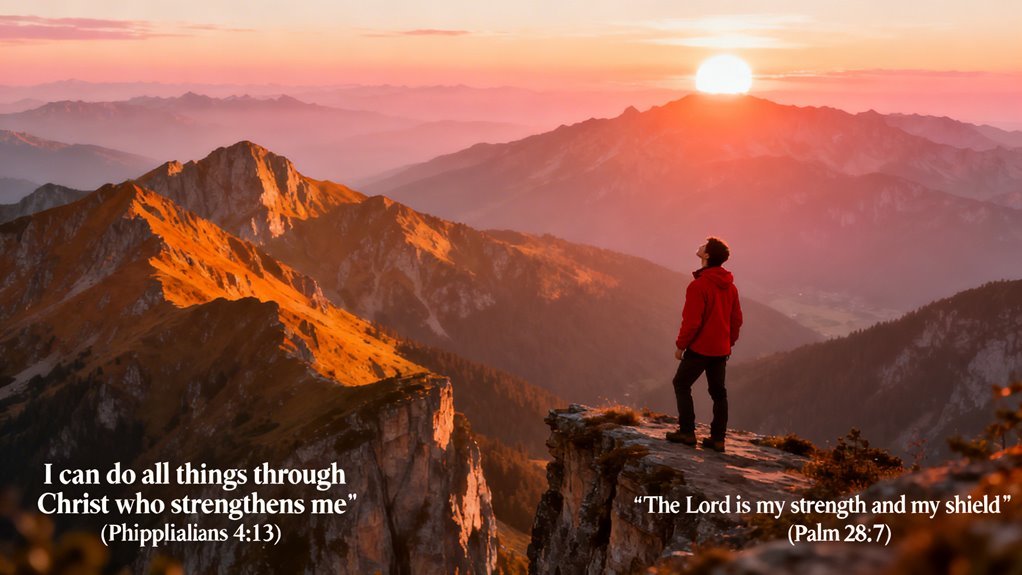
Need a quick boost of inner strength? You can turn to Scripture for instant empowerment. When you read Psalm 46:1—“God is our refuge and strength, an ever‑present help in trouble”—you feel a surge of confidence. Isaiah 40:31 reminds you that “those who hope in the Lord will renew their strength.” Let that promise lift you above fatigue. Philippians 4:13 declares, “I can do all things through Christ who strengthens me,” urging you to tackle obstacles head‑on. Each verse acts like a mental spark, rewiring doubt into resolve. Keep a list of these passages on your phone or sticky note; when anxiety creeps in, glance at them and inhale the assurance they carry. By embedding these truths into daily routine, you transform fleeting moments of weakness into lasting fortitude, all without waiting for external validation. Let Scripture be your immediate source of inner power.
Apply Scripture Motivation to Overcome Daily Challenges
How can you turn a hectic morning into a moment of calm? Picture yourself reaching for a favorite verse—perhaps Psalm 23’s “You prepare a table before me…”—and letting those words anchor your thoughts. As you sip coffee, repeat the promise aloud, letting it replace the rush with steadiness. When a deadline looms, recall Philippians 4:13: “I can do all things through Christ who strengthens me.” Let that truth fuel your focus, breaking tasks into bite‑size steps. If frustration spikes during traffic, breathe, and whisper Isaiah 40:31—“Those who hope in the Lord will renew their strength.” The rhythm of the verse steadies your pulse, turning irritation into patience. Throughout the day, keep a small card with a motivational scripture in your pocket. Whenever anxiety surfaces, pull it out, read, and feel the shift. By weaving scripture into ordinary moments, you transform challenges into opportunities for spiritual resilience.
Science Behind Scripture Motivation and Resilience
Ever wonder why a single verse can steady your heart amid chaos? Neuroscience shows that reading a familiar script triggers the brain’s reward circuitry, releasing dopamine and lowering cortisol. The prefrontal cortex, which governs self‑control, lights up when you focus on uplifting words, sharpening attention and reducing impulsive reactions.
Studies on “biblical meditation” reveal that repeated exposure to meaningful passages strengthens neural pathways linked to hope and perseverance, essentially rewiring stress responses. Hormonal shifts accompany this process: oxytocin rises, fostering social bonding and a sense of belonging, while the amygdala’s alarm signals mute, letting you stay calm under pressure.
Moreover, the narrative structure of scripture—conflict, struggle, resolution—mirrors the brain’s natural pattern‑recognition, making the message memorable and emotionally resonant. By engaging these mechanisms, you convert spiritual encouragement into measurable resilience, turning abstract faith into concrete physiological advantage.
Real‑World Stories of Scripture Motivation Success
When you hear a story of someone turning a painful setback into triumph, you’ll often find a single verse at its core—whether it’s a veteran soldier who clung to Psalm 23 during deployment, a cancer survivor who recited Romans 8:28 while undergoing chemotherapy, or an entrepreneur who quoted Proverbs 3:5‑6 before launching a risky startup.
You can picture a single mother in Detroit who faced eviction, yet clutched Philippians 4:13 and secured a promotion that saved her family.
A former inmate in Texas turned his life around after memorizing Jeremiah 29:11, now mentoring youth and preventing recurrences.
In Brazil, a young athlete broke a career‑ending injury by meditating on Isaiah 40:31, returning to win a national title.
These narratives aren’t myths; they’re evidence that scripture can ignite resilience, reshape identity, and guide decisive action.
When you encounter doubt, recall these real‑world testimonies and let the same verses fuel your own breakthrough.
Quick Techniques for Ongoing Scripture Motivation
These inspiring stories show that a single verse can spark a lasting change, but the real challenge is keeping that spark alive day after day. You can keep motivation fresh by setting a “verse alarm” on your phone—choose a short, powerful line and let it buzz at regular intervals. Pair each alert with a quick breath‑and‑repeat: inhale, recite the verse silently, exhale, and feel the words settle. Create a visual cue by writing a favorite line on a sticky note and placing it on your laptop, mirror, or fridge; the constant sight triggers reflection. Use a habit‑stacking app: link scripture reading to an existing routine, like brushing teeth or making coffee, so the act becomes automatic. Finally, journal in one sentence after each session, noting any shift in mood or perspective. This concise loop—alert, repeat, see, write—keeps the verse alive, fuels inner strength, and sustains motivation without overwhelming you.
Frequently Asked Questions
Do I Need a Specific Translation for Effective Scripture Motivation?
You don’t need a particular translation to feel motivated; any version that speaks to you’ll work. Choose a text that feels clear and resonant, because comprehension fuels inspiration. If a phrase feels clunky, try another rendering until it clicks. The key is internalizing the message, not the exact wording. So pick the translation that moves you, focus on the meaning, and let it drive your inner strength.
Can Scripture Quotes Replace Professional Mental Health Support?
No, scripture quotes can’t fully replace professional mental‑health support. They can lift your spirit, offer perspective, and remind you of hope, but they don’t provide diagnosis, evidence‑based treatment, or crisis intervention. Use them as a supplement—meditate on verses, pray, and share uplifting passages—while still seeking therapy, counseling, or medication when needed. Balancing faith and professional care gives you the strongest chance at lasting healing.
How Often Should I Recite Verses for Lasting Resilience?
You should recite verses at least once a day, preferably in the morning and before bed, to build lasting resilience. Consistency matters more than quantity, so a brief, focused session—five to ten minutes—keeps the message fresh in your mind. If you can add a quick pause during stressful moments, you’ll reinforce the strength instantly. Adjust the frequency as your schedule allows, but aim for daily practice to see lasting benefits.
Are There Cultural Considerations When Sharing Scripture Motivation?
Yes, you should respect cultural contexts when sharing scripture motivation. Different traditions interpret verses uniquely, so you’ll need to consider language nuances, religious sensitivities, and local customs. Avoid imposing your own perspective; instead, ask listeners how they relate to the text. Tailor examples to their cultural background, and be mindful of symbols or metaphors that might be misread. By honoring their worldview, you’ll foster genuine encouragement and deeper connection.
What if I Disagree With a Verse’s Message?
If you disagree with a verse’s message, you can still respect its cultural significance while critiquing its content. Acknowledge the author’s intent, then explain why the wording conflicts with your values or experiences. Offer alternative perspectives or personal reflections that better align with your worldview. Engaging in open dialogue encourages mutual understanding and shows that you honor the tradition without compromising your own convictions.
Conclusion
You’ve seen how a single verse can fire up your inner resolve, how science backs the boost, and how real people turn those words into daily triumphs. Keep these scriptures handy, let them shape your mindset, and revisit them whenever doubt creeps in. By turning faith into action, you’ll sustain the motivation you need to conquer every challenge that comes your way.











No Comments