

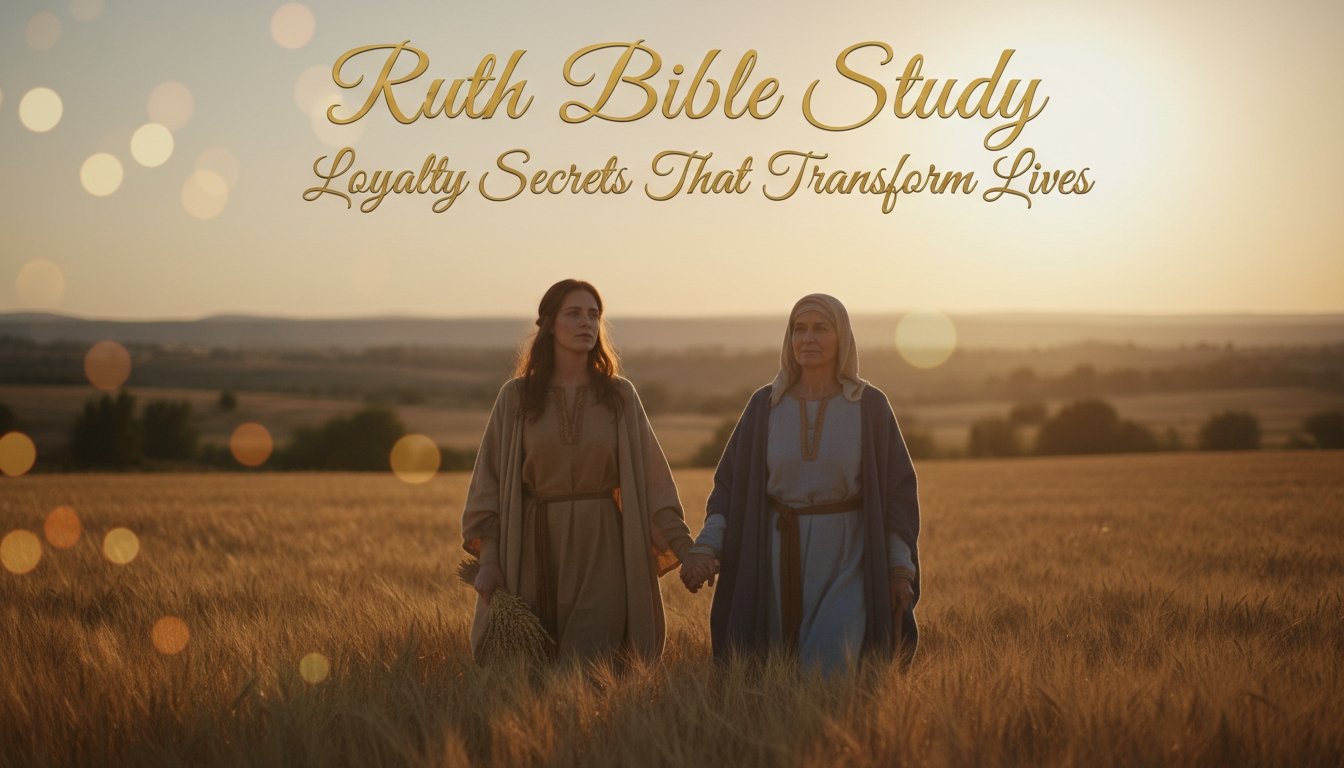
14 Feb Ruth Bible Study: Loyalty Secrets That Transform Lives
Ruth’s loyalty secrets transform lives through her radical covenant commitment that transcended cultural boundaries and blood relations. You’ll discover how her vow “your people will be my people and your God my God” redefined family through spiritual bonds rather than convenience. Ruth strategically built trust through consistent actions, turned disadvantage into opportunity through humble service, and took calculated risks that led to breakthrough. Her authentic leadership emerged through serving without recognition, demonstrating khesed (loyal love) that positioned her for divine providence. Ruth’s transformation from destitute Moabite widow to honored ancestor in David’s lineage reveals timeless principles for building relationships that endure beyond favorable circumstances. Explore how her strategic loyalty and unwavering character can revolutionize your approach to commitment.
Key Takeaways
- Ruth’s radical loyalty transcends blood relations, choosing covenant commitment over convenience and cultural expectations.
- Strategic trust-building through consistent actions and voluntary service positions Ruth for divine opportunities and community recognition.
- Bold risk-taking aligned with divine timing transforms Ruth’s disadvantages into breakthrough moments and lasting influence.
- Authentic character demonstrated through humility and serving others creates sustainable leadership that endures across generations.
- Loyalty investments in relationships during hardship yield transformational outcomes, elevating outsiders to positions of honor and legacy.
Ruth’s Radical Loyalty: The Decision That Redefined Family

Why would a young Moabite widow abandon everything familiar to follow her bitter mother-in-law into uncertainty? Ruth’s decision reveals covenant fidelity that transcends cultural boundaries and blood relations. When Naomi urged her daughters-in-law to return to Moab’s gods and people, Ruth chose radical loyalty instead. Her vow—”Your people will be my people and your God my God”—demonstrates foreign allegiance that completely redefines family.
Ruth’s commitment wasn’t merely emotional attachment; it represented theological transformation. She abandoned Moabite heritage and pagan worship, embracing Israel’s covenant God using His sacred name, Yahweh. Her solemn oath invoked divine judgment if she wavered, showing absolute dedication despite facing potential hostility as a foreigner in Bethlehem.
This loyalty redefined family beyond marriage ties to her deceased husband. Ruth created new kinship through spiritual commitment rather than bloodline, establishing covenant relationship that would ultimately place her in the Messianic lineage through her future son Obed. Jewish norms had discouraged intermarriage with Moabites due to the serious risk of idolatry, making Ruth’s acceptance even more remarkable.
Why Ruth’s Pledge Still Matters in Modern Relationships
You’ve likely made promises when circumstances were favorable, but Ruth’s pledge reveals why authentic commitment transcends convenience and comfort.
Her sacred vow demonstrates that meaningful relationships require choosing loyalty even when personal cost seems overwhelming. During the time of Judges, Ruth faced unprecedented instability and hardship that would have justified abandoning her commitment.
Through examining her decision to embrace love during devastating loss, you’ll discover how biblical faithfulness transforms modern relational dynamics from transactional exchanges into covenantal bonds.
Commitment Beyond Convenience
When contemporary relationships crumble under pressure, Ruth‘s ancient pledge to Naomi reveals a stark contrast between two fundamentally different relational frameworks.
You’re living in a contractual culture where commitment depends on convenience and mutual benefit. Ruth operated from a covenantal mindset that prioritized relationship over personal reward.
While modern discussions often veer into unrelated topic areas or tangent discussion about relationship dynamics, Ruth’s commitment transcended emotional convenience. She didn’t calculate cost-benefit analysis or wait for favorable circumstances. Her sacrificial choice offered no clear personal advantage, yet she remained steadfast through grief and uncertainty.
You can’t practice partial commitment—it either exists or doesn’t. Ruth’s unconditional loyalty demonstrates that authentic relationships require willingness to sacrifice personal comfort, challenging you to examine whether your commitments survive when convenience disappears.
Sacred Promises Matter
How does a pledge made between two widows on a dusty road thousands of years ago continue shaping the most sacred promises we make today? Ruth’s words in 1:16-17 provide the earliest recorded template for modern vows, emphasizing lifelong commitment “till death do us part.” Her pledge transcends gender boundaries, demonstrating that *khesed*—loyal love—applies across diverse relationships. When you examine contemporary wedding ceremonies, you’ll find Ruth’s language echoing through promises of unconditional devotion.
Her use of *dabaq* (clinging) mirrors marital binding, while her covenantal commitment models the depth modern vows aspire to achieve. Ruth’s oath proves that sacred promises, rooted in divine accountability and selfless loyalty, possess transformative power across cultures and centuries, inspiring acceptance of diverse relationships built on genuine commitment.
Love Through Loss
Why does genuine loyalty emerge most powerfully in seasons of devastating loss? Ruth’s unwavering commitment to Naomi demonstrates how authentic relationships transcend convenience and cultural expectations. When Naomi released both daughters-in-law from obligation, Ruth chose deliberate clinging—using the Hebrew word for marital bonding or cleaving to God. This wasn’t emotional manipulation but covenant love in action.
Unlike modern skepticism that views loyalty as weakness, Ruth’s choice revealed transformative strength. She forsook homeland, family, and security for an unknown future, demonstrating that true commitment flourishes when stripped of external benefits. Her vow invoked Yahweh’s name, creating legal and emotional bonds that positioned her as covenantal daughter.
Political power structures couldn’t compel such devotion—only love could. Ruth’s loyalty ultimately brought redemption, blessing entire nations through her lineage.
Ruth’s Strategic Approach to Building Trust and Reputation

Ruth’s reputation wasn’t built through grand proclamations but through deliberate actions that consistently aligned with her declared loyalties. You’ll notice she transformed from a foreign widow into a woman of noble character by demonstrating unwavering faithfulness in small, daily choices that others could observe and verify.
Her strategic approach reveals how authentic trust develops when your character remains constant across different seasons and circumstances, ultimately positioning you for unexpected opportunities and favor.
Actions Over Empty Words
What distinguishes authentic loyalty from mere sentiment becomes evident through Ruth’s deliberate shift from verbal declarations to sustained action. You’ll notice Ruth didn’t simply promise devotion—she initiated gleaning to provide tangible sustenance for Naomi. This proactive dedication bridged trust gaps that words alone couldn’t span, demonstrating commitment through observable behavior rather than empty declarations.
Ruth’s reputation as “a woman of noble character” emerged from consistent workplace conduct, not self-promotion. When Boaz acknowledged that her reputation preceded direct introduction, you see how daily choices in fields and relationships created social standing independent of circumstances. Her actions transcended cultural boundaries, earning respect as a foreigner caring for an unrelated elder. Silent dissent could’ve undermined her commitment, yet Ruth’s sustained obedience grounded abstract promises in concrete sacrifice.
Consistent Character Through Seasons
Since genuine character emerges most clearly during prolonged testing, Ruth’s strategic consistency across multiple seasons reveals how sustained integrity builds unshakeable reputation.
You’ll notice Ruth demonstrated economic resilience by maintaining unwavering work ethic despite harsh conditions as a vulnerable foreigner. Her workplace ethics in Boaz’s fields earned recognition without self-promotion – proving that consistent moral behavior speaks louder than empty declarations.
Ruth’s character remained steady whether gleaning grain, following Naomi’s counsel, or navigating cultural barriers. This consistency across seasons created compound credibility that opened extraordinary doors.
Boaz affirmed her noble reputation was known throughout Bethlehem (Ruth 3:11). You can’t fake sustained integrity – it either endures testing or crumbles under pressure. Ruth’s unbroken faithfulness in ordinary moments positioned her for God’s extraordinary plan.
Humble Service Builds Influence
How does voluntary service become a pathway to extraordinary influence? Ruth’s gleaning demonstrates a transformational principle: humility strategically positions you for leadership opportunities. Rather than demanding recognition, she initiated service without coercion, taking responsibility for household provision through backbreaking labor. Her consistent work ethic—”from morning till now”—created credibility among Boaz’s workers and community leaders.
Ruth’s permission-seeking approach and grateful acknowledgment of her foreigner status revealed strategic submission that opened doors. In our economy ethics discussions around urban decline, we observe similar patterns: those who serve first, ask permission, and maintain humble postures often gain greater influence than those demanding immediate recognition. Ruth’s sustained faithfulness transformed her from outsider to valued community member, demonstrating that humble service builds lasting influence through character visibility and trust.
How Ruth Turned Disadvantage Into Opportunity Through Service
When circumstances stripped Ruth of security, status, and sustenance, she transformed her vulnerability into a strategic advantage through deliberate acts of service. Rather than wallowing in disadvantage, Ruth leveraged Torah provisions for immigrants and poor, positioning herself in harvest fields where divine providence could intersect human need.
Her consistent labor from dawn to dusk demonstrated character that transcended cultural barriers. While temple sacrifices and tithing norms provided structured religious expression for Israelites, Ruth’s service became her worship—a living sacrifice that caught Boaz’s attention and earned his protection.
Ruth’s bold threshing floor proposal exemplified strategic risk-taking rooted in service. She didn’t manipulate circumstances for personal gain but positioned herself as handmaid, prioritizing Naomi’s restoration. This servant’s heart transformed widowhood into royal lineage, poverty into prosperity, and foreign status into covenant membership. Service became Ruth’s pathway from disadvantage to dynasty.
Ruth’s Bold Move: When Taking Risks Leads to Breakthrough

What drives someone to risk everything on a single, audacious move that could either secure their future or destroy their reputation forever? Ruth’s decision to follow Naomi’s threshing floor plan reveals how calculated risks become catalysts for divine breakthrough.
Naomi’s strategic instructions weren’t reckless gambling—they were faith-driven action targeting Boaz’s role as guardian-redeemer. Ruth’s immediate agreement, “All that you say to me I’ll do,” demonstrates unwavering trust despite understanding the threshing floor risks involved. As a widowed Moabite, her vulnerability was already pronounced, making this midnight encounter potentially catastrophic.
Yet Ruth’s pattern of loyalty—from leaving Moab to gleaning fields—prepared her for this pivotal moment. Her Moabite vulnerability became irrelevant when weighed against her demonstrated khesed. The plan succeeded because it aligned bold action with divine providence, transforming what appeared dangerous into God’s redemptive pathway. Sometimes breakthrough requires stepping beyond safety into faith’s uncertain territory.
What Ruth Teaches About Authentic Leadership and Character
Why does authentic leadership endure across millennia while countless management fads fade into obscurity? Ruth’s story reveals timeless principles embedded in cultural heritage that transcend temporal boundaries.
Authentic leadership rooted in timeless character principles outlasts fleeting management trends because it addresses humanity’s deepest needs for trust and purpose.
You’ll discover Ruth’s leadership emerges through humility—she serves without seeking recognition. Her initiative in gleaning fields demonstrates proactive character, taking necessary action during crisis. She doesn’t wait for permission or perfect conditions.
Boaz exemplifies integrity through proper land redemption procedures. He follows legal protocols, ensuring ethical conduct that builds trust. His transparency in business dealings creates standards for authentic leadership.
Their faithfulness to commitments inspires confidence. Ruth’s unwavering loyalty to Naomi and Boaz‘s protection of vulnerable people showcase servant leadership principles.
You’ll notice their leadership flows from character, not position. They prioritize others’ welfare, demonstrate consistency between values and actions, and build relationships through genuine care. These qualities create lasting influence because they address fundamental human needs for trust, security, and purpose.
Ruth’s Transformation: From Outsider to Honored Ancestor
How does someone progress from complete outsider to revered ancestor in biblical history? Ruth’s transformation defied every social expectation of ancient Israel’s gender dynamics and economic policy structures.
You’ll notice Ruth entered Bethlehem as a triple outsider—Moabite, widow, and destitute gleaner dependent on Israel’s economic safety nets. Jewish law excluded Moabites for ten generations, yet Ruth’s loyalty transcended ethnic barriers. She strategically navigated Israel’s gleaning laws, demonstrating respect for their economic policy while securing survival.
Boaz’s recognition of Ruth’s character challenged prevailing gender dynamics. He elevated her from marginalized foreigner to protected gleaner, then kinsman-redeemer candidate. This progression wasn’t accidental—Ruth’s consistent loyalty and cultural adaptation earned unprecedented favor.
Her ultimate transformation culminated in marriage, motherhood, and integration into David’s lineage. You’re witnessing how authentic character can override systemic exclusion, proving that outsider status needn’t define destiny when coupled with unwavering commitment to community.
Living Ruth’s Example: Practical Steps for Loyal Living Today
When you examine Ruth’s loyalty through a modern lens, her character traits reveal actionable principles that transcend ancient Israel’s cultural boundaries. Ruth’s commitment demonstrates how you can transform disadvantage into opportunity through persistent dedication.
As cultural outsiders face integration challenges today, Ruth’s approach offers practical guidance. She didn’t demand acceptance but earned it through consistent character and hard work. You can apply this by investing in relationships before expecting returns, demonstrating reliability through small actions, and maintaining integrity during difficult seasons.
Ruth’s social mobility resulted from strategic loyalty combined with diligent effort. She gleaned fields persistently, showing initiative while respecting boundaries. You can mirror this by identifying mentors who align with your values, contributing meaningfully to their vision, and remaining humble during advancement opportunities.
Her sacrificial commitment to Naomi created unexpected pathways to blessing. When you prioritize others’ welfare over immediate comfort, you often discover that faithful service opens doors beyond your original expectations.
Frequently Asked Questions
What Specific Hebrew Words Did Ruth Use in Her Original Loyalty Pledge?
Ruth’s loyalty pledge contains specific Hebrew phrasing that reveals covenant depth. You’ll find “telkhi ‘elekh” (where you go I’ll go) and “talini” (where you lodge).
She declares “‘am” (your people my people) and “‘Elohim” (your God my God).
Her oath invokes “YHWH” with “lashuv” (to return/turn back), creating binding commitment.
These Hebrew words demonstrate Ruth’s complete conversion and covenant loyalty beyond cultural expectations.
How Does Ruth’s Story Connect to the Genealogy of Jesus Christ?
Ruth and Boaz’s marriage creates a direct genealogical line to Jesus Christ through their son Obed. You’ll find this connection explicitly detailed in Ruth 4:18-22 and Matthew 1:5, where Ruth’s Moabite heritage demonstrates God’s inclusive redemptive plan. Her transformation from cursed outsider to Christ’s ancestor reveals how God’s grace transcends ethnic barriers, foreshadowing the gospel’s universal reach to all nations through Jesus.
What Was the Cultural Significance of the Threshing Floor in Ancient Israel?
You’ll find that threshing floors functioned as vital communal spaces where agricultural, social, and sacred activities intersected in ancient Israel. The threshing floor rituals weren’t merely economic—they represented places of covenant-making, divine encounter, and community bonding. Ruth’s non-Israelite loyalty vow at Boaz’s threshing floor demonstrates how these spaces facilitated cross-cultural integration and redemptive relationships, ultimately connecting her to Israel’s covenant community and Messianic lineage.
Why Was Levirate Marriage Important for Preserving Family Inheritance Rights?
Levirate marriage protected your family’s inheritance rights by ensuring ancestral lands remained within the clan through strategic levirate politics. When you married your deceased brother’s widow, you’d raise an heir who legally inherited his property, not yours. This system prevented outsiders from acquiring tribal lands while maintaining bloodline continuity. You’re essentially serving as a guardian of generational wealth, fulfilling covenant obligations that preserved Israel’s territorial integrity through kinship structures.
What Historical Evidence Supports Ruth’s Story During the Period of Judges?
Archaeological pollen samples from Israel Finkelstein’s research confirm late 12th century BCE drought in the Levant, validating Ruth 1:1’s famine narrative. You’ll find the Sociopolitical Context matches judges-era moral chaos described in Judges 17:6, while Agricultural Practices suffered during this documented climatic crisis. The genealogy linking Boaz to David through Ruth 4:21-22 anchors the story chronologically within the judges period’s final century.
Conclusion
You’ve seen Ruth’s covenant faithfulness (ḥesed) transform her narrative trajectory from vulnerable foreigner to covenant matriarch. Her strategic loyalty wasn’t passive sentiment but active commitment requiring calculated risks. You’re witnessing covenant theology lived out—where faithful relationship precedes material security. Ruth’s exegetical significance lies in demonstrating how God’s ḥesed operates through human agency. You can’t separate her character development from Israel’s redemptive history. She embodies covenant loyalty that transcends ethnic boundaries while establishing messianic lineage.










No Comments