

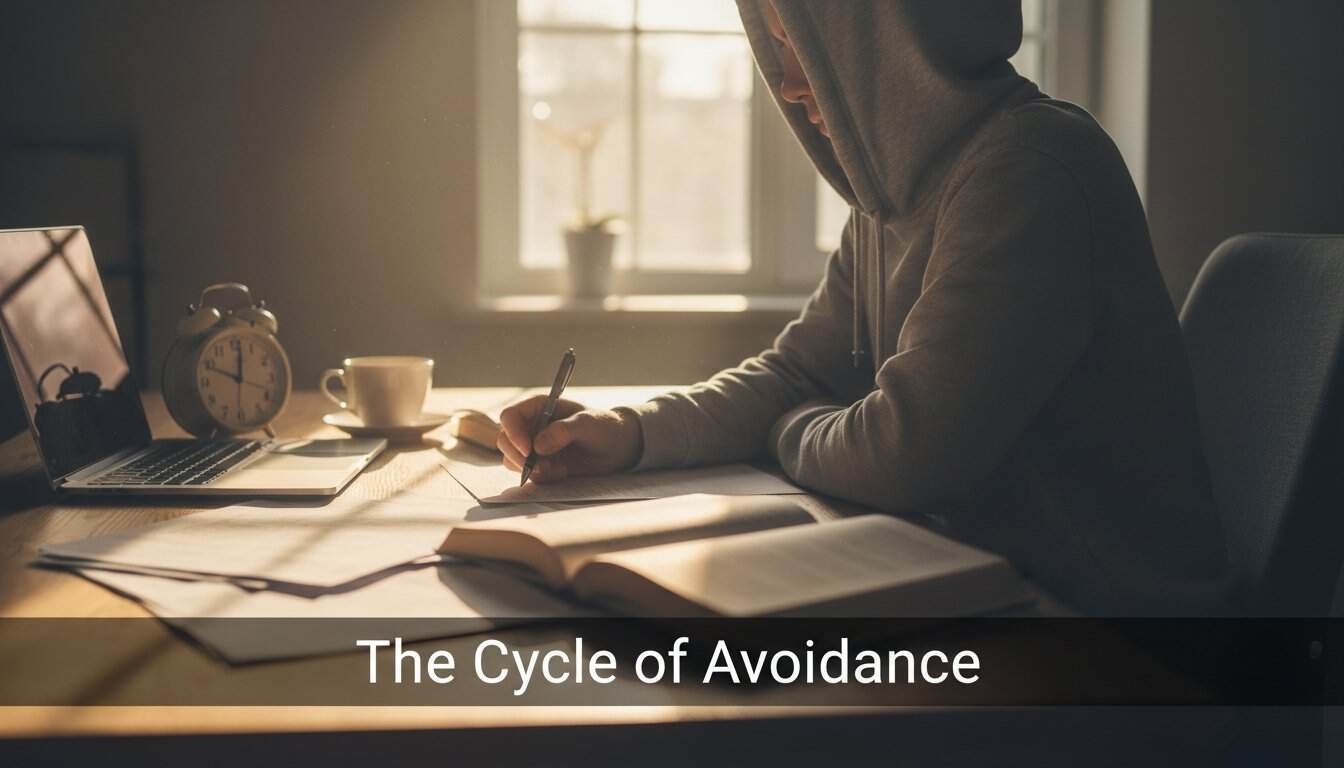
16 Jan Why Procrastination Is Actually Self Sabotage (And How to Stop)
Procrastination isn’t laziness—it’s your brain’s protective mechanism against perceived threats like failure or judgment. Your dopamine system prioritizes immediate rewards over long-term benefits, making social media more appealing than important tasks. Fear triggers fight-or-flight responses that cause avoidance, while perfectionism creates impossible standards that delay starting. You can break this cycle by using micro-commitments, setting 5-minute timers, and tracking emotional triggers. Understanding your specific procrastination patterns reveals how to rewire these self-sabotaging behaviors permanently.
Table of Contents
Key Takeaways
- Your brain’s dopamine system prioritizes instant gratification over long-term goals, making procrastination neurologically rewarding despite harmful consequences.
- Perfectionism and fear of judgment create impossible standards that delay action, turning high achievers into their own worst enemies.
- Procrastination triggers fight-or-flight responses that flood your system with stress hormones, creating a cycle of avoidance and anxiety.
- Break the pattern using timer methods and micro-commitments to make overwhelming tasks feel manageable and build momentum through small wins.
- Track your procrastination triggers for one week, then create specific intervention strategies and accountability systems tailored to your patterns.
Why Your Brain Chooses Procrastination Over Progress

Why does your brain consistently steer you toward scrolling social media instead of tackling that important project?
Your brain operates on a dopamine loop that prioritizes immediate rewards over long-term benefits.
Social media, entertainment, and other distractions provide instant gratification, flooding your system with feel-good chemicals.
Your brain craves the instant dopamine hit from notifications and likes, making distractions irresistibly more appealing than meaningful work.
Meanwhile, important tasks often involve delayed rewards, making them neurologically less appealing.
Your time perception also works against you.
When facing a challenging project, your brain distorts how long it’ll take, making the task feel overwhelming.
This triggers your fight-or-flight response, and since you can’t physically fight a deadline, you flee through procrastination.
Additionally, perfectionism amplifies this cycle.
You delay starting because you fear the outcome won’t meet your standards.
Your brain convinces you that avoiding the task altogether feels safer than risking failure, creating a self-sabotaging pattern that reinforces itself with each delay.
The 4 Hidden Triggers That Cause Procrastination
Understanding these brain mechanisms reveals only part of the story—specific triggers consistently activate your procrastination patterns before you even realize what’s happening.
The first hidden trigger is perfectionism disguised as high standards.
You delay starting because the outcome mightn’t meet your impossible expectations.
Your brain interprets this as protecting your self-worth.
Fear of judgment creates the second trigger.
You postpone tasks that expose you to potential criticism, even when feedback is necessary for growth.
Overwhelm acts as the third trigger when tasks feel too complex or unclear.
Your mind chooses avoidance over breaking projects into manageable steps.
The fourth trigger involves emotion signals your body sends when facing discomfort.
Physical sensations like tension, restlessness, or fatigue often precede procrastination episodes.
These physiological responses warn your brain of perceived threats, activating avoidance behaviors automatically.
Recognizing these hidden triggers allows you to interrupt procrastination before it takes control.
Simple Techniques To Stop Procrastinating When Fear Hits
When fear triggers your procrastination response, your nervous system activates fight-or-flight mode, flooding your body with stress hormones that make productive action feel impossible.
Your brain interprets the task as a threat, causing you to freeze or flee through avoidance behaviors.
The timer method disrupts this cycle by making commitment feel manageable. Set a timer for just 5-10 minutes and commit only to working until it rings.
This brief timeframe tricks your fear response because there’s a clear escape route. Often, you’ll discover the task isn’t as threatening as anticipated and continue beyond the timer.
Breaking overwhelming projects into tiny steps further reduces fear activation. Instead of “write the report,” try “open the document” or “write one paragraph.”
These micro-commitments feel safe to your nervous system while creating momentum. Each completed tiny step builds confidence and proves the feared outcome won’t materialize, gradually rewiring your procrastination patterns.
How To Build Anti-Procrastination Habits That Actually Stick
Breaking the procrastination cycle with techniques is just the beginning—lasting change requires embedding new behaviors into your daily routine.
Through systematic habit formation.
Start small with micro-habits that feel almost trivially easy. Instead of committing to work for hours, begin with just five minutes. Your brain won’t resist such minimal effort, making consistency achievable.
Create accountability rituals that reinforce your new patterns. Track your progress visually using a simple chart or app. Share your commitments with someone who’ll check in regularly. These external structures compensate for internal motivation fluctuations.
Stack new anti-procrastination behaviors onto existing habits you already perform consistently. If you always drink morning coffee, use that moment to review your daily priorities. This habit stacking leverages your brain’s existing neural pathways.
Focus on identity shift rather than just behavior change. Think “I’m someone who tackles tasks immediately” instead of “I should stop procrastinating.” This subtle reframe transforms temporary actions into permanent character traits.
Creating Your Personal Procrastination Recovery Plan
Why do some people successfully overcome chronic procrastination while others remain stuck despite knowing all the right strategies?
The difference lies in having a personalized recovery plan that addresses your specific self-sabotage patterns.
Start by identifying your procrastination triggers through a week-long tracking exercise.
Note when you delay tasks, what emotions surface, and which environments enable avoidance.
This data reveals your unique sabotage blueprint.
Next, design a plan structure that matches your personality.
If you’re detail-oriented, create step-by-step protocols.
If you’re big-picture focused, establish milestone markers.
Include specific intervention strategies for each identified trigger.
Choose accountability partners who understand your recovery journey—not just cheerleaders, but people who’ll call out your excuses compassionately.
Schedule weekly check-ins where you review progress honestly.
Frequently Asked Questions
Is Procrastination Linked to Specific Mental Health Conditions Like ADHD or Depression?
Yes, you’re dealing with real neurological connections.
ADHD often involves executive dysfunction that makes task initiation difficult, despite common ADHD myths suggesting it’s just laziness. There’s also a strong depression link – when you’re depressed, your brain struggles with motivation and energy regulation.
Both conditions create genuine barriers to action that aren’t character flaws but treatable symptoms requiring professional support.
Can Procrastination Ever Be Beneficial or Lead to Positive Outcomes?
Yes, you can experience creative benefits from procrastination when it allows your subconscious to process ideas.
Some people thrive under pressure through deadline learning, producing their best work when time’s limited.
However, research shows these positive outcomes typically occur in moderate procrastinators, not chronic ones.
If you’re consistently relying on last-minute pressure, you’re likely experiencing diminishing returns and increased stress rather than genuine benefits.
How Does Procrastination Affect Relationships With Family, Friends, and Coworkers?
Your procrastination creates trust erosion when you repeatedly miss commitments or deliver last-minute work.
Family members feel deprioritized, friends experience communication gaps when you avoid difficult conversations, and coworkers lose confidence in your reliability.
You’re unconsciously pushing people away by creating patterns of disappointment and unpredictability.
These damaged relationships reinforce feelings of shame and isolation, creating a cycle that makes procrastination feel safer than authentic connection and accountability.
What Role Does Perfectionism Play in Chronic Procrastination Patterns?
Perfectionism traps you in procrastination by making tasks feel impossibly daunting.
When you set unrealistic standards, you’re paralyzed by fear of producing anything less than flawless work.
Your brain delays starting because it anticipates failure to meet these impossible expectations.
Research shows perfectionist procrastinators spend more time worrying about outcomes than actually working, creating a cycle where avoidance feels safer than risking imperfection.
Are There Medications or Supplements That Can Help Reduce Procrastination Tendencies?
While there’s no magic pill for procrastination, you can optimize your brain chemistry through strategic caffeine timing—consuming it 90-120 minutes after waking maximizes alertness without afternoon crashes.
However, beware of placebo effects when trying supplements like L-theanine or omega-3s; evidence remains limited.
You’ll see better results addressing underlying issues like ADHD through proper medical evaluation rather than self-medicating with unproven cognitive enhancers.
Conclusion
You’ve learned that procrastination isn’t laziness—it’s your brain protecting you from perceived threats like failure or judgment. Research shows you can rewire these patterns by identifying your triggers, using micro-commitments, and building consistent habits. Your procrastination serves a purpose, but it doesn’t have to control you. Start with one small technique today. Your future self will thank you for breaking this cycle of self-sabotage and choosing progress over protection.












No Comments