


13 Jan The 2 Minute Bedtime Prayer That Guarantees Better Sleep According to Scripture
You can transform restless nights into peaceful sleep with a simple 2-minute biblical prayer structure: spend 30 seconds in gratitude, 45 seconds surrendering your worries to God, 30 seconds meditating on Scripture like Psalm 4:8 (“In peace I will lie down and sleep”), and 15 seconds blessing others. This isn’t about rushing through God’s presence—it’s about deliberately connecting with His promise that sleep is a sacred gift for His beloved. When you anchor your rest in Scripture rather than anxiety, you’ll discover how this ancient practice activates supernatural peace that dissolves worry and transforms your bedroom into a sanctuary where God’s restorative power works.
Table of Contents
Key Takeaways
- Follow a structured 2-minute prayer: 30 seconds gratitude, 45 seconds surrender, 30 seconds Scripture meditation, 15 seconds blessing others.
- God promises peaceful sleep to His beloved through Psalm 127:2 and Psalm 4:8 as sacred gifts woven into divine design.
- Biblical sleep prayers work by addressing the soul’s deepest needs and activating God’s supernatural peace beyond mere relaxation techniques.
- Avoid prayer mistakes like carrying guilt, rehearsing tomorrow’s worries, or rushing through prayers instead of dwelling in God’s presence.
- Build consistent nightly routine by choosing specific times, anchoring prayer to existing habits, and preparing hearts through thanksgiving.
The Complete 2-Minute Biblical Bedtime Prayer (Step-by-Step)
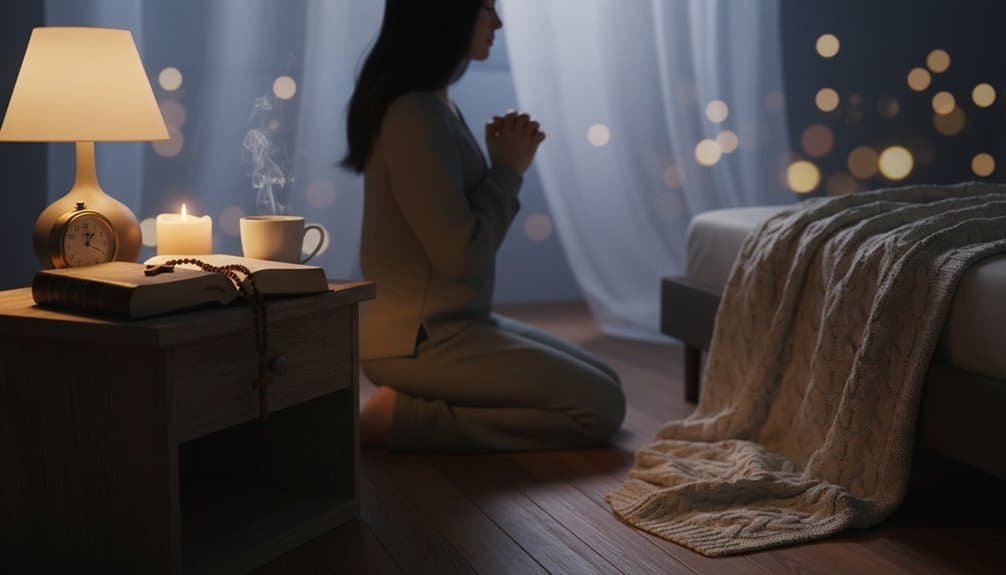
When anxiety weighs heavy on your heart and sleep feels elusive, God’s Word offers a gentle pathway to rest through intentional prayer. This biblical prayer structure creates a sacred bridge between your worries and God’s peace.
Step 1: Gratitude (30 seconds)
Begin by thanking God for three specific blessings from your day. Psalm 107:1 reminds us to “give thanks to the Lord, for he’s good.
Step 2: Surrender (45 seconds)
Release your concerns to God using Philippians 4:6-7. Name each worry specifically, then declare your trust in His sovereignty.
Step 3: Scripture Meditation (30 seconds)
Recite Psalm 4:8: “In peace I’ll lie down and sleep, for you alone, Lord, make me dwell in safety.”
Step 4: Blessing Others (15 seconds)
Pray briefly for family members or friends, following Christ’s example of intercessory love.
This timing focus ensures you don’t rush through God’s presence while preventing overthinking that disrupts sleep preparation.
What Scripture Reveals About God’s Promise of Peaceful Sleep
How deeply does God care about your nightly rest? Scripture reveals that your sleep isn’t an afterthought to the Creator—it’s a divine gift woven into His very design for your life.
Psalm 127:2 declares that God “gives sleep to his beloved,” establishing sleep as a direct blessing from your heavenly Father.
Sleep flows as a sacred gift from your heavenly Father’s heart, marking you as His treasured beloved.
This isn’t merely physical rest; it’s divine rest that restores both body and spirit.
When Psalm 4:8 promises, “In peace I’ll lie down and sleep,” it reveals God’s covenant of safety over your vulnerable hours.
Proverbs 3:24 assures you that “when you lie down, you won’t be afraid; when you lie down, your sleep will be sweet.”
This promised peace isn’t conditional on circumstances—it flows from God’s unchanging character as your protector.
Your Creator designed sleep as sanctuary time, where His presence guards your heart and mind through the night’s darkness.
Why Biblical Sleep Prayers Work Better Than Counting Sheep
While countless restless minds have turned to counting sheep, your spirit craves something deeper than mental tricks—it yearns for divine connection.
Biblical sleep prayers possess proven efficacy that transcends worldly remedies because they address your soul’s deepest needs.
When you pray before sleep, you’re not merely engaging in positive thinking—you’re activating God’s supernatural peace.
Scripture demonstrates this biblical efficacy through countless testimonies of believers who experienced profound rest through prayer.
Unlike counting sheep, which only occupies your mind temporarily, prayer benefits include surrendering your burdens to Christ and receiving His promised peace.
Prayer transforms your bedroom into a sanctuary where anxiety dissolves.
As you speak God’s Word over your circumstances, His truth replaces worry.
Your mind stops racing because you’ve entrusted everything to your heavenly Father.
This divine exchange—your fears for His peace—creates the perfect environment for restorative sleep that counting sheep simply can’t provide.
Sleep Prayer Mistakes That Block God’s Restful Peace
Even sincere believers can unknowingly sabotage their sleep prayers through common mistakes that hinder God’s restful peace.
The most destructive error involves carrying guilt patterns into prayer time.
When you approach God with shame about past failures or today’s shortcomings, you’re essentially rejecting His forgiveness.
Scripture declares, “There is therefore now no condemnation for those who are in Christ Jesus” (Romans 8:1).
Release guilt before praying—God’s already forgiven you.
Fear patterns create another barrier.
Bringing tomorrow’s worries, health concerns, or relationship anxieties into prayer activates your mind rather than calming it.
Jesus commanded, “Do not worry about tomorrow” (Matthew 6:34).
Instead of rehearsing fears, surrender them completely to God’s capable hands.
Finally, rushing through prayers treats God like a cosmic vending machine.
He desires intimate fellowship, not hurried transactions.
Slow down, breathe deeply, and rest in His loving presence.
When you eliminate these mistakes, prayer becomes your pathway to peaceful sleep.
Building Your Nightly Prayer Routine for Consistent Rest
Start your consistent cadence by choosing a specific time each night.
Whether it’s immediately after brushing your teeth or while lying in bed, anchor your prayers to an existing habit.
This creates automatic triggers that remind you to seek God’s rest.
Your nightly devotion doesn’t require lengthy prayers.
Quality over quantity matters most in prayer—brief, heartfelt moments with God create deeper connection than lengthy, unfocused conversations.
Two minutes of focused communion with God proves more powerful than rushed, distracted petitions.
Prepare your heart by removing distractions—put away devices, dim lights, and quiet your mind.
Begin with thanksgiving, confess any burdens weighing on your spirit, then invite God’s peace to guard your heart and mind.
As Philippians 4:7 promises, His peace surpasses understanding.
Consistency builds trust, allowing God’s restful presence to become your nightly companion.
Frequently Asked Questions
Can Children Use This Bedtime Prayer or Is It Only for Adults?
You can absolutely use this bedtime prayer with children. Jesus welcomed little ones, saying “Let the children come to me” (Matthew 19:14). With proper parental guidance, you’ll help your child develop a beautiful habit of seeking God’s peace before sleep. Consider child suitability by simplifying language for younger ones, but the prayer’s scriptural foundation makes it perfect for nurturing faith and rest in children’s hearts.
What if I Fall Asleep Before Completing the Full 2-Minute Prayer?
If you fall asleep before completing the prayer, God’s grace covers your sincere heart.
Scripture teaches that He knows your intentions before you speak them (Matthew 6:8).
Consider timing adjustments like starting your prayer earlier or allowing completion flexibility by focusing on shorter, heartfelt phrases.
Your genuine desire to seek Him matters more than perfect execution.
Rest peacefully knowing He hears even your unfinished prayers.
Should I Pray Silently or Out Loud for Maximum Effectiveness?
Both silent and audible prayer hold equal effectiveness before God, as He hears your heart’s intentions.
The silent approach offers intimacy and won’t disturb others, making it ideal for bedtime.
However, if audible effectiveness helps you focus and feel more connected to your prayers, speak softly.
Scripture shows Jesus prayed both ways. Choose what draws you closer to God’s peace tonight.
Can This Prayer Help With Nightmares and Recurring Bad Dreams?
Yes, this prayer can powerfully combat nightmares and bad dreams.
When you surrender your sleep to God’s protection, you’re invoking His peace over your subconscious mind.
Scripture promises He “gives His beloved sleep” (Psalm 127:2).
Nightmare coping becomes easier when you trust God’s sovereignty over dream symbolism and disturbing images.
You’ll find that consistent prayer creates a spiritual hedge around your rest, replacing fear with divine comfort and peaceful sleep.
Is It Okay to Pray This in Bed or Should I Kneel?
You can absolutely pray in bed! God hears your heart regardless of your physical position.
While bedside kneeling shows reverence, Scripture emphasizes sincere faith over posture.
Jesus prayed in various positions, and David wrote Psalms from his bed.
Choose whatever comfort posture allows you to focus on God without distraction.
Whether lying down, sitting, or kneeling, your genuine prayer matters most to Him.
Conclusion
You don’t have to struggle with restless nights anymore. God’s Word promises peace to those who seek Him before sleep, and He’s faithful to deliver. Start tonight with this biblical bedtime prayer, trusting that the Lord who “gives His beloved sleep” (Psalm 127:2) will honor your faith. As you consistently bring your worries to His throne, you’ll discover the deep, restorative rest your soul craves. Sweet dreams await you.











No Comments