

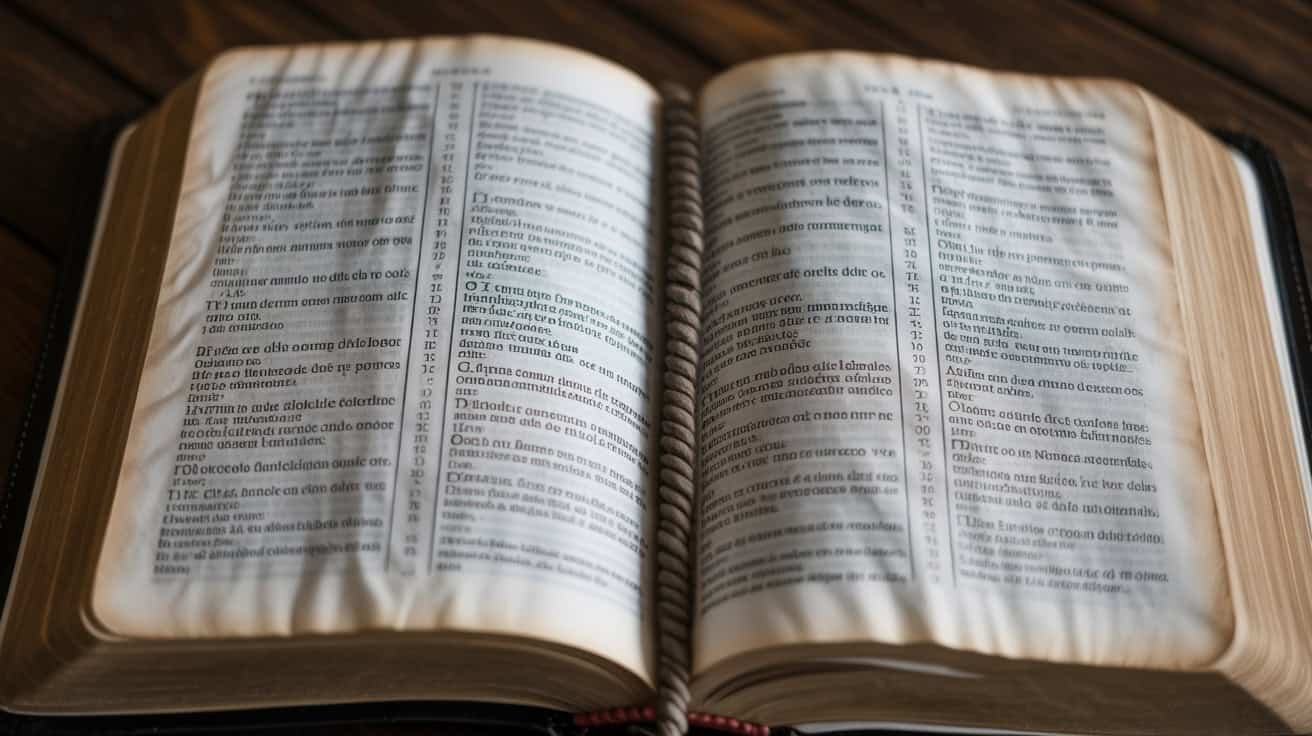
08 Sep Powerful Biblical Quotes in Spanish Citas Bíblicas en Español
When you explore biblical quotes in Spanish, you’ll discover treasures like “Porque de tal manera amó Dios al mundo” (Juan 3:16) and “Todo lo puedo en Cristo que me fortalece” (Filipenses 4:13), verses that’ve sustained Hispanic believers through centuries of faith. Spanish Scripture preserves theological precision while revealing nuances through gendered nouns and the subjunctive mood that English can’t capture. These sacred texts shape Hispanic Christianity’s devotional practices, artistic expressions, and daily discourse in ways that continue transforming communities worldwide.
Table of Contents
Key Takeaways
- Juan 3:16, Filipenses 4:13, Salmo 23, Jeremías 29:11, and Romanos 8:28 are among the most beloved Spanish Bible verses offering comfort and hope.
- Spanish Bible translations preserve theological precision while utilizing distinctive syntax, gendered nouns, and the subjunctive mood to convey divine mystery.
- Major Spanish versions include Reina-Valera (formal equivalence) and Dios Habla Hoy (dynamic equivalence), each serving different reader preferences and regional audiences.
- Spanish biblical quotes have shaped Western civilization’s spiritual consciousness for five centuries, influencing art, law, education, and daily discourse.
- Memorizing Spanish Scripture engages unique cognitive pathways through phonetic consistency, rhythmic cadences, and natural mnemonic devices embedded in the language.
Most Beloved Spanish Bible Verses and Their Meanings

When you explore the sacred texts in Spanish, you’ll discover that certain verses resonate profoundly within Hispanic communities, carrying theological weight that transcends mere translation.
Juan 3:16’s “Porque de tal manera amó Dios al mundo” exemplifies how Spanish renders divine love with distinctive emotional depth through its syntax and verb forms.
Spanish syntax transforms divine love into profound emotional expression through its distinctive verb forms and linguistic structure.
You’ll find that Filipenses 4:13‘s “Todo lo puedo en Cristo que me fortalece” holds particular significance in Latin American cultural context, where faith intertwines with perseverance through adversity.

The verse’s structure emphasizes Christ’s strengthening power more explicitly than English translations.
Through careful verses analysis, you’ll notice Salmo 23‘s “El Señor es mi pastor” employs intimate pronouns that establish personal covenant relationships.
Spanish biblical language preserves ancient Hebraic parallelisms while adapting to Romance linguistic patterns.
These beloved passages don’t merely translate meaning—they transform it, creating unique theological expressions that shape Hispanic spiritual identity and communal worship practices.
The History and Impact of Spanish Bible Translations

When you trace the Spanish Bible’s journey from medieval monasteries to modern digital platforms, you’ll discover how early scholars like Casiodoro de Reina and Cipriano de Valera shaped centuries of Hispanic faith through their revolutionary translations.

These sacred texts didn’t merely convert Hebrew and Greek words into Spanish; they transformed entire civilizations, embedding biblical language into legal systems, literature, and the collective consciousness of Spanish-speaking peoples.
You’re witnessing this profound cultural religious influence today whenever Spanish proverbs echo scripture or when Latin American art depicts biblical narratives through distinctly Hispanic theological perspectives.
Early Translation Efforts
Although the Spanish Bible translations we’re familiar with today represent centuries of scholarly refinement, the earliest efforts to render Scripture into Castilian emerged during medieval Spain’s complex religious landscape.
You’ll find that thirteenth-century scholars produced the first significant early manuscript versions, including the Biblia Alfonsina commissioned by Alfonso X. These pioneering translators faced profound translation challenges when converting Hebrew and Greek texts into vernacular Spanish.
They’d grapple with theological terminology that lacked Castilian equivalents, forcing creative linguistic solutions. You can’t overlook how the Inquisition’s restrictions shaped these efforts, as unauthorized translations risked severe persecution.
Despite ecclesiastical opposition, anonymous scholars courageously produced partial translations, preserving God’s Word for Spanish-speaking believers who couldn’t access Latin Vulgate texts.
Cultural Religious Influence
These medieval translation efforts profoundly shaped Spanish religious identity, establishing vernacular Scripture as a cornerstone of Hispanic Christianity that would reverberate through five centuries of cultural development.
You’ll find biblical language woven throughout Spanish religious traditions, from the solemn cadences of Holy Week processions to the intimate prayers of daily devotion. The Scriptures didn’t merely inform belief; they transformed how Spanish speakers conceptualized morality, justice, and divine providence.
You can trace countless cultural expressions directly to translated biblical texts—proverbs, literary metaphors, and artistic motifs that permeate Hispanic society.
When you examine Golden Age literature or colonial architecture, you’re witnessing Scripture’s enduring influence on Spanish imagination. These translations democratized sacred knowledge, allowing ordinary believers to internalize God’s word in their mother tongue.
Key Differences Between Popular Spanish Bible Versions

When you compare Spanish Bible versions, you’ll discover that each translation reflects distinct philosophical approaches—from the formal equivalence of the Reina-Valera to the dynamic equivalence of the Nueva Versión Internacional.
The vocabulary choices and linguistic registers vary significantly, with some versions preserving classical Castilian expressions while others embrace contemporary Latin American vernacular.
Your selection of a Spanish Bible version should consider not only theological accuracy but also the regional preferences of your intended audience, as certain translations resonate more deeply within specific Hispanic communities.
Translation Philosophy Approaches
As you explore Spanish Bible translations, you’ll discover that each version reflects distinct translation philosophies that shape how God’s Word speaks to Spanish-speaking communities.
You’ll encounter formal equivalence approaches in the Reina-Valera, which prioritize word-for-word accuracy, preserving Hebrew and Greek syntactical structures despite linguistic challenges inherent to Spanish grammar.
Dynamic equivalence versions like Dios Habla Hoy employ different translation strategies, emphasizing thought-for-thought clarity. They’ll restructure complex biblical phrases to communicate meaning effectively across diverse Hispanic cultures.
You’re witnessing how translators navigate between fidelity to source texts and comprehensibility for modern readers.
These philosophical frameworks aren’t merely academic exercises—they’re sacred responsibilities that determine how millions encounter Scripture.
Each approach honors the divine text while acknowledging Spanish’s unique linguistic demands and regional variations.
Vocabulary and Language Style
The philosophical foundations manifest distinctly in each version’s vocabulary choices and linguistic register.
You’ll notice the Reina-Valera maintains archaic terms like “vosotros” and “he aquí,” preserving reverent formality that echoes sixteenth-century Castilian.
Contemporary translations demonstrate deliberate vocabulary development, replacing “caridad” with “amor” and “justicia” with “rectitud” to align with modern usage.
You’re encountering profound language nuances when comparing versions.
The Nueva Versión Internacional employs accessible terminology, transforming “bienaventurados” into “dichosos” for today’s readers.
Meanwhile, La Biblia de las Américas balances linguistic precision with readability, selecting “misericordia” over colloquial alternatives.
Each translation’s stylistic decisions reflect theological priorities—whether preserving sacred distance through elevated diction or fostering immediate comprehension through contemporary expression.
You’ll find these choices fundamentally shape how Spanish-speaking communities experience Scripture’s transformative message.
Regional Usage Preferences
Throughout Latin America’s diverse religious landscape, you’ll discover distinct biblical translation preferences shaped by centuries of ecclesiastical tradition and cultural identity. Spain’s Reina-Valera remains the cornerstone text, yet you’ll encounter significant regional variations across Hispanic communities.
Mexican congregations often embrace the Nueva Versión Internacional‘s contemporary dialectal expressions, while Argentine parishes traditionally favor the Biblia de Jerusalén‘s scholarly annotations.
You’ll notice Colombian evangelicals predominantly use the Reina-Valera 1960, whereas Caribbean communities frequently adopt the Dios Habla Hoy translation for its accessible language.
These preferences aren’t merely linguistic—they’re deeply theological. Central American churches value formal equivalence translations, preserving Hebrew and Greek syntactical structures.
Meanwhile, you’ll find South American urban ministries gravitating toward dynamic equivalence versions that prioritize contextual meaning over literal precision.
Powerful Verses of Comfort and Hope in Spanish
When life’s burdens weigh heavily upon your spirit, Scripture offers profound solace through verses that have sustained believers across millennia. You’ll find that Spanish translations render these verses comfort with particular eloquence, preserving both theological precision and linguistic beauty.
Consider Jeremías 29:11: “Porque yo sé los pensamientos que tengo acerca de vosotros, dice Jehová, pensamientos de paz, y no de mal.” This promise resonates deeply within Hispanic communities facing adversity.
God’s thoughts toward you are of peace, not evil—a promise that sustains Hispanic believers through every trial.
The hope scriptures of Romanos 8:28 affirm that “todas las cosas les ayudan a bien” for those who love God. You’re encountering centuries of translation tradition that’s refined these passages for maximum spiritual impact.
Salmos 23’s “aunque ande en valle de sombra de muerte” speaks to universal human experience while maintaining cultural authenticity. These verses don’t merely translate words—they transmit divine consolation across linguistic boundaries, offering you timeless wisdom that transcends earthly troubles.
Spanish Scripture for Daily Prayer and Meditation
As you establish a rhythm of daily devotion, Spanish Scripture provides a rich tapestry of verses that’ll anchor your prayer life and deepen your meditation practice.
The Psalms offer particularly profound resources for oraciones diarias, with Salmo 63:1 declaring, “Dios, tú eres mi Dios; yo te busco intensamente.” This yearning exemplifies the soul’s perpetual search for divine communion.
You’ll find that incorporating verses like Filipenses 4:6-7 transforms anxious thoughts into peaceful surrender through structured prayer. The Spanish rendering preserves the apostolic urgency: “Por nada estéis afanosos, sino sean conocidas vuestras peticiones delante de Dios.”
For meditaciones espirituales, Josué 1:8’s command to meditate día y noche establishes biblical precedent for contemplative practice.
Consider beginning each morning with Lamentaciones 3:22-23, which proclaims God’s mercies are “nuevas cada mañana.” This declaration grounds you in divine faithfulness while preparing your heart for the day’s spiritual encounters.
Biblical Promises and Blessings Written in Spanish
You’ll discover that God’s eternal promises in Spanish Scripture carry profound theological weight, offering both comfort and divine assurance through phrases like “Porque de tal manera amó Dios al mundo” (John 3:16).
These sacred texts reveal how blessings of faith manifest through obedience and trust, as exemplified in verses such as “Benditos los que tienen hambre y sed de justicia” (Matthew 5:6).
When you meditate on these promises—from covenant faithfulness to spiritual inheritance—you’re engaging with centuries of Hispanic theological tradition that has sustained believers across generations.
God’s Eternal Promises
Throughout Scripture, divine promises transcend linguistic boundaries, yet Spanish renditions of these sacred assurances carry distinct theological weight and cultural resonance within Hispanic Christianity.
You’ll discover that God’s eternal promises, when expressed in Spanish, illuminate profound theological truths through linguistic precision. “Yo soy el Alfa y la Omega” (Revelation 22:13) exemplifies how Spanish preserves the majesty of divine eternality.
When you examine phrases like “vida eterna” and “esperanza viva,” you’re encountering promises fulfilled through Christ’s resurrection—the cornerstone of eternal hope.
Spanish biblical translations render these covenantal guarantees with remarkable fidelity: “No te desampararé, ni te dejaré” (Hebrews 13:5) resonates deeply within communities where abandonment threatens faith.
You’ll find that Spanish articulates eschatological promises with particular clarity, transforming abstract theological concepts into accessible spiritual realities.
Blessings of Faith
Bendición emerges as the Spanish language’s most comprehensive expression of divine favor, encompassing both material provision and spiritual abundance that Scripture promises to believers.
You’ll discover that biblical texts repeatedly link bendiciones divinas to unwavering fe y confianza, establishing an inseparable covenant relationship between human faith and divine response.
When you examine passages like Hebreos 11:6, you’re confronted with faith’s essential nature: “Sin fe es imposible agradar a Dios.” This declaration positions trust as the foundational requirement for receiving God’s promises.
You’ll find that Scripture doesn’t present blessings as arbitrary rewards but as consequences of faithful obedience. The Beatitudes, beginning with “Bienaventurados,” demonstrate how spiritual poverty, meekness, and righteousness attract divine favor.
Through maintaining fe y confianza during trials, you activate supernatural provision that transcends circumstances.
Verses About Love and Faith From Spanish Scriptures
When you explore Spanish translations of Scripture, you’ll discover that verses about love and faith carry distinctive linguistic beauty that enriches their theological meaning.
The verses analysis reveals how Spanish renderings capture nuanced love definitions through terms like “amor,” “caridad,” and “misericordia,” each conveying different relational themes within scriptural context.
You’ll find faith expressions in passages like Hebrews 11:1 gain profound emotional impact when rendered as “la certeza de lo que se espera.”
The poetic language of Spanish Scripture transforms familiar verses into fresh encounters with divine truth.
Cultural interpretations shape how you understand “el amor todo lo soporta” from 1 Corinthians 13:7, where Spanish’s melodic cadence emphasizes perseverance.
These translations bear historical significance, having guided Spanish-speaking believers through centuries of devotion.
The theological implications deepen when you consider how Spanish’s formal and informal pronouns distinguish between reverent address to God and intimate fellowship, enriching your comprehension of biblical relationships.
How Spanish Translations Reveal New Scriptural Insights
As you compare Spanish biblical translations with their Greek and Hebrew sources, you’ll uncover interpretive layers that English versions often obscure through linguistic limitations.
Spanish’s gendered nouns reveal divine attributes that remain hidden in English—”la sabiduría” (wisdom) appears feminine, reflecting the Hebrew “Ḥokhmah,” while English’s neutral “wisdom” loses this theological dimension.
You’ll discover that Spanish’s subjunctive mood captures biblical uncertainty and divine mystery more precisely than English can. When Christ says “para que tengan vida,” the subjunctive “tengan” expresses purpose with hope rather than certainty, enriching scriptural interpretation through grammatical precision.
Translation nuances in Spanish also preserve Semitic thought patterns. The phrase “entrañas de misericordia” literally means “bowels of mercy,” maintaining the visceral Hebrew concept of compassion that English translations sanitize to “tender mercy.”
These linguistic choices don’t merely translate—they interpret, offering you theological insights that centuries of Spanish biblical scholarship have refined through cultural and linguistic sensitivity.
Memorizing and Teaching Bible Verses in Spanish
Moving from textual analysis to pedagogical practice, you’ll find that memorizing Scripture in Spanish engages distinct cognitive and spiritual pathways that differ markedly from English-language retention methods.
Spanish’s phonetic consistency and rhythmic cadences create natural mnemonic devices that you can’t access in English translations.
Spanish’s inherent musicality transforms Scripture memorization into rhythmic devotion, unlocking mnemonic pathways English simply cannot provide.
When you’re developing memorization techniques for Spanish verses, leverage the language’s inherent musicality. The stressed syllables in “Bienaventurados los pobres en espíritu” create a memorable pattern absent in its English counterpart.
You’ll discover that Spanish’s verb conjugations embed theological precision directly into memory work—each form carrying doctrinal weight.
Your teaching methods should honor the cultural reverence Spanish-speaking communities hold for oral tradition.
Don’t merely translate English pedagogical approaches; instead, incorporate call-and-response patterns familiar to Hispanic worship contexts.
You’re not just transferring information but participating in centuries of Spanish biblical transmission, where memorization serves as both spiritual discipline and communal inheritance.
The Cultural Significance of Spanish Biblical Literature
While English-speaking Christians often overlook this reality, Spanish biblical literature has shaped Western civilization’s spiritual consciousness for over five centuries, creating a distinct theological vocabulary that you’ll find embedded in art, law, and daily discourse across three continents.
You’re witnessing a literary heritage that transcends mere translation—it’s become inseparable from Hispanic cultural identity itself.
When you examine Spain’s Siglo de Oro or Latin America’s colonial manuscripts, you’ll discover biblical narratives interwoven with indigenous cosmologies and European mysticism.
This synthesis hasn’t merely preserved scripture; it’s transformed how millions conceptualize divinity, morality, and human purpose.
Spanish biblical phrases permeate constitutional preambles, judicial oaths, and educational curricula throughout the hispanophone world.
You can’t comprehend Cervantes, Sor Juana, or García Márquez without recognizing their scriptural foundations.
This linguistic tradition continues shaping contemporary thought, from liberation theology‘s revolutionary interpretations to modern evangelical movements‘ social engagement across the Americas.
Frequently Asked Questions
How Do I Properly Cite Spanish Bible Verses in Academic Papers?
You’ll need to follow specific citation styles like MLA, APA, or Chicago when citing Spanish Bible verses. Include the book name, chapter, and verse numbers, followed by the Bible version (e.g., Juan 3:16, RVR1960).
Maintaining academic integrity requires you to specify the translation used and remain consistent throughout your paper.
When quoting directly, preserve the original Spanish text‘s sacred language, ensuring you’re honoring both scholarly standards and the reverential nature of Scripture.
Are There Spanish Bible Apps With Audio Pronunciation Features?
Yes, you’ll find several Spanish Bible apps with excellent audio pronunciation features.
YouVersion Bible App offers multiple Spanish translations with native speaker narration, while Biblia Reina Valera provides verse-by-verse audio playback.
For scholarly pursuits, consider Logos Bible Software’s Spanish resources with pronunciation guides.
These app recommendations include adjustable playback speeds and offline audio features, allowing you to hear proper ecclesiastical Spanish pronunciation while studying sacred texts reverently.
What’s the Difference Between “Tú” and “Usted” in Spanish Bibles?
You’ll find that Spanish Bibles traditionally employ “tú” when addressing God, reflecting intimate reverence rather than distance. This choice contrasts with secular formal language where “usted” indicates respect through formality.
The tú versus usted distinction in Scripture emphasizes covenant relationship—you’re God’s child, not His distant subject. Modern translations maintain “tú” for divine address, preserving the original texts’ familial warmth while “usted” appears occasionally in dialogue between human characters showing deference.
Which Spanish Bible Version Is Best for Beginners Learning Spanish?
You’ll find the Nueva Versión Internacional (NVI) most suitable for beginner recommendations in language learning. Its contemporary vocabulary and simplified syntax mirror modern Spanish usage, making comprehension more accessible than archaic translations.
The Dios Habla Hoy (DHH) version also serves beginners excellently through its dynamic equivalence approach. Both translations maintain theological integrity while employing everyday language patterns you’re already studying, facilitating simultaneous spiritual enrichment and linguistic development through sacred texts.
How Do Spanish Bibles Handle God’s Name (Yhwh/Jehovah)?
You’ll find Spanish Bibles handle YHWH differently based on their traducción de nombres philosophy.
Most traditional versions like Reina-Valera render it as “Jehová,” while modern translations prefer “SEÑOR” (in capitals) following ancient manuscript conventions.
The interpretación teológica varies: some prioritize reverence by avoiding the sacred name, others emphasize accessibility.
Catholic editions typically use “Señor,” while Protestant versions show more variation.
Each approach reflects distinct theological traditions regarding God’s ineffable name.
Conclusion
You’ve discovered how Spanish biblical texts enrich your spiritual journey through their unique linguistic beauty and cultural depth. Whether you’re memorizing verses for daily meditation or exploring different translations’ nuances, you’ll find that God’s word in Spanish opens profound dimensions of understanding. Let these sacred passages guide your faith, comfort your heart, and illuminate your path. Continue immersing yourself in these timeless truths—they’ll transform how you perceive and practice your devotion.












No Comments