

28 Feb Orthodox Origins and Meaning: 3 Key Tips
Exploring the historical context reveals how Orthodox Christianity emerged within the Byzantine Empire, shaping its core beliefs and practices. Unpacking the profound religious symbolism, from the cross to iconography, can deepen your spiritual understanding. By incorporating regular prayer, fasting, and meditation into your daily life, you’ll discover how to integrate Orthodox spirituality and find deeper meaning. Continuing to dive into this rich tradition can enrich your faith journey immensely.
Key Takeaways
- Understand the historical context that shaped Orthodox Christianity, including its Byzantine roots and the pivotal Great Schism.
- Explore how Orthodox rituals, symbolism, and iconography express profound theological meaning and contribute to spiritual life.
- Cultivate reverence for Orthodox traditions through regular prayer, fasting, and immersion in sacred art and architecture.
- Appreciate the communal aspect of Orthodoxy, with shared liturgical practices and a focus on transforming daily life.
- Integrate Orthodox spirituality to find deeper meaning and connection with the divine through timeless beliefs and practices.
Understanding the Historical Context
Why is it important to understand the historical context when exploring the origins and meaning of Orthodoxy? The historical roots of Orthodox Christianity can’t be fully grasped without examining the sociopolitical and cultural landscape in which it emerged. From the Byzantine Empire’s influence to the Great Schism, uncovering Orthodoxy’s past illuminates its key beliefs, practices, and development over time.
This historical grounding provides essential context for interpreting Orthodox theology, rituals, and traditions today. By delving into Orthodoxy’s origins, you’ll gain a richer, more nuanced understanding of its enduring significance and how it’s uniquely shaped by its origins in the Eastern Christian world.
Unpacking the Religious Symbolism
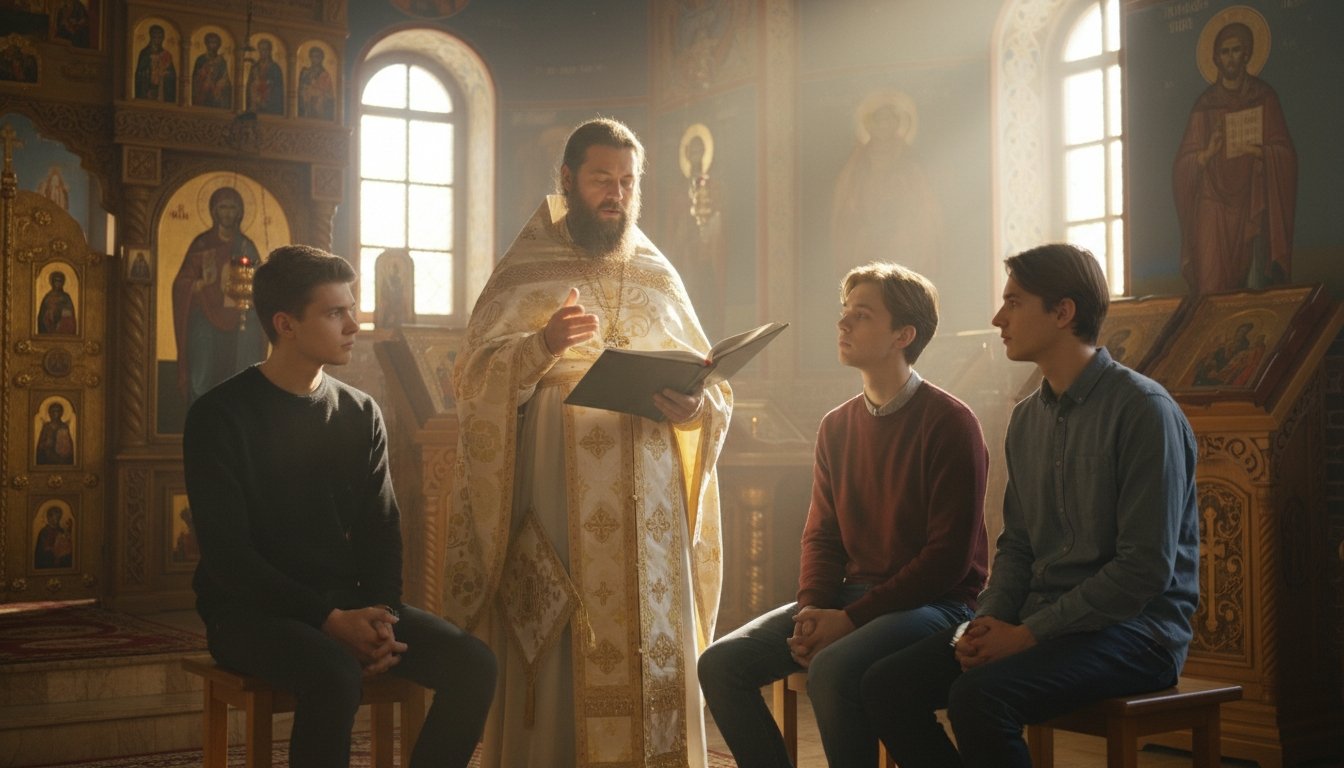
The religious symbolism within Orthodox Christianity is profoundly meaningful, reflecting its deep-rooted traditions. From the intricate iconography adorning churches to the ritual gestures and vestments of clergy, every element carries symbolic significance. The cross, for instance, represents Christ’s sacrifice and the triumph of life over death. Candles symbolize the light of Christ, illuminating the faithful. Incense evokes the presence of the divine, while the use of specific colors, such as gold and red, signifies holiness and royalty. Even the architecture of Orthodox churches, with their domed structures and ornate interiors, conveys a sense of the sacred and the eternal. Unpacking this rich tapestry of religious symbolism provides insight into the heart of Orthodox spirituality and its enduring influence.
Practical Applications for Today
Although the religious symbolism of Orthodox Christianity may seem esoteric, you can apply its principles to enrich your spiritual life today. Start by cultivating a reverence for tradition and ritual. Incorporate regular prayer, fasting, and meditation into your routine. Surround yourself with sacred art and iconography to deepen your connection to the divine. Embrace the Orthodox emphasis on community, attending services, and participating in shared practices. Ultimately, the goal is to integrate Orthodox spirituality into your everyday existence, transforming the mundane into the sacred. By doing so, you’ll discover a wellspring of meaning, purpose, and transcendence in the modern world.
Frequently Asked Questions
What Is the Role of the Orthodox Church in Modern Society?
The Orthodox Church plays a crucial role in modern society by providing spiritual guidance, preserving ancient traditions, and serving as a moral compass for its followers.
It encourages community engagement, charitable work, and a deeper understanding of faith.
Though its influence has diminished in some regions, the Orthodox Church remains an important institution, shaping the lives of millions worldwide.
How Do Orthodox Christians Practice Their Faith Today?
Orthodox Christians practice their faith today through regular worship, prayer, and observance of important religious holidays and traditions. They attend liturgies at their local parish church, participate in sacraments like baptism and communion, and uphold the church’s teachings on morality and social justice.
Many also engage in personal devotional practices like icon veneration and fasting during Lent. The Orthodox faith is deeply rooted in history and community.
What Are the Core Beliefs of Orthodox Christianity?
The core beliefs of Orthodox Christianity include belief in the Holy Trinity, the divinity of Christ, and the authority of Scripture and Tradition. They emphasize sacraments, liturgical worship, and the importance of icons. Orthodox Christians also believe in the veneration of saints and the Theotokos (Mother of God). Their theology is grounded in the Apostolic and Patristic traditions of the early Church.
How Does the Orthodox Church Differ From Other Christian Denominations?
The Orthodox Church differs from other Christian denominations in its emphasis on tradition, hierarchy, and mysticism. It focuses on the liturgy and sacraments, rather than individual interpretation of scripture. The Orthodox Church also rejects the concept of papal infallibility and some Western theological developments, maintaining the original practices and beliefs of the early Church.
What Is the Significance of the Orthodox Liturgy and Rituals?
The Orthodox liturgy and rituals hold deep significance, conveying the church’s rich theology and tradition.
They’re not merely symbolic but reflect the mystical union between the divine and human.
From intricate vestments to incense and chanting, each element carries profound meaning, immersing worshippers in the timeless mystery of Orthodoxy.
These rituals are more than mere customs – they’re a window into the very heart of the Orthodox faith.
Conclusion
You’ve now explored the historical context, unpacked the religious symbolism, and considered practical applications of orthodox origins. By understanding this rich heritage, you can apply its timeless wisdom to your life today. Embrace the depth and meaning of the orthodox tradition, and let it guide your spiritual journey.











No Comments