


25 Apr 10 Best Old Testament Parallels To Jesus Fast
You’ll see how Moses’ 40‑day wilderness trek, Elijah’s Horeb fast, Daniel’s open‑field prayer, the 40‑day flood, Samuel’s king‑selection fast, Abraham’s Moriah trial, Isaiah’s prophetic abstinence, Job’s mourning, and a few other OT episodes echo Jesus’ desert testing, divine provision, and covenant renewal. Each story shows a period of scarcity that sharpens faith and prepares for mission. Keep going and you’ll discover the deeper connections.
Table of Contents
Why 40 Days Matters in Biblical Fasts
Why does the number 40 matter in biblical fasts? You’ll see it marks periods of testing, preparation, and divine encounter. In Genesis, Abraham spent 40 days wandering before meeting Isaac’s sacrifice, symbolizing faith under trial. Moses led Israel for 40 years in the wilderness, learning dependence on God. Elijah’s 40‑day journey to Horeb sharpened his prophetic resolve. Each episode uses 40 as a threshold where human effort meets heavenly provision. When Jesus entered the desert, He mirrored these patterns, aligning His mission with the archetype of a 40‑day trial that transforms purpose into power. You can recognize that the number isn’t arbitrary; it signals a complete cycle of purification, revelation, and covenant renewal. Understanding this rhythm helps you grasp why the Gospel frames Jesus’ fast as the climax of a biblical tradition that repeatedly uses 40 days to bridge human frailty and divine destiny.
Moses’ Desert Fast: Preparing for Jesus’ Wilderness
You’ll see how Moses’ desert trek teaches you to rely on God alone, turning solitude into a test of faith. His isolation sharpens trust, preparing you for the same spiritual rigor Jesus faces in the wilderness. And as Moses anticipates the promised deliverance, you glimpse the messianic promise that undergirds Jesus’ fast.
Desert Preparation and Dependence
How does Moses’ forty‑day desert fast shape our understanding of Jesus’ wilderness trial? You see Moses stripped of comforts, relying on God’s provision of manna and water. That dependence teaches you that desert preparation isn’t about self‑reliance but about trusting divine supply. When you face your own wilderness, you learn to shed excess, focus on prayer, and listen for God’s voice. You recognize that the desert strips away distractions, leaving only the essential relationship with the Creator. By emulating Moses’ humility, you prepare spiritually for Jesus’ trial, understanding that true sustenance comes from God alone. This mindset transforms scarcity into a conduit for deeper faith and reliance.
Testing Faith Through Isolation
Ever wondered how isolation can sharpen faith? You step into the desert with Moses, feeling the heat press against your skin while the world recedes.
The silence forces you to listen to God’s whisper, not the crowd’s chatter. As you fast, hunger becomes a reminder that your sustenance comes from the Almighty, not from daily comforts. Each day without companionship tests your trust, turning doubt into dependence. You watch the clouds rise, the manna appear, and you realize that God meets you even when you’re alone. This solitary pilgrimage prepares you for Jesus’ wilderness, where isolation isn’t abandonment but a crucible that refines belief and ignites purpose.
Anticipating Messianic Promise
When Moses entered the wilderness, his forty‑day fast wasn’t merely a test of endurance—it was a deliberate preparation for the Messiah’s own wilderness, signaling that the promised Savior would emerge from the same desolate landscape where God’s covenant was reaffirmed. You see Moses standing on the brink of a barren plain, his breath thin, his heart fixed on the promise that a Deliverer would follow. His hunger becomes a spiritual antenna, tuning the nation to the future hope.
As you contemplate this scene, recognize that the desert isn’t empty; it’s a crucible where God’s word is sharpened. The fast teaches you to wait expectantly, trusting that the promised Messiah will arise, just as the Israelites did after their own wilderness trial.
Elijah’s Horeb Fast: Divine Testing and Provision
While wandering the wilderness of Horeb, Elijah’s 40‑day fast illustrates how divine testing is paired with God’s provision, showing that even in utter exhaustion the Lord supplies sustenance and purpose. You picture him, barefoot, clutching his mantle, as the sun beats down and his stomach rumbles. On the seventh day, an angel appears, offering bread and water, reminding you that scarcity never means abandonment. This encounter teaches that trials sharpen faith while God quietly meets needs. As you reflect, notice the pattern: a period of deprivation followed by a divine supply that fuels the next mission. Elijah’s experience mirrors Jesus’ own wilderness ordeal, where hunger becomes a conduit for revelation rather than defeat. By embracing the hunger, you discover that God’s testing refines character and His provision equips you for the work ahead, turning weakness into steadfast purpose.
Daniel’s Open‑Field Fast: Prayer and Revelation
Why does Daniel choose the open field for his fast, and what does that setting reveal about his prayer life?
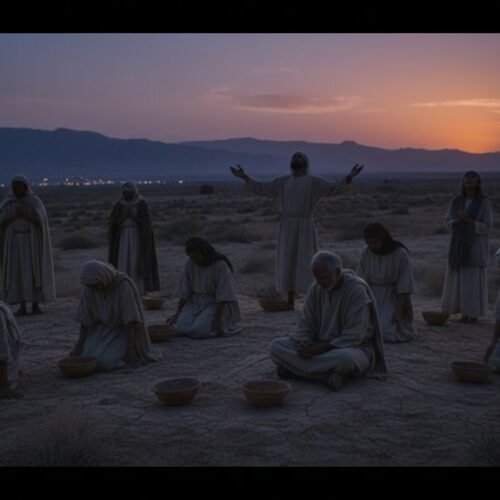
You see him stepping out of the palace into a barren plain, away from luxury and distraction. The open field strips away comfort, forcing you to confront God with nothing but your bare self. In that stark space, Daniel’s petitions become raw and unmediated, showing a prayer life that craves intimacy over ceremony. The wilderness mirrors his inner hunger; every breath becomes a petition, every heartbeat a plea for divine insight.
When you imagine Daniel kneeling on the dust, you recognize his fast as a strategic pause—a deliberate withdrawal that clears mental clutter and opens him to revelation. The solitude amplifies his focus, allowing the Holy Spirit to speak directly. This setting teaches you that true prayer often requires stepping outside familiar comforts to hear God’s voice clearly.
How the 40‑Day Flood Symbolizes Spiritual Cleansing
You see the flood’s waters washing away sin, leaving a clean slate for the faithful. The destruction gives way to a fresh start, showing that even the deepest ruin can become a foundation for renewal.
This promise of new beginnings mirrors the spiritual cleansing you experience in a fast.
Cleansing Through Water
The 40‑day flood in Genesis isn’t just a dramatic tale of judgment; it serves as a powerful metaphor for spiritual cleansing, washing away humanity’s corruption and resetting creation for a fresh start. You see water as the divine solvent, dissolving sin and impurity. When the waters recede, the earth emerges spotless, ready for renewal. In your own fasting journey, imagine the flood’s torrent sweeping through your heart, removing lingering doubts, pride, and selfishness. The ark becomes a sanctuary where you shelter, protected while the cleansing surge passes. Once the del subsides, you step out onto a renewed landscape, feeling lighter, purer, and more aligned with God’s purpose. This imagery invites you to embrace water’s transformative power, trusting that true cleansing precedes deeper spiritual growth.
Renewal After Destruction
Water’s purifying surge gives way to a new landscape, and the flood’s aftermath illustrates how destruction can become the catalyst for renewal. You see the ark’s landing on Mount Ararat as a divine reset button: the waters recede, the earth dries, and fresh life sprouts from the mud. The covenant rainbow signals that God’s promise survives even after total devastation, urging you to trust that your own brokenness can yield fertile ground for growth. As the surviving creatures repopulate the world, you recognize that spiritual cleansing isn’t merely about washing away sin, but about rebuilding identity on a cleaner foundation. Embrace the wreckage, for it clears the way for a renewed purpose and a deeper reliance on divine providence.
Promise of New Beginnings
Ever wondered how a forty‑day deluge can become a spiritual reset? Picture the flood as God’s sweeping cleanse, wiping slate clean for humanity. As waters rose, every impurity—pride, idolatry, sin—was submerged, leaving only what could float. When the rain stopped, the ark’s occupants stepped onto fresh, untainted earth, a literal new beginning.
That same principle applies to your own life: let the flood symbolize a period of surrender, allowing old habits to drown. Then, like the dove returning with an olive branch, you emerge with renewed purpose and a promise that God’s mercy always follows judgment. Embrace this cycle, and you’ll experience a rebirth that mirrors the ancient narrative’s hopeful aftermath.
Israel’s 40‑Day Wandering: Shaping National Identity
Why did Israel wander for forty days in the desert, and how did that trek forge a collective identity?
You see the Israelites left Egypt with hope, but the desert stretched before them like a blank canvas. Their daily reliance on manna, water from a rock, and Moses’ leadership taught you that survival depended on trust in God and communal obedience. Each camp, each pillar of cloud by fire, reminded you that you were a people bound by covenant, not by geography. The wilderness became a crucible where tribal rivalries melted into a shared narrative of redemption. You learned to count the days, to remember miracles, and to speak of a promised land as a destiny earned through endurance. This forty‑day pilgrimage stamped a national memory: that identity is forged in hardship, that faith is tested by scarcity, and that unity emerges when you walk together toward a divine promise.
Samuel’s King‑Selection Fast: Leadership and Intercession
You’ll see how Samuel’s fast draws you into a moment where divine guidance directs the choice of king. As you consider his prayerful intercession, you recognize the nation’s fate hinges on that sacred petition. This episode shows leadership emerging through humility and reliance on God’s direction.
Divine Guidance in Selection
When Samuel called the Israelite leaders to a fast, he wasn’t merely seeking personal piety; he was inviting divine guidance to choose a king who’d lead and intercede for the nation. You see how the fast creates a sacred pause, stripping away political noise so God’s will can surface. In that hush, Samuel prayed, “Lord, reveal to us the man you have chosen.”
The response came not through human debate but through a clear, unmistakable sign—God’s Spirit settling on Saul. This episode shows that when you intentionally fast, you open a channel for divine direction, allowing the Holy One to shape leadership decisions. The fast becomes a conduit, aligning human choice with heavenly purpose.
Prayerful Intercession for Nation
Ever wondered how a fast can turn a nation’s plea into divine action? You see Samuel’s 40‑day fast before an Saul’s appointment as king. While Israel’s leaders debated, Samuel withdrew, prayed, and interceded for the whole people. He asked God to reveal a ruler who’d obey Him, and the nation’s collective hunger amplified that prayer.
You can mirror this: set a specific period, abstain from meals, and focus every breath on the nation’s needs—peace, justice, spiritual renewal. As you fast, write petitions, speak aloud, and invite the Holy Spirit to guide leaders. The discipline turns personal sacrifice into a corporate cry, aligning Israel’s heart with God’s purpose and inviting a sovereign response.
Abraham’s Moriah Fast: Trust and Sacrificial Obedience
What does Abraham’s three‑day fast on Mount Moriah reveal about trusting God and obeying sacrificially? You see a man who halted every comfort, letting hunger sharpen his focus on God’s promise. By refusing food, he turned his physical need into a spiritual litmus test, showing that reliance on divine provision outweighs earthly sustenance. His obedience wasn’t passive; he actively prepared the altar, bound Isaac, and waited while the sun rose and set, embodying steadfast faith. The fast also illustrates that true sacrifice demands inner surrender, not merely external ritual. As you reflect, notice how Abraham’s willingness to give up his son mirrors the depth of commitment required for any holy undertaking. His example teaches that when you align hunger with holiness, you cultivate a trust that can bear the weight of God’s most demanding calls.
Isaiah’s Prophetic Fast: Vision of Salvation and Holiness
A prophet’s fast can feel like a spiritual sprint, and Isaiah’s three‑day abstinence on the hill of Horona illustrates that perfectly. You picture yourself standing with him, the wind whipping your hair, the desert heat pressing against your skin, while he seeks God’s revelation. In those days, Isaiah refuses food and drink, turning his focus from bodily needs to divine purpose. The fast sharpens his vision, allowing him to hear God’s promise of a coming Messiah who’ll bring salvation and holiness to a broken world. You sense the urgency in his prayer, the conviction that holiness begins with personal sacrifice.
As the days pass, Isaiah’s spirit becomes a conduit for God’s words, proclaiming that the Holy One will bring justice, heal wounds, and restore covenant relationship. The experience teaches you that fasting can be a catalyst for prophetic insight, aligning heart and mind with God’s redemptive plan.
Job’s 40‑Day Mourning: Endurance, Restoration, and Hope
From Isaiah’s brief, intense fast we move to Job’s prolonged period of grief, where his endurance is tested over forty days of mourning. You see Job sitting amid ash, his hair matted, his skin covered in sores, and yet he refuses to curse God. Each sunrise marks another day of loss—his children dead, his wealth gone, his health shattered—yet he clings to a stubborn hope that God’s justice will prevail. This endurance isn’t passive; you watch him wrestle with raw emotion, cry out, and still utter, “The Lord gave, and the Lord has taken; blessed be the name of the Lord.”
Frequently Asked Questions
What Historical Evidence Supports the 40‑Day Duration in Biblical Narratives?
You’ll find that the 40‑day figure isn’t proved by external records; it comes from the biblical texts themselves. Archaeologists and historians have uncovered no contemporary inscriptions or chronicles confirming a literal 40‑day fast. The number likely reflects a literary motif—40 symbolizing testing or purification in ancient Near Eastern culture—rather than a verifiable historical duration. So, the evidence is internal, not external.
How Do Cultural Practices of Fasting Differ Between Old Testament and New Testament Contexts?
You’ll notice that Old‑Testament fasting is often communal, tied to national crises or covenant renewal, and usually involves abstaining from food and water for specific periods, like Israel’s 40‑day wilderness wanderings.
In the New Testament, fasting becomes more personal, linked to prayer, repentance, and preparation for ministry, and Jesus even shortens it to three days.
The New Testament also emphasizes inner motives over ritual length, encouraging secret, heartfelt fasting rather than public spectacle.
Are There Symbolic Meanings Behind the Number 40 Beyond the Examples Listed?
You’ll find that 40 often signals a period of testing, purification, or transition. In Genesis, the flood lasts 40 days, marking humanity’s reset. In Exodus, Israel wanders 40 years, reflecting purification and covenant formation. In Numbers, Moses spends 40 days on Mount Sinai, receiving law. These patterns suggest you should interpret 40 as a symbolic span where divine preparation, judgment, or renewal unfolds, not merely a chronological count.
What Role Do Prophetic Visions Play During Extended Fasting Periods?
You’ll find that prophetic visions often surface when you fast for extended periods because the discipline quiets daily distractions, allowing the Holy Spirit to speak more clearly.
During those hunger‑filled moments, your heart becomes more attuned to divine revelation, and Scripture shows that God uses fasting to sharpen spiritual perception.
Consequently, you experience vivid insights, symbolic imagery, and direct messages that guide your faith journey and mission.
Do Any Non‑Biblical Ancient Near Eastern Texts Describe Similar 40‑Day Fasts?
Yes, you’ll find several Near‑Eastern texts that recount 40‑day fasts. The Epic of Gilgamesh mentions a hero who abstains from food and water for forty days while seeking immortality. In the Ugaritic myths, the god El endures a forty‑day fast before delivering a covenant. The Babylonian “Marduk‑Creation” hymn describes a priest’s forty‑day fast to appease the gods. These accounts pre‑date the biblical narrative and show that prolonged fasting was a recognized ritual in the ancient world.
Conclusion
You’ve seen how each Old Testament fast—Moses’ desert trek, Elijah’s Horeb trial, Daniel’s open‑field prayer, and the rest—mirrors Jesus’ 40‑day wilderness. They all reveal a pattern: divine testing, preparation, and transformation. By tracing these parallels, you grasp that fasting isn’t merely a ritual; it’s a powerful conduit for spiritual renewal, leadership, and deeper communion with God, echoing the same purpose in Christ’s own fast.







No Comments