

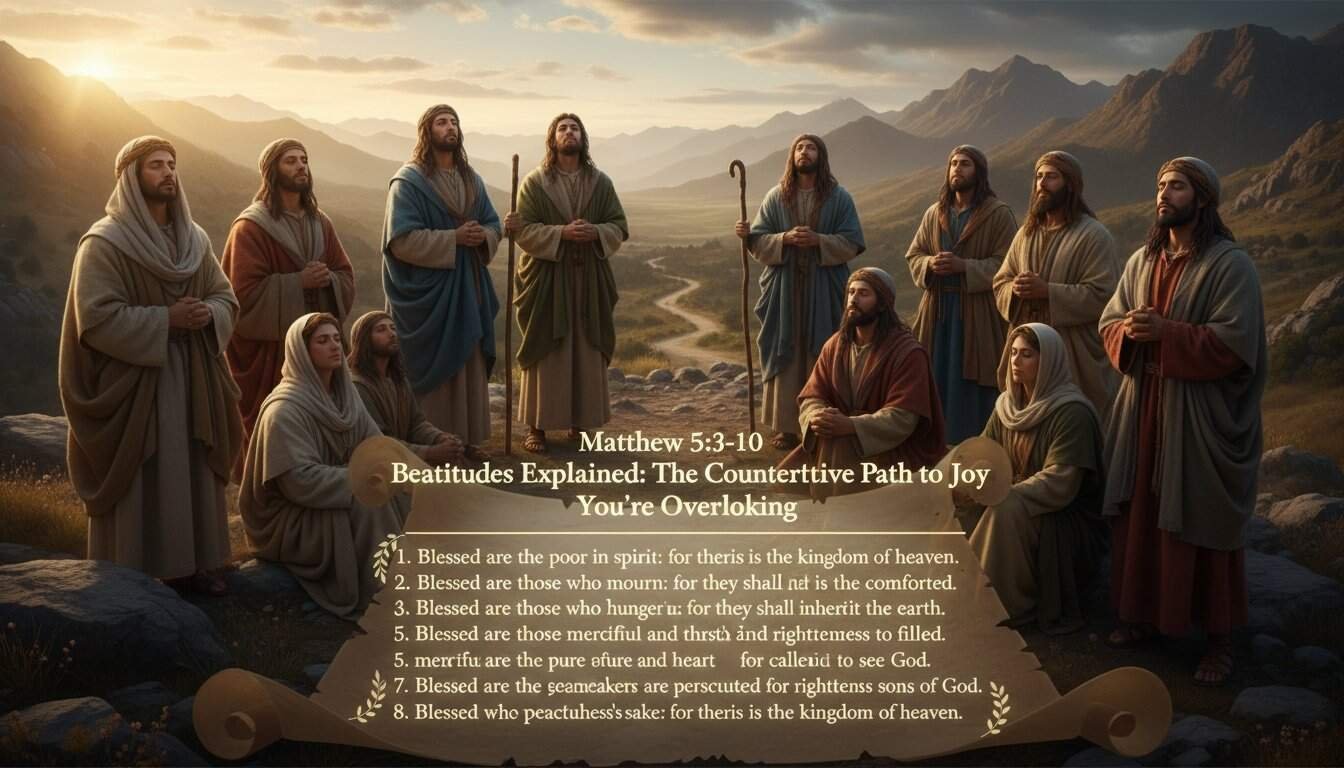
07 Jan Matthew 5:3-10 – Beatitudes Explained: The Counterintuitive Path to Joy You’re Overlooking
Jesus’s Beatitudes in Matthew 5:3-10 deliberately invert your natural understanding of blessing by revealing that spiritual emptiness, controlled mourning, gentle strength, and righteous hunger—not worldly success or emotional comfort—constitute the true pathway to divine joy and Kingdom citizenship. You’ll discover that spiritual poverty acknowledges your complete dependence on God’s grace, while mourning over sin creates space for divine consolation. These counterintuitive principles unlock heaven’s transformative power within your everyday circumstances.
Key Takeaways
- Spiritual poverty means recognizing your emptiness before God, which paradoxically creates space for divine filling and Kingdom citizenship.
- Mourning goes beyond grief to encompass deep sorrow over sin, opening the door for God’s transformative comfort and consolation.
- Meekness is controlled strength, not weakness—like a war-trained horse showing restraint, creating space for God’s kingdom to flourish.
- Hungering for righteousness means craving God’s perfect standard rather than self-improvement, promising complete soul satisfaction only God provides.
- Kingdom values create friction with worldly systems, but living these counterintuitive principles brings eternal rewards surpassing temporary gains.
The Foundation of Spiritual Poverty: Why Emptiness Leads to Fulfillment

You’ve likely confused spiritual emptiness with weakness. Christ reveals it’s actually the prerequisite for Kingdom citizenship. Your spiritual poverty isn’t about low self-esteem; it’s recognition that you possess nothing inherently worthy before God. This emptiness creates space for divine filling.
Biblical self acceptance paradoxically begins with acknowledging your spiritual bankruptcy. You can’t simultaneously trust your righteousness and Christ’s. The poor in spirit understand they’re beggars before heaven’s throne, not creditors demanding payment.
This foundational beatitude establishes the posture for all others. Without recognizing your spiritual destitution, you’ll never hunger for righteousness or show mercy. Your emptiness becomes the vessel God fills with His kingdom.
Finding Comfort in Mourning: How Grief Opens the Door to Divine Consolation
When you embrace your spiritual poverty, you naturally encounter the second beatitude’s profound paradox: “Blessed are those who mourn, for they’ll be comforted” (Matthew 5:4). This mourning transcends mere emotional grief—it’s a deliberate spiritual posture. You’re called to mourn over sin’s devastating effects on humanity, including your own moral failures and the world’s brokenness.
The Greek term “pentheō” suggests deep, transformative sorrow that penetrates your soul. It’s not depression but sacred grief that aligns your heart with God’s. This mourning becomes the gift of tears, purifying your spiritual vision and creating space for divine intervention.
Christ promises “paraklēthēsontai”—they shall be comforted by the Holy Spirit, the ultimate Comforter. When you authentically grieve over spiritual realities, you position yourself to receive God’s supernatural comfort in sorrow. This divine consolation doesn’t eliminate pain but transforms it into redemptive hope, demonstrating heaven’s response to genuine contrition.
The Power of Meekness: Inheriting Earth Through Gentle Strength
The third beatitude reveals Christianity’s most counterintuitive promise: “Blessed are the meek, for they’ll inherit the earth” (Matthew 5:5). You’re encountering Jesus’s radical redefinition of power and possession. The Greek word “praus” doesn’t mean weakness—it describes controlled strength, like a war-trained horse responding to gentle commands.
When you practice meekness, you’re cultivating patience that transforms opposition into opportunity. This isn’t passive submission but active restraint of your power for others’ benefit. Moses exemplified this quality, called “very meek” despite leading millions through wilderness challenges.
Embracing vulnerability becomes your pathway to true inheritance. While worldly systems promise earth’s rewards through aggression and dominance, Jesus declares the opposite. You inherit through surrendering your demands for immediate control. The meek ultimately receive what the aggressive can only temporarily seize—lasting influence rooted in trust rather than fear. Your gentle strength creates space where God’s kingdom flourishes.
Hungering for Righteousness: The Soul’s Appetite That Actually Satisfies
Jesus’s fourth beatitude strikes at humanity’s deepest longing: “Blessed are those who hunger and thirst for righteousness, for they’ll be filled” (Matthew 5:6).
The Greek term *dikaiosyne* encompasses both divine righteousness and ethical living. You’re not merely pursuing moral improvement—you’re cultivating spiritual hunger for God’s perfect standard. This isn’t about religious performance but genuine soul-level craving for what’s right.
True righteousness isn’t moral self-improvement—it’s a deep spiritual hunger for God’s perfect standard that transforms from within.
Notice Jesus uses physical metaphors: hunger and thirst. These represent life’s most urgent needs. When you’re truly hungry, food becomes your singular focus. Similarly, righteousness should dominate your spiritual appetite. You’re pursuing holistic wellness that begins with internal transformation.
The promise “they will be filled” (*chortazo*) means complete satisfaction—like cattle fed to contentment. God doesn’t partially satisfy righteous hunger; He abundantly fulfills it. This satisfaction isn’t merely future; it begins now as you align with divine purposes.
Your soul’s deepest appetite finds fulfillment only in God’s righteousness, not worldly substitutes.
Living Out Kingdom Values in a World That Rejects Them
Kingdom values create inevitable friction with worldly systems that prioritize self-advancement, material accumulation, and power dynamics. When you embrace the Beatitudes, you’re adopting countercultural compassion that challenges society’s fundamental assumptions about success and worth.
The world celebrates the assertive, but you’re called to meekness. Society rewards the ruthless, yet you’re instructed to show mercy. This tension isn’t accidental—it’s transformative. Your commitment to kingdom principles exposes the bankruptcy of worldly values while demonstrating God’s alternative reality.
You’ll face misunderstanding, even persecution, as Jesus promised. Your kingdom oriented community becomes a prophetic witness, embodying divine justice in unjust systems. This isn’t passive resistance but active demonstration of heaven’s priorities.
The cost is real: relationships may strain, opportunities might disappear, and comfort will be sacrificed. Yet Christ’s promise remains—those who live by kingdom values inherit eternal rewards that far surpass temporary worldly gains.
Frequently Asked Questions
How Do the Beatitudes Differ From Happiness Teachings in Other Religions?
You’ll find the Beatitudes emphasize spiritual humility rather than self-actualization or positive thinking. Unlike other religious happiness teachings that focus on eliminating suffering or achieving prosperity, Christ’s framework embraces mourning, persecution, and meekness as pathways to unconventional fulfillment.
You’re called to find blessing through weakness, not strength—a radical inversion of human wisdom that distinguishes Christian beatitude from alternative spiritual paradigms.
Can Someone Experience Multiple Beatitudes Simultaneously or Are They Sequential Stages?
You’ll experience the beatitudes through both simultaneous fulfillment and progressive realization. They’re not sequential stages but interconnected spiritual realities that can manifest concurrently in your life.
While you might notice progressive realization as you mature spiritually, poverty of spirit can coexist with peacemaking, and mourning can accompany mercy. Christ’s design allows multiple beatitudes to operate within you simultaneously, creating a holistic Christian character rather than compartmentalized virtues.
What’s the Historical Context of When Jesus Delivered the Beatitudes?
You’ll find Jesus delivered the beatitudes during His Sermon on the Mount in early Galilean ministry, likely around 28-30 AD. This wasn’t coincidental timing—you’re witnessing revolutionary teaching amid escalating Jewish Roman tensions.
Jesus deliberately subverted both Roman imperial values and Jewish nationalist expectations, presenting God’s kingdom ethics that challenged occupying forces and religious establishment alike. He’s redefining blessing, power, and divine favor.
Are the Beatitudes Meant for All Christians or Specific Groups?
You’ll find the Beatitudes address all believers within Christ’s inclusive community, not select groups. Jesus doesn’t qualify His audience—He proclaims universal principles for discipleship.
You’re called to embody these attitudes as foundational spiritual disciplines that shape Christian character. The text’s grammatical structure and contextual placement suggest these aren’t optional virtues for spiritual elites, but essential qualities you must cultivate as Christ’s follower in Kingdom living.
How Do I Know if I’m Truly Blessed According to Beatitude Standards?
You’ll recognize true blessedness by examining your internal motivation rather than external circumstances. If you’re genuinely mourning over sin, hungering for righteousness, and showing mercy from a transformed heart, you’re blessed regardless of worldly outcomes.
The beatitudes describe heart attitudes, not performance metrics. Your poverty of spirit and peacemaking efforts reveal God’s kingdom work within you, confirming His favor.
Conclusion
You’ve discovered Christ’s radical inversion of worldly values—where spiritual bankruptcy yields divine riches, where mourning births comfort, where meekness conquers earth itself. These beatitudes aren’t mere moral suggestions; they’re kingdom prerequisites that reshape your understanding of blessing. When you embrace this counterintuitive path, you’re not just following Jesus’ teaching—you’re embodying the eschatological reality of God’s reign. Your transformed life becomes living proof that heaven’s economy operates on principles this world can’t comprehend.











No Comments