

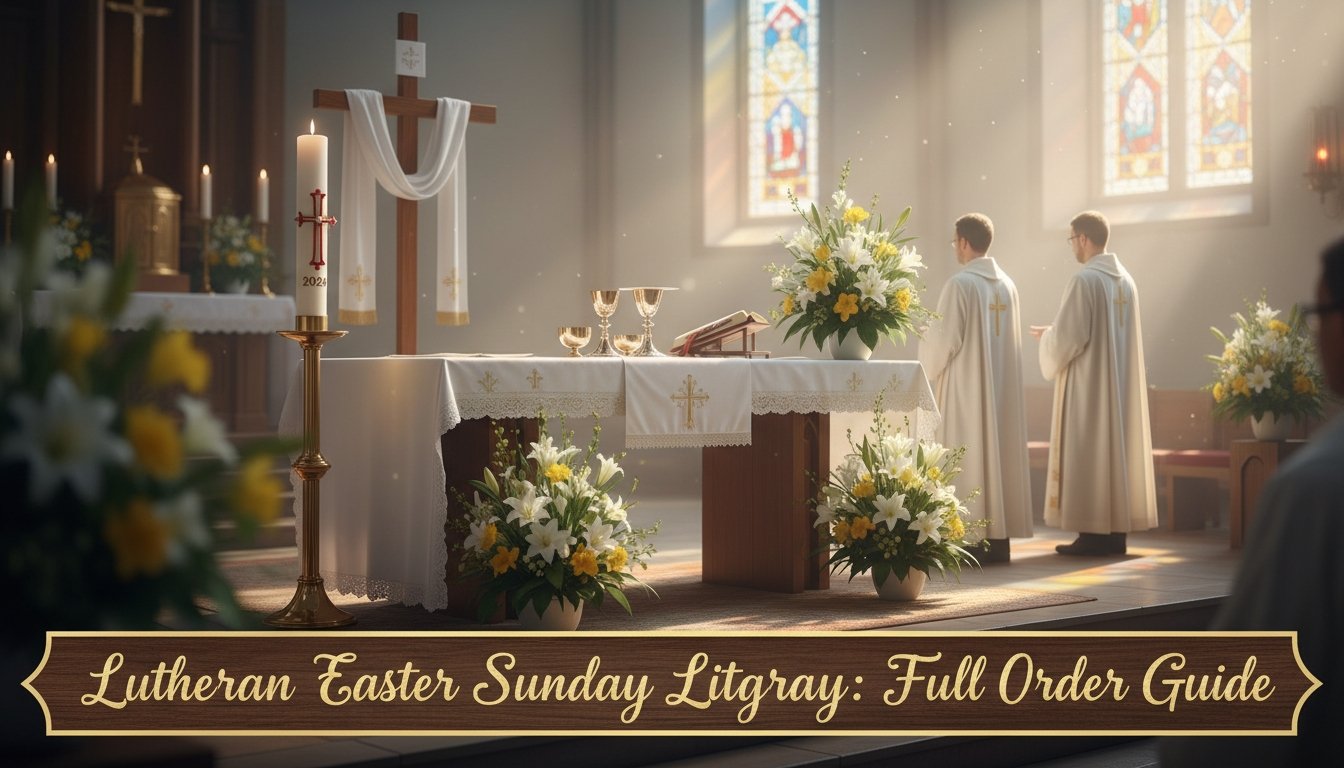
26 Feb Lutheran Easter Sunday Liturgy: Full Order Guide
The Lutheran Easter Sunday liturgy invites you on a joyful journey. You’ll experience the Gathering, the Word, the Eucharistic Feast, and celebratory music that imbues the service with the triumphant spirit of Christ’s resurrection. You’ll hear the lighting of the Paschal candle, sing the Exsultet, and respond to the Easter proclamation. The Word portion nourishes your faith, leading to the powerful message of the Savior’s triumph over death. If you’d like to delve deeper into the full order of this cherished tradition…
Key Takeaways
- The Lutheran Easter Sunday liturgy includes the Gathering, the Word, Proclamation and Creeds, the Eucharistic Feast, and traditional Lutheran Easter music and departing blessing.
- The Gathering features the lighting of the Paschal candle, the Exsultet hymn, the Easter proclamation, confession of sins, and forgiveness.
- The Word portion includes readings from the Old Testament, Epistles, and Gospels, with the pastor’s sermon unpacking the scriptural texts.
- The Proclamation and Creeds center on the Easter message, with the congregation reciting the Nicene and Apostles’ Creeds.
- The Eucharistic Feast is the climactic moment, with consecrated bread and wine celebrated, and the departing blessing concludes the service.
The Gathering
The gathering is the opening part of the Lutheran Easter Sunday liturgy.
The opening part of the Lutheran Easter Sunday liturgy is the gathering.
You’ll begin with the lighting of the Paschal candle, symbolizing Christ’s resurrection.
Then, you’ll sing an ancient hymn called the Exsultet, praising God for the gift of this holy night.
Next, you’ll hear the Easter proclamation, declaring the risen Christ.
The congregation will respond with joyful acclamations, celebrating the Savior’s triumph over death.
You’ll then confess your sins and receive God’s forgiveness, preparing your heart for the feast to come.
The gathering sets the tone for the entire service, drawing you into the mystery and wonder of Easter.
The Word
As you move into the Word portion, you’ll encounter the readings and lessons, where the scriptures come alive.
The proclamation and preaching then bring these words to life, inviting you to deepen your faith.
Finally, the creeds and confessions allow you to profess your beliefs and connect with the broader Lutheran tradition.
Readings and Lessons
During the Lutheran Easter Sunday liturgy, the Readings and Lessons (The Word) section follows the Invocation and Confession. This is a central part of the service, where the congregation listens to selections from the Old Testament, Epistles, and Gospels. These readings focus on the death and resurrection of Jesus, proclaiming the good news of salvation. After each reading, the congregation may respond with “Thanks be to God” or “Alleluia.” The pastor then delivers a sermon, unpacking the scriptural texts and their meaning for the congregation. This time of hearing God’s Word is a vital component of the Easter liturgy, nourishing the faithful with the message of Christ’s victory over sin and death.
Proclamation and Preaching
After the readings, it’s time to delve into the Proclamation and Preaching (The Word) portion of the Lutheran Easter Sunday liturgy. This is the heart of the service, where the pastor proclaims the Easter message and preaches on the significance of Christ’s resurrection. The congregation listens intently, eager to hear the Good News. The pastor’s words should be Spirit-filled, drawing from the Scripture passages and illuminating their meaning for the gathered faithful. This proclamation of the Word is central to the Lutheran tradition, nourishing the congregation’s faith and equipping them to live as resurrection people in the world.
Creeds and Confessions
Following the proclamation of the Easter message, the congregation professes their faith through the recitation of Creeds and Confessions. The Nicene Creed is a widely used statement of belief, affirming the central tenets of Christianity. Likewise, the Apostles’ Creed concisely outlines the fundamental doctrines. These historic creeds unite the Lutheran congregation in their shared faith.
Additionally, the congregation may also confess their sins and receive absolution, a hallmark of Lutheran worship. This time of corporate confession and proclamation of God’s forgiveness strengthens the community’s bond and prepares them to receive the Sacrament of Holy Communion.
The Eucharistic Feast
The Eucharistic Feast is the climactic moment of the Lutheran Easter Sunday liturgy. You’ll celebrate Christ’s sacrifice and resurrection through the consecrated bread and wine. The pastor’ll invite you to the table, reminding you that Jesus invites all who trust in him. As you receive the elements, you’ll be nourished by Christ’s real presence.
After the distribution, the pastor’ll lead a prayer of thanksgiving, praising God for this sacred meal. You’ll feel the joy of Christ’s triumph over death and the assurance of his love. The Eucharist reminds you that you’re part of the communion of saints, united with believers across time and space. This feast’s the pinnacle of the Easter celebration, filling you with hope, peace, and the promise of eternal life.
Traditional Lutheran Easter Music
Lutheran Easter Sunday services feature a rich tradition of music that enhances the joyful celebration of Christ’s resurrection. You’ll hear triumphant hymns like “Jesus Christ Is Risen Today” and “Alleluia! Jesus Is Risen!” The choir may perform rousing anthems, and the congregation may join in singing with gusto. Organ music is often lively, with majestic preludes and postludes. Lutheran Easter music exudes an air of reverence and exultation, perfectly capturing the essence of this holy day. The music uplifts the spirit, reinforcing the message of hope and new life. Whether you’re an avid churchgoer or a casual attendee, the traditional Lutheran Easter music will surely inspire and move you.
Departing With a Blessing
As the joyous music fades and the service comes to a close, you’ll experience the Lutheran Easter liturgy’s final and perhaps most meaningful element: the Benediction. The pastor will raise their hands, invoking God’s blessing upon the congregation. You’ll feel a sense of peace and unity as the ancient words resonate: “The Lord bless you and keep you; the Lord make his face to shine upon you and be gracious to you; the Lord lift up his countenance upon you and give you peace.”
With this benediction, you’re sent forth, empowered to share the good news of Christ’s resurrection. The service may end, but the celebration of new life in Christ continues as you depart, carrying the blessing into the world.
Getting Ready for the Service
Arrive early and find your seat as the sanctuary fills with anticipation. You’ll want to settle in and prepare your heart for worship. Check the bulletin to familiarize yourself with the order of service. Locate the hymnal and find the songs you’ll be singing. Make sure you have a pen or pencil to follow along and participate fully. Greet those around you and exchange warm smiles. This is a joyous day – Christ is risen! Take a few deep breaths and let the weight of the world fall away as you focus on the celebration to come. The service is about to begin.
Frequently Asked Questions
Can I Dress Casually for the Easter Sunday Service?
You can certainly dress casually for the Easter Sunday service. While some churches may have a more formal dress code, most Lutheran congregations welcome worshippers in whatever attire they feel comfortable. The focus should be on celebrating the resurrection of Christ, not the outward appearance. As long as you’re dressed appropriately, your casual attire won’t be out of place.
Is It Okay to Bring Children to the Easter Service?
Absolutely! Children are more than welcome to attend the Easter Sunday service. In fact, many Lutheran churches encourage families to bring their children and engage them in the celebration. The service is designed to be inclusive and welcoming for all ages. Just be mindful of keeping them comfortable and entertained during the longer parts of the liturgy.
What Time Does the Easter Sunday Service Typically Start?
The Easter Sunday service typically starts around 10:00 AM, though the exact time may vary depending on the church.
Many Lutheran congregations hold a special service to celebrate the resurrection of Jesus Christ, so it’s common for the service to begin in the late morning or early afternoon.
Check with your local church for the specific start time.
Can I Take Communion if I’m Not a Lutheran?
Yes, you can take communion if you’re not a Lutheran. Most Lutheran churches welcome all Christians to participate in Holy Communion, regardless of their denominational affiliation. The only requirement is that you’ve been baptized and believe in the real presence of Christ in the bread and wine. However, it’s always a good idea to check with the pastor or worship leader beforehand.
Where Can I Find the Easter Sunday Bulletin or Program?
You can usually find the Easter Sunday bulletin or program on the church’s website or by contacting the church office. Many Lutheran churches make these available online or have printed copies available for attendees. The bulletin will contain the order of service, hymns, and other important information for the Easter Sunday celebration.
Conclusion
As you prepare for the Lutheran Easter Sunday liturgy, remember to focus on the joy and celebration of Christ’s resurrection. Participate fully in the service, sing the traditional hymns, and depart with a renewed sense of hope and blessing. The service is a time to come together as a community and experience the power of the Risen Lord.












No Comments