

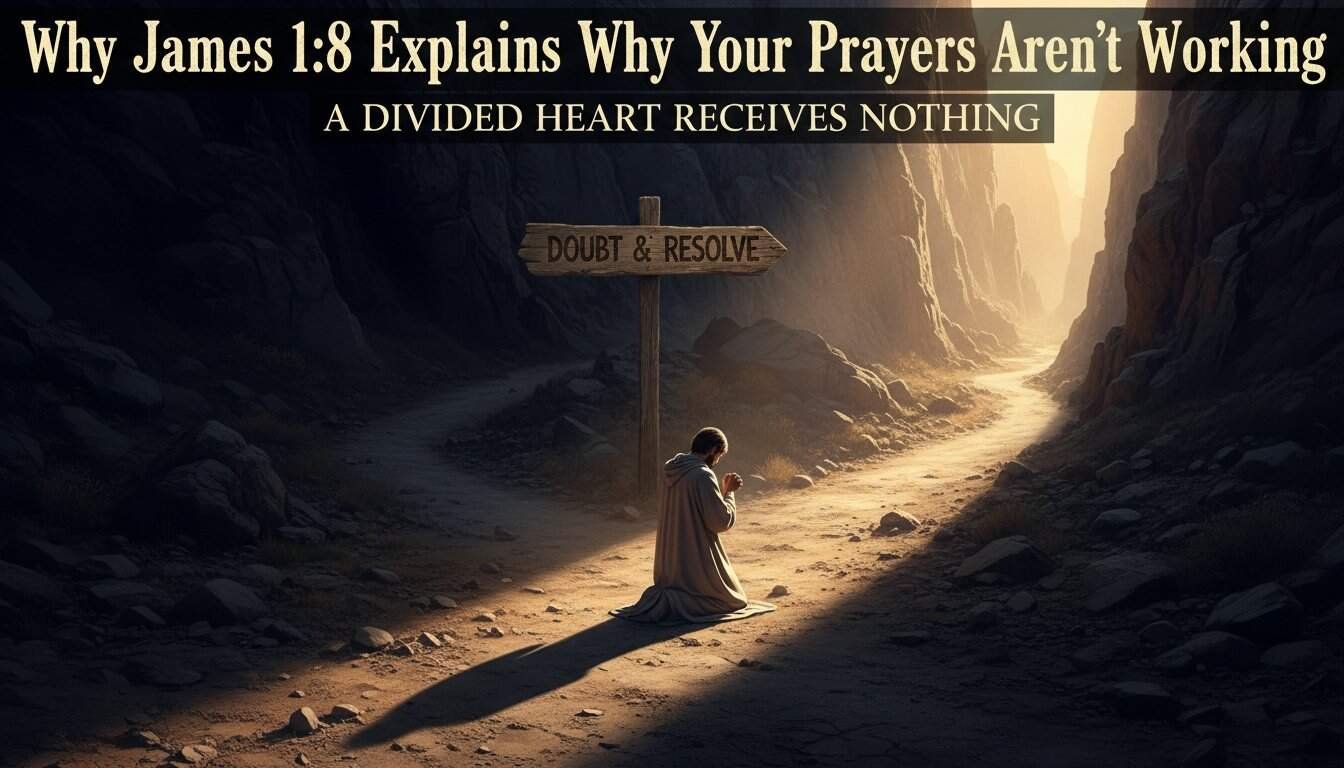
01 Feb Why James 1:8 Explains Why Your Prayers Aren’t Working
Your prayers aren’t working because you’re approaching God with what James calls “double-mindedness”—a divided heart that wavers between faith and doubt. This dipsuchos condition means you’re literally “two-souled,” simultaneously trusting and questioning God’s ability to answer. James 1:7-8 warns that such instability blocks divine blessings entirely. When you pray “maybe” instead of believing wholeheartedly, you’re serving two masters and undermining your spiritual commitment. Understanding how to develop single-minded devotion will transform your prayer life completely.
Table of Contents
Key Takeaways
- Double-mindedness (dipsuchos) means praying with simultaneous faith and doubt, creating divided loyalties between God and worldly wisdom.
- Wavering between belief and skepticism during prayer demonstrates lack of full trust, undermining your spiritual commitment to God.
- Instability from double-mindedness extends beyond prayer into all life areas, creating walking contradictions between desires and beliefs.
- James 1:8 shows that being “unstable in all ways” blocks divine answers because serving two masters prevents receiving blessings.
- Single-minded faith requires wholehearted commitment, daily Scripture meditation, and making obedience to Jesus your controlling life principle.
What Does Double-Minded Mean in James 1:8?

When James penned the word “double-minded” in his epistle, he drew from the Greek term *dipsuchos*, literally meaning “two-souled”—a concept so novel that scholars believe James himself coined it. This describes someone with two separate minds holding contradictory thoughts simultaneously.
You’re double-minded when you pray without full trust, shifting between faith and doubt like waves tossed by wind (James 1:6-7). It’s not occasional uncertainty—it’s deliberately maintaining divided loyalties between God and the world. You’ll say you trust God but live by your own wisdom, creating internal contradiction that makes you “unstable in all your ways” (James 1:8). This instability extends beyond prayer to every area of life and conduct.
This wavering nature contrasts sharply with the singleness of purpose God desires. When your heart remains divided, you can’t expect to receive anything from the Lord because you’re essentially trying to serve two masters—an impossible feat that undermines your entire spiritual foundation.

How Double-Minded Thinking Creates Life Instability
Double-minded thinking doesn’t just affect your prayer life—it creates a ripple effect that destabilizes every area of your existence. When you’re dipsuchos—literally “two-souled”—you’re living as a walking contradiction, torn between conflicting desires and beliefs.
This internal war manifests as cognitive dissonance, where your conscious intentions clash with unconscious resistance. You want growth but resist responsibility. You desire change but cling to familiar patterns. Your inner voice constantly judges and criticizes, blocking the very progress you’re praying for.
James describes this condition as being “unstable in all his ways” (James 1:8). The two word discussion here isn’t merely academic—it’s deeply practical. When your heart and mind operate from opposing belief systems, you can’t commit fully to anything. Trials become overwhelming because you lack the spiritual stability that comes from single-hearted devotion. This constant mental simulation of catastrophic outcomes and imagined failures only amplifies the instability, trapping you in cycles of anxiety and doubt.
This double-heartedness creates spiritual schizophrenia, preventing you from receiving what God wants to give you through prayer.
Why Double-Minded Prayer Receives No Answer
Have you ever wondered why some prayers seem to bounce off the ceiling while others move mountains? James 1:7 provides the answer: “For that person mustn’t suppose that he’ll receive anything from the Lord.” When you pray with a divided heart, you’re essentially telling God you don’t fully trust Him.

Double-minded prayer occurs when you hold faith and doubt simultaneously. You’ll confess God’s promises while secretly believing they’re impossible for your situation. This internal contradiction makes your spiritual commitment an irrelevant topic to God’s response system. Your wavering heart creates an unrelated theme between what you say and what you truly believe.
James describes this person as “unstable in all his ways” because divided loyalty blocks divine answers. You can’t serve two masters and expect God’s blessing. When your heart wavers between faith and doubt, you receive nothing because you’re fundamentally uncertain about God’s character and promises.
How to Develop Single-Minded Faith in Prayer
Single-minded faith doesn’t develop overnight, but it grows through deliberate spiritual disciplines that align your entire being with God’s purposes. You must cultivate wholehearted commitment by prioritizing God’s kingdom above earthly concerns, loving Him with all your heart, soul, mind, and strength.
Start by hiding God’s word in your heart through daily meditation. This redirects your thoughts from false worldly values and prevents your mind from wandering to any unrelated topic during prayer. Set your mind on things above rather than temporal concerns.
Make obedience to Jesus the controlling principle of your life. Faithful action in both small and great matters reflects genuine commitment. Don’t allow two word ideas like “maybe not” or “what if” to create doubt.
Rely on the Holy Spirit’s empowerment to maintain undivided devotion. Through His strength, you’ll let go of competing priorities and develop the perseverance needed to resist double-mindedness that weakens prayer effectiveness.
Frequently Asked Questions
Can Someone Be Double-Minded Temporarily or Is It a Permanent Spiritual Condition?
Double-mindedness is temporary, not permanent. You’re experiencing willful divided loyalty, not honest doubt like the father in Mark 9:24.
James 4:8 promises change: “Draw near to God…cleanse your hands…purify your hearts.” Your areas once uncontrolled can come under control.
This spiritual condition blocks your double mindedness prayer because you’re choosing instability. Turn from divided allegiance—God rewards sincere seekers with steadfast faith.
What’s the Difference Between Honest Doubt and Being Double-Minded in Prayer?
Honest doubt seeks God’s help while maintaining faith, like the father crying “I believe; help my unbelief!
Your prayer doubt becomes double mindedness when you’re secretly harboring sin or wavering between loyalty to God and worldly desires.
Faith fluctuation with genuine seeking differs drastically from divided hearts that attempt serving both God and self.
Double-minded prayers remain unanswered because they lack the pure heart Jesus requires.
Are There Biblical Examples of People Overcoming Double-Mindedness Successfully?
Yes, Scripture shows clear victories over double-mindedness. You see Joshua’s unwavering commitment to serve God (Joshua 24:15), the desperate father who honestly confessed his struggle and received breakthrough (Mark 9:24), and Elijah whose focused prayers moved heaven and earth. Through double minded perseverance and consistent prayer discipline, they chose single-hearted devotion. You can overcome divided loyalties by following their example of wholehearted surrender.
How Long Does It Typically Take to Develop Single-Minded Faith?
Developing faith doesn’t follow a set timeline—it’s deeply personal. Some believers experience breakthrough in weeks through consistent prayer and Scripture study, while others need months or years. Your commitment to prayer consistency accelerates the process.
Like David’s psalms reveal, even mature believers battle wavering thoughts. Focus on daily spiritual disciplines, surrender your doubts to Christ, and trust God’s timing in strengthening your resolve.
Can Double-Minded Believers Still Receive Salvation Despite Their Wavering Prayers?
Yes, you can receive salvation despite wavering prayers. Double-mindedness affects prayer consistency, not salvation itself. Your salvation depends on faith in Christ, not perfect prayer life. However, the doubt vs faith struggle indicates you’re likely a struggling believer, not truly double-minded. Genuine double-mindedness suggests insincerity toward God. Focus on Christ’s finished work—He saves despite your imperfect prayers (Romans 8:26-27).
Conclusion
You can’t expect God to answer prayers when you’re wavering between faith and doubt. James 1:8 reveals that double-mindedness creates instability in everything you do, including prayer. Stop flip-flopping between believing God will answer and questioning His faithfulness. Develop single-minded faith by aligning your heart completely with God’s will. When you pray with unwavering confidence in His character and promises, you’ll see breakthrough. Your prayers aren’t failing—your faith needs focus.












No Comments