

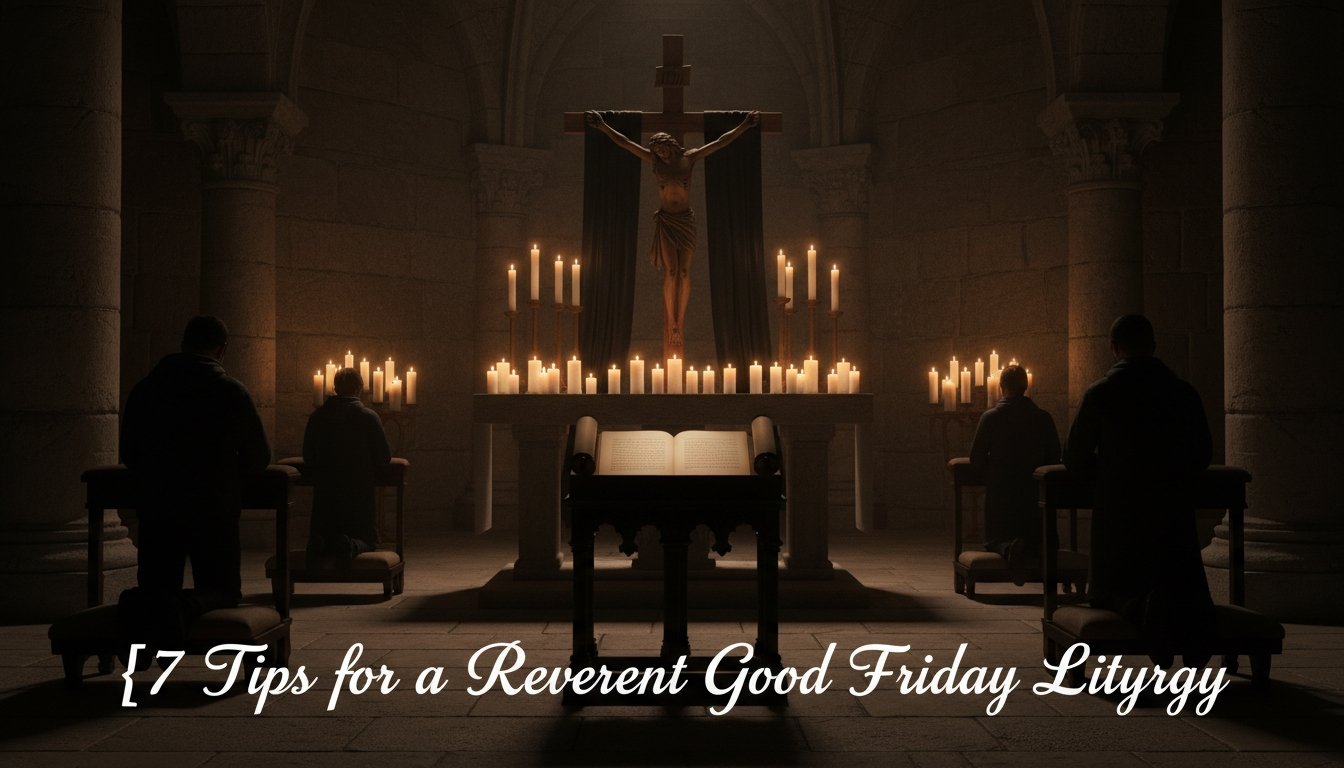
26 Feb 7 Tips for Good Friday Liturgy and Prayers
Craft a reverent Good Friday service by establishing a somber tone, incorporating reflective moments, and prioritizing Scripture readings on Christ’s passion. Weave in beloved traditions like the Stations of the Cross to guide reflection. Balance solemnity and hope, using evocative symbolism and visual aids to reinforce the service’s theological significance. Prepare the worship space to foster contemplation, and ensure the liturgy aligns with the purpose of commemorating Christ’s sacrifice. Continue reading to delve deeper into crafting an impactful Good Friday observance.
Key Takeaways
- Craft a somber, reflective liturgy that emphasizes Christ’s crucifixion and the meaning of the cross, incorporating beloved Good Friday practices.
- Incorporate a balance of Scripture readings, prayers, and hymns that foster an environment conducive to contemplation and deeper engagement with the Passion.
- Utilize symbolic elements such as the cross, thorns, and nails to visually represent Christ’s suffering and guide meditation during the service.
- Provide opportunities for active participation through responsive readings, guided reflections, and personal prayer to engage the congregation.
- Prepare the worship space intentionally with subdued lighting, draped furnishings, and a prominent cross or crucifix to set a solemn, contemplative atmosphere.
Crafting an Impactful Good Friday Service Structure
When crafting an impactful Good Friday service structure, it’s crucial to plan a meaningful flow that resonates with your congregation. Begin with a somber tone, acknowledging the gravity of the day.
When crafting an impactful Good Friday service, begin with a somber tone, acknowledging the gravity of the day.
Incorporate moments of reflection and silence, allowing attendees to contemplate the significance of Christ’s sacrifice.
Prioritize Scripture readings that highlight the passion narrative, inviting your community to walk alongside Jesus on his journey to the cross.
Consider incorporating symbolic elements, such as the veneration of the cross, to foster a profound sense of reverence.
Conclude with a note of hope, pointing towards the resurrection to come.
Incorporating Meaningful Good Friday Prayers and Traditions
Crafting meaningful Good Friday prayers and incorporating time-honored traditions can deepen your congregation’s reflection on Christ’s sacrifice. Draw from the rich history of the Church to create a solemn yet impactful liturgy that resonates with your community. Thoughtfully weave in beloved Good Friday practices to guide your people in commemorating the Passion in a spiritually transformative way.
Meaningful Good Friday Traditions
What’re some meaningful Good Friday traditions to incorporate into your liturgy and prayers? You could include a solemn Good Friday procession, where the congregation follows a cross through the church. Another tradition is venerating the cross, where people come forward to kiss or touch the cross. You might also consider doing a dramatic reading of the Passion narrative. Finally, don’t forget the powerful tradition of praying the Solemn Intercessions, where the community prays for the Church, the world, and all in need. These time-honored customs can make your Good Friday services deeply meaningful.
Reflective Good Friday Prayers
Meaningful Good Friday prayers can set the somber yet reflective tone for your liturgy. Consider incorporating prayers that meditate on Christ’s suffering and sacrifice, like the Stations of the Cross or the Solemn Reproaches. You could also include personal prayers of repentance and surrender. Invite your congregation to participate actively by providing printed prayers or projecting them onscreen. Alternating between corporate and individual reflection can create a meaningful rhythm. Don’t be afraid of silence – allow pauses for quiet meditation. End with a prayer of hope, acknowledging the sorrow of Good Friday but looking forward to the joy of Easter. These reflective moments will draw your community into the depth of Christ’s passion.
Engaging Good Friday Liturgy
Beyond reflective prayers, you can engage your congregation through a thoughtfully designed Good Friday liturgy.
Incorporate meaningful traditions like the Stations of the Cross, where participants reflect on Christ’s final journey.
Use dramatic readings, visual aids, and moments of silence to heighten the solemnity.
Encourage participation through responsive readings or hymns that connect the congregation to the profound narrative.
Curate a service that balances contemplation and active engagement, allowing your community to fully experience the gravity of the day.
Enhancing Congregation Engagement Through Reflective Elements
Encourage your congregation to pause for contemplative moments during the Good Friday service. Foster thoughtful participation through reflective elements that deepen their devotional experience. Cultivate an atmosphere of reverence and reflection to meaningfully connect your community to the solemnity of the day.
Encouraging Contemplative Moments
Creating contemplative moments can deepen your congregation’s engagement during Good Friday services. Incorporate brief periods of silence, allowing worshippers to reflect on Christ’s sacrifice. Use evocative imagery and symbolism to prompt introspection. Encourage attendees to meditate on the passion narrative through guided prompts. Weave in atmospheric music and dimmed lighting to foster a sense of reverence. Provide opportunities for personal prayer and intercession, inviting the faithful to pour out their hearts. These reflective elements can cultivate a profound encounter with the solemnity of the day, awakening your community’s spiritual senses.
Fostering Thoughtful Participation
How might you foster thoughtful participation during Good Friday services?
Encourage congregants to take time for personal reflection. Pause between readings and prayers, allowing silence for meditation. Incorporate symbolic gestures, like reverently touching the cross. Distribute resources for note-taking, inviting people to journal their thoughts. Feature a time of communal lament, giving voice to grief. Prompt worshippers to share brief testimonies about how the Passion narrative resonates with their own lives. By creating space for introspection and expression, you can deepen the congregation’s engagement with this solemn commemoration.
Cultivating Devotional Atmosphere
When planning your Good Friday service, consider incorporating reflective elements that can cultivate a devotional atmosphere and deepen congregational engagement. Dim the lights, light candles, and use solemn music to create a somber, introspective mood. Invite the congregation to participate in guided meditations or Scriptural reflections on the Passion narrative. Encourage silent prayer and personal reflection during moments of silence. You might also incorporate visual aids, such as a cross or symbols of Christ’s suffering, to focus the worshippers’ attention. These simple yet impactful elements can help your congregation enter into the solemnity and reverence of Good Friday.
Balancing Solemnity and Hope in Good Friday Observances
How do you strike a balance between the solemnity and hope inherent in Good Friday observances? It’s a delicate dance, reflecting the somber reality of Christ’s suffering and death, while also celebrating the promise of resurrection and redemption. Embrace the solemnity through mournful hymns, solemn readings, and moments of reverent silence. But don’t overlook the hope. Incorporate joyful songs, scripture passages proclaiming new life, and symbolic gestures like the veneration of the cross. Encourage your congregation to grapple with the weight of Good Friday, while also holding fast to the assurance of Easter Sunday. By striking this balance, your Good Friday liturgy will resonate deeply, guiding your community through the darkness towards the light.
Symbolically Connecting Good Friday to the Passion Story
By incorporating symbolic elements throughout your Good Friday liturgy, you can powerfully connect your congregation to the pivotal events of Christ’s Passion. Use physical objects like a cross, thorns, or nails to represent the instruments of His suffering. Encourage people to write their sins on slips of paper and nail them to a cross, visualizing Christ bearing their transgressions. Dim the lights to evoke the darkness that shrouded the earth during the crucifixion. Play somber music and allow moments of prayerful silence, inviting worshippers to reflect on the magnitude of Christ’s sacrifice. Through these symbolic gestures, you’ll help your community enter more fully into the sacred mystery of Good Friday, fostering a deeper appreciation for the love that led Jesus to the cross.
Preparing the Worship Space for Solemn Good Friday Observances
Preparing the worship space for solemn Good Friday observances sets the stage for meaningful engagement with Christ’s Passion. Begin by draping the altar and other furnishings in black cloth, symbolizing the solemnity of the day. Consider removing candles, flowers, and other decorations to create a somber atmosphere. Dim the lights, if possible, and encourage worshippers to enter in silence. Place a large cross or crucifix prominently in the sanctuary, serving as the focal point for meditation. Provide stations of the cross images or sculptures around the space, inviting contemplation of Jesus’ suffering. Ensure there are ample opportunities for reverent kneeling, such as kneelers or cushions. Thoughtfully consider the music and liturgy, emphasizing the penitential nature of the day. With intentional preparation, the worship space will foster an environment conducive to the solemnity of Good Friday.
Aligning the Good Friday Liturgy With Its Theological Purpose
Why is it important to align the Good Friday liturgy with its theological purpose? The solemn Good Friday service commemorates Christ’s crucifixion and death. It’s a time to reflect on the profound meaning and implications of Jesus’ sacrifice. To facilitate this, your liturgy should focus on the theological significance – Christ’s atonement, his triumph over sin and death, and the hope of salvation. Avoid getting sidetracked by unnecessary rituals or performances. Instead, prioritize elements like Scripture readings, prayers, and hymns that powerfully convey the day’s somber yet redemptive themes. This alignment ensures your congregation experiences a spiritually meaningful observance that draws them deeper into the mystery of the cross and its transformative power.
Frequently Asked Questions
Is Good Friday a National Holiday?
No, Good Friday isn’t a national holiday in the United States. It’s primarily observed as a religious holiday by Christian communities, but it’s not one of the federally recognized public holidays.
Businesses, schools, and government offices typically remain open on Good Friday, though some may offer reduced hours or special observances for those who wish to participate in religious services or activities.
Can Non-Christians Participate in Good Friday Services?
Absolutely! Good Friday services are open to all, regardless of religious affiliation. You don’t have to be a Christian to participate.
These solemn observances honor the death of Jesus, but they’re also opportunities for spiritual reflection, community, and solidarity. So feel free to attend, even if you don’t share the same beliefs.
You’ll likely find the experience meaningful and enlightening.
What Is the Difference Between Good Friday and Easter?
Good Friday commemorates the crucifixion of Jesus Christ, while Easter celebrates his resurrection. On Good Friday, Christians reflect on the suffering and death of Jesus, while Easter marks the triumph of life over death. The two are closely linked, as the resurrection wouldn’t be possible without the sacrifice of Good Friday. Easter is a joyous celebration, while Good Friday is a somber and reflective day.
Why Is Good Friday Called “Good”?
Good Friday is called “good” because it commemorates the day Jesus Christ was crucified and died on the cross for the sins of humanity. Despite the tragedy and suffering involved, the events of Good Friday ultimately led to Christ’s resurrection and the salvation of mankind, which is the foundation of the Christian faith. It’s considered “good” because it marks the day when God’s plan for redemption was fulfilled.
How Do Churches Handle Good Friday Observances?
Churches handle Good Friday observances by focusing on the solemnity and gravity of the day. They’ll typically hold a service that commemorates Christ’s crucifixion, often including readings from the passion narrative, hymns, and prayers. Some churches may have a Stations of the Cross service or a somber Tenebrae service where candles are gradually extinguished.
The observance is meant to be reflective and penitential, preparing for the joy of Easter.
Conclusion
You’ll want to ensure your Good Friday liturgy and prayers align with the solemn, reflective tone of the day. By incorporating meaningful traditions, engaging the congregation, and preparing the worship space, you can create an impactful observance that connects your community to the passion story and its theological significance.












No Comments