

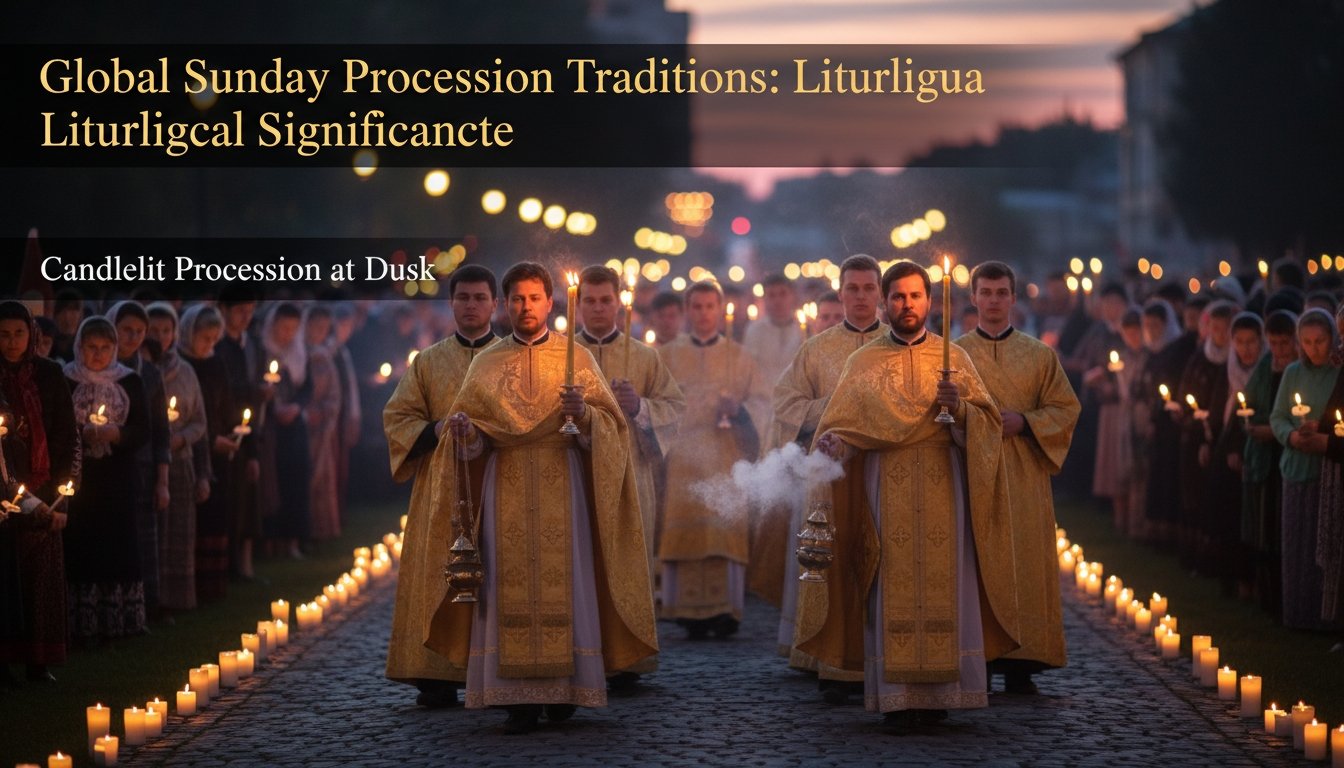
01 Mar Global Sunday Procession Traditions: Liturgical Significance
Palm Sunday processions hold deep spiritual meaning for Christians worldwide, reenacting Jesus’ triumphal entry into Jerusalem and foreshadowing the events of Holy Week. Palms symbolize victory, joy, and honor attributed to Christ, while the procession itself mirrors the faithful welcoming Jesus with songs and acclamations. Across the globe, these vibrant traditions incorporate local customs, yet share a common thread of celebrating salvation. To explore the rich diversity and symbolic depth of these observances, continue reading.
Table of Contents
Key Takeaways
- Palm Sunday processions worldwide reenact Jesus’ triumphal entry into Jerusalem, symbolizing themes of humility, reverence, and salvation.
- Palms used in the processions represent victory, joy, and honor attributed to Christ, connecting to both biblical and harvest traditions.
- Processions embody the faithful carrying and waving palms, mirroring the biblical narrative and affirming their participation in the story of salvation.
- Regional variations in Palm Sunday processions reflect local customs and cultures, unifying the liturgical significance of the event.
- The global diversity of Palm Sunday processions showcases the shared themes of Christ’s entry, passion, and resurrection, celebrated across denominations and cultures.
The Origins and Symbolism of Palm Sunday Processions
What’s the significance behind the age-old tradition of Palm Sunday processions? This ritual dates back to the 4th century when Christians commemorated Jesus’ triumphant entry into Jerusalem. Participants carry palm branches, representing the palm leaves spread before Christ as he rode a donkey. It’s a symbolic reenactment, celebrating his status as the Messiah. The procession mirrors Christ’s journey, evoking themes of humility, reverence, and worship. Carrying palms, people sing hymns, chant prayers, and sometimes dress in ceremonial robes. This solemn yet joyous event kickstarts Holy Week, leading to Easter. Through this timeless tradition, worshippers connect with the biblical narrative, affirming their faith.
Regional Variations in Palm Sunday Procession Traditions
How do Palm Sunday procession traditions vary across different regions? From the somber and reflective processions in the Middle East to the vibrant and celebratory ones in Latin America, the cultural diversity is striking. In Spain, worshippers carry elaborate palm-adorned floats, while in Germany, children march with handmade palm fronds. Italians emphasize the procession’s connection to Christ’s entry into Jerusalem, while Filipinos incorporate local customs like the blessing of palm leaves. Whether grand or intimate, these processions share a common thread – honoring the start of Holy Week and commemorating Jesus’ triumphant arrival. Despite the regional differences, they all serve as powerful reminders of the liturgical significance of this sacred tradition.
The Liturgical Significance of Palm Branches and Processions
The use of palm branches in liturgical processions holds deep symbolic meaning. These leafy fronds represent victory, joy, and honor – attributes ascribed to Jesus as he entered Jerusalem. Explore how this ancient tradition continues to shape the spiritual experiences of worshippers worldwide.
Palm Branches as Symbols
Why do palm branches hold such profound liturgical significance within the Christian tradition? Palm branches symbolize Christ’s triumphant entry into Jerusalem, where crowds welcomed Him with waving palms. They represent joy, victory, and the promise of eternal life.
Palm leaves are also associated with the Feast of Tabernacles, a joyous harvest celebration. In Christian liturgy, they signify the final leg of Jesus’ journey to the cross, His sacrificial death, and ultimately, His resurrection and the promise of salvation. The use of palms in processions and services evokes these deeply symbolic meanings, inviting worshippers to celebrate Christ’s victory over sin and death.
Processions and Liturgical Meaning
What role do processions play in the liturgical significance of palm branches? Processions symbolize the triumphal entry of Jesus into Jerusalem, which palm branches commemorate. As the faithful carry and wave palm branches during these processions, they reenact this pivotal biblical event.
This liturgical action connects the congregation to Christ’s suffering, death, and resurrection – the very heart of Christian belief. The procession is a vivid, embodied proclamation of faith, reminding worshippers that they too must take up their cross and follow Jesus. Through this ritual, the community celebrates Christ’s victory and anticipates the eternal feast in heaven.
How Palm Sunday Processions Reenact Jesus’ Triumphal Entry
Palm Sunday processions reenact Jesus’ triumphal entry into Jerusalem. The waving of symbolic palm branches celebrates his triumphant arrival. By participating in these processions, worshippers commemorate Christ’s momentous occasion.
Symbolic Palm Branches
How do the palm branches carried in Palm Sunday processions serve to reenact Jesus’ triumphal entry into Jerusalem? The palm branches symbolize the way the crowds welcomed Jesus by laying palm branches on the ground as he rode into the city. By carrying palm branches, participants in the procession mimic the people who greeted Jesus with this celebratory gesture. The palm leaves represent the victory and glorification of Christ as the Messiah. This ritual reenactment allows worshippers to tangibly connect with and commemorate the biblical event, fostering a deeper understanding of its significance in Christian liturgy and tradition.
Reenactment of Triumph
Why do Palm Sunday processions so effectively reenact Christ’s triumphal entry into Jerusalem?
The processions echo the festive atmosphere and celebratory mood that greeted Jesus as he entered the city. Worshippers wave palm branches, just as the crowd did in the biblical account.
The procession’s progression mirrors Jesus’ own journey, while the congregation’s joyous shouts evoke the adoring crowd’s acclamations.
This reenactment puts participants directly in the biblical narrative, allowing them to experience the triumph and anticipation of that fateful day.
Through this ritual enactment, the liturgy connects modern Christians to the pivotal moment when Jesus was hailed as the Messiah, fostering a deeper understanding and appreciation of this seminal event.
The Spiritual Meaning and Themes of Palm Sunday Processions
What spiritual themes are embodied within the centuries-old tradition of Palm Sunday processions? These solemn yet joyous processions reenact Jesus’ triumphant entry into Jerusalem, symbolizing his kingship and the people’s devotion. The waving of palm branches evokes Christ’s role as the Messiah, while the procession itself mirrors his journey, inviting participants to walk alongside him. Underlying this ritual is a profound message of hope, humility, and sacrifice. The procession reflects Jesus’ willingness to embrace his destiny, foreshadowing his ultimate suffering and death. Yet, amidst the solemnity, there’s a sense of anticipation for the Resurrection to come. This blend of solemnity and celebration lies at the heart of the Palm Sunday procession, reminding us of the salvation Christ offers through his life, death, and resurrection.
The Global Diversity of Palm Sunday Procession Practices
Across the globe, Palm Sunday processions exhibit a rich tapestry of cultural traditions. From the flower-adorned streets of the Philippines to the elaborate pageantry of Spain, each region puts its unique stamp on this sacred ritual. In parts of Latin America, worshipers carry wooden crosses, while in Poland, the faithful weave intricate palm fronds into decorative patterns. In Ethiopia, priests lead the procession, clad in vibrant robes and chanting ancient hymns. Even within the same country, traditions can vary – in Italy, some communities emphasize the solemnity, while others embrace joyous celebrations. This diversity reflects the universal appeal of Palm Sunday, as communities worldwide commemorate Christ’s triumphant entry into Jerusalem through time-honored customs that connect them to their faith and heritage.
Frequently Asked Questions
Can You Use Other Plants Instead of Palm Branches?
You can certainly use other plants instead of palm branches in global Sunday procession traditions. Many churches and communities incorporate local flora, like olive branches, flowers, or evergreens, to represent the significance of the day. The specific plant choice may vary by region, but the core meaning and symbolism remain the same – celebrating Christ’s triumphant entry into Jerusalem.
Do All Churches Hold Palm Sunday Processions?
No, not all churches hold Palm Sunday processions. The observance of this tradition varies across denominations and regions.
Some churches may prefer alternative celebrations or focus more on the liturgical aspects of the day without a processional.
The use of palm branches specifically is a common but not universal practice in Christian Palm Sunday commemorations.
How Long Do Palm Sunday Processions Typically Last?
Palm Sunday processions typically last anywhere from 15 minutes to an hour, depending on the size of the congregation and the distance traveled.
The procession reflects the triumphal entry of Jesus into Jerusalem, so the length can vary to allow for appropriate commemoration of this important event in the life of Christ.
Can Children Participate in Palm Sunday Processions?
Yes, children can absolutely participate in Palm Sunday processions. It’s a wonderful way for them to engage with the liturgical traditions of the Church. The processions are often lively and vibrant, with the waving of palm branches and singing of hymns – perfect for involving children in the celebration.
Are Palm Sunday Processions Celebrated in Non-Christian Faiths?
Palm Sunday processions are primarily celebrated within Christian faiths, particularly in Catholic and Protestant denominations.
While some non-Christian faiths may have similar processional traditions, they’re not directly associated with the Palm Sunday commemoration of Jesus’ entry into Jerusalem.
Your best bet to find non-Christian procession traditions would be to research specific cultural or religious festivals in different parts of the world.
Conclusion
You’ve explored the rich tradition of Palm Sunday processions, tracing their origins and regional variations. These processions don’t just commemorate Jesus’ triumphal entry – they reenact it, inviting you to join in that spiritual journey. Whether you partake in a grand cathedral parade or a more intimate neighborhood celebration, the global diversity of these practices reminds you of the universality of this holy celebration.











No Comments