

16 Dec Free Worship Songs Legal Downloads and Royalty-Free Picks
You’ll find legally compliant free worship songs through CCLI-licensed platforms, Creative Commons collections, and pre-cleared church resource websites like PraiseCharts and Worship Together. Public domain works published before 1928 require no licensing fees, while platforms like Free Music Archive and Jamendo offer Creative Commons-licensed content with specific attribution requirements. You must verify licensing terms, document usage rights, and maintain compliance records to avoid federal copyright violations carrying penalties up to $150,000 per infringement. Comprehensive legal strategies ensure complete ministry protection.
Table of Contents
Key Takeaways
- CCLI provides blanket licenses for most contemporary worship songs, offering legal protection for congregational use and streaming.
- Public domain worship songs published before 1928 require no licensing fees and can be freely downloaded and used.
- Creative Commons platforms like Free Music Archive and Jamendo offer royalty-free worship music with specific attribution requirements.
- Church resource websites like PraiseCharts and Worship Together provide pre-cleared licensing agreements with comprehensive usage rights.
- Independent artists often release worship songs under Creative Commons licensing, providing legal alternatives to copyrighted commercial music.
Understanding Copyright Laws and Licensing for Church Music
Most worship songs fall under federal copyright protection, requiring churches to obtain proper licensing before public performance or reproduction. You’ll need to navigate complex licensing considerations when selecting music for your congregation. The Copyright Act of 1976 establishes exclusive rights for composers and publishers, making unauthorized use a federal violation.
CCLI (Christian Copyright Licensing International) provides blanket licenses covering most contemporary worship catalogs, but you must verify specific song coverage. Public domain works, typically published before 1928, don’t require licensing fees. However, modern arrangements of public domain songs often carry new copyrights.
You’ll face significant copyright concerns when streaming services, recording sermons, or distributing sheet music. Fair use exceptions rarely apply to complete song performances in worship settings. Penalties for infringement include statutory damages up to $150,000 per work. Always document your licensing agreements and maintain current subscriptions to avoid legal liability.
Top Websites and Platforms Offering Legal Free Worship Songs
You’ll find legally compliant worship songs through three primary distribution channels that maintain proper licensing frameworks. Popular free music platforms like Spotify Free and YouTube offer limited-use access under their terms of service, while dedicated church resource websites provide congregation-specific licensing agreements.
Creative Commons collections deliver the most comprehensive usage rights through standardized attribution requirements and derivative work permissions that comply with federal copyright statutes.
Popular Free Music Platforms
When seeking legitimate sources for worship music without copyright infringement, several established platforms provide extensive catalogs of legally downloadable content. You’ll find comprehensive libraries through dedicated music streaming services that maintain proper licensing agreements with copyright holders. These platforms ensure compliance with intellectual property laws while offering transparent usage rights.
Specialized worship song aggregators serve churches and ministries by curating content specifically licensed for congregational use. They provide clear documentation regarding permitted usage scenarios, redistribution rights, and attribution requirements. You must verify each platform’s terms of service before downloading, as licensing conditions vary significantly between providers.
Some platforms offer completely royalty-free content, while others require specific attribution protocols. Always review the licensing documentation to ensure your intended usage aligns with the platform’s legal parameters and copyright restrictions.
Church Resource Websites
Although many general music platforms exist, dedicated church resource websites provide the most comprehensive access to legally compliant worship music specifically designed for congregational use. You’ll find these specialized platforms offer pre-cleared licensing agreements, eliminating copyright infringement risks.
Websites like CCLI, PraiseCharts, and Worship Together provide extensive catalogs with built-in church music management systems. These platforms integrate seamlessly with worship tech solutions, offering chord charts, lead sheets, and multi-track recordings. You can access licensing documentation, usage reports, and administrative tools essential for legal compliance.
Unlike general platforms, these resources understand ecclesiastical requirements and provide congregation-specific features. They’ll streamline your worship preparation while ensuring full legal protection for your ministry’s musical activities.
Creative Commons Collections
Creative Commons licensed worship songs represent the most legally secure path for churches seeking cost-effective musical resources without traditional licensing complexities.
You’ll find extensive collections on platforms like Free Music Archive, Jamendo, and CC Mixter, which host worship content under various Creative Commons licensing frameworks. Each license carries specific usage parameters—some permit commercial use, others restrict modifications, and several require share-alike provisions.
You must comply with artist attribution requirements regardless of license type. Document the original composer, performer, and license terms for each song you incorporate into worship services.
Platforms like Bandcamp and SoundCloud feature dedicated Creative Commons sections where independent worship artists distribute their work. Always verify license authenticity before implementation, as misattribution constitutes copyright infringement despite Creative Commons designation.
Creative Commons Licensed Worship Music Resources

You’ll need to verify Creative Commons licensing terms before using worship music in your services, as each CC license carries specific attribution and usage requirements.
Popular platforms like Free Music Archive and ccMixter host extensive collections of CC-licensed worship songs with clearly marked permissions for commercial and non-commercial use.
Understanding these licensing frameworks ensures your church remains compliant while accessing legally free worship resources from established Creative Commons repositories.
Finding Creative Commons Music
Several established platforms host Creative Commons licensed worship music that meets specific legal requirements for congregational use. You’ll find comprehensive collections on Free Music Archive, Jamendo, and ccMixter, which provide detailed license specifications for each track.
When evaluating tracks, you must verify attribution requirements and commercial usage rights before implementation. CC BY licenses permit unrestricted use with proper credit, while CC BY-SA requires derivative works under identical licensing terms. CC BY-NC restricts commercial applications entirely. You should examine metadata carefully, as licensing terms vary significantly between compositions.
MusOpen and Internet Archive offer additional repositories with searchable filters for Creative Commons designations. Always document licensing compliance for legal protection during congregational worship services and public performances.
Popular CC Worship Platforms
Beyond general Creative Commons repositories, specialized worship music platforms have emerged to serve faith communities with curated collections that address specific liturgical needs. You’ll find these platforms maintain comprehensive sample catalogs organized by denomination, seasonal themes, and musical arrangements. Each platform establishes distinct licensing policies that specify attribution requirements, derivative work permissions, and commercial use restrictions.
When evaluating these resources, you must verify license compatibility with your intended usage. Some platforms require explicit credit attribution during live performances, while others permit modification only under specific conditions. Review each platform’s terms of service alongside their Creative Commons designations, as additional restrictions may apply beyond standard CC licensing frameworks. Documentation of compliance becomes essential for avoiding inadvertent infringement.
Independent Artists Providing Royalty-Free Worship Songs
When seeking alternatives to traditional publishing houses, independent artists represent a significant source of royalty-free worship content that operates under Creative Commons licensing or similar unrestricted usage frameworks. You’ll discover these musicians typically release their compositions under CC0, CC BY, or CC BY-SA licenses, providing explicit permission for ecclesiastical usage without performance royalties or synchronization fees.
Your independent artist outreach efforts should focus on platforms like Bandcamp, SoundCloud, and artist-specific websites where creators explicitly designate their works as royalty-free. You must verify worship song licensing terms before implementation, ensuring compliance with stated usage parameters. Many independent composers specify attribution requirements while waiving monetary compensation.
You’ll find these artists often provide downloadable stems, lead sheets, and chord charts alongside audio files. Documentation of licensing agreements remains essential for your church’s legal compliance. Always confirm perpetual usage rights and any restrictions regarding commercial distribution or derivative works before incorporating these compositions into your worship programming.
Building Your Digital Library of Free Worship Music
After identifying suitable independent artists and their licensing frameworks, you must establish systematic protocols for organizing and maintaining your acquired worship content. Create standardized file naming conventions incorporating artist names, song titles, and license types for efficient retrieval. Document all licensing terms, expiration dates, and usage restrictions in a comprehensive database.
Establish systematic protocols for organizing worship content with standardized naming conventions, comprehensive licensing databases, and proper documentation tracking.
When finding reliable sources, verify each platform’s legitimacy through legal verification processes. Cross-reference licensing agreements against current copyright databases to ensure compliance validity. Maintain backup copies across multiple storage systems to prevent data loss.
For avoiding legal issues, implement regular license audits and renewal tracking systems. Archive original licensing documentation alongside each digital file. Establish clear chain-of-custody records for all downloaded content, including acquisition dates and source verification.
Configure automated alerts for license expirations and regulatory updates. Train staff members on proper handling procedures for copyrighted materials to maintain organizational compliance standards throughout your digital worship music library.
Quality Assessment Tips for Free Worship Song Downloads
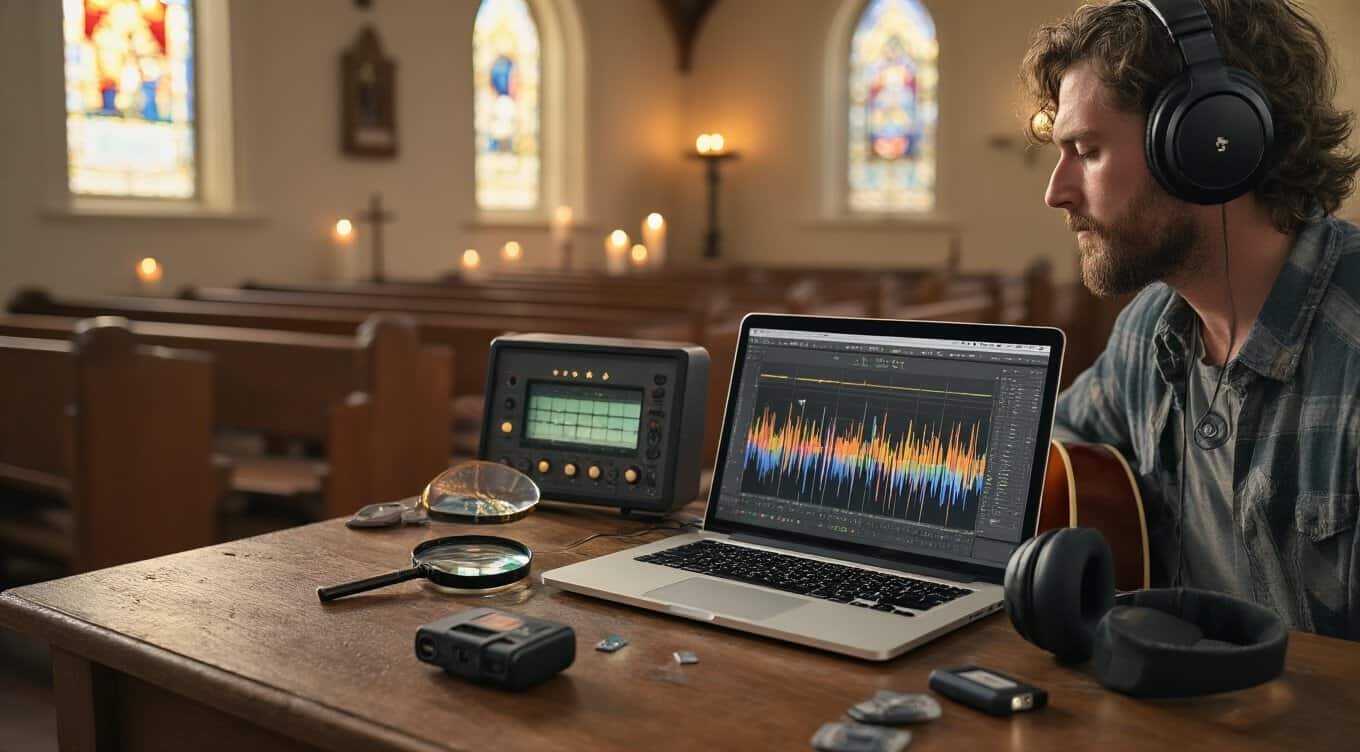
The technical evaluation of free worship song downloads requires systematic assessment protocols to ensure audio fidelity meets your congregation’s performance standards. When analyzing song quality, you’ll need to verify minimum bitrate specifications of 320 kbps for MP3 files or lossless FLAC formats for optimal playback. Check frequency response ranges between 20Hz-20kHz to confirm full-spectrum audio reproduction capabilities.
Evaluating download requirements involves examining file metadata for proper licensing documentation and usage permissions. You must validate that Creative Commons licenses or public domain designations are clearly specified within file properties. Inspect audio waveforms for clipping, distortion, or compression artifacts that could compromise worship service quality.
Implement standardized testing procedures using professional audio monitoring equipment or certified software analyzers. Document compliance verification for each downloaded track, maintaining records that demonstrate due diligence in quality assurance protocols. This systematic approach protects your ministry while ensuring congregation members experience worship music at acceptable technical standards.
Legal Usage Guidelines for Churches and Ministries
Understanding copyright law becomes essential for churches and ministries utilizing free worship songs, as violations can result in significant financial penalties and legal consequences. You must verify each song’s specific license terms before implementation in worship services, broadcasts, or recordings.
Understanding licensing requirements involves distinguishing between Creative Commons, public domain, and royalty-free designations. Creative Commons licenses may restrict commercial use, derivative works, or require attribution. Public domain songs carry no copyright restrictions, while royalty-free doesn’t necessarily mean cost-free for all applications.
When navigating free usage policies, you’ll encounter varying permissions for live performance, streaming, recording, and distribution. CCLI licenses don’t cover all free worship songs, requiring separate verification. Document your compliance by maintaining records of license agreements, attribution requirements, and usage restrictions.
Always consult legal counsel when uncertain about specific licensing terms, particularly for recorded services, online streaming, or commercial distribution of worship content containing these musical works.
Alternative Cost-Effective Worship Music Solutions
Beyond securing proper licensing for free worship songs, churches can implement several strategic approaches to minimize music-related expenses while maintaining legal compliance. You’ll find that partnering with local musicians creates mutually beneficial arrangements while reducing licensing costs. Establish relationships with music schools and conservatories to access talented performers seeking experience opportunities.
Strategic partnerships with local musicians and music schools create cost-effective solutions while maintaining full legal compliance for worship ministries.
Consider commissioning original compositions from emerging songwriters who’ll retain copyright while granting your ministry usage rights. This approach supports independent artist opportunities while building your unique musical repertoire. You can negotiate flat-fee arrangements for exclusive or limited-use compositions.
Invest in creative music productions using royalty-free instrumental tracks as foundations for congregational singing. These tracks eliminate ongoing royalty obligations while providing professional-quality accompaniment. Additionally, explore subscription-based licensing services that offer unlimited access to extensive catalogs for fixed monthly fees.
Document all licensing agreements, payment records, and usage permissions to ensure ongoing compliance with copyright regulations and protect your ministry from potential legal challenges.
Frequently Asked Questions
Can I Use Free Worship Songs for Commercial Church Broadcasts or Livestreams?
You can’t assume free worship songs permit commercial use without verifying specific licensing terms. Worship song usage requires explicit commercial broadcast permissions, as “free” typically means personal use only.
Commercial broadcast restrictions often prohibit livestreaming without proper licensing agreements. You’ll need to secure performance rights through CCLI, ASCAP, or BMI for legal compliance. Always review each song’s license agreement before incorporating into revenue-generating broadcasts.
Do I Need to Credit the Original Artist When Using Royalty-Free Songs?
Yes, you’ll typically need to credit the original artist even with royalty-free songs. While royalty-free means you don’t pay ongoing fees, licensing requirements usually mandate attribution.
Check your specific license agreement for exact crediting specifications. Public performance rights may include attribution clauses regardless of royalty status.
You’re legally obligated to follow the license terms, which commonly require artist acknowledgment in your broadcasts or livestreams.
Are There Quality Differences Between Free and Paid Worship Song Downloads?
You’ll typically find significant song quality differences between free and paid downloads. Free versions often feature compressed audio formats, lower bitrates, and reduced dynamic range. Paid licenses usually provide high-resolution files with superior mastering.
However, legal considerations remain paramount regardless of audio quality—you must verify licensing terms, usage rights, and attribution requirements. Don’t assume free equals inferior; some royalty-free providers offer professional-grade recordings that meet commercial broadcasting standards.
Can I Modify or Arrange Free Worship Songs for My Church Band?
You can modify free worship songs if they’re released under Creative Commons or public domain licenses, but you must review specific personal use guidelines first.
Most royalty-free downloads permit arrangements for non-commercial church services, though some restrict derivative works.
Always verify song arrangement permissions in the license agreement before creating instrumental versions, changing keys, or adding verses.
Commercial distribution of your arrangements typically requires separate licensing regardless of the original song’s free status.
What’s the Difference Between Royalty-Free and Completely Copyright-Free Worship Music?
Royalty-free worship music requires one-time licensing fees but retains copyright protection, limiting your distribution rights and commercial usage. You’ll need specific legal permissions for broadcasts or recordings.
Copyright-free music enters public domain, granting you unrestricted usage, modification, and distribution rights without ongoing obligations. You can’t assume royalty-free means copyright-free—always verify licensing terms before implementing worship music in your services or recordings.
Conclusion
You’ll need to verify each download’s licensing terms before implementing songs into your worship services. Ensure you’re maintaining comprehensive documentation of Creative Commons licenses, artist permissions, and usage restrictions. Don’t assume “free” means unrestricted use—review derivative work limitations and attribution requirements. You’re legally obligated to comply with specified licensing parameters, regardless of cost. Establish systematic verification protocols for your music library to maintain regulatory compliance and avoid potential copyright infringement liabilities.






No Comments