

17 Apr What Forty Days After Easter Sunday Really Means
You’re looking at the forty‑day stretch that starts with Easter Sunday and ends with Ascension Day, when the risen Christ leaves Earth and rises to heaven, sealing His victory and commissioning His followers. Those days echo Israel’s wilderness trek, showing perseverance and transformation, and they bridge the post‑resurrection appearances to the Spirit’s coming at Pentecost. The period moves from visible encounters to invisible empowerment, inviting you to live out the mission daily. Keep going and you’ll see how churches celebrate it and how it can shape your own life.
Table of Contents
Why Ascension Day Caps the 40‑Day Easter Period
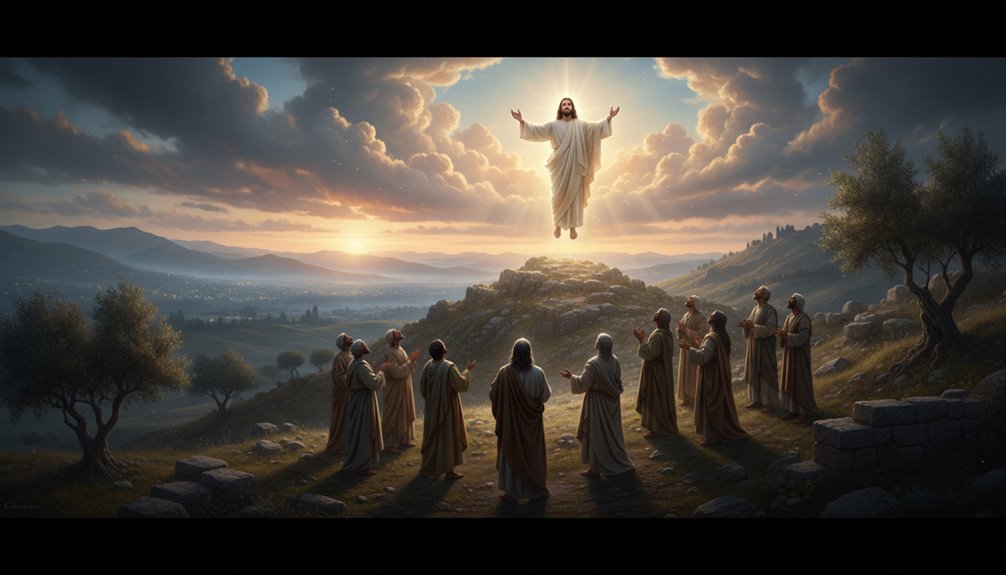
Why does Ascension Day mark the climax of the 40‑day Easter season? You witness the final chapter of Jesus’ post‑resurrection appearances, a moment that turns celebration into commissioning. After three weeks of appearances, the disciples gather on the mountaintop, and the risen Lord lifts into the sky, fulfilling the promise that He’d ascend. This act signals the transition from earthly presence to heavenly intercession, confirming that the resurrection wasn’t a private miracle but a public inauguration of the Kingdom. You feel the weight of history as the Ascension closes the liturgical period, preparing the Church for Pentecost, when the Spirit descends. The 40‑day span mirrors Israel’s wilderness journey, highlighting transformation and preparation. By ending the season with ascension, you recognize that the story moves from visible encounters to invisible empowerment, establishing the foundation for ongoing faith and mission.
Biblical Events and Theological Themes of Ascension Day’s 40‑Day Timeline
When you trace the forty‑day stretch from Easter to Ascension, you encounter a tightly woven sequence of biblical events that echo Israel’s wilderness wanderings and point to the fulfillment of Christ’s salvific mission. After the empty tomb is discovered, Jesus appears to Mary Magdalene, then to the disciples, reinforcing their faith and commissioning them as witnesses. He walks with them to Emmaus, revealing himself through Scripture, and later gathers the apostles in Jerusalem, where he explains the Kingdom’s inauguration. These post‑resurrection appearances echo Moses receiving the Law in the desert, signifying a new covenant.
The forty‑day period mirrors Israel’s forty years of testing, emphasizing perseverance, transformation, and divine provision. Theologically, the timeline underscores Christ’s victory over death, the validation of his teachings, and the inauguration of the Spirit’s work. It culminates in the Ascension, where Jesus returns to the Father, sealing his exaltation and commissioning the disciples to spread the gospel.
How Major Christian Traditions Observe Ascension Day
Ever wondered how churches across the globe mark Ascension Day? In Catholic parishes, you’ll find a solemn Mass on Holy Thursday followed by a procession that ends with a special “Elevation” rite, symbolizing Christ’s ascent. Anglican churches often celebrate with a Eucharist that includes a reading of Acts 1:9‑11 and a hymn like “The Ascension.” Lutheran congregations typically hold a sunrise service, then a sermon focused on the promise of the Holy Spirit. Eastern Orthodox Christians observe the day on the 40th day after Pascha, chanting the “Hymn of the Ascension” and performing a liturgy that emphasizes Christ’s triumph over death. In many Methodist churches, the day is marked by a community outreach event, reflecting the belief that Christ’s ascension commissions believers to serve. Across these traditions, you’ll notice common elements—scripture readings, special music, and a call to live out the risen Christ’s mission.
Incorporating Ascension Day Meanings Into Personal and Community Life
When you let the Ascension’s call to go beyond yourself shape daily choices, you turn a liturgical celebration into a living practice. Begin by seeing the event as a reminder that Christ’s mission continues through you. Invite this mindset into prayer, work, and service: ask daily how you can lift others, model humility, and pursue justice.
In your community, organize short gatherings after work or school where participants share a brief reflection on ascent and then commit to a concrete act—feeding a neighbor, mentoring a youth, or cleaning a shared space. Use the symbolism of rising to inspire collective goals: start a community garden, launch a mentorship program, or support a local charity.
Let the story of the Ascension fuel both personal transformation and communal solidarity, turning a single feast day into ongoing, purposeful motion toward love and renewal.
Frequently Asked Questions
Why Does Easter Sunday’s Date Change Each Year?
You see Easter Sunday shifts each year because it follows the lunar‑solar calendar, not a fixed Gregorian date. The Church defines Easter as the first Sunday after the first full moon occurring on or after the March equinox (around March 21).
Since the moon’s phases and the equinox move annually, the resulting Sunday can fall anywhere between March 22 and April 25, making the date change every year.
How Is the 40‑Day Period Calculated?
You calculate the 40‑day span by starting on Easter Sunday and counting forward, including that day as day 1. Continue counting each calendar day—Monday, Tuesday, and so on—until you reach day 40, which lands on the following Thursday. This method treats every day equally, regardless of weekends or holidays, and aligns with the traditional liturgical practice that marks the period from Easter to Pentecost.
Do All Denominations Observe Ascension Day on the Same Date?
You’ll find that most major denominations—Catholic, Orthodox, Anglican, and many Protestant churches—celebrate Ascension Day exactly forty days after Easter, so they share the same date. However, some evangelical and non‑liturgical groups don’t observe it at all, and a few Eastern churches that follow the Julian calendar will mark it on a different civil day. In short, the date aligns for most historic churches, but not universally.
What Is the Historical Origin of Ascension Day?
You trace Ascension Day back to early Christianity, when believers commemorated Jesus rising into heaven forty days after his resurrection. The New Testament, especially Acts 1:9‑11, records the event, and by the second century the church began marking it liturgically.
Can Ascension Day Be Celebrated on a Different Day if It Falls on a Weekend?
Yes, you can celebrate Ascension Day on another day if it lands on a weekend. Most churches observe the feast on the nearest weekday—usually the following Monday—to ensure congregants can attend services. Some denominations simply shift the liturgy to Sunday, while others keep the traditional Thursday date but add a special weekday observance. Check your local parish’s calendar; they’ll tell you exactly which day they’ve designated for the celebration.
Conclusion
Now that you’ve explored the 40‑day journey, you see Ascension isn’t just a calendar mark—it’s the climax of Christ’s earthly mission, a bridge from resurrection to promised return. By honoring this day, you join centuries of believers who celebrate hope, transformation, and the Spirit’s ongoing work. Let that legacy shape your faith, your community, and the way you live out the risen Christ’s promise.











No Comments