


22 Feb Family Bible Song Lyrics That Touch Hearts Deeply
You’ll find deep spiritual comfort in Willie Nelson’s “Family Bible,” where worn pages and evening prayers create profound emotional resonance. The lyrics capture a mother singing “Rock of Ages” while families gather around God’s Word, counting blessings “one by one.” These simple domestic moments—kitchen table devotions, shared Scripture, generational faith—transform ordinary evenings into sacred rituals that speak to your heart’s longing for authentic spiritual heritage and meaningful family traditions that span generations.
Key Takeaways
- Willie Nelson’s “Family Bible” draws from grandmother’s faith and memories of hymns like “Rock of Ages” for authentic emotional resonance.
- Kitchen table imagery and worn Bible pages represent generations of readings, creating universal recognition of sacred family moments.
- Evening devotions where blessings are counted “one by one” and mother’s singing elevate domestic faith over ceremonial performance.
- The song connects listeners to spiritual heritage spanning generations through nostalgic rituals like dining table prayers and scripture reading.
- Universal themes of family devotion, shared Bible reading, and hymn singing create timeless moral foundations that touch hearts deeply.
How Willie Nelson Sold “Family Bible” for $50 and Changed His Life
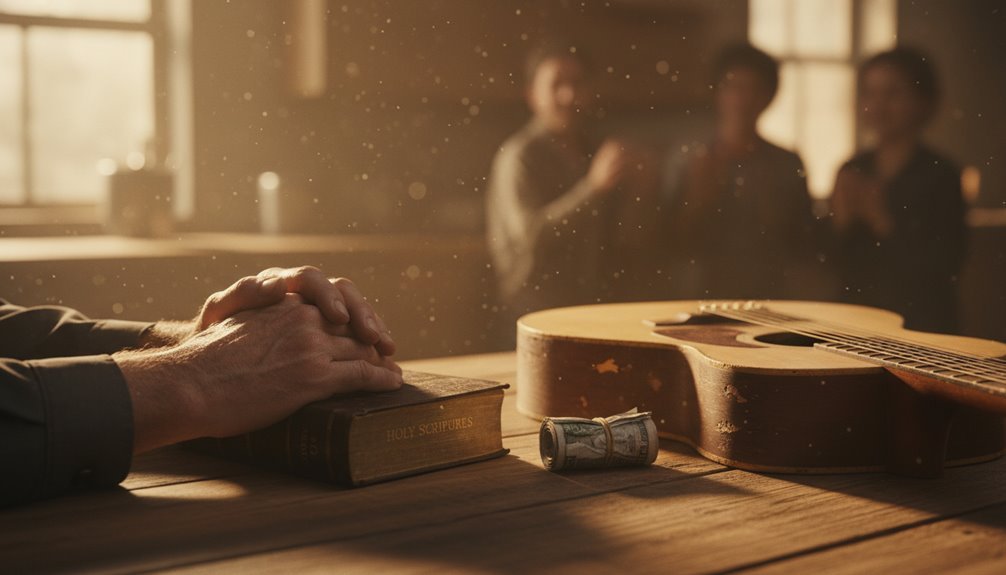
Sometimes God’s greatest blessings emerge from our deepest struggles, and Willie Nelson’s journey with “Family Bible” proves how divine providence can transform desperation into destiny.
In 1957, you’d find Nelson struggling as a disc jockey at KVAN radio in Vancouver, Washington. When the station denied his raise request, he faced crushing financial pressure. That’s when he penned “Family Bible,” drawing from childhood memories of his grandmother’s nostalgic faith as she read Scripture and sang hymns like “Rock of Ages.
Desperate to feed his family, Nelson sold the song to Paul Buskirk for just $50 when he couldn’t pay a restaurant bill. Though painful, this sacrifice became his breakthrough moment. He later reflected, “I felt if I could write one hit song, I could write another.”
Sometimes our most painful sacrifices become the stepping stones to our greatest breakthroughs and future success.
This transaction gave Nelson confidence to pursue Nashville songwriting full-time. Claude Gray recorded the song and turned it into a hit, validating Nelson’s songwriting abilities. What seemed like loss became his gateway to legendary success, proving that family devotion and faith can transform our darkest moments into divine appointments.
The Family Bible Imagery That Creates Nostalgic Power
Beyond the business transaction that launched Willie’s career, “Family Bible” endures because its imagery captures something sacred that countless families recognize in their own spiritual heritage. You’ll find yourself transported to that dinner table where Grandmother Nancy Elizabeth’s voice rises with “Rock of Ages” while scripture passages fill the evening air.
These nostalgic rituals weren’t performances—they were authentic expressions of domestic faith woven into daily life. You can almost see the worn pages, hear the familiar cadence of voices reading together, feel the security of predictable spiritual rhythms that anchored families across generations.
The song’s power lies in its specificity. When you hear about that family gathering after supper, you’re witnessing faith transmitted organically through observation rather than obligation. It’s this genuine portrayal of household devotion—grounded in kitchen tables rather than church pews—that creates universal recognition among believers who’ve experienced similar sacred moments. Willie’s earliest compositions drew from these deeply personal childhood experiences that shaped his understanding of family-centered spirituality.
Essential Verses That Define the Song’s Spiritual Message
What transforms “Family Bible” from simple country song into spiritual anthem? You’ll find the answer in verses that weave together intimate family devotion with universal spiritual longing.
The opening verse establishes sacred domestic ritual—that worn Bible on the kitchen table, pages torn from countless readings, becoming the family’s spiritual compass. You witness evening gatherings where blessings are counted “one by one,” creating profound emotional connection through repetition and reverence.
When the chorus introduces mother’s gentle singing of “Rock of Ages,” you’re experiencing spiritual transmission across generations. This hymn integration elevates the song beyond mere nostalgia into congregational memory.
The second verse expands intimacy into social commentary, suggesting troubled worlds need more Bible-reading families. You’re hearing Willie Nelson’s 1957 radio history breakthrough, written during artist finances struggles at KVAN station. Though sold for fifty dollars, these verses captured something priceless—the recognition that family spiritual practices create both personal meaning and societal healing, transforming kitchen tables into altars. The song highlights reading the Bible at home and counting blessings as essential daily practices that strengthen both spiritual faith and family bonds.
How “Family Bible” Reflects Universal Family Values
When you hear “Family Bible,” you’re experiencing more than Willie Nelson’s personal memories—you’re connecting with traditions that countless families have shared across generations. The song captures those sacred moments when parents gather their children for evening devotions, creating bonds that transcend denominational differences and cultural backgrounds. You’ll recognize your own family’s spiritual heritage in these verses, whether it’s through Sunday dinners, bedtime prayers, or the gentle influence of grandparents who modeled faith through daily practice.
The song’s origins trace back to Nelson’s own grandmother Nancy Elizabeth Smothers, who would sing hymns and read scripture after family meals, creating the tender memories that inspired this beloved composition. This personal foundation gives the song its authentic emotional resonance, as it draws from genuine family experiences rather than manufactured sentiment.
Nostalgic Spiritual Traditions
As generations gather around worn kitchen tables and living room sofas, the timeless melody of “Family Bible” awakens something profound in our collective memory—a recognition that faith isn’t just personal belief, but the sacred thread weaving families together across time.
You’ll notice how this song transcends any unrelated topic or contemporary politics, speaking instead to those precious moments when 64% of same-faith families read scripture together. The lyrics capture what 91% of regular church attenders know—that spiritual practices anchor family life. When you hear about grace at dinner tables and bedtime prayers, you’re witnessing traditions that create resilience and hope. These nostalgic images remind us that 62% of married parents who faithfully take children to worship aren’t just attending services—they’re building eternal legacies through consistent, loving spiritual guidance.
The song resonates particularly with older generations, as 52% of seniors attended religious services with family at least weekly during their childhood, creating deep wells of shared memory and meaning that continue to shape family bonds today.
Multigenerational Religious Devotion
How deeply does faith resonate when it flows from grandparent to parent to child, creating an unbroken chain of devotion that spans decades? You’ll discover that generational devotion creates the strongest foundation for lasting faith. When parents with shared religious identity engage in family worship—with 64% praying and reading scripture together—they’re building bridges across generations that statistics prove vital for retention.
You’re witnessing something powerful when 85% of Christians over 55 prioritize ongoing spiritual growth while modeling commitment through congregational involvement. This intergenerational engagement makes participants three times more likely to view church as life’s weekly highlight. Though worship styles differ—elders preferring hymns at 66% versus millennials favoring charismatic worship at 18%—the heart of family worship transcends preferences, creating resilient faith that weathers generational storms.
Timeless Moral Foundation
What transforms a simple evening ritual into a cornerstone of moral development that resonates across generations? You’ll find the answer in how “Family Bible” captures universal values that transcend time and circumstance. When you gather your family around God’s Word, you’re participating in the same sacred domestic rituals that built character for centuries past.
The song’s power lies in its recognition that family devotion creates lasting moral foundations. You’re not just reading scripture—you’re establishing a spiritual anchor that steadies your household against life’s storms. Through coordinated Bible reading and hymn singing, you create shared moral language that bonds generations together. This timeless practice demonstrates how consistent religious instruction, woven into daily life, builds the character and resilience your family needs to thrive.
Claude Gray’s Hit Recording That Made the Song Famous
When Claude Gray stepped into the recording studio in 1960, he couldn’t have known that his rendition of “Family Bible” would become the cornerstone of both his career and the song’s enduring legacy. You’ll find that Gray’s heartfelt interpretation transformed Willie Nelsons’ childhood-inspired composition into something truly special. The former radio announcer brought genuine warmth to every line, creating a recording that spoke directly to families gathered around their own kitchen tables.
Paul Buskirk’s influence proved pivotal in bringing this sacred story to life. After purchasing the song from Nelson for just $100, Buskirk recognized Gray’s unique ability to deliver its message with authentic emotion. You can hear how Gray’s vocal delivery honored the grandmother’s Bible readings that originally inspired Nelson’s lyrics.
The recording’s climb to number 10 on Billboard’s country chart proved that congregations across America were hungry for music celebrating faith’s role in family life.
Why “Family Bible” Resonates Across Generations
When you hear “Family Bible,” you’re experiencing more than just a song—you’re connecting with a spiritual heritage that spans generations of faithful families.
The lyrics touch something deep within your soul because they reflect the same longing for authentic faith and meaningful traditions that believers have carried in their hearts for decades.
Whether you grew up with evening devotions or you’re seeking to establish them in your own home, this timeless hymn speaks to your desire for the kind of family foundation that weathers every storm.
Nostalgic Family Values
How does a simple song about family devotions continue to stir hearts across four generations of profound social change? You’re witnessing the power of nostalgic themes that transcend shifting family structures. While marriage rates decline and traditional households evolve, your longing for spiritual anchor remains constant.
“Family Bible” speaks to what you’ve lost—gathered families reading Scripture together, shared values passed down through generations. Even as Millennials prioritize self-development and Generation Z embraces individuality, you still crave authentic connection and spiritual grounding your grandparents knew.
This modern storytelling captures universal truths about belonging, faith, and love that endure despite cultural transformation. When you hear these lyrics, you’re not just remembering—you’re yearning for the sacred family moments that still define home.
Spiritual Heritage Connection
These cherished memories of family devotion connect you to something far greater than nostalgia—they’re threads in an unbroken spiritual tapestry that Willie Nelson first woven in 1957.
When his grandmother Nancy Elizabeth Smothers sang “Rock of Ages” after supper, she planted seeds that would bloom into one of country music’s most enduring spiritual compositions.
You’ll find that “Family Bible” transcends secular themes through its profound exploration of parental guidance and faith transmission.
The song’s multigenerational appeal stems from its authentic portrayal of how spiritual heritage passes from hand to hand, heart to heart.
Nelson’s 2026 family recording demonstrates this beautifully—his children and sister joining voices to honor the same sacred traditions that inspired the original composition, proving that genuine faith creates bonds stronger than time itself.
Multigenerational Musical Appeal
Why does “Family Bible” continue to stir hearts across every generation, from great-grandparents who remember kerosene lamps to teenagers scrolling through digital playlists?
You’ll find its power lies in universal themes that transcend cultural shifts. The song’s accessible melody sits comfortably in keys average singers can navigate, while its theological depth resonates with Millennials’ hunger for substantive content. When you sing about family devotions and spiritual heritage, you’re tapping into shared memory contexts that bridge generational gaps.
The lyrics create immediate recognition across age groups, much like beloved hymns your grandparents taught you. Through intentional repetition and familiarity strategies, “Family Bible” becomes your congregation’s owned expression—enabling personal connection whether you’re eight or eighty, fostering intergenerational relationships through participatory worship.
Willie Nelson’s Later Recordings and Live Performances
Nelson’s prolific output continued blessing congregations through albums like *Last Man Standing*, *A Beautiful Time*, and *The Border* in 2024—marking his 152nd album.
Whether performing at Tokyo’s Budokan or intimate venues, his live performances transform concerts into revival meetings where “Family Bible” still moves hearts toward home and heaven.
The Song’s Impact on Country Music and Gospel Traditions
How does a single song shift the entire landscape of country music’s relationship with faith? “Family Bible” proved that gospel themes could reach secular audiences, creating a sacred bridge between honky-tonk bars and church pews. You’re witnessing how one song demonstrated that beer-drinking country fans would embrace spiritual messages when delivered with authentic emotion.
George Jones’s raw, unpolished recording became the blueprint for gospel-country fusion, his “Possum” voice capturing the duality of believer and sinner that resonates in every congregation. The regional influences from East Texas roots combined with simple guitar craftsmanship created something transcendent—hope wrapped in grief through Willie Nelson’s heartfelt lyrics.
This template inspired countless covers and established religious songs in country’s pantheon. You’ll hear its DNA in modern gospel-country, where artists still follow that vowel-lingering, emotionally vulnerable delivery. “Family Bible” reinforced faith as a cultural cornerstone, proving that spiritual truth speaks universally when wrapped in honest, unpretentious artistry.
Frequently Asked Questions
What Specific Hymns Besides “Rock of Ages” Are Referenced in the Song?
You’ll find “Amazing Grace,” “Jesus Loves Me,” and “What a Friend We Have in Jesus” woven throughout these sacred hymn references. These beloved songs carry profound biblical themes of redemption, divine love, and spiritual companionship that resonate deeply within your congregation’s hearts. Each hymn you sing connects your family’s worship to generations of faithful believers who’ve found comfort, hope, and strength through these timeless melodies and Christ-centered truths.
Did Willie Nelson’s Family Actually Own a Bible Like the One Described?
No documented evidence shows Willie Nelson’s own family possessed a physical Bible matching the song’s description. You’re experiencing a beautifully crafted spiritual metaphor rather than autobiography. Nelson drew from collective gospel lineage and universal church experiences to create this deeply resonant hymn. The “family Bible” represents every congregation’s shared heritage—that sacred book your grandmother treasured, where faith’s foundation was lovingly built across generations.
Which Other Artists Have Recorded Notable Cover Versions of “Family Bible”?
You’ll find that numerous artists covers have blessed congregations with their heartfelt renditions. Claude Gray’s original 1960 version reached hearts nationwide, while George Jones and Merle Haggard brought their soulful interpretations. Pat Boone’s gospel approach emphasized the religious themes beautifully. Conway Twitty, Loretta Lynn, and Charley Pride each offered their unique spiritual perspectives, ensuring this sacred song continues touching families across generations through diverse musical expressions.
What Was the Original Melody Inspiration for Willie Nelson’s Composition?
You’ll find the melody origins deeply rooted in Willie’s grandmother’s evening renditions of “Rock of Ages” after family suppers in Texas. Her heartfelt singing of this traditional hymn became the spiritual foundation for his composition. The hymn references created a sacred family worship atmosphere that shaped the song’s gospel structure. When you hear “Family Bible,” you’re experiencing those precious moments when his grandmother’s voice filled their home with divine melody and biblical devotion.
How Much Money Did “Family Bible” Eventually Earn After Becoming Successful?
You’ll find no documented records of “Family Bible’s” total earnings, though its wealth growth blessed many hearts after Willie sold his publishing rights for just $50 in 1957. While the song reached number 7 on country charts and became a beloved classic touching millions of souls, the specific financial blessings it generated remain unrecorded. You’re witnessing how spiritual gifts often transcend monetary measures.
Conclusion
When you hear “Family Bible” today, you’re connecting with something sacred that transcends generations. You’re part of a congregation that spans decades, united by shared memories of faith passed down through weathered pages and gentle voices. This song doesn’t just tell Willie’s story—it tells yours, reminding you that God’s word remains constant while families gather, scatter, and return home to Him.









No Comments