

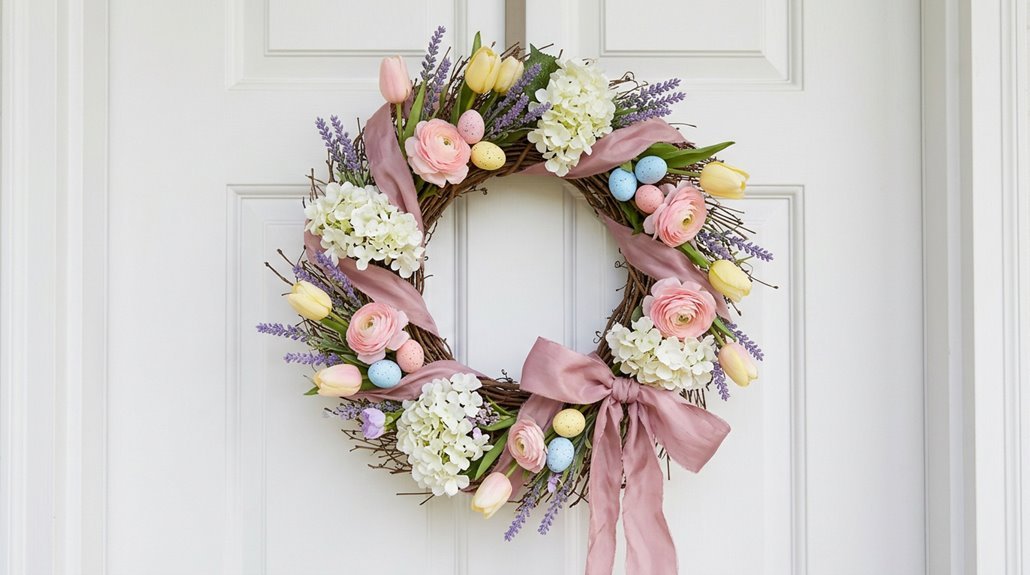
21 Mar Easter Wreath Ideas That Instantly Upgrade Your Door
Grab a sturdy 12‑inch wire or grapevine circle, twist it into a loose U, and thread pastel cotton strips through for a fluffy base. Clip hyacinth clusters, tulips, daffodils and eucalyptus with hot glue or floral wire, then tuck in pastel ribbons, tiny wooden chicks, and painted eggs for playful depth. Seal everything with UV‑safe spray, add a discreet LED string, and hang it at eye level on a hook. Keep the lights low‑profile and the wiring hidden for a charming, weather‑proof look that instantly boosts curb appeal, and the next steps will show you how to fine‑tune color balance and lighting placement.
Table of Contents
Gather All Materials Needed for an Easter Wreath
Where do you start? First, pull a sturdy wire or grapevine base—about 12‑inch diameter works for most doors. Next, gather a mix of pastel ribbons, faux eggs, and small fabric squares; aim for 8‑10 pieces each to keep the palette balanced. Add a handful of artificial spring flowers—tulips, daffodils, and hyacinths—plus a few sprigs of greenery for texture. Stock up on hot‑glue gun and glue sticks, plus a pair of garden shears for trimming. Keep a small basket of decorative accents like tiny wooden chicks, metal bells, and glittery pom‑poms nearby. Finally, have a ruler, marker, and zip ties or floral wire ready for securing items. With everything laid out on a clean surface, you’ll move swiftly to the next step without hunting for missing pieces.
Build a Quick Fabric Garland Base
Now that your materials are laid out, grab a length of sturdy wire or grapevine and cut it to a 12‑inch circle. Twist the ends together to form a secure loop, then bend it into a loose “U” shape that will hold the fabric strips. Cut 6‑8 strips of cotton or linen, each about 12‑inch long and 2‑inch wide. Slip one end of each strip through the loop, spreading them evenly around the curve. Pull the opposite ends toward the center, overlapping slightly to create a tiered look. Secure the inner ends with a few twists of wire or a dab of hot glue, making sure the base stays flat and sturdy. Trim any excess wire, then gently pull the fabric outward to give the garland a full, textured appearance. This quick fabric base read ready for embellishments like ribbons, pom‑poms, or tiny Easter charms.
Choose a Spring Palette for Your Easter Wreath
Pick pastel blooms and fresh greenery to set a lively spring vibe, then balance them with soft neutrals like ivory or sage. Add a few bright accents—perhaps a splash of coral or mint—to keep the wreath from feeling too muted. This mix lets you create a festive, harmonious look that feels both airy and inviting.

Pastel Blooms & Greenery
Ever thought how a soft pastel palette can instantly lift your Easter wreath? Pair delicate pink peonies, lavender lilacs, and buttery yellow tulips with fresh greenery for a garden‑inspired look. Choose sprigs of eucalyptus, ferns, and ivy to frame the blooms, letting the muted tones breathe against the vivid foliage. Trim the base with a thin ribbon in ivory or sage, then tuck a few loose stems into the wreath’s gaps for texture. Mix matte and glossy finishes: matte pastel petals add subtlety, while glossy leaves catch morning light. Keep the composition balanced—no more than three flower colors—to avoid overwhelm. This combination brings spring’s calm elegance to your door, making every passerby pause and smile.
Soft Neutrals & Accents
Shifting from pastel blooms, soft neutrals create a serene backdrop that lets subtle accents shine. You’ll start with a base of ivory, dove gray, or warm beige pine boughs, then weave in muted sage, dusty lavender, or blush pink ribbons. Choose a limited palette—three tones max—to keep the look cohesive.
Add texture with matte ceramic eggs, brushed copper bells, or hand‑painted wooden charms. A few sprigs of dried eucalyptus or pale daffodil petals bring depth without overpowering. Keep the arrangement balanced by spacing accents evenly around the wreath’s perimeter. When you hang it, the gentle hues will complement any door color, offering an elegant, spring‑ready entrance that feels both fresh and timeless.
Add Fresh Seasonal Blooms to the Garland
You’ll brighten the garland by tucking in spring hyacinth clusters, letting their fragrant spikes pop against the greenery.
Mix in tulips and daffodils for a burst of color that feels fresh and festive.

These seasonal blooms keep the arrangement lively and perfectly Easter‑ready.
Spring Hyacinth Clusters
How can you instantly brighten an Easter wreath with spring’s most fragrant burst? Grab a handful of fresh hyacinth stems, trim the lower leaves, and cut the stalks to about four inches. Group the blooms in tight clusters, then tuck each bundle into the wreath’s base, spacing them evenly for a balanced look. The hyacinths’ bell‑shaped flowers release a sweet, uplifting scent that fills your entryway, while their pastel pink, blue, or white hues complement any color scheme. Secure the clusters with floral wire or hot‑glue dots, making sure the stems peek just enough to catch the eye. Finish with a few sprigs of eucalyptus or ferns for texture, and you’ll have a vibrant, aromatic centerpiece that celebrates spring’s arrival.
Tulip and Daffodil Mix
Curious how a splash of bright color can transform your Easter wreath? Pair tulips and daffodils for a fresh, seasonal burst that instantly upgrades your door. Start with a base of greenery, then insert three to five tulip stems in pastel pink, orange, or yellow. Slip in two daffodil stems—their trumpet-shaped crowns add contrast and a sunny vibe. Space the blooms evenly, allowing each flower to breathe. Secure the stems with floral wire or hot glue, then mist lightly for a dewy finish. The tulip’s sleek petals and the daffodil’s bold centers create a dynamic rhythm, drawing eyes and inviting spring inside. This mix stays vibrant through the holiday, keeping your entry bright and welcoming.
Attach Playful Bunny Accents and Easter Egg Details
Ever wondered how a few charming bunnies and pastel eggs can transform a simple wreath into a festive centerpiece? Grab a tiny polymer bunny and a set of painted wooden eggs, then attach them with hot‑glue or florist wire. Position the bunny at the bottom for a grounded look, and scatter the eggs among the foliage for color pops. Use varying sizes—small eggs for filler, larger ones as focal points—to keep the eye moving.
Mix matte and glossy finishes for texture contrast, and choose pastel hues that echo spring. If you have ribbon, loop a thin pastel bow around the base and tuck an egg into the knot for a subtle surprise. Secure each piece firmly, but leave a little wiggle room so the wreath stays lively when the door opens. The result is a playful, eye‑catching arrangement that screams Easter without overwhelming your décor.
Seal Your Wreath for Weather‑Proof Outdoor Use
Wondering how to keep your Easter wreath looking fresh despite rain and sun? Start by choosing a clear, UV‑resistant sealant spray.
Hold the can 12‑14 inches away and mist the entire arrangement evenly, covering foliage, ribbons, and any fabric accents.
Let the first coat dry for 10‑15 minutes, then repeat once more for extra protection.
If you prefer a brush‑on finish, use a marine‑grade polyurethane and apply a thin layer with a soft foam brush, working in the direction of the stems to avoid clumping.
Pay special attention to the base where the wreath meets the hook; a generous coating there prevents water from seeping into the wire frame.
After sealing, let the wreath cure for at least 24 hours before hanging.
This barrier repels moisture, blocks UV rays, and keeps colors vibrant, so your festive door décor stays beautiful throughout the spring season.
Hang and Style the Wreath for Maximum Curb Appeal
Now that your wreath is sealed, pick a sturdy hook or suction cup that can hold the weight and position it at eye level on your door or porch. Use a brass or stainless‑steel hook for durability, and test the grip before hanging. Center the wreath so its width aligns with the door’s midpoint, then step back to gauge balance. Add a decorative ribbon or burlap bow beneath the wreath; let it drape naturally to soften the edge and echo spring colors. If you have a porch column, wrap a thin garland of pastel foliage around it and attach the wreath to the garland for a layered look. Light the wreath with a small battery‑operated LED string for evening charm, but keep the lights low‑profile to avoid glare. Finally, step away, adjust any crooked sections, and enjoy the instant boost to your curb appeal.
Frequently Asked Questions
How Long Does a Sealed Wreath Stay Fresh Outdoors?
A sealed wreath stays fresh outdoors for about two to three weeks, depending on weather and how well you’ve sealed it.
If you use a high‑quality sealant and keep it out of direct rain, you can stretch that to a month.
Hot, humid days will shorten its life, while cooler, dry conditions help preserve the foliage.
Check it weekly and replace any wilted bits to keep the look vibrant.
Can I Reuse the Same Base for Multiple Seasonal Wreaths?
Yes, you can reuse the same base for multiple seasonal wreaths. Just clean any debris, spray a light mist of disinfectant, and let it dry completely before attaching new foliage or decorations. Keep the wire frame or foam sturdy, and store it in a cool, dry place when not in use. By maintaining the base, you’ll save money, reduce waste, and keep your door looking fresh all year round.
What’s the Best Way to Prevent Mold on Fresh Flowers?
You prevent mold on fresh flowers by keeping them dry, well‑ventilated, and cool. Trim any wilted stems, remove excess foliage, and place the bouquet in a vase with fresh, cool water mixed with a few drops of bleach or a commercial preservative. Change the water daily, avoid direct sunlight, and use a fan or open window to circulate air. If you notice any fuzzy spots, discard the affected stems immediately.
Are Artificial Eggs as Durable as Real Ones for Outdoor Use?
Yes, artificial eggs are generally more durable than real ones for outdoor use. They won’t crack, rot, or attract insects, and they resist rain and UV light better. Choose polymer or resin eggs with a UV‑stable coating, and you’ll keep their color and shape season after season. Just make sure they’re securely attached to avoid wind damage, and you’ll enjoy a low‑maintenance, long‑lasting Easter display.
How Do I Store a Wreath During the Off‑Season?
You store a wreath by first cleaning it gently with a soft brush to remove dust, then wrapping it in breathable fabric like cotton or muslin. Place the wrapped wreath in a sturdy cardboard box, add a few silica gel packets to control moisture, and seal the box loosely to allow air flow. Keep it in a cool, dry closet away from direct sunlight, and check it periodically for mold before re‑hanging.
Conclusion
Now you’ve got a vibrant, weather‑proof Easter wreath that instantly upgrades your door. The fabric garland base is sturdy yet flexible, letting you swap out blooms and accents each season. Fresh flowers and playful bunny details add charm, while the seal keeps everything intact against rain or wind. Hang it proudly, step back, and enjoy the bright, welcoming vibe you’ve created for spring visitors.












No Comments