

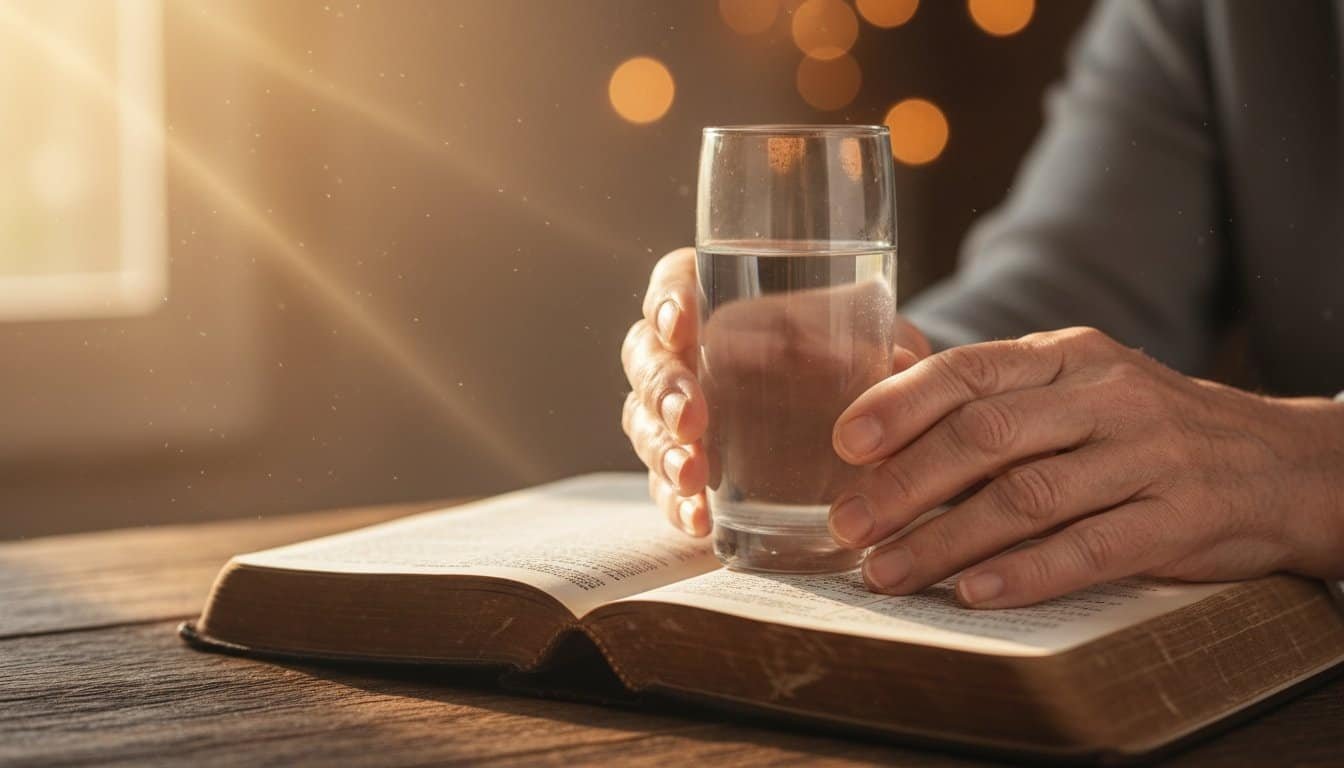
18 May Biblical Water Fast Guide — What It Is and How to Do It Biblically
I still remember the night I felt God’s presence settle over me as I sipped plain water, the world hushed and my heart opened. That simple, quiet moment sparked a journey that changed how I pray, worship, and listen for His voice.
Table of Contents
A biblical water fast is just that—drinking only water while letting go of every bite of food, just as Moses, Jesus, and Esther did when they needed God’s guidance or deliverance. Most people find 1‑3 days safe and rewarding; longer stretches, up to 40 days, should only be attempted with a doctor’s okay‑off.
Start by easing into lighter meals and staying well‑hydrated, then carve out a quiet corner for prayer. Begin each day with a verse, pour out your heart, and keep an eye on how your body feels. When the fast feels right, you’ll discover practical steps to keep going and a gentle way to bring it to a close.
Key Takeaways
Key Takeaway: Biblical water fasts—only water, 1‑40 days, start with tapering, stay hydrated, and break gently with light foods while praying.
Define a Biblical Water Fast
A biblical water fast is basically just you stopping all solid food and drinking only water. It’s the pattern we see in the New Testament—Jesus went 40 days without food, and the text mentions his hunger but not his thirst (Luke 4:2 [NIV]).

Unlike the total fasts that cut out every liquid—think of Moses on Sinai, who ate no food or drink for 40 days (Exodus 34:28 [KJV])—a water fast lets you stay hydrated, which helps keep dehydration and electrolyte loss in check.
Most people aim for one to forty days, but after about three days it’s wise to get a doctor’s okay. Historically, Israel’s strict fasts were just a day long, like Yom Kippur, though later Jews sometimes allowed water for health reasons.
Early Christians and medieval believers used water as a symbol of humility and purification, and today many pastors still recommend sticking with plain water, especially after the first 24 hours—no juice, no partial fasts.
You go through it praying, seeking God, and keeping it modest, echoing Isaiah 58:6‑7’s call for sincere devotion (NIV). It’s a personal, quiet journey—just you, God, and a glass of water. Short‑term fasting is generally considered safe for most healthy adults when properly supervised.
Scriptural Examples of a Biblical Water Fast
Scriptural accounts of water fasting show how God sustains us even when we’re stripped down to nothing. Take Moses on Mount Sinai—he spent forty days and nights with no food or water (Exodus 34:28 [NIV]), yet God gave him the Ten Commandments.

Jesus did the same in the wilderness. Matthew 4:2, Mark 1:13 and Luke 4:2 all tell of a forty‑day fast with no eating, and the devil’s temptations focused on food, not thirst.
Esther’s plea in Esther 4:16 is a vivid example of three days of complete fasting—no food, no drink—so the Jews could find deliverance.
Saul, later Paul, also went three days without anything after his Damascus encounter (Acts 9:9 [ESV]).
And Elijah? He walked forty days and nights to Horeb after an angel fed him a small meal; the journey itself was a dry trek (1 Kings 19:8 [NIV]).
Typical Fast Durations in Scripture and Today
Typical fasts in the Bible range from a single day to several weeks, and each length carries its own purpose and practical limits. One‑day fasts, like Judges 20:26 or the Day of Atonement, are common for seeking direction or repentance; a healthy adult can usually manage 24 hours without food and water. Three‑day absolute fasts appear in Esther 4:16 and Acts 9:9, used for wisdom, protection, or spiritual breakthrough; you can survive several days with water alone. Seven‑day fasts, seen in 1 Samuel 31:13 and David’s prayer for a sick child, serve mourning and guidance, typically without strict liquid rules. Ten‑day partial fasts, modeled after Daniel 1:12, restrict meat and rich foods while allowing vegetables and water, a practice still popular today. Longer periods—21 to 40 days—are rare and usually divine‑sponsored; Daniel 10:3, Moses, Elijah, and Jesus each endured extreme fasts with supernatural support, so modern attempts require careful preparation and supervision.
How to Get Your Body and Mind Ready for a Biblical Water Fast
Before you start a biblical water fast, give your body a gentle heads‑in. For a few days eat smaller, plant‑based meals—think fresh fruit, raw veggies, a bowl of oatmeal. It eases constipation and lets your digestive system wind down.
Swap out the heavy, sugary stuff for raw produce and sip water more often. Aim for about half your body weight in ounces each day, then once the fast begins, settle into 8‑12 cups. It feels like a small, steady rhythm—like a prayerful breath.
If you have diabetes, sugar sensitivities, or are young, check with your doctor first. A medical professional can confirm it’s safe and suggest a modified fast if needed. It’s a simple step of wisdom—“the heart is deceitful above all things” (Jeremiah 17:9 NIV).
Pray daily, journal what God puts on your heart, and talk the plan through with church leaders, your spouse, or parents. Their encouragement is a tangible reminder that “two are better than one” (Ecclesiastes 4:9 NIV).
Schedule your water intake around your usual meal times—use quiet evenings for prayer and keep the TV off. Those little pauses help sharpen mental discipline and keep you focused on the spiritual journey ahead.
Step‑by‑Step Guide to Starting, Maintaining, and Ending a Biblical Water Fast
Now that your body and mind are primed, you can move into the practical steps of launching, sustaining, and concluding a biblical water fast.
Start – Set a clear spiritual goal, pick a duration that matches your experience (one‑meal, 24‑hour, or 3‑7 days), and choose a day you can keep your normal schedule. Simplify your diet the week before with more fruits, veggies, and less caffeine.
Maintain – Drink plenty of pure water, add a pinch of salt for electrolytes, and avoid caffeine or alcohol. Begin each day with worship, then replace meals with Scripture reading, prayer, and intercession. Keep work and routine, noting any physical sensations.
End – Re‑introduce food slowly, starting with light, easily digestible items.
| Phase | Key Action |
|---|---|
| Start | Define purpose, select duration |
| Hydrate | Water + pinch of salt |
| Worship | Morning praise, prayer posture |
| Replace | Meals → Scripture & intercession |
| Break | Gradual, light foods only |
Common Challenges and Solutions During a Biblical Water Fast
You’ll notice hunger spikes early, so plan light meals and taper off caffeine before you begin; when fatigue hits, keep activity low, stay well‑hydrated, and rest early, letting your body adjust while you focus on Scripture and prayer to steady both body and soul.
Hunger Management Strategies
I’ve learned the hard way that hunger can sneak up on you during a biblical water fast. One trick that really helped was to “shrink the stomach” a week before—just tiny bites of raw fruit, veggies, and a little healthy fat. It’s not a diet; it’s a gentle prep.
Then I started sipping more water each day, and on fast days I’d gulp a half‑gallon when the pangs hit—quick, then back to sipping so I stay comfortable. A pinch of salt can keep the light‑headed feeling at bay, and a diluted broth or juice at my usual mealtime tricks the mind into thinking I’m still eating.
I’ve learned to tell true hunger from cravings—most of those sharp pangs fade after two days. When they creep in, I turn to Scripture. “Man shan’t live by bread alone, but by every word that proceeds out of the mouth of God” (Matt 4:4 NIV). It reminds me the body isn’t the only thing being fed.
Prayer, journaling, or just sitting quietly with a verse becomes my new “snack.” I fill the void with God’s promises, letting each wave of hunger become a spiritual reminder. I plan my supplies ahead, avoid grocery trips, and always check in with a doctor if anything feels off. This rhythm steadies both my body and my spirit.
Physical Fatigue Mitigation
Ever feel that heaviness of fatigue pulling you down during a biblical water fast? I’ve learned to tame it by drinking at least 100 oz of water a day—sipping slowly, not gulping. Adding an electrolyte packet or a splash of mineral‑rich bottled water keeps the sodium and potassium in balance.
I make extra sleep a priority, especially those short naps after 2 PM when drowsiness spikes. A gentle rise from a chair helps avoid that light‑headed spin. Instead of intense workouts, I swap them for light walks or prayer walks—just enough to keep the blood moving without draining my energy.
Headaches and a bit of irritability are normal, but if confusion, a racing heartbeat, or extreme weakness creep in, I stop the fast immediately. By watching my fluids, rest, and activity, I’ve found the fatigue eases—especially during those first three to five days of adaptation.
“Come to me, all who labor and are heavy‑laden, and I’ll give you rest” (Matthew 11:28 NIV). That promise reminds me to be gentle with my body and trust the process.
Spiritual Focus Techniques
What pulls your mind away during a biblical water fast? Hunger pangs show up, thoughts get restless, and the screen’s lure is hard to ignore. Turn each growl into a prayer pause—breathe deep, then write down the craving.
Swap the food thoughts for worship. Set up a quiet, phone‑free spot where you can pray without interruption. Let Scripture be your compass; read Psalm 103:1‑5 (NIV) and let God’s love and faithfulness settle in your heart.
Start each day on your knees, whisper, “Speak, Lord, your servant is listening.” Visualize the biblical scene of Jesus’ temptation—feel the pressure, then let it melt into prayer.
| Challenge | Technique | Result |
|---|---|---|
| Hunger | Prayer pause & deep breathing | Refocused mind |
| Distraction | Phone‑free prayer area | Deeper concentration |
| Restlessness | Scripture meditation & journaling | Spiritual calm |
| Lack of purpose | Intentional praise & Holy Spirit invitation | Renewed zeal |
Frequently Asked Questions
Can I Fast While Taking Medication?
Yes, you can fast while taking medication, but talk to your doctor first—many meds need food or water to protect your stomach. If the medicine is essential, keep taking it as prescribed; a gentle fast—like water only or a partial fast—won’t interfere with its purpose. Remember Psalm 103:3 (NIV): “He forgives all your sins and heals all your diseases,” and stay hydrated while watching for any side effects.
Is It Safe to Fast During Pregnancy?
You really shouldn’t fast while you’re pregnant—even a short water‑only fast can leave you dehydrated, low on blood sugar, and feeling dizzy or fatigued, which isn’t safe for you or your baby.
Nutrient gaps can slow fetal growth and raise the risk of preterm birth, so talk to your doctor or midwife before any changes, and consider safer options like regular, balanced meals.
“For I know the plans I’ve for you,” says Jeremiah 29:11 (NIV), and those plans include caring for the life you’re carrying.
How Does Fasting Affect Sleep Patterns?
Fasting can make you feel more alert at first—your body releases cortisol and norepinephrine, so falling asleep might be a bit tougher.
After a day or two, the shift happens: growth hormone rises, orexin‑A eases at night, and you often enjoy deeper, more restorative REM sleep.
Short‑term fasts usually improve sleep quality and mood, while longer fasts may bring restless nights or vivid dreams until your rhythm steadies (Psalm 4:8, NIV).
Can I Drink Tea or Coffee During a Water Fast?
You can’t have tea or coffee if you’re keeping a strict biblical water fast—only plain water counts (Matt 4:4).
If you’re using a gentler approach, unsweetened black coffee or plain tea is usually okay, but keep it to one or two cups and skip any sugar or milk so you don’t disturb the fasting benefits.
What Signs Indicate I Should Stop the Fast?
If you get dizzy, feel faint, have chest or severe stomach pain, keep vomiting, or notice a rapid, irregular heartbeat, stop the fast right away.
Also quit if you have intense headaches, extreme fatigue, confusion, or signs of dehydration like a dry mouth and rapid weight loss.
As Scripture reminds us, “Your body is a temple of the Holy Spirit” (1 Cor 6:19 NIV); caring for it means listening to these warning signs and ending the fast if they appear.
Conclusion
Trust God’s leading as you step into this season of fasting, listening for His gentle voice in the quiet moments and feeling His presence strengthen you day by day. When you break the fast, let the gratitude that fills your heart guide each bite, remembering how this time of surrender has deepened your walk with Him.
May the Holy Spirit refresh your spirit, grant you peace, and keep you steadfast. If you feel led, lift up a prayer now, asking for continued growth and the courage to keep seeking His will.










No Comments