

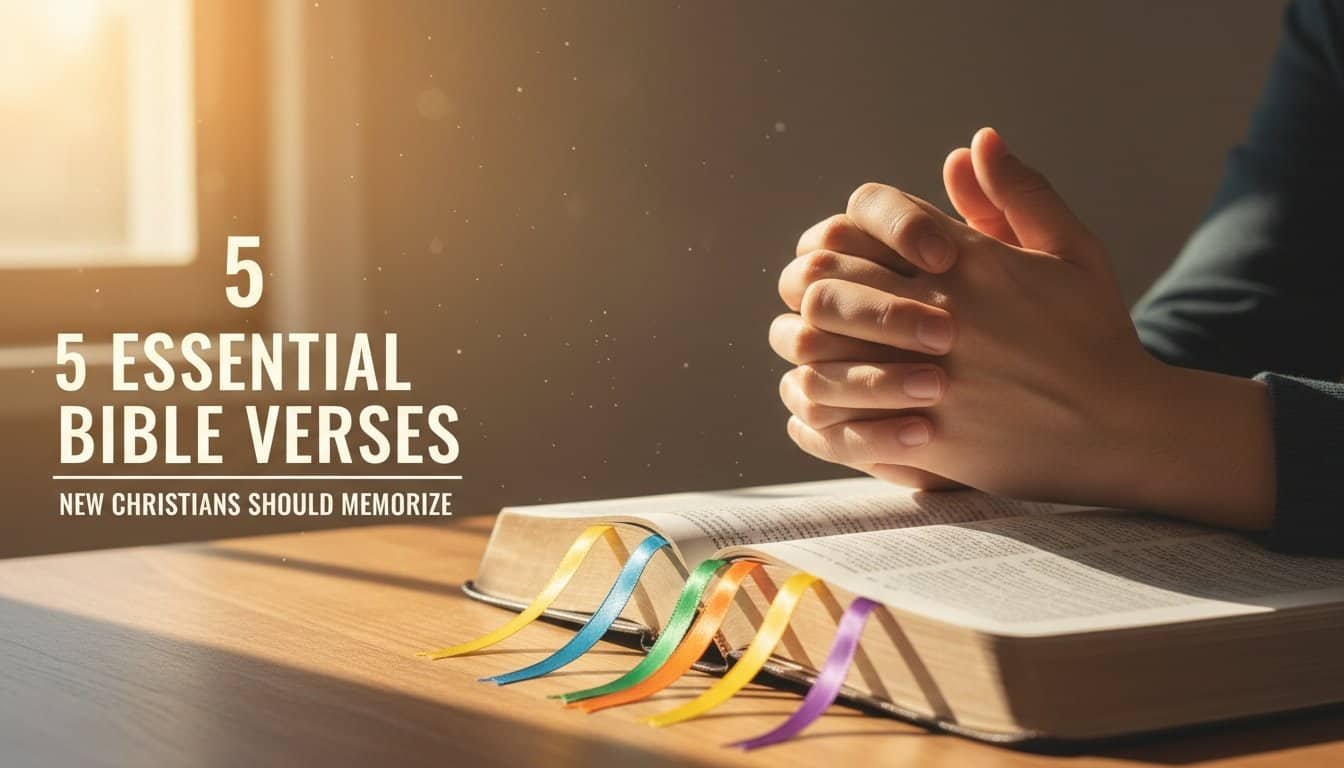
14 Feb 5 Essential Bible Verses New Christians Should Memorize
As a new believer, you’ll find strength in memorizing John 3:16 to understand God’s unconditional love, Psalm 23 for comfort during dark times, Philippians 4:13 for Christ-dependent strength in daily struggles, Romans 8:28 to reframe hardships with divine purpose, and 1 John 1:9 for fresh starts through confession. These verses anchor your heart in God’s promises when life tests your faith. Each passage offers practical wisdom that transforms how you navigate challenges and experience His faithfulness in every circumstance.
Key Takeaways
- John 3:16 reveals God’s unconditional love for everyone and serves as the foundational verse for understanding salvation.
- Psalm 23 provides comfort during difficult times by depicting God as a caring shepherd who guides and protects.
- Philippians 4:13 teaches new believers to find strength through Christ when facing daily challenges and hardships.
- Romans 8:28 helps reframe suffering by showing how God works all circumstances together for believers’ ultimate good.
- 1 John 1:9 offers assurance of forgiveness and fresh starts when believers confess their sins to God.
Why John 3:16 Reveals Everything About God’s Heart?

How can a single verse capture the entire essence of God‘s character? John 3:16 reveals God’s heart completely because it showcases His unconditional love extending to the entire world, not just a select few. When you read “For God so loved the world,” you’re discovering universal redemption—salvation offered to everyone, breaking down barriers of ethnicity, status, or merit.
The verse demonstrates grace versus works by emphasizing God’s initiative: He gave His only Son before you did anything to earn it. You don’t work your way to God; He comes to you through Christ’s sacrifice. The word “whoever” includes you personally in this divine love story.
God’s heart beats with sacrificial love, proven by giving what’s most precious to Him. When you believe in Jesus, you’re not just avoiding judgment—you’re entering an eternal relationship with the God who loved you first and most completely. This powerful message serves as the theme verse that encapsulates the entire biblical narrative of redemption and God’s relationship with humanity.
How Psalm 23 Comforts You In Life’s Darkest Moments?
While John 3:16 reveals God’s heart of love, Psalm 23 shows how that love practically sustains you when life feels overwhelming. When you’re walking through your darkest valley, this psalm transforms fear vs faith into confident trust. The Lord isn’t just watching from heaven—He’s your shepherd, walking beside you.
In life’s most threatening moments, you don’t need to fear evil because God’s presence protects you. His rod corrects when you’re wandering into danger, and His staff pulls you from life’s traps. These tools bring comfort, not harm. The shepherd makes you lie down in green pastures, understanding exactly what rest and renewal your soul needs.
The psalm addresses hope vs doubt by showing God’s abundant provision. Even when enemies surround you, He prepares a feast and anoints your head with oil, marking you as His own. His goodness and mercy follow you daily, ensuring you’ll dwell in His house forever. This isn’t wishful thinking—it’s covenant promise.
What Philippians 4:13 Really Means For Daily Struggles?
Where do you turn when life’s circumstances threaten to overwhelm your faith? Philippians 4:13 offers profound hope: “I can do all things through Christ who strengthens me.” However, this verse isn’t a blank check for achieving personal dreams—it’s Paul‘s testimony about finding contentment strength through Christ’s power.
Writing from Roman imprisonment, Paul reveals the secret of contentment whether facing abundance or need. The “all things” refers specifically to enduring hunger, poverty, persecution, and plenty with equal grace. This isn’t Stoic self-reliance but Christ-dependence that transforms your perspective on circumstances.
For your daily struggles, this verse promises supernatural strength to persevere through trials you can’t escape on your own. Christ’s power enables daily perseverance when facing financial stress, health challenges, or relational conflicts. You’ll discover that true victory isn’t avoiding difficulties but finding contentment and strength through Christ in every season, trusting His sufficiency over your limitations.
Why Romans 8:28 Changes How You View Hardships?
When tragedy strikes and your world seems to crumble, Romans 8:28 offers a radical perspective that transforms how you understand God’s presence in pain: “And we know that in all things God works for the good of those who love him, who’ve been called according to his purpose.” This isn’t empty comfort or spiritual platitude—it’s Paul’s declaration that God actively orchestrates every circumstance, including your darkest moments, for purposeful good.
Romans 8:28 and suffering become intertwined as God transforms your trials into spiritual development. He doesn’t cause your pain but works through every heartbreak, financial loss, and rejection for your growth. Divine presence in hardship means the Holy Spirit intercedes with groanings beyond words, entering your suffering rather than remaining distant.
This verse doesn’t minimize your struggles or promise trouble-free living. Instead, it reframes your perspective—your difficulties become “Father-filtered” material for Christlikeness. No circumstance separates you from God’s unbreakable love and purposes.
How 1 John 1:9 Offers Fresh Starts When You Fail?
Understanding confession mechanics changes everything. Confession isn’t just admitting guilt—it’s agreeing with God about your sin. The Greek present tense indicates ongoing confession for believers, not a one-time event. You’re acknowledging what God already knows while choosing to walk in His light.
This promise focuses on fellowship restoration. Sin doesn’t remove your salvation, but it damages your relationship with God. Through confession, you reverse the effects of walking in darkness and restore intimate communion with your heavenly Father. God’s faithfulness guarantees forgiveness because Christ already paid sin’s penalty, offering you fresh starts whenever you fail.
Frequently Asked Questions
How Many Bible Verses Should New Christians Memorize Each Week?
Start with one verse per week as you’re building this spiritual discipline. Your weekly targets should remain realistic and sustainable rather than overwhelming. Focus on verse selection that speaks to your heart during Bible reading – passages about salvation, God’s love, and daily guidance work wonderfully. You’ll find consistent memorization transforms your thinking and strengthens your faith. Don’t rush the process; let God’s word take deep root in your heart through patient, steady practice.
What’s the Best Method for Memorizing Scripture as a Beginner?
Start with short, meaningful verses that speak to your heart. Read each verse aloud ten times daily, then recite from memory ten times. Write it on cards you’ll carry everywhere. Choose a translation that’s easy for you to understand – beginner memory techniques work best with familiar language. Review previous verses before learning new ones. God’s Word will transform you as you hide it in your heart through consistent practice.
Should Children Memorize Different Verses Than Adult New Believers?
Yes, children should memorize different verses than adult new believers, though there’s wonderful overlap. You’ll want age-appropriate content for kids—like Psalm 139:13-15 for identity and Genesis 1:26-31 for God’s creation. Adults can handle deeper theological concepts like Ephesians 2:8-9 about grace. Adjust your memory pacing too—children often memorize faster but need more repetition, while adults benefit from understanding context first.
How Long Does It Typically Take to Memorize a Bible Verse?
You’ll typically memorize a single Bible verse within 3-7 days through daily practice. Start by reciting it 5-10 times each morning, then review throughout your day. Set realistic weekly goals of 1-2 verses as you’re beginning. Remember, God’s Word doesn’t return empty—every moment you invest plants His truth deeper in your heart. Don’t rush the process; consistent daily repetition creates lasting spiritual fruit in your life.
Is It Better to Memorize From One Bible Translation or Multiple?
You’ll find the optimal translation approach is memorizing from one primary version while occasionally consulting others for study. This prevents cross language memory confusion that scrambles verses when you’re trying to recall them. Choose an accessible translation you connect with, then stick with it for memorization. God’s Word will take root more deeply when you’re not wrestling with mixed phrasings during recitation.
Conclusion
You’ve discovered five powerful verses that’ll anchor your faith through every season. When you’re struggling, let Philippians 4:13 remind you of Christ’s strength within you. In darkness, find peace in Psalm 23‘s promise of God’s presence. Let John 3:16 overwhelm you with His love, Romans 8:28 transform your perspective on trials, and 1 John 1:9 assure you of forgiveness. Hide these treasures in your heart—they’ll sustain you for life.










No Comments