

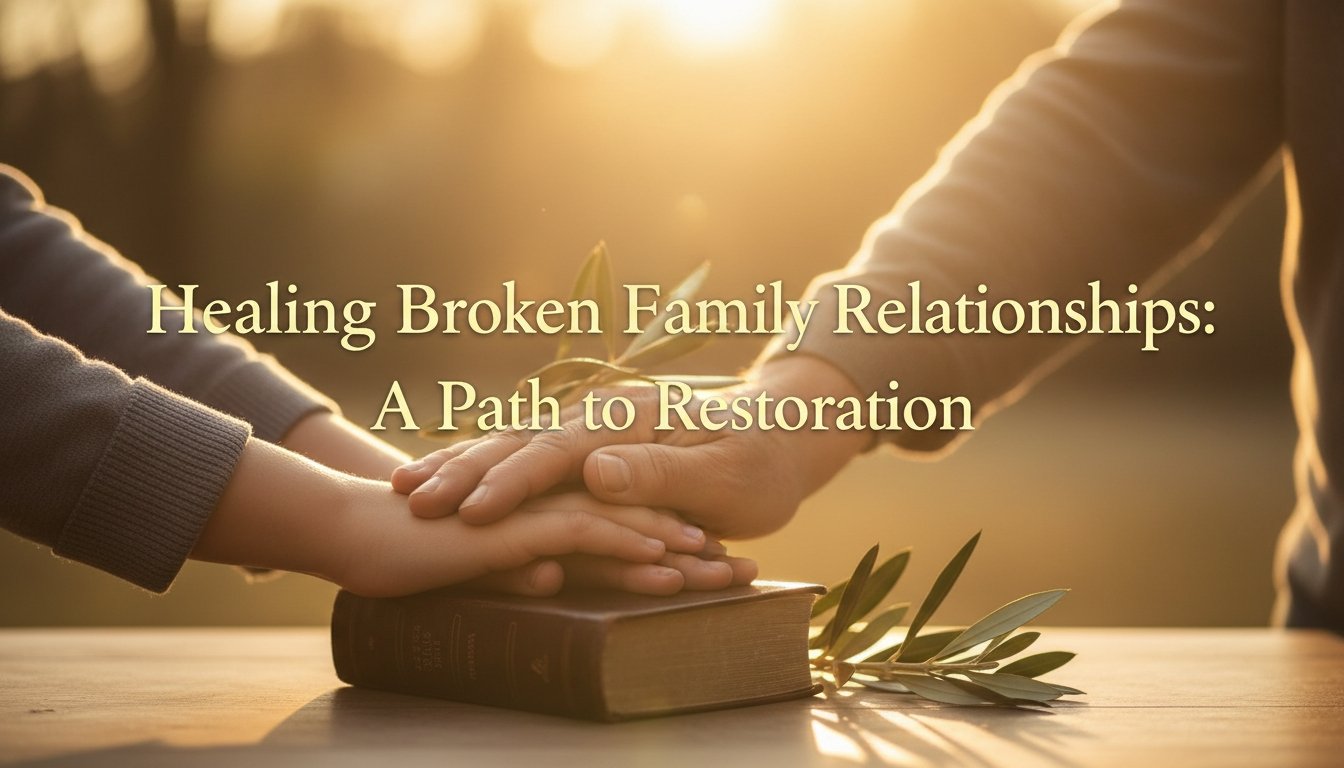
22 Feb Bible Verses for Healing Broken Family Relationships
God’s Word offers powerful healing for broken family relationships through His promises of restoration. Psalm 147:3 assures you that “He heals the brokenhearted and binds up their wounds,” while Psalm 30:5 reminds you that “weeping may endure for a night, but joy comes in the morning.” Begin with forgiveness as Christ commands in Matthew 6:14-15, trust God’s timing for restoration, and remember that He specializes in making beauty from ashes. Discover how these biblical principles can transform your family’s future.
Key Takeaways
- Psalm 34:18 promises God draws near to the brokenhearted and saves those with crushed spirits during family pain.
- Matthew 6:14-15 teaches forgiveness is essential for restoration and creates foundation for rebuilding broken family relationships.
- Ephesians 4:32 commands believers to forgive one another as God forgave them, enabling reconciliation and healing.
- Psalm 147:3 declares God heals the brokenhearted and binds up wounds, offering hope for family restoration.
- Matthew 18:19 promises when two agree in prayer, God answers, making intercession powerful for family healing.
Finding Hope When Your Family Falls Apart

When your family feels like it’s crumbling around you, you’re not walking through this valley alone. With nearly half of American children now raised outside intact married-parent households and divorce affecting millions annually, broken family relationships have become tragically common. Yet God’s Word offers profound comfort for your shattered heart.
Scripture reminds us that “weeping may endure for a night, but joy comes in the morning” (Psalm 30:5). Your pain has purpose, and healing is possible. Remember that God specializes in restoration—He’s the master of making beauty from ashes.
Don’t rush your forgiveness timeline or expect instant results. Healing timelines vary for each person and situation. Some wounds require months or years to mend properly. While lack of commitment is cited by 75-85% of divorced individuals as a primary factor, God’s commitment to you and your family remains unwavering. Trust God’s process as He works in both your heart and your family members’ hearts. His love never fails, even when human relationships do.
Why Forgiveness Must Come First in Family Healing
How can broken family relationships truly heal without addressing the deepest wounds first? You can’t bypass forgiveness and expect genuine restoration. Christ commands you to forgive others as He’s forgiven you—it’s not optional (Matthew 6:14-15). When you choose forgiveness vs pride, you’re choosing freedom over bondage to bitterness.
Forgiveness doesn’t excuse wrongdoing; it releases you from emotional imprisonment. You’re not condoning hurtful actions—you’re liberating yourself from resentment that poisons your heart and blocks God’s healing work. Jesus forgave His crucifiers, demonstrating unconditional mercy even in agony. Studies show that forgiveness can reduce stress and anxiety while improving your overall emotional well-being.
Practice mercy meditation, reflecting on Christ’s sacrificial love for you. Remember, forgiveness isn’t a one-time event but ongoing commitment requiring God’s grace. Like Jesus instructed Peter to forgive “seventy times seven,” you must continually release offenses. This conscious choice creates spiritual space for reconciliation, transforming your character and opening pathways to authentic family healing.
What the Bible Says About Healing Broken Hearts
After you’ve taken those first steps toward forgiveness, God meets you in the raw ache of your broken heart with promises that anchor your soul. Psalm 34:18 declares that “The Lord is near to the brokenhearted and saves the crushed in spirit.” He doesn’t stand at a distance—He draws close to your pain.
Scripture reveals God’s tender heart toward your wounded spirit. Psalm 147:3 promises He “heals the brokenhearted and binds up their wounds.” Isaiah 61:1 speaks of His anointing to heal broken hearts and proclaim freedom to captives. This divine healing becomes the foundation for spiritual growth and relational clarity in your family relationships.
When crushed spirits dry your bones (Proverbs 17:22), God offers restoration. Cast your anxiety on Him who cares for you (1 Peter 5:7). Trust Him with your whole heart, acknowledging Him in all your ways (Proverbs 3:5-6). His healing transforms broken hearts into vessels ready for reconciliation. Even when you feel forgotten in your pain, remember that brokenness can be overcome through God’s faithful presence and unwavering love.
How to Handle Family Conflict God’s Way?
Why does family conflict feel so devastating when it erupts in the very place meant to be your sanctuary? Because God designed families to reflect His love, making discord particularly painful.
Handling family conflict God’s way begins with humility examining your own heart first. Before pointing fingers, ask yourself: “What’s my part in this?” (Psalm 25:9). Submit to God as your foundation, recognizing that pride fuels most family battles (James 4:6-7).
When truth love_confrontation becomes necessary, balance both elements carefully. Speak honestly while listening well, avoiding belittling or shaming tactics (Zechariah 8:16; James 1:19-20). Pre-forgive before confronting, preparing your heart to extend grace regardless of their response.
Remember that biblical roles matter—wives respecting husbands, children obeying parents, everyone treating each other as beloved family members (Ephesians 5:22-24; 6:1). Family conflict has occurred throughout Scripture, from Cain and Abel to households divided over faith in Christ. View conflict as God’s classroom for developing patience, kindness, and selfless love. Your family sanctuary can be restored through Christ-centered responses.
Praying Your Way Through Family Crisis
When family crisis strikes, you don’t have to face it alone—God invites you to bring your deepest pain and greatest concerns directly to His throne of grace.
Through united prayer, you can seek His supernatural intervention while honestly wrestling through the specific issues tearing your family apart.
As you faithfully intercede for each family member and lift up your collective need for healing, you’re partnering with the God who specializes in restoring what seems irreparably broken. Scripture teaches that we must be reconciled with others before we can fully approach God’s altar, making family healing an essential part of our spiritual journey.
Seeking God’s Intervention Together
As families face deep wounds and fractured relationships, turning to God together in unified prayer becomes one of the most powerful steps toward healing. When conversations seem impossible and trust feels shattered, seeking divine intervention isn’t an unrelated topic or off topic distraction—it’s essential.
Deuteronomy 31:6 reminds you that God “will never leave you nor forsake you.” Through Ephesians 3:14-19, you can pray for inner strength through His Spirit, asking Him to root your family in love. As you surrender your broken relationships into Jesus’ Sacred Heart, you’re inviting the Creator who “formed you in the womb” (Psalm 139:13) to restore what seems impossible. Together, increase your faith in God’s power to heal and guide your family’s way forward.
Praying Through Pain Points
The deepest family wounds often leave you feeling speechless before God, unsure how to voice the pain that grips your heart. When words fail, lean into hopeful surrender through honest prayers that acknowledge your hurt while trusting God’s healing power. You don’t need eloquent language—simply pour out your raw emotions before Him.
Pray specifically for each family member by name, asking God to soften hardened hearts and replace bitterness with His peace. Use short, authentic prayers that anchor your family in biblical truth rather than circumstances. This quiet resilience grows as you shift focus from fear to faith through gratitude.
God remains present in your crisis, working even when you can’t see His hand moving in broken relationships.
Interceding for Family Unity
Although family crises can feel overwhelming and hopeless, you possess a powerful weapon through intercessory prayer that can break through the strongest walls of division. Unlike secular healing approaches or unrelated topics that offer temporary solutions, biblical intercession addresses the spiritual battle behind family strife.
Stand firm against spirits of rebellion and disrespect that destroy communication. Plead Jesus’ blood over your family, declaring “no” to the devil’s interference. As Matthew 18:19 promises, when you agree in prayer, the Father answers. Surrender your strained efforts to Christ’s Sacred Heart, trusting Him for purification and restoration.
Your intercession becomes a bridge between pain and healing, creating space for God’s transformative work to rebuild broken bonds through divine love.
Rebuilding Trust After Deep Family Wounds
When deep wounds fracture your family relationships, rebuilding trust feels impossible, but God’s Word offers a pathway forward through forgiveness and faithful actions.
You’ll discover that forgiveness isn’t just a one-time decision but the foundation upon which every rebuilt relationship must stand, as Christ forgave us (Ephesians 4:32).
Your consistent, loving actions over time will slowly demonstrate the authenticity of your repentance and create space for healing to take root in wounded hearts.
Forgiveness as Trust Foundation
How can forgiveness become the cornerstone that rebuilds what betrayal has torn apart? When family wounds cut deep, you’ll discover that forgiveness serves as the essential foundation for renewed trust. It transcends resentment and bitterness, laying groundwork for healing relationships that seemed irreparable.
Through empathy cultivation, you can step into others’ shoes, fostering deeper connections amid conflict. This understanding builds bridges and promotes compassion during reconciliation. Consider reframing your perspective—viewing the offender as someone shaped by generational healing needs rather than simply a perpetrator. This shift removes their emotional power over you.
Forgiveness works as a healing balm, soothing deep family wounds. It creates space for healthier connections and determines whether conflicts will create distance or restore closeness in your precious family bonds.
Consistent Actions Over Time
While forgiveness opens the door to healing, rebuilding trust requires something more tangible—your consistent actions demonstrated day after day. Scripture reminds us that “faith without works is dead” (James 2:26), and the same principle applies to trust restoration. Your family members won’t believe your words until they see your deeds align with your promises.
Time based restoration happens through daily choices to be honest, dependable, and accountable. When you follow through on commitments—even small ones—you’re laying stones in trust’s foundation. Each transparent conversation, each kept promise, each moment of reliability speaks louder than elaborate apologies.
God’s faithfulness toward us models this consistency. As Lamentations 3:22-23 declares, His mercies are “new every morning.” Your consistent actions over time reflect His character and gradually heal wounded hearts.
God’s Design for Family Unity and Peace
God created families to be a living picture of His love, where each member reflects His character through tenderhearted mercy, kindness, humility, gentleness, and patience (Colossians 3:12-14). When you clothe yourself in these virtues, you’re living out His original design for unity and harmony.
Scripture reveals God’s blueprint clearly: “How good and pleasant it’s when God’s people live together in unity!” (Psalm 133:1). He desires your family to function as one body, where each person works together for growth and mutual support (Ephesians 4:16). This requires maintaining healthy personal boundaries while practicing spiritual disciplines that keep your heart tender.
You’re called to “make every effort to keep the unity of the Spirit through the bond of peace” (Ephesians 4:3). Love binds everything together in perfect harmony, and Christ’s peace should rule your family’s hearts, creating an environment where forgiveness flows freely and relationships flourish.
Keeping Your Family Strong for the Future
Building on this foundation of unity and peace, your family’s spiritual health requires intentional investment in practices that will sustain and strengthen your bonds through life’s inevitable challenges.
Your family’s spiritual wellness demands deliberate cultivation of practices that fortify relationships against life’s storms.
Establishing forgiveness pathways within your household creates lasting resilience. Teach your children that forgiveness isn’t weakness—it’s the cornerstone of Christ-centered relationships. When conflicts arise, address them promptly with grace and truth, modeling the reconciliation you’ve experienced with God.
Unity through prayer becomes your family’s spiritual anchor. Develop consistent prayer rhythms together—morning devotions, mealtime gratitude, bedtime blessings. These moments cultivate intimacy with God and each other, creating sacred space where hearts align.
Invest in your family’s future by prioritizing Scripture memorization, celebrating spiritual milestones, and serving others together. When your children witness authentic faith lived out daily, they’ll carry these values forward. Remember, you’re not just healing current brokenness—you’re building generational strength through Christ’s transforming power.
Frequently Asked Questions
How Long Should I Wait Before Reaching Out to an Estranged Family Member?
There’s no perfect forgiveness timing, but you can reach out whenever your heart feels genuinely ready to extend grace. Don’t wait for them to make the first move—God calls us to be peacemakers. Consider starting with a simple message expressing love without rehashing past hurts. Reconciliation timing varies, but taking that brave first step honors Christ’s example of pursuing relationship despite our failures.
What if My Family Member Refuses to Forgive or Reconcile Despite My Efforts?
When your family member won’t forgive despite your sincere efforts, you’ve done what Scripture calls you to do. Forgiveness obstacles don’t negate your obedience to God’s word. Sometimes reconciliation timing isn’t in your hands—Romans 12:18 says “if it’s possible, as far as it depends on you, live at peace.” You can’t control their response, but you can trust God’s healing in your heart while maintaining boundaries.
Should I Involve Church Leaders or Counselors in Serious Family Disputes?
Yes, you should involve church leadership and professional counseling when family disputes escalate beyond your capacity to handle alone. Church leaders provide spiritual guidance and biblical wisdom, while professional counselors offer specialized expertise in forgiveness dynamics and boundary setting. God uses both pastoral care and clinical intervention to bring healing. Don’t hesitate to seek this dual support system when safety or mental health concerns arise.
How Do I Protect My Children During Ongoing Family Conflicts and Divisions?
Protect your children by establishing clear boundaries around conflict discussions and maintaining their routines. Shield them from adult arguments while honestly addressing their concerns in age-appropriate ways. Seek counsel from trusted church leaders or Christian family counselors who can guide both protective strategies and healing approaches. Remember Psalm 127:3 – children are God’s gifts requiring your faithful stewardship, especially during difficult seasons of family division.
Is It Biblical to Set Boundaries With Toxic or Abusive Family Members?
Yes, it’s absolutely biblical to set boundaries with toxic family members. Scripture supports protecting yourself from those who cause harm (Proverbs 27:14, 1 Corinthians 5:11).
You’re not required to maintain close relationships with abusive people, even family. While forgiveness after abuse is important for your healing, it doesn’t mean removing protective boundaries. God values your safety and well-being over maintaining harmful family dynamics.
Conclusion
You don’t have to walk through family brokenness alone. God’s Word offers healing, hope, and restoration even in your darkest moments. As you’ve learned, forgiveness opens the door, prayer sustains you, and God’s love transforms hearts. Remember Ephesians 4:32: “Be kind to one another, tenderhearted, forgiving one another, as God in Christ forgave you.” Your family’s story isn’t over—God’s still writing chapters of redemption and reconciliation.












No Comments