

18 Apr What Are Ascension Day Traditions in Christian Worship?
You’ll find vivid colors—white or gold vestments dominate, symbolizing Christ’s triumph and heavenly glory. Churches often hold outdoor processions, reenacting the ascent and sharing the celebration with neighbors. The liturgy centers on Luke 24:50‑53 and Acts 1:9‑11, with soaring hymns, chants, and prayers that highlight the Holy Spirit’s promise and Christ’s return. Baptism and confirmation link the ascent to the Spirit’s work, while multimedia streams and youth activities bring the feast into modern life. Keep going for deeper details.
Table of Contents
Describe the Core Biblical Narrative of Ascension Day
Rising from the Mount of Olives, Jesus ascended into heaven, fulfilling the promise that He’d return to the Father after His resurrection. You read that the disciples gathered on the road to Emmaus, and as they watched, He lifted His hands, blessed them, and vanished into a cloud. The narrative, recorded in Luke 24:50‑53 and Acts 1:9‑11, emphasizes that He left the earth physically yet remained present through the Holy Spirit. You notice the angels’ proclamation that He’ll return in the same way He ascended, underscoring hope and continuity. The text also highlights the disciples’ awe and worship, their question of why He must go, and the reassurance that He’ll send the Advocate. By focusing on these verses, you grasp the core story: a triumphant departure that confirms Christ’s divine authority, seals the covenant, and initiates the ongoing mission of the Church.
Explain How Liturgical Colors and Vestments Highlight Ascension
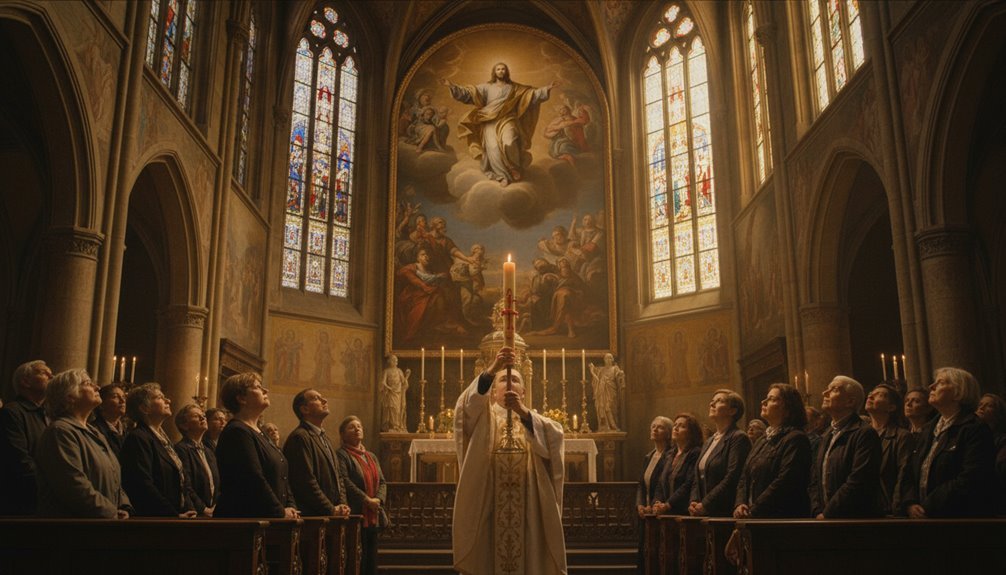
Grace shines through the colors and vestments that cloak the altar on Ascension, turning the liturgy into a visual sermon. You’ll notice the dominant white or gold, symbolizing Christ’s triumph and heavenly glory. This radiant hue drapes the altar, chasubles, and stoles, reminding you that Jesus has ascended beyond earth’s confines.
Some traditions sprinkle in a subtle violet, echoing the mystery of the Paschal mystery while still honoring the celebratory tone. The priest’s alb remains pristine, representing purity and the divine light that now fills the heavens.
When the deacon carries a green cope, it hints at the new life that sprouts from the risen Lord’s ascent. These colors work together, guiding your eyes and heart toward the celestial reality of Ascension, reinforcing the sermon’s message without a single spoken word.
Choose Key Ascension Scripture Readings & Themes
You’ll pick the key scriptural passages that highlight the Ascension, focus on themes like Christ’s exalted authority and the promise of the Holy Spirit, and then shape how those texts guide worship, preaching, and sacraments.
This approach lets you connect Scripture directly to the liturgy, giving the congregation a clear theological thread.
Key Scriptural Passages
When you explore Ascension Day, the core biblical passages—Acts 1:9‑11, Luke 24:50‑53, and John 14:2‑3—anchor the celebration in Christ’s physical rise and promised return. In Acts, you see the disciples watching Jesus ascend, then hearing angels assure that He’ll return in the same way.
Luke describes the disciples being led to Bethany, Jesus blessing them, and then being taken up as a cloud, emphasizing the transition from earthly ministry to heavenly reign.
John offers a comforting promise that Jesus prepares a place and will come back to receive believers, linking the Ascension to future hope. Together, these texts shape your worship focus, reminding you of Christ’s triumph, ongoing presence, and eschatological expectation.
Central Ascension Themes
The biblical passages we just examined set the stage for the core themes that shape Ascension worship. You’ll notice three dominant ideas: Christ’s exalted authority, the promise of the Holy Spirit, and the inauguration of the kingdom. First, the heavens open and Jesus is lifted, signaling his sovereign rule over all creation; this invites you to honor his reign in prayer and song. Second, the disciples receive the pledge that the Spirit will empower them, reminding you that divine presence continues beyond the physical departure. Third, the ascension marks the fulfillment of God’s redemptive plan, urging you to live as citizens of the coming kingdom, embodying hope, service, and anticipation of Christ’s return.
Liturgical Application Strategies
Which scripture should anchor your Ascension liturgy? Choose Acts 1:1‑11 for its vivid portrayal of Christ’s departure and promise of return, or Luke 24:50‑53 to highlight the disciples’ worshipful response. Pair the reading with a theme of “Christ’s exalted kingship” and weave it into the opening hymn, the sermon, and the closing benediction. Use the Scripture as a cue for a responsive prayer: “Lord, lift us as you lifted yourself.” Incorporate a visual element—perhaps a banner depicting clouds—to reinforce the ascent motif. End with a communion that mirrors the heavenly banquet, reminding participants that the Ascension opens the way to eternal fellowship. This cohesive approach transforms the service into a lived celebration of Christ’s victorious rise.
Select Special Prayers, Hymns, and Chants for Ascension
How can you choose prayers, hymns, and chants that truly capture the spirit of Ascension? Begin by selecting texts that emphasize Christ’s ascent, the promise of the Holy Spirit, and the hope of eternal life. Look for prayers that reference “the Lord’s return to the Father” and “the gathering of the nations.”
For hymns, favor those with soaring melodies and lyrics like “Lift up your heads” or “He is risen, he’s risen.” Traditional chants such as the “Antiphon of the Ascension” or the “Gradual” from the Roman Missal provide a reverent, ancient tone. Pair a concise, exultant prayer with a hymn that builds dynamically, then close with a chant that invites contemplation. Ensure each piece fits the liturgical flow, reinforcing the theological theme while engaging the congregation’s hearts and voices.
Why Do Some Churches Process Outdoors on Ascension Day?
You’ll notice that the biblical accounts of Christ’s ascension inspire many churches to walk outdoors, turning the procession into a living reenactment of the journey. This symbolic trek outside the sanctuary mirrors the disciples’ experience and invites the congregation to physically follow the narrative. By moving through the community, the procession also fosters fellowship and makes the celebration visible to passers‑by.
Biblical Basis for Processions
One compelling reason churches walk outdoors on Ascension Day is that Scripture itself depicts Christ’s ascent as a public, movement‑filled event. In Acts 1:9‑11, the disciples watch Jesus rise and then “be taken up” while clouds receive Him, emphasizing a visible, outward motion. Luke 24:50‑53 portrays Jesus leading the disciples to Bethany, blessing them, and being carried up into heaven, again in a communal, processional setting. These narratives show the ascent not as a private mystery but as a shared, observable journey.
When you lead a congregation outside, you echo the biblical tableau: a collective witness to Christ’s return to the Father. The outdoor procession thus becomes a lived reenactment of the biblical scene, reinforcing the reality of the event.
Symbolic Journey Outdoors
The biblical accounts of Christ’s ascent already set a stage of movement, so many churches extend that scene beyond the sanctuary walls. You’ll find congregations stepping outside, forming a procession that mirrors the heavenly journey. Walking through the churchyard or into a nearby park lets you physically enact the upward motion described in Scripture. The outdoor route often follows a symbolic path—starting at the altar, moving toward a hill or open sky, and ending with a moment of silent prayer. This tangible movement helps you internalize the transformation from earth to heaven, reinforcing the belief that Christ’s ascent isn’t merely a past event but an ongoing invitation to rise spiritually. The fresh air, natural light, and communal steps turn the service into a lived, memorable experience.
Community Engagement Benefits
Because stepping outside invites neighbors, passersby, and even skeptics into the worship experience, an outdoor Ascension procession turns a church service into a community event. You’ll see familiar faces from the grocery store, kids riding bikes, and local officials joining the route, which expands the congregation’s reach beyond its walls. The open air creates a shared public space where faith becomes visible, encouraging dialogue and curiosity. You also strengthen neighborhood bonds as participants share music, prayers, and refreshments, fostering goodwill and mutual support. By processing through streets, you demonstrate the church’s commitment to the broader community, inviting partnership with charities, schools, and civic groups. This visible witness can inspire new members and reinforce the church’s role as a compassionate, inclusive presence.
Integrating Ascension Themes Into Baptism & Confirmation
How can you weave the soaring promise of Ascension into the rites of baptism and confirmation? Begin by linking the water’s descent with Christ’s ascent, reminding the candidate that the Holy Spirit lifts us toward heaven. During baptism, cite the Gospel of Luke 24:50‑53, declaring that the same wind that raised Jesus now fills the newly‑born believer. In the confirmation ceremony, invite the congregation to recite a brief creed that affirms the risen Christ’s ongoing work, then an the confirmand to receive the laying‑on‑of‑hands while a hymn about “going up” plays. Use visual symbols—such as a dove rising over a cross or a banner bearing the Ascension date—to reinforce the theme. Encourage families to pray for the confirmand’s “higher calling,” tying personal growth to the universal ascent. By integrating scripture, music, and symbols, you make the Ascension a living, transformative element of both sacraments.
How Modern Churches Celebrate Ascension Day With Multimedia & Youth Programs
Ever wonder how today’s congregations turn an ancient feast into a vibrant, tech‑savvy celebration? You’ll see livestreams of sunrise services projected onto the sanctuary’s walls, while a curated playlist of contemporary worship songs underscores the theme of Christ’s ascent. Youth leaders often design interactive digital quizzes that let teens explore biblical geography, earning points that unlock a virtual “ascension” badge. Many churches employ drones to capture aerial footage of the worship space, then stream the video live on social media, inviting remote members to join the prayer chain. Creative teams craft short, cinematic videos that dramatize the Gospel narrative, mixing motion graphics with live‑action clips of the congregation raising hands. Some parishes host “sky‑watch” events, where kids use telescopes to learn about constellations that symbolize the heavens. By blending immersive media, gamified learning, and community‑wide broadcasting, you help make Ascension Day both timeless and relatable.
Frequently Asked Questions
How Long Should Ascension Services Typically Last?
You should aim for a service that runs about 45 to 60 minutes. Most congregations keep the liturgy concise, fitting the Scripture reading, a short sermon, hymns, and the communion rite within that window.
If you include a special procession or extended prayer, you might stretch to an hour, but generally you’ll stay under ninety minutes to keep worship engaging and respectful of attendees’ schedules.
Can Ascension Day Be Celebrated on a Different Date?
You can celebrate Ascension Day on a different date if your church’s calendar shifts it for practical reasons. Many congregations move the observance to the following Sunday to accommodate weekday work schedules, ensuring attendance and participation.
Some denominations even align it with local holidays or school breaks, making it easier for families to gather. The key is keeping the theological focus intact while adapting the timing to fit your community’s needs.
What Foods Are Traditionally Associated With Ascension Celebrations?
You’ll find that many cultures serve simple, seasonal fare on Ascension Day. In Europe, you often see lamb or goat dishes, symbolizing Christ’s sacrifice, alongside fresh spring vegetables like asparagus and peas. German families bake “Himmelkuchen,” a light airy cake topped with powdered sugar.
In the Philippines, “Pancit” noodle soups appear, representing longevity. Latin American churches might offer “empanadas” or sweet “roscas de ascensión,” a braided bread dusted with cinnamon. These foods celebrate renewal and community.
Do Non‑Christian Families Participate in Ascension Rituals?
You’ll find that non‑Christian families rarely join formal Ascension rituals, since the holiday is rooted in Christian theology. Some may attend interfaith services or community events that include a brief mention, but they typically don’t observe the liturgical customs, processions, or hymns. If they’re invited to a family gathering, they might share a meal or enjoy cultural activities, yet the core religious elements stay within Christian circles.
How Can Virtual Reality Enhance Ascension Worship Experiences?
You can use virtual reality to immerse yourself in a three‑dimensional recreation of the Mount of Olives, letting you feel the ascent alongside the disciples.
By projecting 3‑D biblical scenery, you’ll experience the sky opening and the Holy Spirit descending in real time.
Interactive audio guides can synchronize hymns and prayers, while avatars enable communal worship, making the Ascension feel vivid, personal, and shared across distances.
Conclusion
You’ll leave Ascension Day feeling the risen Christ’s triumph, the church’s vibrant colors, and the powerful prayers that echo His promise. By embracing outdoor processions, weaving the story into baptisms, and using modern media for youth, you’ll keep the celebration alive and relevant. Let the ascent inspire your worship, your community, and your own walk of faith.











No Comments