

21 Mar Ascension Day Hope: Acts 1:9-11 Says He’s Coming Back
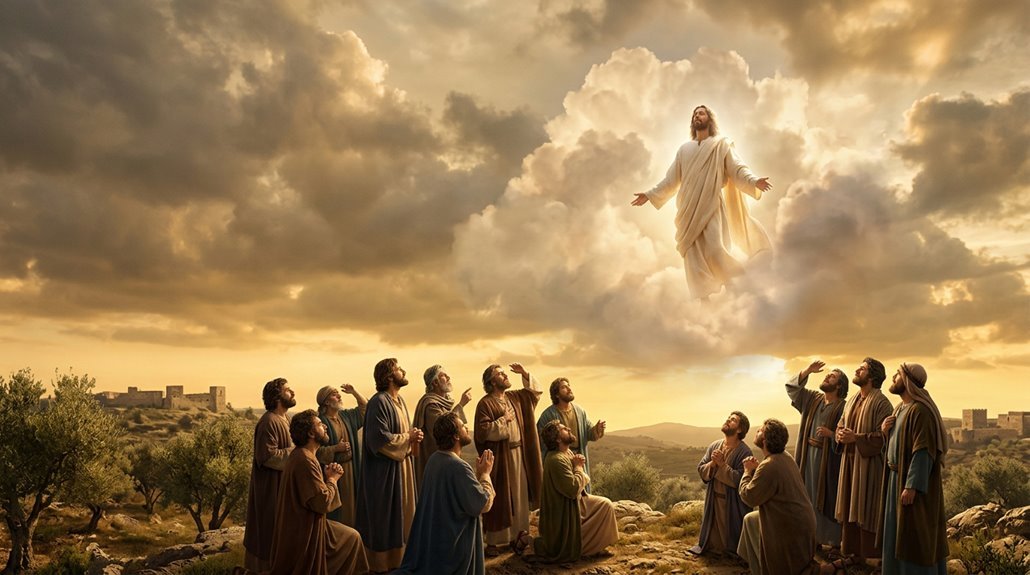
You celebrate Ascension Day because forty days after Easter Jesus rose, ascended, and promised to return, a truth Acts 1:9‑11 underscores as the clouds swallow Him and the Father assures the Holy Spirit inherits His power. That hand‑off means the Spirit now guides and equips believers, keeping the promise alive until His coming. Expectancy turns passive waiting into active preparation, shaping your daily habits and hope. Keep going, and you’ll discover how to live this hope fully.
Table of Contents
What Is Ascension Day and Why It Matters?
What’s Ascension Day, and why does it matter? You celebrate it forty days after Easter, marking the moment Jesus rose from the tomb and ascended into heaven. This event confirms that his earthly ministry ended and his divine authority began, providing a bridge between resurrection and the promised return. You recognize that the ascension validates Jesus’ claim to be the Son of God, proving his power over death and his role as the eternal king.
It also signals the inauguration of the Holy Spirit’s work, which empowers believers to live out the gospel. By remembering this day, you anchor your faith in the historical reality of Christ’s triumph and the future hope of his coming. The celebration reminds you that the same power that lifted Jesus is at work in you, shaping your purpose and encouraging perseverance until his promised return.
What Acts 1:9‑11 Says About the Holy Spirit’s Power in the Ascension
When you read Acts 1:9‑11, you see the ascension not just as a departure but as a dramatic hand‑off of power to the Holy Spirit. The clouds that swallow Jesus signal a divine transition: the Father’s promise in verse 10 assures that the same authority that lifted Christ now rests on the Spirit. You sense that the Spirit inherits the mission, carrying the same glory and authority into the world.

The narrative tells you that the Spirit’s arrival isn’t a later event but an immediate continuation of Christ’s work. This empowers you to understand the Ascension as the inauguration of a new, Spirit‑driven era, where the same power that raised Jesus now fuels the church’s witness. The text therefore frames the Holy Spirit not as a secondary helper but as the primary agent who’ll guide, equip, and sustain believers until the promised return.
Why Expectancy Matters After Ascension Day
Why does the Ascension still shape your daily hope? You see the event as a promise that God’s story didn’t end on the cross; it pivoted toward a future return. That pivot fuels expectancy—a confident anticipation that something greater is coming.
Expectancy keeps you alert, turning passive waiting into active preparation. It sharpens your focus on God’s promises, so you notice small blessings as clues of the larger plan. When you expect Christ’s return, you prioritize values that align with His kingdom, letting go of fleeting comforts.
Expectancy also sustains perseverance: setbacks become temporary, not permanent, because you trust the ultimate culmination. It transforms anxiety into peace, because you know the narrative is already written.
In short, expectancy after Ascension isn’t a vague optimism; it’s a disciplined, hopeful stance that guides decisions, fuels gratitude, and anchors your identity in the promised return.

How to Live in Hope and Expectancy Until He Returns
A handful of daily habits can keep hope and expectancy alive while you await Christ’s return. Start each morning with a brief prayer that affirms His promised coming; let that focus set the tone for the day. Pair Scripture reading with a journal note on how the passage speaks to future fulfillment. Serve others intentionally—each act reflects the kingdom’s values and reinforces your anticipation. Schedule regular fellowship, sharing testimonies that remind you of past faithfulness and future hope. When doubts arise, pause, breathe, and recite a memorized verse that declares His return. Keep a visual reminder—perhaps a cross or a calendar countdown—to anchor your thoughts. Finally, cultivate gratitude by listing daily blessings, which trains your heart to see God’s ongoing work. These practices weave hope into routine, ensuring you live with confident expectancy until He comes back.
Frequently Asked Questions
How Did Early Christians Celebrate Ascension Day Historically?
You’d find that early Christians marked Ascension Day with a simple feast, prayer, and communal worship. They gathered in homes or catacombs, sharing bread and wine while recounting Jesus’ ascent.
Some lit candles to symbolize his rising, and they sang hymns about his return. The celebration emphasized hope, reinforcing belief that he’d come back, and it helped unify the fledgling community.
What Biblical Evidence Supports a Literal Versus Symbolic Ascension?
You’ll find literal evidence in Acts 1:9‑11, where the text says Jesus “was taken up” and a cloud hid Him, implying a physical ascent.
Luke’s narrative in Mark 16:19 also states He “was taken up into heaven.”
Conversely, symbolic readings point to Psalm 19:4‑6 and John 6:62, where “ascending” describes glory or divine authority, not a spatial journey.
Both perspectives hinge on how you interpret those passages.
Are There Cultural Variations in Ascension Day Observances Worldwide?
You’ll find ascension day celebrations differ widely across cultures. In Europe, many churches hold processions and special liturgies, while in Latin America, vibrant street festivals blend indigenous music and dance. African churches often combine the service with drumming and communal feasts. In the Philippines, novenas and processions dominate, and some Asian congregations emphasize quiet prayer and scriptural study. Each tradition reflects local customs, yet all honor the same biblical event.
How Does the Ascension Relate to the Doctrine of the Trinity?
You see the Ascension as the Father sending the Son back to heaven, confirming the Son’s divine authority and the Spirit’s ongoing presence. It shows the three persons working together: the Father’s sending, the Son’s return, and the Spirit’s promise to dwell in believers. This event illustrates the Trinity’s unity and distinct roles, reinforcing that each person is fully God while remaining distinct.
What Prophetic Signs Indicate Christ’s Imminent Return?
You’ll recognize Christ’s imminent return through several prophetic signs: wars and rumors of wars, famines, earthquakes, and pestilences that increase in frequency; the spread of the gospel to every nation; moral decay and widespread lawlessness; the rebuilding of the Jewish temple and the rise of a global religious‑political leader claiming divine authority; and the sudden, visible “coming” described in the heavens, as Jesus promised in Acts 1:9‑11.
Conclusion
You’ve seen how Ascension Day marks Christ’s triumphant return to heaven, how Acts 1:9‑11 reveals the Holy Spirit’s power, and why living with expectancy fuels your faith. Keep that hope alive daily—trust the Spirit, stay vigilant, and let anticipation shape your actions. By embracing this forward‑looking confidence, you’ll walk in purpose until He comes again.












No Comments