

16 May Bread and Water Fast in the Bible – Mourning & Repentance
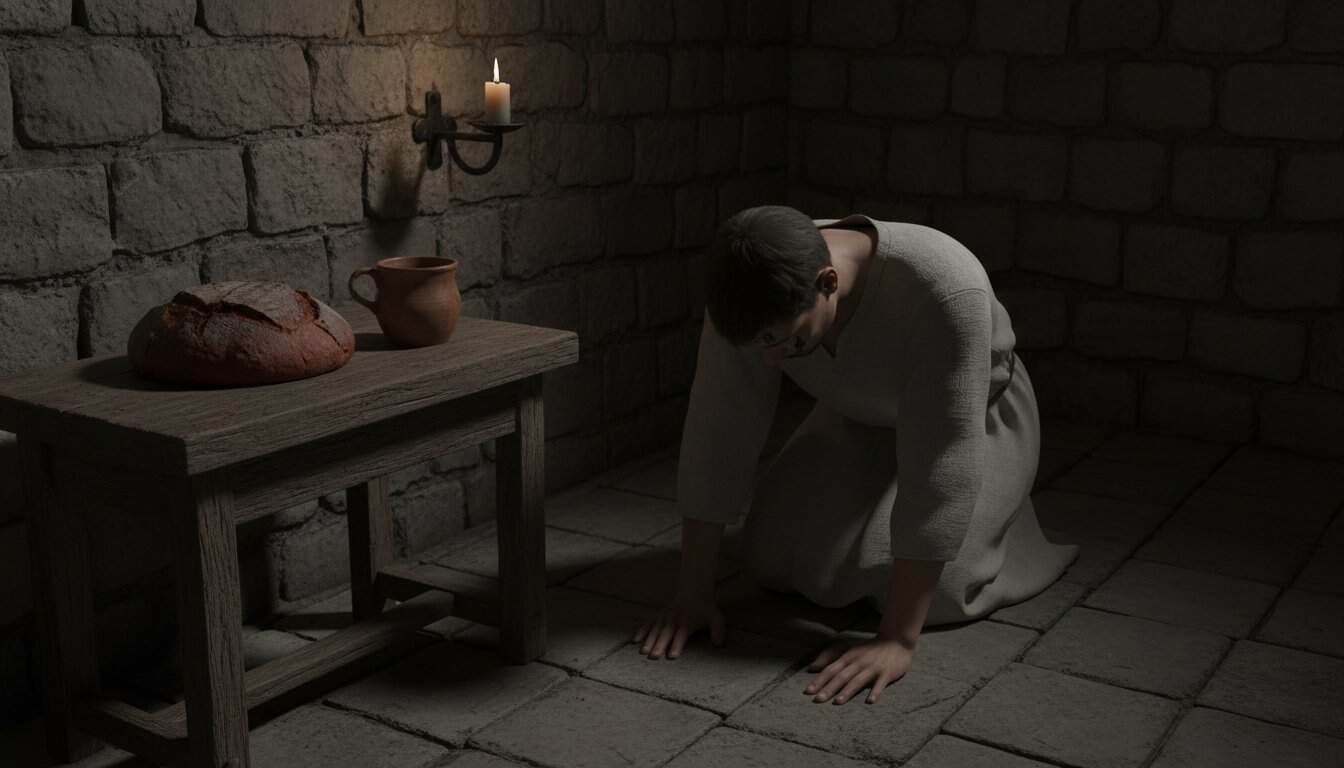
I still remember the night I sat on the floor, my heart heavy, with only a piece of bread and a cup of water before me. In that simple, stark setting, I felt the same raw grief that David expressed in 2 Samuel 12, where he refused full meals and wrapped himself in sackcloth as he prayed for his child.
Table of Contents
The concept of a “Bread and Water Fast” in the Bible reminds me how even a whole city can be humbled, much like in Jonah’s story, while Daniel’s intercessory fast illustrates that limiting our sustenance can transform personal anguish into a plea for divine mercy. These biblical moments teach us that a Bread and Water Fast is not just a ritual—it’s a heartfelt turn to God when words fail us.
When we engage in this fast, we echo the ancient cries for repentance and hope, allowing our spirits to resonate louder than any feast. Let’s explore how these humble meals, rooted in scripture, have shaped lives and can shape yours, too.
How Bread‑and‑Water Fast Signaled Mourning
When the Bible talks about a bread‑and‑water fast, it’s not just about skipping meals—it’s a sign of deep mourning. In 2 Samuel 12 (NIV), David refuses food, lies on the floor in sackcloth, and begs for his child’s life. He only takes a little bread and water, enough to keep his body alive while he prays.

That partial intake mirrors the old practice of limiting sustenance but not starving completely. It’s a way to stay physically present while the spirit is in anguish. In Catholic tradition, Wednesdays and Fridays honor betrayal and the crucifixion, and the brief chewing of bread—about 45‑60 seconds—paired with water feels like a tiny echo of the Eucharist and a moment of purification.
Skipping breakfast and lunch becomes a whole‑person grief response. Your body groans with heart‑sorrow, and the Holy Spirit can intercede. It’s not the total denial of Nineveh’s fast, but a modest nourishment that marks mourning in a tangible, personal way.
The 40‑day journey of Lent reflects this same spirit of repentance and purification.
How Joel 2’s Fast Calls for Heart‑Rending Repentance
I’m urging you to open your heart, not just your clothes, because genuine repentance comes from deep sorrow—pair fasting with sincere weeping, and God’s compassion will meet your mourning, turning ritual into lasting transformation.
Rending Hearts Over Garments
The call in Joel 2 to “rend your heart, not your garments” flips the old ritual of tearing clothing into a demand for inner devastation. It’s not about a dramatic outward display—it’s a deep, painful surrender that crushes pride and restores your broken relationship with God.

Heart over habit – you have to drop the superficial mourning and let sorrow pierce your innermost being. When you feel that ache, you know it’s not just a habit.
Complete surrender – the rending is total; half‑hearted attempts leave the same old pride intact. God sees the whole heart, not a half‑torn robe.
Divine mercy – God’s gracious character waits for a heart that cries out, not a ripped garment. “The Lord is compassionate and gracious, slow to anger, abounding in love” (Psalm 103:8 NIV).
Urgent action – “even now” urges you to fast, weep, and assemble, turning every breath into a confession that reshapes your life. I’ve felt that urgency in my own prayer life, and it changes everything.
Divine Compassion Amid Mourning
God’s compassion doesn’t disappear when Israel is weeping—it actually rises up with the sorrow. I’ve felt that when I’m brokenhearted, God seems to slow His anger, just like Joel 2:13 says, “Rend your heart and not your garments” (KJV). He meets our tears with steadfast love, and that genuine grief can move Him to relent from disaster—think of Exodus 34:6‑7, where He shows mercy instead of wrath.
When we fast and mourn, it isn’t just a ritual; it’s a heart‑break that triggers divine relief. I remember a season of deep repentance, feeling humbled, not presumptuous, and seeing God’s forgiveness flow in. The Bible reminds us in Joel 2:12 (NKJV) to “return to the Lord your God, for He’s gracious and compassionate, slow to anger and abounding in love.”
That sincere sorrow, paired with a humble turn back to Him, restores our covenant fellowship. It’s like 2 Chronicles 7:14 (implied) – if we humble ourselves, pray, and seek His face, He’ll heal our land. In those moments, I’ve experienced God’s mercy as a steady, comforting presence, not a distant judge.
How Judges 20’s Civil War Prompted National Grief and Fasted Prayer
Ever wondered how a single atrocity could rally an entire nation into mourning? You see the Levite’s gruesome message ignite a collective outcry that swept from Dan to Beersheba. The Israelites gathered at Mizpah, four hundred thousand soldiers standing before the LORD, and swore a solemn vow: none would return to the sinner’s house. Their grief manifested in relentless fasting and prayer, day after day, as battle losses mounted.
- National weeping – the whole people wept before the house of God.
- Fasting until evening – sustained abstention paired with burnt and peace offerings.
- Repeated sacrificial prayers – each battle day brought renewed petitions.
- Vow of non‑participation – a communal pledge to pursue justice without hesitation.
The war claimed over 65,000 lives, left Benjamin with merely six hundred men, and exposed Israel’s reckless zeal. Though united in outrage, the people learned that true repentance demands humility, not just martial zeal.
How 1 Samuel 7’s Communal Fast Combined Confession and Mourning
As we gather at Mizpah, we pour water on the altar while openly confessing our sins, turning the ritual into a heartfelt mourning that empties our hearts and sets the stage for Israel’s renewal.
Public Confession at Mizpeh
We gathered at Mizpah for a one‑day fast, and the whole camp felt the weight of the moment. No food, just prayer and a shared ache for God’s mercy.
When Samuel stood up, he called us to speak as one—“We have sinned against the Lord” (2 Chronicles 7:14 NIV). The words rolled out together, raw and honest, like a chorus that couldn’t be ignored.
He interceded, a voice of leadership and judgment, reminding us of the covenant we’d broken. It felt like a personal conversation with the Almighty, not a distant lecture.
Then the sky cracked—thunder rolled, and the Philistines fell. It was a vivid, divine “yes” to our repentance, a reminder that God hears a humble heart (Psalm 51:17 NIV).
That day at Mizpah still lives in my memory, a reminder that humility, confession, and God’s grace can turn a nation around. It wasn’t just history; it’s a living promise for anyone who turns to God with a contrite spirit.
Mourning Through Water Ritual
How does a simple act of pouring water become a nation’s lament? You stand at Mizpah, the watchtower where Israel once gathered to decide its fate. The high ground makes every drop visible, every heart exposed.
You draw water, pour it before the LORD, and feel your soul emptying—an outward sign of inner repentance, echoing 1 Samuel 1:15 (NIV). The community fasts, no food, only the bitter taste of sorrow, mirroring Joel’s call to weep and mourn (NLT).
Together you confess collective idolatry; the water libation becomes a shared grief, a public acknowledgment of broken covenant. This ritual binds you, turning personal contrition into a corporate lament that prepares the nation for divine restoration.
How Jonah 3’s City‑Wide Fast Turned Guilt Into Redemption
Jonah 3’s city‑wide fast is unforgettable because it happened in a single day. As soon as Jonah stepped onto the shore, every Ninevite—king, merchant, laborer—tossed on sackcloth and began fasting. It felt like the whole city was breathing the same grief, turning guilt into a promise of redemption.
The king didn’t wait for a council; he threw his crown aside, sat in ashes, and ordered a national fast. Even the animals were wrapped in sackcloth, a vivid picture of collective contrition (Jonah 3:8 NIV). That sudden, unified response showed how powerful repentance can be.
God saw the whole people turning from evil. He “relented and didn’t bring on them the disaster he’d threatened” (Jonah 3:10 NIV). It’s a reminder that when we humble ourselves together, divine mercy meets us.
How Daniel 9’s Intercessory Fast Sought Restoration for Israel
Why does Daniel’s nine‑day intercessory fast matter for Israel’s restoration? The fast comes right after Jeremiah’s 70‑year exile prophecy, so the deadline feels almost on the horizon. You turn your face to the Lord, combine prayer, supplications, sackcloth, and ashes—humility and mourning in one breath.
By giving up food, you’re saying, “I’m all in, nothing can distract me from God.” In verses 4‑15 you own up to Israel’s rebellion, idolatry, and disobedience, echoing Deuteronomy’s curses and reminding yourself of God’s covenant faithfulness (Deut 28:15‑68, NIV). It’s a corporate confession, clearing the sin barrier that blocks mercy.
Then you ask for Jerusalem’s revival, calling on God’s steadfast love and seeking national vindication, not personal gain (Jer 29:12‑14, NLT). Your fervent fast catches divine attention; Gabriel shows up and lays out the 70‑week timeline (Daniel 9:24‑27, ESV). That moment shows repentance and humility can unlock God’s response.
The whole picture? Repentance and humility come first, then breakthrough. Israel’s redemption isn’t a human project—it’s God’s glorious work, and the fast is the key that opens the door.
Frequently Asked Questions
Does the Biblical Bread‑And‑Water Fast Differ From Other Fasting Types?
The biblical bread‑and‑water fast lets you eat only bread and drink water, while many other fasts either cut out all food, limit certain foods, or even forbid water (see Matthew 6:16‑18 NIV).
It’s less extreme than a total fast but more restrictive than a simple water‑only fast, giving you a clear way to mourn and repent.
This approach is a gentle yet meaningful way to seek God’s presence.
Why Is Water Specifically Included in the Fast’s Symbolism?
We include water because it’s a picture of life, God’s provision, and cleansing.
In a fast it reminds us that He sustains us even when food is gone, and it points to the “living water” that quenches our eternal thirst (John 4:14, NIV).
Pairing water with bread shows both our physical and spiritual needs, urging humility and reliance on His grace.
Can Fasting Be Practiced Without Genuine Repentance?
No, you can’t truly fast without genuine repentance. God looks for a humbled heart, not just abstaining from food—see Matthew 6:16‑18 (NIV) and Isaiah 58 (NIV).
If you fast out of habit or pride, it becomes an empty ritual (Jeremiah 14:12, NIV).
How Long Did These Biblical Fasts Typically Last?
Biblical fasts usually lasted one, three, seven, or ten days. A one‑day fast, like Judges 20:26 (NIV), runs from sunrise to sunset.
three‑day absolute fasts—Esther 4:16 or Acts 9:9 (NIV)—skip both food and water.
seven‑day fasts, seen in 1 Samuel 31:13 (NIV), focus on mourning without water limits.
and ten‑day partial fasts, such as Daniel 1:12 (NIV), allow only vegetables and water.
These are the typical lengths the Scriptures record.
Are There Modern Liturgical Traditions That Mirror These Ancient Fasts?
You’ll find modern liturgical customs that echo those ancient bread‑and‑water fasts. In Catholicism, Ash Wednesday, Good Friday, and all Fridays in Lent call for a simple fast—often just one meal, sometimes bread and water alone.
Eastern Orthodox and some Anglican churches observe strict weekday fasts, limiting food to bread, fruit, and water.
Even in Medjugorje, believers practice a Wednesday‑to‑Friday bread‑and‑water fast, mirroring the biblical pattern.
Conclusion
The bread‑and‑water fast isn’t just a diet—it’s a heartfelt language of grief, humility, and repentance. From Joel’s desperate plea to Daniel’s intercessory prayer, each fast marks a turning point where sorrow meets hope. By embracing this ancient practice, you join a tradition that turns mourning into a catalyst for spiritual renewal and communal restoration.
May God grant you the courage to seek Him in these moments of fasting, and may your heart be lifted as you draw nearer to Him. Take a step of faith today, and let His peace fill the space where you once felt loss.











No Comments