

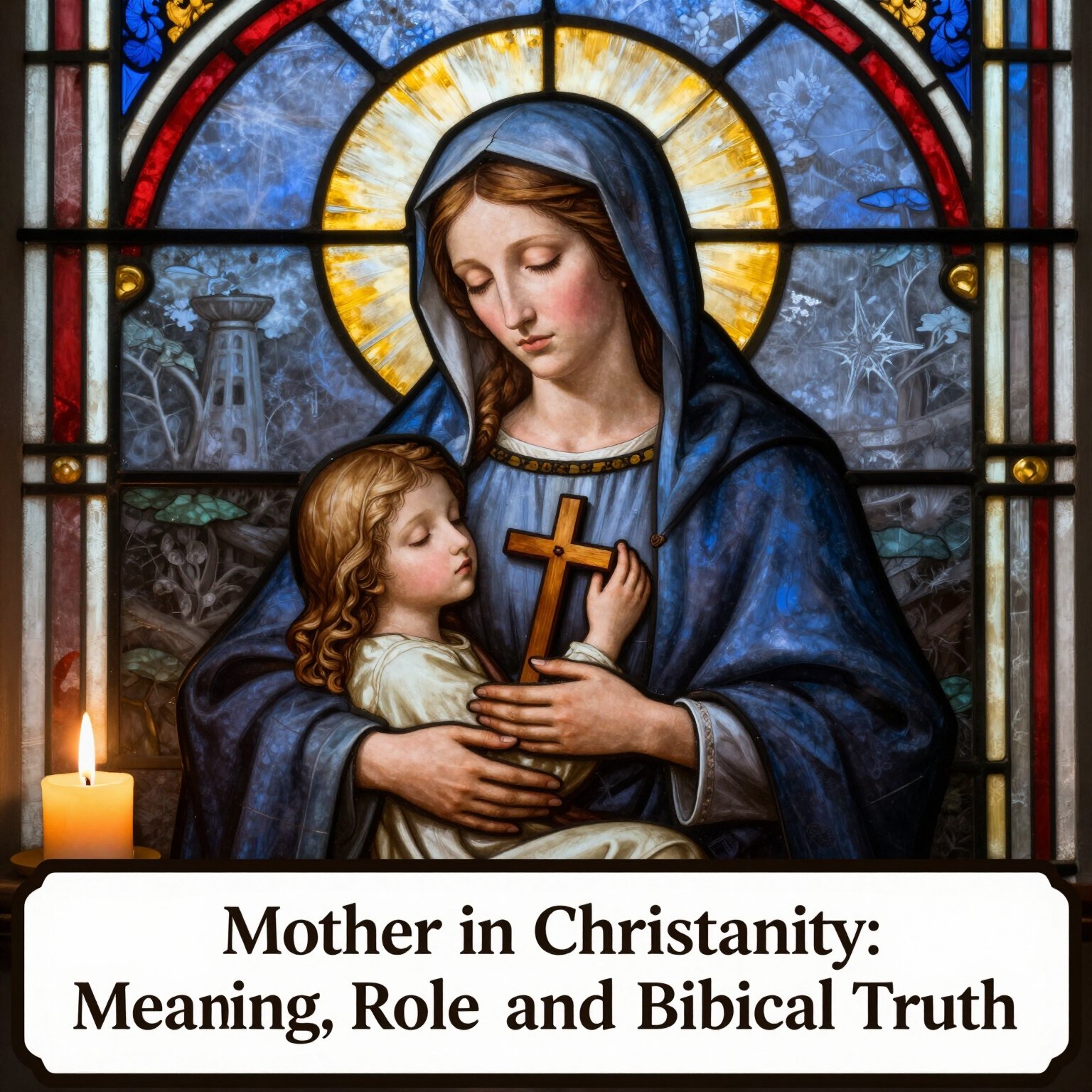
25 Apr Mother in Christianity: Meaning, Role, and Biblical Truth
You’re called to be a God‑appointed steward, nurturing, teaching, and protecting your children while passing on His covenant. Your role mirrors Eve’s as “mother of all the living,” embodies Scripture into nurture,, and De, 6:6–7, and models reverence like Titus 2:4‑5. You provide physical care, emotional comfort, and disciplined love, weaving prayer and Bible into daily routines. By honoring this biblical calling, you shape a lasting spiritual heritage—continue and and discover deeper insights.
Table of Contents
What Is Biblical Motherhood? – A Quick Definition
A biblical mother is a woman appointed by God to nurture, teach, and protect her children, embodying the role first named for Eve in Genesis 3:20 as “mother of all the living.” You’re called to reflect God’s compassion, offering physical care and emotional comfort while guiding your family toward His commandments.
Your role isn’t limited to household chores; it’s a spiritual vocation that shapes future generations and honors the covenant. You model reverence for the Lord, discipline with love, and weave faith into daily routines.
Scripture presents motherhood as a divine appointment, a stewardly of heritage, and a conduit of God’s promises. By embracing this purpose, you align with biblical examples—Eve, Hannah, Mary—who trusted God, prayed fervently, and nurtured believers.
Your daily actions become a living testimony, influencing your children’s character and their relationship with God.
What Are the Core Responsibilities of Biblical Motherhood?
What does a biblical mother actually do? You provide physical nourishment and protection, echoing Psalm 139:13’s image of God forming a child in the womb. You offer emotional comfort, recalling Isaiah 49:15’s promise that even a mother’s love never wanes. You teach God’s commandments daily, as Deuteronomy 6:6‑7 commands, and you model reverence for the Lord, embodying Titus 2:4‑5. You discipline with love and consistency, guided by Proverbs 29:17’s wisdom that correction nurtures.
Your responsibilities extend to shaping spiritual legacy—children become a heritage from the Lord (Psalm 127:3), and you steward that gift through prayer, instruction, and example. You balance household duties with broader service, reflecting Proverbs 31’s industriousness and New Testament mothers who participated in ministry. In every task, you honor the covenant, ensuring your family walks in God’s promises and truth.
Why Are Nurturing and Comfort Central to Biblical Motherhood?
Often, the biblical picture of a mother hinges on her ability to nurture and comfort because those acts reflect God’s own relationship with His people. You see, Scripture ties a mother’s love to divine providence: Isaiah 66:13 likens God’s consolation to a mother’s soothing touch, and Psalm 139:13 reminds you that God “knits you together” in the womb, establishing a pattern of tender care.
When you provide physical nourishment, you echo God’s sustaining presence; when you offer emotional reassurance, you become a tangible echo of His covenantal promises. This dual role isn’t optional—it’s central. Comfort steadies a child’s soul, preventing fear from eclipsing faith, while nurturing creates the safe environment where spiritual truths can flourish. By embodying God’s own nurturing and comforting nature, you fulfill a divinely appointed mandate that shapes identity, builds trust, and anchors the family in the everlasting love of the Creator.
How Do Biblical Mothers Transmit Faith Across Generations?
Your nurturing and comfort lay the groundwork, but the lasting impact of biblical motherhood lies in how you pass faith down the line. You begin by weaving Scripture into everyday moments—reciting verses while cooking, praying before meals, and linking biblical stories to current events. You model reverence for God, showing that worship isn’t a ritual but a lifestyle. When your children ask questions, you answer with patience, pointing them to Deuteronomy 6:6‑7 and encouraging them to hide God’s commands in their hearts. You create family traditions—celebrating baptism, observing Sabbath, and sharing testimonies—that anchor faith across seasons. You involve them in church service, letting them see you serve and lead. By consistently pairing love with discipline, you shape a spiritual heritage that outlives you, ensuring each generation inherits the same covenantal promise you cherish.
What History and Culture Teach About Biblical Motherhood?
Ever wondered how ancient Israelite customs shape today’s view of biblical motherhood? You’ll see that early Israel placed mothers at the heart of household worship, assigning them the task of teaching the law (Deuteronomy 11:18‑19). Their role extended beyond child‑rearing; Proverbs 31 shows a mother managing commerce, proving biblical motherhood didn’t demand seclusion. In the New Testament, women like Lois, Timothy’s mother, taught public theology, indicating that spiritual influence could be exercised in church settings. Early church fathers such as Augustine described motherhood as a vocation of service, not merely biology, reinforcing the idea that mothers steward divine gifts. Missionary histories reveal mothers as primary agents of cross‑cultural evangelism, shaping future generations through prayer and instruction. These patterns illustrate that biblical motherhood historically blended nurturing, education, and public witness—an integrated model that still informs how you might understand and live out your own maternal calling.
How Do Modern Christian Moms Live Out Biblical Motherhood Today?
Ancient Israel’s emphasis on mothers as household teachers and spiritual stewards naturally leads to the question of how today’s Christian women embody those biblical principles. You begin each day with prayer, inviting God’s comfort into your home as Isaiah 66:13 describes. You weave Scripture into meals, bedtime stories, and chores, echoing Deuteronomy 6:6‑7’s call to teach God’s commandments constantly. You model a reverent heart, letting your actions speak louder than words, just as Titus 2:4‑5 urges. You discipline with love, using Proverbs 29:17 as a guide to corrective encouragement rather than harshness. You balance work and family, recalling Proverbs 31’s industrious wife, and you join church ministries, sharing your gifts like Timothy’s mother Lois. You lean on God’s promises during fatigue, remembering Isaiah 49:15’s assurance of His unfailing love. In these ways, you live out biblical motherhood, shaping a legacy of faith for future generations.
What Common Challenges Do Biblical Mothers Face?
Why do biblical mothers often feel stretched thin, and how does Scripture speak to those pressures? You juggle physical care, emotional nurturing, and spiritual instruction while the world demands more. Infertility can erupt, leaving you praying like Hannah for a child God God promises. Balancing work, home, and ministry mirrors the industrious Proverbs 31 woman, yet fatigue see inevitable. Discipline without provocation challenges you, as Ephesians 6:4 warns against harshness, and Colossians 3:21 reminds fathers to avoid discouragement. Intergenerational conflict arises when you honor parents (Deuteronomy 5:16) yet protect your own children’s autonomy. Emotional exhaustion creeps in, but Isaiah 66:13 assures God’s comfort mirrors a mother’s. You also confront societal expectations that undervalue your spiritual influence. These hurdles test your faith, but Scripture equips you with prayer, wisdom, and the promise of divine support.
How to Apply Biblical Motherhood Truths to Everyday Parenting?
How can you turn Scripture’s timeless wisdom into daily mothering practices? Start each day with a brief prayer, asking God to shape your heart as you nurture your child’s physical needs, just as Psalm 139:13 reminds you of divine design. When a child cries, echo Isaiah 49:15, offering gentle reassurance that God’s love mirrors a mother’s comfort. Teach the commandments in everyday moments—while cooking, recite Deuteronomy 6:6‑7, weaving faith into routine chores.
Model reverence for the Lord by practicing humility and kindness, following Titus 2:4‑5, so your child sees godly behavior in action. Discipline with love, using Proverbs 29:17 as a guide to correct gently yet consistently. Celebrate milestones with gratitude, recalling Proverbs 31:28, and let your household reflect the honor promised in Exodus 20:12. By integrating these verses into meals, bedtime, and play, you transform biblical truth into lived, nurturing motherhood.
Frequently Asked Questions
How Does Biblical Motherhood Address Single‑Parent Households?
You find biblical motherhood supports single‑parent households by emphasizing God’s provision, community responsibility, and the mother’s spiritual authority.
Scripture calls you to trust God’s comfort (Isaiah 66:13) and to teach His commandments (Deuteronomy 6:6‑7), even alone.
The church is urged to rally around widows (1 Timothy 5:3‑5), offering practical aid, prayer, and fellowship, ensuring your child’s faith and wellbeing thrive despite the single‑parent reality.
Can Biblical Motherhood Be Practiced by Men or Non‑Biological Caregivers?
Yes, you can embody biblical motherhood even if you’re a man or a non‑biological caregiver. Scripture calls all believers to nurture, teach, and protect children (Deuteronomy 6:6‑7; Titus 2:4‑5).
What Biblical Guidance Exists for Mothers With Special‑Needs Children?
You find guidance in Scripture’s call to love and nurture all children, especially those who need extra care. Psalm 139:13 reminds you God fashions each child uniquely, so you’re commissioned to provide physical protection (Exodus 20:12) and emotional comfort (Isaiah 49:15). Teach them diligently (Deut 6:6‑7), model patience (Proverbs 31:17), and pray for strength (1 Sam 1:10). Trust God’s promise that your faithful care bears lasting spiritual fruit.
How Should Biblical Mothers Handle Cultural Pressures Conflicting With Scripture?
You should anchor your decisions in Scripture, letting God’s standards shape your response to cultural pressure. When trends clash with biblical values, pray for discernment, study the relevant passages, and seek counsel from mature believers. Trust that obedience to God outweighs approval, and model confidence in His truth. By prioritizing divine authority, you protect your family’s spiritual health and demonstrate faithful witness.
Do Biblical Texts Speak to Motherhood After a Child’s Death?
You’ll find that Scripture comforts grieving mothers and affirms their ongoing role. Psalm 34:18 assures you God is near the broken‑hearted, while Isaiah 66:13 likens His solace to a mother’s. Jesus honors his mother even after her death (John 19:26‑27), and Paul encourages believers to “comfort one another” (1 Cor 12:26).
Conclusion
Embrace the biblical call to motherhood, remembering that your nurturing, faith‑sharing, and steadfast love echo God’s design across generations. By grounding daily choices in Scripture, you’ll face challenges with confidence, model Christ‑like virtue, and shape a legacy of faith that endures. Let your heart reflect His compassion, and your home become a sanctuary where truth, hope, and love thrive together.






No Comments