


20 Apr Why Baptize in the Triune Name of God?
You baptize in the Father, Son, and Holy Spirit’s name because the Great Commission explicitly commands it, and the early church’s Didache confirms that three‑fold formula as the authentic baptismal rite. This triune invocation unites the divine persons into one authority, fulfilling the covenant that marks you as a member of the visible church. It also aligns with Acts 2:38’s focus on Jesus’ authority while preserving the fuller biblical pattern—so the next sections reveal how the two passages complement each other.
Table of Contents
The Biblical Basis for Baptizing in the Father, Son, and Holy Spirit
Why does the Scripture matter when you consider the formula for baptism? You see, the Great Commission gives you a clear baptismal formula: “in the name of the Father and of the Son and of the Holy Spirit.” That triune wording anchors trinitarian baptism in the gospel’s own command. The Didache, an early church manual, repeats the same pattern, showing that early church practice already used the three‑fold name. When you compare this with Acts 2:38’s “in the name of Jesus Christ,” you notice a contextual shift rather than a contradiction; the early community invoked Jesus’s authority while still honoring the fuller formula elsewhere. By tracing these texts, you recognize that the Father, Son, and Spirit aren’t merely titles but a unified divine name that the early believers repeatedly applied. This continuity validates the trinitarian baptism you practice today, rooting it firmly in Scripture and historic tradition.
How Matthew 28:19 and Acts 2:38 Work Together in Trinitarian Baptism
How do Matthew 28:19 and Acts 2:38 together shape a Trinitarian baptism? You see, Matthew 28:19 commands baptizing “in the name of the Father, and of the Son, and of the Holy Spirit,” while Acts 2:38 tells believers to be baptized “in the name of Jesus Christ.”
The key is the singular “name,” which signals the authority of God acting as one unified divine person. When you invoke the singular name, you acknowledge Jesus’ lordship and the Triune God’s saving work in a single act.
Matthew’s formula equips you for missionary outreach, establishing a doctrinal foundation that includes all three persons. Acts 2:38 addresses a Jewish audience, emphasizing that Jesus embodies that authority.
Together they guide you to practice trinitarian baptism that publicly professes faith, aligns with Christ’s death and resurrection, and incorporates you into the covenant community under the authority of God.
The Triune Name as a Naming Ceremony: Identity and Belonging in Christ
What does it mean to be named by the Triune God? When you receive the Triune name in baptism, you step into a covenant identity that declares you belong to the Father, Son, and Holy Spirit. This naming ceremony does more than mark a ritual; it reshapes your sense of self, aligning your daily conduct with God’s character. You become part of a visible church, sharing fellowship with others who carry the same name, and you inherit the privilege of being claimed by the divine family. That belonging carries duty: you’re called to reflect the Triune name in speech, work, and relationships, living out the threefold work of salvation. As you walk in this covenant, your identity is anchored in Christ, and every action becomes a testimony that you’re a child of the Triune God, united with the body of believers.
Step‑by‑Step Guide to Performing a Trinitarian Baptism
Ever wondered what each moment of a Trinitarian baptism looks like from start to finish?
First, you gather the candidate and explain the baptism’s purpose, emphasizing the Trinity and apostolic authority.
Then you pronounce the faith confession, confirming belief in Jesus.
Next, you prepare the water for immersion, ensuring it’s deep enough for full submersion.
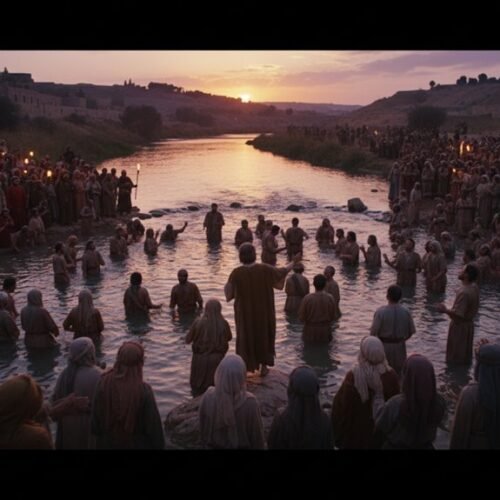
When the moment arrives, you hold the candidate’s shoulders, say, “I baptize you in the name of the Father, and of the Son, and of the Holy Spirit,” and lower them completely beneath the surface.
The immersion symbolizes death to the old self and rising to new life.
After the upward movement, you lift the person, dry them, and wrap them in a towel as a sign of belonging to God’s family.
Finally, you conclude with a prayer, reminding the baptized of their ongoing covenant with the Trinity and the church’s apostolic heritage.
Practical Benefits of Trinitarian Baptism in Daily Faith
When you walk daily in the Triune Name, baptism stops being a one‑time ceremony and becomes a living framework that shapes every decision, relationship, and devotion. Trinitarian baptism gives you a constant reminder that you belong to a covenant family headed by Father, Son, and Holy Spirit, so your daily faith is anchored in that identity. Each morning you can picture the Spirit’s presence within you, guiding choices and fostering fellowship with other believers who share the same public confession.
When conflict arises, you recall the covenant’s blessings, choosing forgiveness and love over resentment. Your worship becomes a response to the Son’s redemptive work, and your testimony to a vivid illustration of the Triune Name’s power. In practical terms, this means you approach work, school, and home with confidence, knowing you’re owned by God, and you invite others into the same transformative fellowship.
Oneness Objections to Trinitarian Baptism and How to Respond
Why do Oneness believers reject the Trinitarian formula, insisting that baptism must be “in Jesus’ name” alone? You’ll hear them cite Acts 2:38 and argue that “in the name of” denotes authority, not a multi‑person formula. Their Trinity vs Oneness critique often ignores Matthew 28:19, which explicitly commands baptizing in the Father, Son, and Holy Spirit. Respond by explaining that “in the name of” can encompass the triune designation; the name Jesus represents the whole divine identity, including the Father and Spirit. Early liturgical practice shows both the Didache’s triune formula and the Jesus‑name phrasing in Acts, indicating no universal mandate for a single wording. Emphasize that the baptism formula is a covenantal act, affirming Father’s love, Son’s redemption, and Spirit’s indwelling, while honoring the gospel’s authority. This balanced view respects historical diversity and upholds Trinitarian doctrine without dismissing Oneness concerns.
How Trinitarian Baptism Shapes Worship & Community Unity
The Oneness critique of the baptismal formula leads naturally to the broader question of what the Trinitarian rite actually does for the church.
When you’re immersed in the Triune name, you experience a baptismal identity that links personal faith to the Father, Son, and Spirit. This link reshapes worship by prompting you to pray, sing, and serve as a single body, fostering worship unity that mirrors the divine communion.
You’ll notice that the church community becomes more than a gathering; it turns into a family that shares the same ownership under the Father, Son, and Spirit. The shared mission you inherit breaks down social barriers, echoing Galatians 3:27‑28, and strengthens mutual edification.
As you live out this triune fellowship daily, your conduct reflects the unified activity of the Trinity, reinforcing doctrine and practice across diverse contexts and deepening the bond of the visible church.
Frequently Asked Questions
Why Should We Baptize in the Name of the Trinity?
You should baptize in the Trinity’s name because it aligns you with Christ’s command, affirms the three‑person God who saves you, and publicly declares your allegiance to the Father, Son, and Spirit.
This act links you to the covenant family, marks you as owned by God, and unites you with believers worldwide.
It also reminds you of each Person’s role—Father’s love, Son’s redemption, Spirit’s indwelling—guiding your daily walk.
Which Sin Will God Never Forgive?
You’ll never be forgiven for blasphemy against the Holy Spirit. That sin isn’t a single mistake; it’s a persistent, hardened refusal to accept the Spirit’s testimony about Christ, even after clear conviction. When you continually attribute the Spirit’s work to Satan or reject the gospel outright, you harden your heart. Until you repent, that state remains unforgivable, while every other sin can be covered through genuine repentance and faith.
Why Did Jesus Refuse Mary to Touch Him?
You should understand that Jesus didn’t reject Mary’s affection; He redirected her focus. By saying, “Don’t hold on to me,” He signaled that His post‑resurrection mission required moving beyond personal contact to a broader, spiritual commissioning. He needed to ascend, send the Holy Spirit, and empower the disciples. So He urged Mary to release her physical grip and prepare to proclaim the risen Lord’s work to all.
What Did Billy Graham Say About Baptism?
You’ll hear Graham say baptism’s a public testimony of your faith, a symbolic death to sin and new life in Christ.
He taught it’s an act of obedience, not a salvation requirement, and urged you to be baptized soon after conversion—preferably by immersion.
He emphasized using Jesus’ name, aligning with Acts, while recognizing the Trinitarian foundation of the gospel.
Conclusion
Now that you’ve seen the scriptural foundation, the practical steps, and the spiritual impact, you can confidently baptize in the Father, Son, and Holy Spirit—knowing it affirms your identity, deepens your faith, and unites you with the body of Christ. Embrace this trinitarian rite as a living declaration of belonging, and let it shape your worship, community, and daily walk with God.










No Comments