

18 Apr Ancient Jewish Corporate Fasting Traditions Explained
You’ll see that ancient Jewish corporate fasting was a nation‑wide rite where leaders, priests, and laypeople all abstained from food and drink to signal humility, confess sin, and plead for mercy. The fasts—like Tisha B’Av, Yom Kippur, and the Fast of Esther—were tied to historic calamities, paired with public prayers, charity, and shared meals that turned personal deprivation into a collective covenant renewal. If you keep going, the deeper layers of ritual and history unfold.
Table of Contents
What Is Corporate Fasting in the Biblical Context?
Why do you keep hearing about “corporate fasting” in the Bible? You encounter it whenever Israel faces national crisis—war, famine, or divine judgment. Corporate fasting isn’t a personal diet; it’s a collective petition. The whole community, leaders, priests, and laypeople, abstain from food and drink to signal humility before God, to confess sin, or to seek mercy.
In 2 Chronicles 20, Judah fasted together before battle; in Ezra 8, the exiles fasted before crossing the Euphrates. The practice binds the people, creates a shared spiritual focus, and amplifies the prayer’s urgency. You’ll notice that the fast often coincides with prayer, sacrifice, and covenant renewal, reinforcing communal identity. It’s not about personal piety but about national repentance and dependence on divine intervention.
Understanding this helps you see why the biblical narrative repeatedly calls the whole nation to fast, not just isolated individuals.

Corporate‑Fast Social Dynamics: Meals, Charity, and Public Declarations
When the nation gathers to fast, the ritual extends beyond abstaining from food; it reshapes everyday life through shared meals, charitable acts, and public proclamations. You’ll notice that even though you’re not eating, you still gather around tables—often with symbolic foods like dates or water—to remind each other of the purpose behind the fast. These gatherings become a platform for collective charity; you and your community pool resources, distributing alms to the poor and funding communal projects. The act of giving transforms personal deprivation into communal uplift. Public declarations also play a crucial role: you recite proclamations, read verses aloud, and broadcast the fast’s intent through town criers or modern media. This shared narrative reinforces solidarity, turning a solitary abstention into a powerful social statement that binds you, your neighbors, and your nation together.
How the Torah Defines National Fast Days and Their Purpose
You’ll see the Torah’s biblical basis for fast days set out in verses that link national mourning to divine covenant.
These fasts act as communal purification rituals, uniting the people in shared repentance and prayer.
Their dates mark historic calamities, reminding you why each day remains a cornerstone of collective memory.
Biblical Basis for Fasting
Ever wondered how the Torah frames national fast days? You’ll find the biblical basis in Leviticus 16, where Yom Kippur commands a day of affliction, and in Numbers 29:31‑33, which adds a fast after the destruction of the altar. Deuteronomy 9:9 reminds you that Moses fasted on Mount Sinai to seek divine guidance. These passages tie fasting to collective repentance, mourning, and covenant renewal. The Torah treats fast days as communal contracts: you abstain from food, drink, and pleasure to heighten spiritual awareness and express sorrow for national transgressions. By observing these statutes, you align personal discipline with the nation’s historic moments, turning private hunger into a shared, sacred testimony.

Communal Purification Rituals
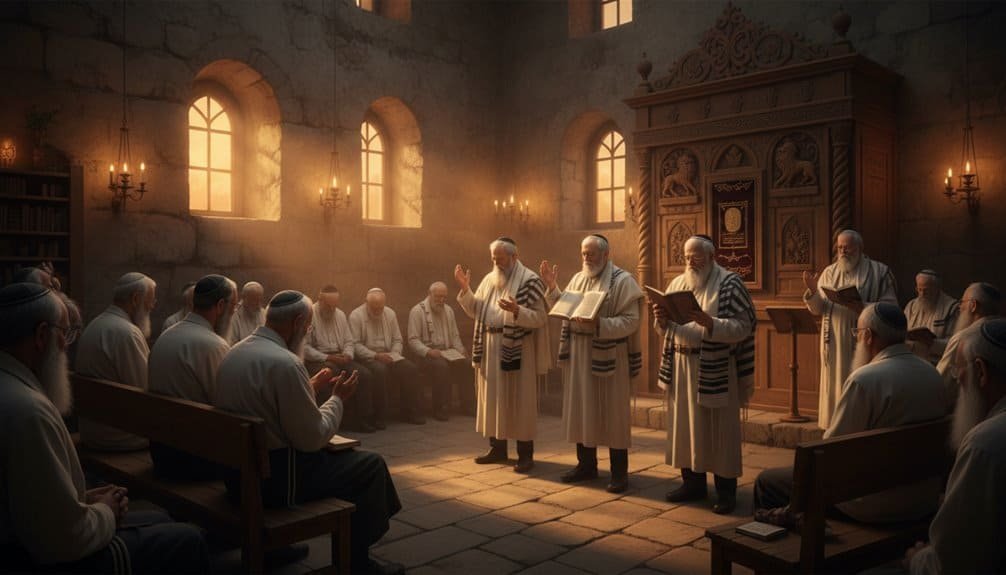
The Torah frames national fast days as communal purification rituals, linking collective abstention to covenant renewal and divine favor. You observe silence, refrain from eating, and gather in the synagogue, allowing the community to reset spiritually.
The text commands you to fast “for your soul” and “for the land,” meaning personal humility mirrors national at. By aligning your breath with the nation’s prayer, you embody collective remorse and hope for divine mercy.
The fast creates a shared rhythm that transforms individual hunger into a symbol of national repentance. You experience heightened awareness of God’s presence, and the ritual reinforces solidarity, reminding you that the nation’s fate rests on collective fidelity to the covenant.
Historical Significance of Dates
When does a date become more than a calendar entry? You discover it in the Torah’s fast days, which turn ordinary dates into communal memory markers. Each national fast—such as the 9th of Av, the 10th of Tevet, or the 17th of Tammuz—commemorates catastrophe, betrayal, or exile. The Torah designates these days to halt ordinary work, gather the community in prayer, and reflect on collective responsibility. By fasting, you embody repentance and solidarity, linking personal discipline to national destiny. The dates anchor historical trauma, ensuring that successive generations recall the lessons of destruction and the promise of redemption. Thus, a date transcends chronology, becoming a living covenant between God, the people, and their shared history.
The Yom Kippur Corporate Fast: Ritual Steps and Communal Significance
How does a corporate community transform the ancient Yom Kippur fast into a shared, purposeful experience? You begin by scheduling a unified pre‑fast briefing, where leadership outlines the day’s spiritual goals and practical logistics. Participants agree to abstain from food, drink, and non‑essential work from sunset to nightfall, mirroring the traditional 25‑hour fast. At the appointed time, you gather in a designated quiet space for Kol Nashir, reciting the communal prayer while a candle burns, symbolizing collective repentance. Mid‑day, you pause for a brief reflective meditation, encouraging personal accountability within the team. The fast concludes with a shared break‑fast, featuring simple, kosher foods, reinforcing solidarity and renewal. Throughout, you document insights in a shared digital journal, turning individual introspection into corporate learning. This structured ritual not only honors the ancient covenant but also strengthens trust, empathy, and a unified sense of purpose across the organization.
The Fast of Esther as a Corporate Fast: Political Crisis, Public Prayer, and Collective Mourning
While political turmoil looms, you can turn the Fast of Esther into a corporate ritual that unites the team in prayer, mourning, and purposeful action. The narrative of Esther’s crisis—Haman’s decree, the hidden identity of a Jewish queen, and the city’s salvation—mirrors modern organizational threats. Invite staff to observe a 24‑hour fast before Purim, framing it as a collective pause that acknowledges risk while fostering solidarity. Begin with a brief reading of the Megillah, then transition to a public prayer service where each voice petitions for wisdom, courage, and ethical leadership. Encourage silent reflection on personal and corporate vulnerabilities, allowing grief to surface without judgment. Conclude with a symbolic act—such as donating food to a local shelter—to transform mourning into tangible goodwill. This structured fast converts ancient lament into a strategic pause, reinforcing community, sharpening focus, and aligning the organization with values of resilience and compassion.
Minor Prophetic Fasts (e.g., the Fast of the First of the Month) and Their Historical Context
The urgency that drove the Fast of Esther can also be seen in the minor prophetic fasts, which punctuate the Jewish calendar with brief, regular periods of communal reflection. You’ll notice that these fasts—such as the Fast of the First of the Month (Rosh Chodesh)—originated in the prophetic tradition, where leaders called the people to pause, repent, and seek divine guidance after a divine revelation or a national crisis. Historically, they marked moments when the nation needed collective humility, often after a military defeat, a famine, or a moral lapse.
You observe that the fast of the First of the Month is observed on the day before Rosh Chodesh, reminding you that time itself is sacred and that each new month offers a chance to reset spiritually. These fasts weren’t as intense as the major fasts, but they still required abstaining from food and drink from sunrise to sunset, fostering a shared sense of accountability and hope across the community.
Adapting Corporate Fasting After the Temple’s Destruction
What changed when the Temple fell, and how did the community keep its corporate fasting alive? When the Second Temple was destroyed in 70 CE, you lost the central venue for national fasts that were announced by the priesthood. Yet you didn’t abandon the practice; you shifted authority to the sages and the emerging synagogue network. The rabbins re‑defined fasting as a communal response to exile, war, and plague, issuing decrees through oral tradition and later written codes.
You began to observe fasts on the same calendar dates, but now the liturgy was led by local leaders instead of the High Priest. Synagogues organized collective prayers, shared meals before the fast, and recorded the fasts in communal registers. This adaptation preserved the collective memory of crisis and solidarity, ensuring that fasting remained a unifying, public act even without the Temple’s physical presence.
How Ancient Corporate Fasting Shapes Modern Jewish Practice
After the Temple’s destruction, the synagogue‑centered model of corporate fasting became the template for today’s communal observances. You’ll notice that modern fast days—Tisha B’Av, the Fast of Gedaliah, and the minor fasts—still follow the ancient pattern of gathering in shul, reciting Selichot, and sharing a collective lament. The liturgy mirrors the Temple’s plea for mercy, while the communal meal‑break after sundown reinforces solidarity.
You also experience the same rhythm: pre‑dawn prayers, a day of abstaining, and an evening celebration that marks renewal. Synagogue leaders now schedule study sessions and charitable acts during the fast, echoing the Temple’s emphasis on repentance paired with good deeds. By joining the congregation, you embody a centuries‑old covenant that transforms personal sorrow into communal hope, ensuring the ancient spirit of corporate fasting lives on in every modern observance.
Frequently Asked Questions
How Were Corporate Fasts Coordinated Across Distant Jewish Communities?
You coordinated corporate fasts by sending messengers or letters to each community, announcing the date, reason, and prayers.
Rabbis then relayed the decree through synagogues, ensuring everyone knew when to begin and end the fast.
They used shared calendars, oral tradition, and sometimes regional leaders to synchronize the observance, so even distant towns aligned their mourning and supplication on the same day.
Did Women Participate Equally in Ancient Corporate Fasting Rituals?
You’ll find that women did take part, but not always on the same level as men. In most communal fasts, they joined the prayers and abstained from food, yet leadership roles and formal vows usually fell to men. Some sources note women’s fasting was essential for household purity, while others suggest they were sometimes exempt during intense periods. Overall, participation varied by community and the specific fast’s purpose.
What Role Did Music or Chanting Play During These Fast Gatherings?
You’ll find that music and chanting acted as a unifying pulse, turning solitary lament into collective prayer. You’d hear low, mournful intonations of Psalms and liturgical verses, often led by a cantor who guided the congregation’s rhythm. These melodies steadied breathing, marked transition points, and helped participants focus on repentance rather than hunger, creating an emotional bridge between personal grief and communal solidarity.
Were There Specific Dietary Restrictions After the Fast Concluded?
You’ll find that after the fast ends, you’re allowed to eat normally, but the community still advises gentle foods—no heavy, fried, or rich dishes for a day or two. You should avoid anything that could upset your stomach, like excessive dairy or spices, and you’re encouraged to start with broth, fruits, and simple grains. The goal is to ease back into regular meals without shocking your system.
How Did Political Authorities View or Intervene in Jewish Corporate Fasts?
You’ll find that political authorities usually treated Jewish corporate fasts as a public concern, often stepping in when gatherings threatened order or revenue. Roman governors, for instance, sometimes restricted large assemblies, fearing unrest, while later Muslim rulers imposed taxes on communal events. Local officials might demand permits or limit the duration, but they rarely banned the fasts outright, preferring regulation over outright suppression.
Conclusion
By tracing ancient corporate fasts—from Yom Kippur’s solemn day to Esther’s crisis‑driven abstinence—you see how collective hunger forged identity, solidarity, and divine appeal. These rites weren’t private penance; they were public spectacles that bound community, charity, and prayer. Today’s communal fasts echo that legacy, reminding you that shared restraint still unites Jews, shaping both memory and modern practice.










No Comments