

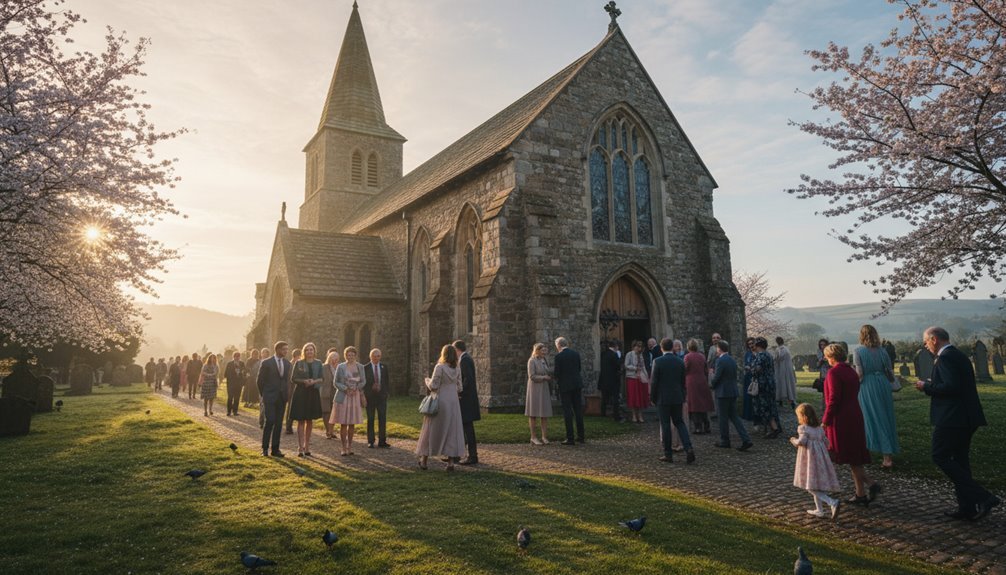
05 Apr Why Churches Hold Easter Monday Services
You attend Easter Monday services because they stretch the joy of the Resurrection beyond Sunday, letting you reflect on Christ’s victory over death and feel the transformative power of new creation. The liturgy highlights joyful resurrection, missionary outreach, and symbolic acts that deepen your faith. Regional traditions—like the Philippines’ Salubong or Germany’s Osterfeuer—enrich the worship experience. These gatherings also give you fresh opportunities for community, prayer, and service, and if you keep going you’ll discover how churches turn this day into lasting spiritual momentum.
What Is Easter Monday and Why It Matters?
Although Easter Monday often slips past the headlines, it’s actually a key extension of the celebration that begins on Sunday.
You’ll find that the day marks the continuation of the Resurrection narrative, giving believers a moment to reflect on the implications of Christ’s victory over death. Churches schedule services to keep the spiritual momentum alive, allowing congregants to deepen their faith beyond the intense liturgy of Good Friday and Easter Sunday.
By gathering on Monday, you reinforce the message that the Resurrection isn’t a single event but a transformative process that reshapes daily life. The extra worship slot also accommodates those who missed earlier services, ensuring the community experiences the full arc of Easter’s story.
In short, Easter Monday matters because it extends the joy, invites ongoing contemplation, and strengthens the collective commitment to living out the risen Christ’s teachings.
How Easter Monday Liturgical Themes Shape the Service
Many churches weave Easter Monday’s liturgical themes—joyful resurrection, new creation, and missionary outreach—directly into the order of service. You’ll hear a hymn that celebrates the risen Christ, followed by a Scripture reading that emphasizes fresh beginnings, such as Genesis 1:1‑31 or Acts 2:1‑4. The sermon then connects the resurrection to the call for believers to spread the gospel, urging you to view evangelism as a natural outflow of new life.
You might notice a prayer of commissioning, where the congregation is sent out with specific missions, reinforcing the outreach focus. The liturgy often includes a symbolic act—like lighting a new candle or planting a seed—to embody new creation. These elements together shape a cohesive worship experience, reminding you that Easter Monday isn’t merely a continuation of Easter Sunday, but a distinct moment to celebrate resurrection, renewal, and the church’s mission.
Regional Easter Monday Traditions That Influence Worship
When you travel beyond your own parish, you’ll find that regional Easter Monday customs—such as the Philippines’ “Salubong” reenactment, Germany’s “Osterfeuer” bonfires, and Mexico’s “Procesión de la Virgen”—directly shape the music, prayers, and symbols used in worship, turning the service into a living reflection of local culture and faith.
In the Philippines, choirs echo the dawn chorus of the Salubong, while congregants chant the *Himig ng Pagkabuhay* as the statue of the risen Christ meets Mary. German churches incorporate the crackle of fire into hymns, inviting members to light candles that symbolize the light of resurrection. Mexican parishes blend the procession’s incense and marian hymns, allowing the Virgin’s image to lead the liturgy. These practices invite you to experience Easter Monday not as a distant rite but as a vibrant, place‑specific celebration that honors both the universal gospel and the community’s heritage.
Why Churches Keep Easter Monday Celebrations
You’ll find that churches keep Easter Monday celebrations because they extend the joy of the resurrection beyond Sunday’s liturgy, giving believers a fresh opportunity to live out the risen Christ’s promises in their daily lives.
You notice the day offers a natural pause after the intensity of Easter Sunday, letting worshippers reflect longer and deepen their faith. Many congregations schedule a simple service, a communion rite, or a prayer gathering that emphasizes gratitude and commitment.
By holding a Monday observance, you reinforce the resurrection’s relevance to everyday work, family, and community. The extra gathering also accommodates those who missed Sunday, ensuring inclusive participation.
You experience a renewed sense of hope as sermons connect biblical themes to current challenges, encouraging practical application. Ultimately, the Monday celebration sustains spiritual momentum, helping you carry Easter’s transformative message forward throughout the week.
How Congregations Extend Easter’s Message on Monday
Churches keep Easter Monday alive by turning the day into a practical extension of Sunday’s celebration, offering worshippers concrete ways to live out the resurrection’s promises. You’ll find that many congregations schedule short, focused sermons that connect the crucifixion’s sacrifice to everyday decisions, urging you to practice forgiveness, generosity, and hope.
Community service projects often replace elaborate liturgies: you might volunteer at a shelter, deliver meals, or organize a neighborhood clean‑up, embodying the new life Christ offers. Small‑group Bible studies break down resurrection themes into actionable steps, helping you set personal goals for spiritual growth.
Some churches host “Easter Monday brunches” where families share testimonies, reinforcing the message that the resurrection isn’t a one‑day event but a continuous journey. By participating in these activities, you transform celebration into service, letting the joy of Easter shape your week and beyond.
Frequently Asked Questions
Is Easter Monday a Public Holiday Everywhere?
No, Easter Monday isn’t a public holiday everywhere. In many European countries—like the United Kingdom, Germany, and France—it’s a statutory holiday, while in places such as the United States it’s just a regular workday.
Some Latin American nations also observe it, but many Asian, African, and Middle‑Eastern countries don’t recognize it at all. So you’ll need to check your local calendar to know whether you get the day off.
How Do Churches Schedule Easter Monday Services With Regular Worship?
You’ll typically slot Easter Monday services into your existing schedule by treating the day as a special extension of Easter weekend. You might move a regular mid‑week or evening service to the morning, combine it with a family fellowship hour, or add a brief liturgy after the Sunday celebration.
Adjust staff rosters, notify congregants early, and use the same worship format—just with Easter‑focused prayers, music, and a short sermon. This keeps continuity while honoring the holiday.
Are There Specific Hymns Designated for Easter Monday?
You’ll find that most churches don’t have a fixed “Easter Monday” hymn list; they usually pick from the broader Easter repertoire.
You might hear “Christ the Lord Is Risen Today,” “The Old Rugged Cross,” or “Alleluia! Christ Is Risen.” Some congregations add a special anthem like “He Is Risen” or a local favorite, but the selection generally mirrors the Sunday celebration, focusing on resurrection joy and praise.
What Age‑Appropriate Activities Are Offered for Children on Easter Monday?
You’ll find crafts, games, and stories designed for kids on Easter Monday. Churches often set up a “Resurrection Hunt” where children follow clues to hidden symbols, then paint eggs, create bunny masks, and act out simple Bible skits.
Some offer sing‑along sessions with kid‑friendly hymns, snack stations, and a short, interactive prayer circle. All activities stay age‑appropriate, keeping the focus on joy and learning.
Do Churches Provide Special Communion Elements on Easter Monday?
Yes, many churches do offer special communion elements on Easter Monday. You’ll often find a richer wine or grape juice, sometimes freshly pressed, and bread that’s been blessed specifically for the day.
Some congregations even add a symbolic “resurrection” element—like a small piece of fruit or a special pastry—to highlight the celebration. Check your parish bulletin, because practices vary, but the emphasis is usually on a more festive, commemorative communion.
Conclusion
So, you see, Easter Monday isn’t just an extra day off—it’s a chance to deepen the joy of resurrection, keep the liturgical rhythm alive, and let regional customs enrich your worship. By gathering on Monday, you extend the celebration, reinforce hope, and carry Easter’s promise into everyday life. It’s a meaningful continuation that helps your community live the risen Christ’s message beyond Sunday.










No Comments