

18 Mar The Christian Prayer Room Setup That’s Going Viral on Social Media
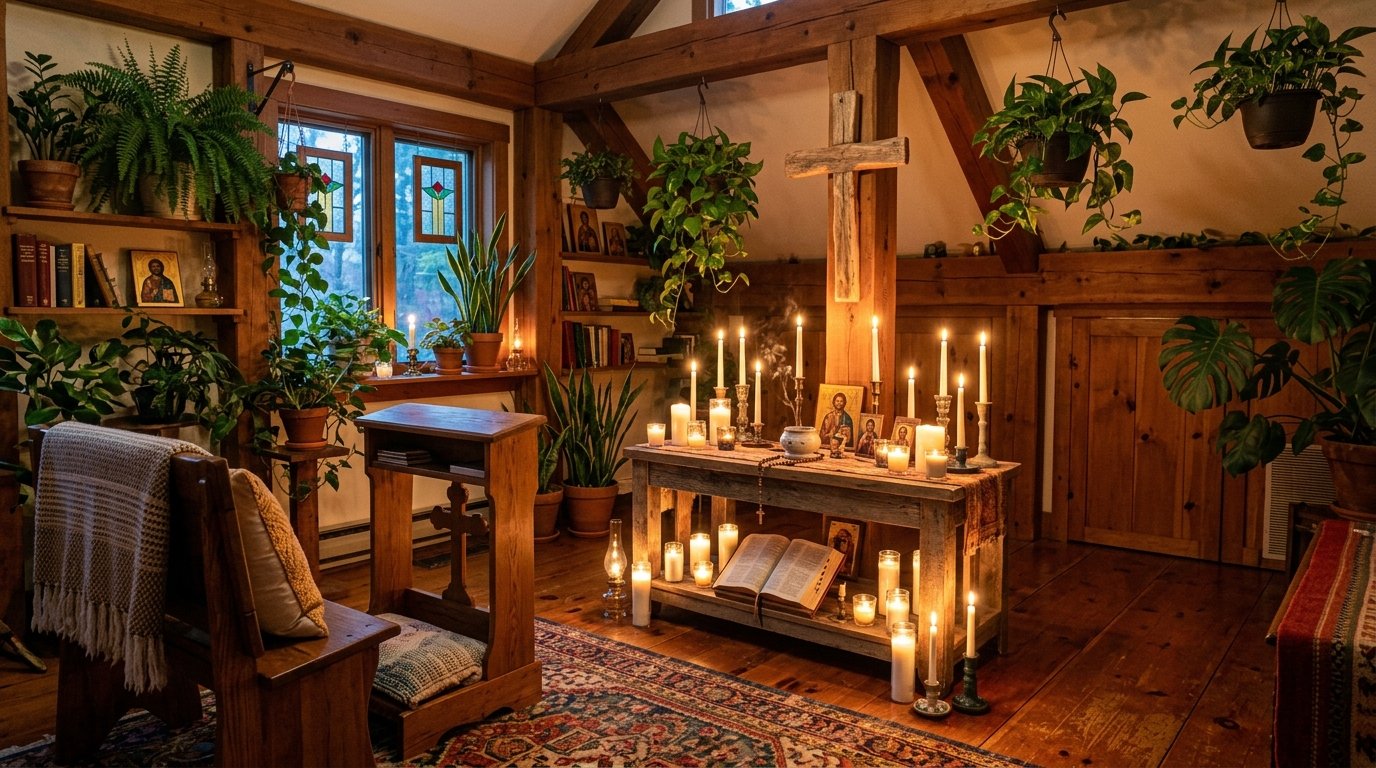
Create a cozy sanctuary with reclaimed wood panels, warm‑toned dimmable LED lights (2700‑3000 K), and simple faith symbols like a cross or a small altar. Use matte finishes, soft linen drapes, and a stone accent wall to absorb sound and ground the space. Add a thin digital display for rotating verses and a wireless speaker for gentle hymns. Finish with hand‑painted verses and repurposed candle holders, then capture the ambiance in a short, vertical video—more details follow.
Table of Contents
Define Your Christian Prayer‑Room Vision
How do you envision a space where every detail invites reverence and intimacy? You start by picturing the purpose of your prayer room: a sanctuary for honest dialogue with God, a place where worship feels personal and profound. Clarify the atmosphere you want—whether it’s a quiet nook for daily devotion or a larger area for group prayer. Decide which symbols embody your faith: a cross, a Bible, perhaps a small altar. Think about the emotions you hope to evoke—peace, awe, humility. Write these intentions down, turning abstract ideas into concrete goals. When you articulate the vision, you can choose furnishings, colors, and layout that reinforce it. This clarity guides every subsequent decision, ensuring the room reflects your spiritual priorities and becomes a genuine haven for communion with the divine.
Choose Lighting & Materials That Enhance Reverence
Your vision for a prayer‑room that invites reverence now finds its voice in the light and textures you select. Choose warm‑toned, dimmable fixtures that create a gentle halo without harsh glare; brass or brushed‑nickel sconces add a timeless feel. Pair them with matte‑finished wood panels or reclaimed timber to evoke natural humility. Soft, natural fibers—linen drapes, wool blankets—absorb sound and soften visual edges, while a simple stone accent wall grounds the space. Opt for low‑reflectivity surfaces; they keep focus on the altar or cross rather than distracting shine. Incorporate frosted glass or parchment‑like paper lanterns for diffused illumination that feels sacred. Balance light and material contrast: darker wood frames against light walls accentuate depth, guiding the eye toward prayerful focal points. By harmonizing these elements, you craft an atmosphere that feels both intimate and reverent, encouraging heartfelt communion.
Install LED Lighting Step‑by‑Step for a Soft Ambient Glow
You’ll want warm‑tinted LEDs to create a soft, reverent glow that feels inviting.

Pick energy‑saving bulbs with a low wattage rating so the room stays bright without inflating electricity costs.
Follow the simple wiring steps, and you’ll have a serene lighting foundation for your prayer space.
Soft Warm Light
A soft, warm glow instantly transforms a prayer room into a calming sanctuary, and installing LED lighting step‑by‑step lets you achieve that ambience without hassle. Choose bulbs with a color temperature between 2700 K and 3000 K; they mimic candlelight and create a gentle, inviting atmosphere.
Position fixtures near the altar, along the walls, and above seating to spread light evenly. Use dimmers so you can lower brightness for quiet meditation or raise it for communal prayer. Keep wiring concealed behind trim to maintain a clean look. Test the setup at dusk to ensure shadows stay soft and no glare hits reflective surfaces. With these adjustments, your space will feel warm, welcoming, and spiritually uplifting.
Energy‑Saving LED Choices
Soft warm light sets the mood, but choosing the right LED saves energy while preserving that gentle glow. Start by measuring your prayer room’s square footage; this tells you how many lumens you need. Pick LEDs rated 2700‑3000 K for a warm hue, and look for a CRI of 90+ to keep colors true. Swap existing bulbs with dimmable, energy‑star models that use 80 % less wattage. Install a simple plug‑in dimmer or a smart hub so you can adjust brightness without flicker. Secure the fixtures with screw‑type or adhesive mounts, ensuring they’re evenly spaced for consistent diffusion. Test the setup by lighting a candle and noting the contrast—if the LED feels soft and steady, you’ve nailed the ambient glow while cutting the bill.

Integrate Digital Scripture Displays in Your Sacred Space
Ever wondered how a digital scripture display can transform your prayer room into a dynamic sanctuary? You can mount a thin, high‑resolution screen on the wall or place a sleek tablet on a stand, then load a rotating verse app that pulls passages from the Bible in real time. Choose a device with adjustable brightness so the text stays readable at sunrise, noon, and sunset. Pair the display with a wireless speaker to let spoken Word accompany the verses, creating an immersive atmosphere. Schedule daily verses or set up a playlist of favorite passages for worship, study, or meditation. If you prefer a minimalist look, opt for a frameless monitor that blends into the décor, and use a simple remote or voice command to change content without leaving the space. This tech‑enhanced approach keeps Scripture present, fresh, and interactive. fostering deeper reflection during every prayer session.
Add Personal DIY Touches to Make the Room Uniquely Yours
You can hand‑paint your favorite scripture verses on canvas or wood to give the room a personal, faith‑filled focal point. Craft candle holders from reclaimed wood or metal, then add your own decorative touches that reflect your style. Repurpose vintage textiles as wall hangings, cushions, or curtains to bring warmth and history into the space.
Hand‑Painted Scripture Verses
Ever wonder how a single hand‑painted verse can transform a prayer room into a personal sanctuary? Pick a favorite passage, sketch it lightly on canvas or reclaimed wood, then use acrylics or water‑based inks for vivid color. Choose a font style that reflects your worship vibe—elegant script for reverence, bold block for empowerment. Seal the work with a matte varnish to protect against humidity and lighting. Hang the piece at eye level, perhaps above your prayer bench or beside a window, so it greets you each time you enter. Pair it with soft lighting to highlight the brushstrokes, and let the words become a visual anchor for meditation. This DIY touch adds intimacy, making the space unmistakably yours.
Customizable Candle Holders
Looking to turn ordinary candle holders into personal symbols of faith? Grab plain glass or metal holders and coat them with a thin layer of matte spray paint—white, ivory, or soft gold works best. Before the paint dries, press tiny metal charms, cross pendants, or engraved wooden discs into the surface, creating raised motifs that catch the candlelight. Use a fine‑point permanent marker to script short verses or initials around the rim, then seal with a clear varnish for durability. Swap out the candle wax for scented soy cubes that match your prayer theme—lavender for peace, cedar for reverence. Arrange a trio on a reclaimed wooden tray, interspersed with small prayer cards, and you’ll have a cohesive, heartfelt focal point that invites contemplation and shares your faith visually.
Repurposed Vintage Textiles
How can you transform forgotten fabrics into a prayer‑room sanctuary that feels both timeless and personal? Start by gathering vintage linens, quilts, or church‑yard curtains with sentimental value. Wash them gently, then cut the fabric into panels for wall hangings, cushion covers, or a soft altar backdrop. Sew simple seams, using a contrasting thread to highlight the stitch work, or apply fabric glue for a quicker finish. Layer a reclaimed lace scarf over a plain cushion to add depth, and drape a faded table runner across a low table for a rustic altar.
Mix textures—silk, burlap, cotton—to create visual interest while keeping the palette muted and reverent. Your repurposed textiles become a tactile prayer, inviting calm and reverence.
Capture & Edit Video for Instagram/TikTok: Prayer‑Room Edition
Want to turn your prayer‑room setup into a scroll‑stopping Reel or TikTok? Start by filming in natural light; position a window behind your altar so the glow highlights candles and textiles. Use a smartphone on a tripod, set the resolution to 1080p @ 30 fps, and enable grid lines for balanced framing. Capture three clips: a slow pan across the space, a close‑up of a favorite scripture, and a brief personal prayer. Keep each take under 10 seconds to maintain viewer attention.
In post‑production, import the footage into a mobile editor like InShot or CapCut. Trim the clips, sync them to a soft instrumental hymn, and add subtle transitions—fade‑ins work best for a serene vibe. Overlay a semi‑transparent text box with a key verse, using a legible serif font. Finally, apply a warm filter to enhance the amber tones of candles, export at 1080 × 1920 for vertical feeds, and upload with hashtags #PrayerRoom, #FaithReel, and #SpiritualTok.
Troubleshoot Common Design Pitfalls and Optimize Your Posts
Avoid over‑crowding your frame and you’ll keep viewers engaged; too many candles, books, or décor pieces can distract from the focal point and cause the video to feel cluttered.
First, check lighting: harsh shadows or uneven brightness make details hard to see, so use soft, diffused light and adjust exposure in post‑production.
Second, watch your background color palette; clashing hues pull attention away from the prayer space. Stick to complementary tones and keep patterns minimal.
Third, ensure audio clarity—ambient noise or echo can drown out spoken prayers, so add a small rug or curtains to dampen sound and use a lapel mic if needed.
Fourth, avoid rapid cuts; a steady, slow‑pan lets viewers absorb the atmosphere.
Finally, add a clear call‑to‑action in the caption, include relevant hashtags, and post during peak engagement hours.
These tweaks will polish your content and boost shares.
Frequently Asked Questions
How Much Does a Basic Prayer‑Room Setup Cost?
You can set up a basic prayer‑room for roughly $300‑$500. Start with a modest rug or mat ($30‑$80), a small cross or icon ($20‑$50), a candle holder and a few candles ($15‑$30), and a portable speaker for soft music ($40‑$100).
Add a bookshelf or wall-mounted shelf for a Bible and devotional books ($50‑$150).
Lighting can be simple—LED floor lamp or string lights ($30‑$70).
Total cost stays under $500 if you shop sales or second‑hand options.
Can I Use a Portable Power Source for LED Lights?
Yes, you can power LED lights with a portable source, just make sure the battery’s voltage matches the LEDs and that it supplies enough current. A 12‑volt deep‑cycle battery or a high‑capacity power bank with an inverter works well. Check the total wattage, add a safety margin, and use proper connectors and a fuse to protect the circuit. This setup keeps your prayer room lit without relying on mains electricity.
Do I Need a Specific Wi‑Fi Speed for Digital Scripture Displays?
You don’t need a special Wi‑Fi tier; a standard home connection works fine. Aim for at least 5 Mbps download and upload to keep the display responsive, especially if you stream high‑resolution images or videos. If multiple devices share the network, ensure the router can handle concurrent traffic without throttling. A stable 2.4 GHz or 5 GHz band will reduce latency, and a modest wired Ethernet link can give you extra reliability if Wi‑Fi feels spotty.
What Are the Best Acoustic Treatments for a Quiet Prayer Space?
You’ll want broadband‑absorbing panels on the walls, especially at ear‑level, and a thick rug or carpet to tame floor reflections. Hang heavy curtains over any windows, and consider a ceiling cloud or acoustic tiles to curb reverberation. Bass traps in the corners will control low‑frequency buildup. Seal gaps around doors and vents, and use diffusers sparingly if you need a touch of warmth without echo. All these steps will create a calm, quiet prayer environment.
How Often Should I Replace the LED Bulbs for Optimal Brightness?
You should replace the LED bulbs roughly every 2‑3 years, or sooner if you notice a dimmer glow, flickering, or color shift.
Even though LEDs last longer than incandescent bulbs, their brightness can degrade over time, especially in a space where consistent illumination matters.
Keep an eye on lumens output; when it drops below about 80 % of the original rating, swap them out to maintain optimal brightness.
Conclusion
Now you’ve got a prayer room that radiates reverence, sparks inspiration, and shines on every feed. Keep the lighting soft, the Scripture visible, and the personal touches authentic. Share your space with honest captions, and watch the community grow. Let the room be a sanctuary for you and a beacon for others—one peaceful moment at a time.












No Comments