

12 Mar What Are Friday Liturgical Practices Explained?
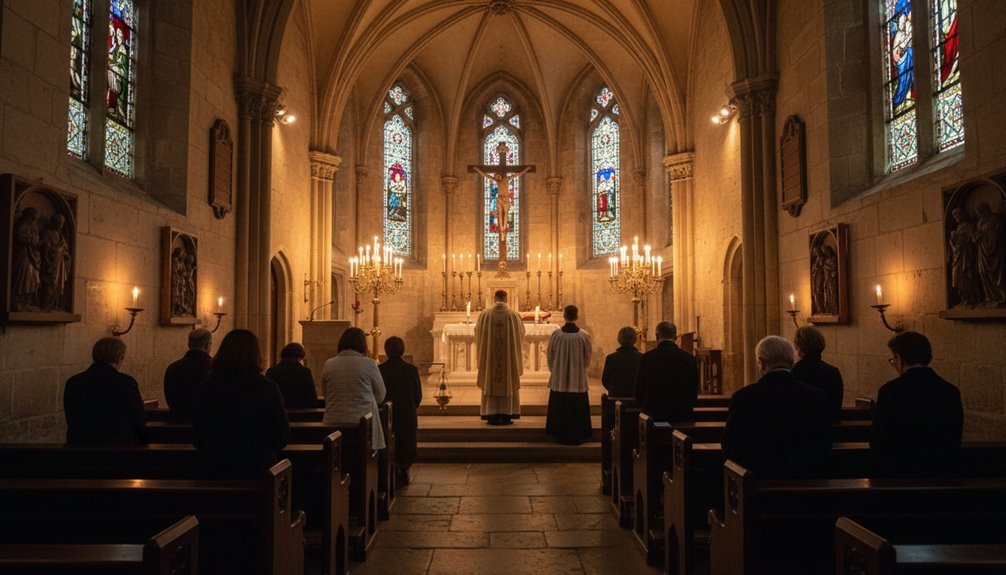
On Good Friday, Christians engage in solemn liturgical practices to commemorate Christ’s crucifixion. These include venerating the cross, reading the Passion narrative, and partaking in Communion. The liturgy emphasizes repentance, spiritual renewal, and the central mysteries of faith. Many also observe fasting or abstinence as an act of penitence. If you’d like to learn more about the significance and structure of these Good Friday traditions, keep reading.
Table of Contents
Key Takeaways
- Good Friday liturgical practices focus on the solemn commemoration of Christ’s passion and death, including the veneration of the cross.
- Common observances on Good Friday include readings from the Gospels, intercessory prayers, and a Communion service using consecrated hosts from Maundy Thursday.
- Additional observances in various traditions may include praying the Stations of the Cross and setting aside time for quiet reflection on the significance of the crucifixion.
- The structure of the Good Friday liturgy typically involves the Veneration of the Cross, the Liturgy of the Word, intercessory prayers, and the Communion service.
- Incorporating Good Friday traditions at home can involve personal reflection, reading the Passion narrative, meditating on the Stations of the Cross, and venerating the cross with family members.
The Significance of Good Friday Liturgical Practices
Although Good Friday is a somber day of mourning and reflection, the liturgical practices observed on this day hold profound significance for Christians. The solemn veneration of the cross, where the faithful kneel and kiss the image of Christ’s crucifixion, serves as a poignant reminder of the ultimate sacrifice made for humanity’s redemption.
The reading of the Passion narrative, recounting the final hours of Jesus’ life, evokes a sense of sorrow and solidarity with his suffering. Moreover, the Good Friday liturgy emphasizes the universal call to repentance and the need for spiritual renewal, preparing the faithful for the joy of Easter. These practices profoundly connect believers to the central mysteries of their faith, fostering a deeper understanding of the transformative power of Christ’s death and resurrection.
Common Observances on Good Friday
What common observances do Christians typically engage in on Good Friday? On this solemn day, many churches hold a Good Friday service focused on Christ’s passion and crucifixion. The service often includes readings from the Gospels, prayers, and the veneration of the cross. Some congregations also partake in a Communion service. Many Christians fast or abstain from meat on Good Friday as an act of penitence. In some traditions, the Stations of the Cross are prayed, walking through Jesus’ final hours. Others observe a time of quiet reflection, meditating on the suffering and death of Christ. These sober observances allow believers to commemorate the ultimate sacrifice made on their behalf.

The Structure of the Good Friday Liturgy
How does the Good Friday liturgy typically unfold? The service usually begins with the Veneration of the Cross, where the faithful approach the cross and pay their respects. This is followed by the Liturgy of the Word, which includes readings from the Old Testament, the Passion narrative from the Gospel, and intercessory prayers.
The central act is the Communion service, where consecrated hosts from Maundy Thursday are distributed. The liturgy concludes with the Solemn Reproaches, a series of laments over the suffering and death of Christ. Throughout the service, the altar remains bare, and the focus remains on the solemnity of Good Friday and the crucifixion of Jesus.
Incorporating Good Friday Traditions at Home
While the Good Friday liturgy at church offers a solemn observance of Christ’s crucifixion, you can also incorporate elements of this sacred tradition in your own home. Set aside time for personal reflection and prayer, perhaps by reading the Passion narrative or meditating on the Stations of the Cross. You could even create a simple prayer space with a crucifix, candles, and a symbol of the Passion, like thorns or nails. Additionally, you might participate in the ancient practice of venerating the cross by placing a cross or crucifix in a prominent location and inviting family members to offer a gesture of reverence. These prayerful activities can help you more deeply commemorate the profound mystery of Good Friday in the intimacy of your domestic church.
Frequently Asked Questions
Can I Attend Good Friday Services if I’m Not Catholic?
Yes, you can attend Good Friday services even if you’re not Catholic. Most churches welcome people of all faiths or no faith to participate in these solemn observances. You’ll find the services to be deeply meaningful, focusing on Christ’s crucifixion and the profound significance of his sacrifice. Attend with an open heart, and you’ll likely find the experience to be spiritually enriching.
What Is the Meaning Behind the Veneration of the Cross?
The veneration of the cross is a solemn and profound Catholic tradition that honors the instrument of Christ’s crucifixion.

It’s a symbolic act of recognizing the immense sacrifice and suffering Jesus endured for humanity’s salvation.
You can participate in this ritual as a non-Catholic, as it’s a universal Christian practice that invites all to reflect on the meaning of the cross and Christ’s ultimate act of love.
How Do Eastern Orthodox Churches Observe Good Friday?
In the Eastern Orthodox Church, Good Friday is observed through the Royal Hours, a series of prayer services throughout the day.
The Vespers service in the afternoon features the Descent from the Cross and the Lamentations over Christ.
The Epitaphios, an elaborate cloth icon depicting the dead Christ, is processed and venerated by the faithful.
Can I Receive Communion on Good Friday?
You can receive communion on Good Friday in Eastern Orthodox churches. The Liturgy of the Presanctified Gifts is celebrated, where the consecrated Host from the previous day’s Maundy Thursday Liturgy is distributed to the faithful. This allows them to receive communion on the solemn day of Christ’s crucifixion, despite the absence of the full Eucharistic celebration.
How Do Non-Denominational Churches Celebrate Good Friday?
Non-denominational churches usually hold a Good Friday service that focuses on remembering Jesus’ crucifixion. You’ll likely hear readings from the gospels describing the events leading up to and including Christ’s death.
The service may also include solemn music, reflections, and prayers. Some churches may have a Communion observance, while others may opt for a more contemplative, worshipful experience to mark this sacred day.
Conclusion
You can incorporate Good Friday traditions at home by focusing on the solemn and reflective nature of the day. Participate in fasting, pray the Stations of the Cross, and reflect on Christ’s passion and death. These practices can help you more deeply experience the significance of Good Friday and prepare your heart for the joy of Easter.










No Comments