

26 Feb What Are Syriac Christian Liturgy Practices?
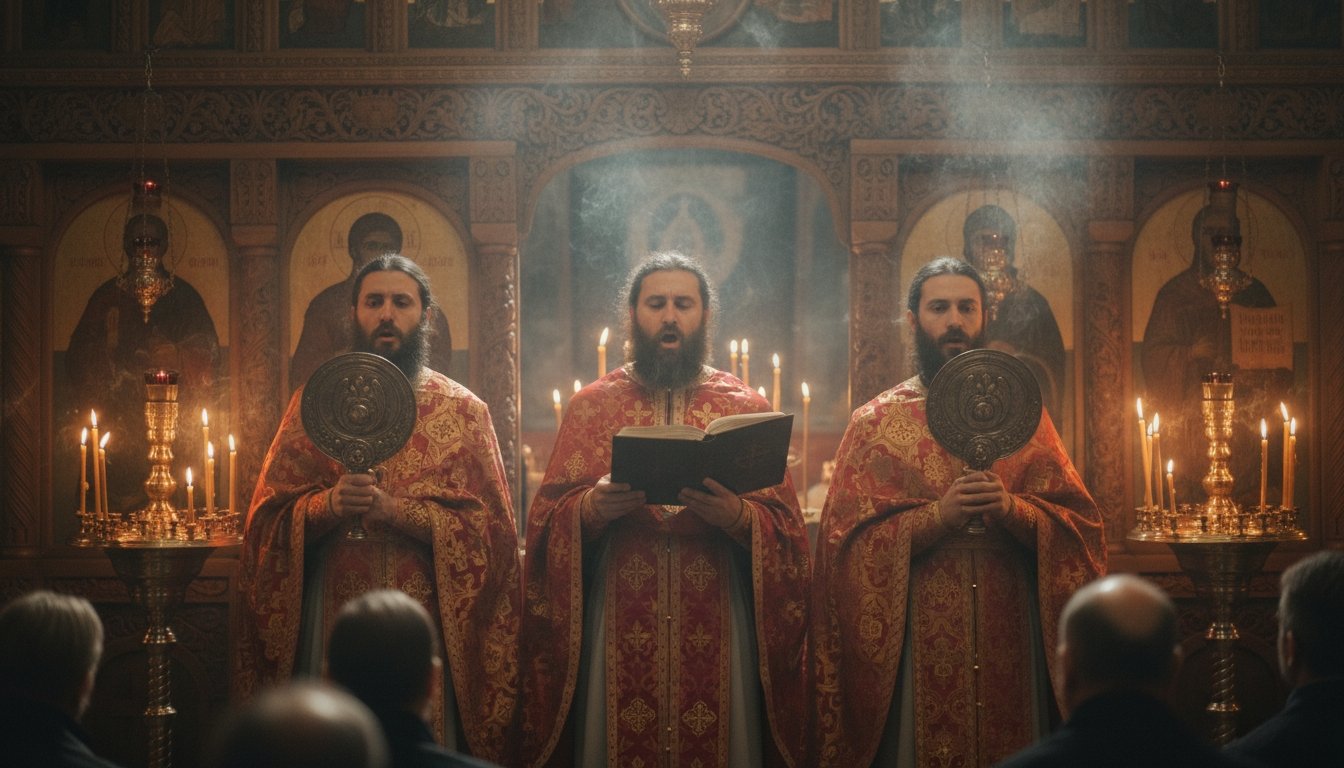
Syriac Christians celebrate the Eucharist as the central act of worship, featuring solemn chanting, fragrant incense, and ornate vestments. Their liturgical calendar is rich, observing major feasts and fasts that shape their identity and community rhythms. Chanting and hymnody play a vital role, elevating sacred texts in reverent melody. Syriac Christians also observe frequent fasting and joyous feast day celebrations. If you’d like to delve deeper into their vibrant liturgical traditions, keep reading.
Key Takeaways
- Syriac Christians celebrate the Eucharist, known as the Holy Qurbana, as the central act of worship, with solemn chanting and the use of incense.
- The liturgical calendar observes major feast days like Christmas, Epiphany, and Easter, as well as periods of fasting and commemoration of saints and biblical figures.
- Chanting and hymns, often composed by renowned Syriac poets, play a central role in Syriac Christian worship, fostering contemplation and community participation.
- Syriac Christians observe frequent fasting, including the Great Lent lasting 50 days, and celebrate feast days with prayers, hymns, rituals, and processions.
- Distinctive liturgical vestments, such as the bishop’s mitre, symbolize the sacred roles and solemnity of Syriac Christian worship, especially during Easter observances.
The Origins of Syriac Christianity
Although the origins of Syriac Christianity can be traced back to the 1st century AD, its distinct liturgical practices developed over centuries of evolution. Emerging from the Aramaic-speaking communities of the Middle East, Syriac Christianity fostered a rich theological tradition and a unique liturgical language. Over time, the Syriac Church diversified into various denominations, each maintaining its own liturgical customs. From the East Syrian (Assyrian/Chaldean) to the West Syrian (Jacobite) traditions, Syriac Christians preserved a reverence for ancient Aramaic chants, intricate vestments, and ceremonial processions that set them apart. This enduring liturgical heritage continues to shape the spiritual lives of Syriac Christian communities worldwide, offering a direct link to the early Christian past.
Foundational Syriac Christian Liturgical Traditions
Syriac Christian liturgical traditions are built upon foundational practices like the Eucharistic celebration, the observance of a liturgical calendar, and the rich tradition of chanting and hymnody. These elements have been central to the worship and spiritual life of Syriac Christians for centuries. As you explore these liturgical traditions, you’ll discover the depth and beauty of Syriac Christian spirituality.
Eucharistic Celebration Practices
How do Syriac Christians celebrate the Eucharist? They follow ancient liturgical traditions passed down for centuries. The Eucharistic celebration, or Holy Qurbana, is the central act of worship. It’s marked by solemn chanting, incense, and elaborate vestments. The priest consecrates bread and wine, transforming them into the body and blood of Christ. Communicants receive the consecrated elements, a profound sacramental encounter. Syriac Christians emphasize the mystery and reverence of this ritual. It’s a time-honored expression of their faith, connecting them to their rich heritage.
Liturgical Calendar Observances
Alongside the Eucharistic celebration, Syriac Christians observe a rich liturgical calendar steeped in sacred traditions. They honor major feast days like Christmas, Epiphany, and Easter, marking each with vibrant rituals and devotions.
Lent is a time of fasting and penitence, culminating in the joyous feast of Resurrection. The liturgical year also commemorates saints, martyrs, and significant biblical figures. These observances connect the faithful to their heritage, fostering a profound sense of identity and community.
Through the rhythms of the liturgical calendar, Syriac Christians celebrate the mysteries of their faith and deepen their relationship with the divine.
Chanting and Hymnody
Why do the chanting and hymns hold such a central role in Syriac Christian liturgy? The ancient Syriac tradition emphasizes the importance of the sung word. Chanting the Scriptures and praying through hymns are integral to the liturgy. Syriac Christians believe the melodic recitation elevates the text, evoking spiritual contemplation. Hymns, often written by renowned Syriac poets, express the community’s shared faith and devotion. The rhythmic, poetic chants create a sense of timelessness, connecting worshippers to centuries of Syriac Christian heritage. This rich musical tradition is a defining feature of Syriac liturgical practice, shaping the worshipper’s experience of the divine.
The Significance of Syriac Chanting and Music
The Syriac chanting and music hold profound significance within the liturgical traditions of Syriac Christian communities. They’re not just aesthetic elements – they’re integral to the spiritual experience. The repetitive, melismatic chants evoke a sense of timelessness, connecting worshippers to the divine. The rich, modal melodies aren’t mere accompaniment; they’re vehicles for sacred text, elevating the words through emotive expression.
Syriac music’s emphasis on community participation fosters a powerful sense of unity, as the congregation’s voices blend in harmony. Moreover, the oral transmission of these traditions links modern believers to their ancient heritage, preserving a living connection to the faith’s roots.
Ultimately, Syriac chanting and music are indispensable elements, imbuing the liturgy with profound spiritual resonance.
Syriac Christian Fasting and Feast Day Observances
Syriac Christians have a rich tradition of fasting and feast day observances. They fast frequently, often on Wednesdays and Fridays, and celebrate major feast days like Christmas, Easter, and Pentecost. These liturgical practices are deeply meaningful and integral to Syriac Christian spirituality.
Fasting Practices
Fasting is a central practice in Syriac Christian traditions, with adherents observing numerous periods of abstinence throughout the liturgical calendar. These include the Great Lent, which lasts for 50 days, and the Nineveh Fast, a three-day period of repentance. Fasts are also observed before major feast days, such as Christmas and Easter. During fasts, Syriac Christians abstain from meat, dairy, and sometimes oil and wine. Fasting is seen as a means of spiritual purification and preparation for holy celebrations. It’s a communal practice that strengthens the bond between the faithful and their faith. Syriac Christians take fasting seriously, seeing it as essential to their religious identity and devotion.
Feast Day Celebrations
How do Syriac Christians celebrate their feast days? They observe a rich liturgical calendar with feasts honoring important biblical events and saints. Major feast days like Christmas, Easter, and Pentecost are marked by special prayers, hymns, and rituals. Smaller commemorations honor local saints and highlight the community’s heritage. Celebrations often feature candlelight processions, the veneration of icons and relics, and shared meals. Feast days are a time for gathering, prayer, and remembrance of the faith’s history and traditions. They reinforce Syriac Christians’ identity and connection to their spiritual ancestors.
The Role of Syriac Christian Liturgical Vestments
What role do liturgical vestments play within the Syriac Christian tradition? Syriac Christians place great significance on the use of sacred garments during worship.
The bishop, priest, and deacon don distinctive robes that symbolize their sacred roles. For instance, the bishop wears a distinctive mitre, while the priest may wear a stole. These vestments aren’t just for show – they reflect the solemnity and holiness of the liturgy.
Syriac Christians believe the vestments help the clergy fully embody their duties, from leading prayers to administering the Eucharist. The careful selection and wearing of these robes is an integral part of Syriac Christian liturgical practice, linking the physical to the spiritual in worship.
Syriac Christian Easter Celebrations
As Syriac Christians celebrate Easter, their observances are marked by deeply meaningful traditions. You’ll find vibrant processions, where worshippers carry candles and icons, symbolizing Christ’s resurrection. Intricate liturgies, chanted in Syriac, evoke the ancient roots of this community. Shared feasts bring families together, with special breads and sweets. Rituals like the washing of feet mirror Jesus’s example. From the lighting of the Paschal candle to the exchanging of joyful greetings, each element reflects the profound spirituality of Syriac Easter. These observances connect the faithful to their heritage, fostering a sense of unity and devotion during this holiest of seasons.
Frequently Asked Questions
Do Syriac Christians Use Incense During Their Liturgies?
Yes, Syriac Christians do utilize incense during their liturgies. They incorporate the use of incense as an integral part of their worship practices, believing it to symbolize the prayers of the faithful rising up to God. The aromatic smoke is seen as a means of evoking a sense of the divine presence and enhancing the spiritual atmosphere of the service.
What Are the Typical Prayer Gestures Used in Syriac Liturgy?
In Syriac liturgy, common prayer gestures include bowing, kneeling, and making the sign of the cross.
You’ll often see worshippers raise their hands in prayer and prostrate themselves during more solemn moments.
Syriac Christians also frequently kiss icons and sacred objects as expressions of devotion and reverence.
Are There Any Unique Syriac Christian Sacred Vestments?
Yes, Syriac Christians have some unique sacred vestments. They use the sticharion, a long tunic, the orarion, a long stole, and the chasuble, a sleeveless outer garment. The colors of these vestments often hold symbolic meaning, like white for feasts and red for martyrs. These distinctive garments reflect the ancient Syriac liturgical tradition.
How Do Syriac Christians Celebrate Important Feast Days?
Syriac Christians celebrate important feast days with elaborate liturgies and processions. You’ll see priests and deacons wearing distinctive vestments like the tarboosha, a type of mitre. The liturgy often features chanting in Syriac and use of incense. Congregants participate actively, responding to the priests’ prayers. Feast day celebrations may also include the distribution of blessed bread and the veneration of relics.
Do Syriac Christians Follow a Different Calendar for Easter?
Yes, Syriac Christians follow a different calendar for Easter. They use the Julian calendar, which means their Easter date often differs from the Gregorian calendar used by most other Christian denominations. This results in Syriac Christians celebrating Easter on a different date than Western Christians in many years.
Conclusion
You’ll find that Syriac Christian liturgy practices are deeply rooted in ancient traditions. From the evocative chanting to the symbolic fasting and feast days, these rites hold profound spiritual significance. The vibrant vestments and joyous Easter celebrations further showcase the richness of this living faith tradition. While the origins may be ancient, Syriac Christianity continues to thrive, offering a unique and captivating expression of Christian worship.









No Comments