

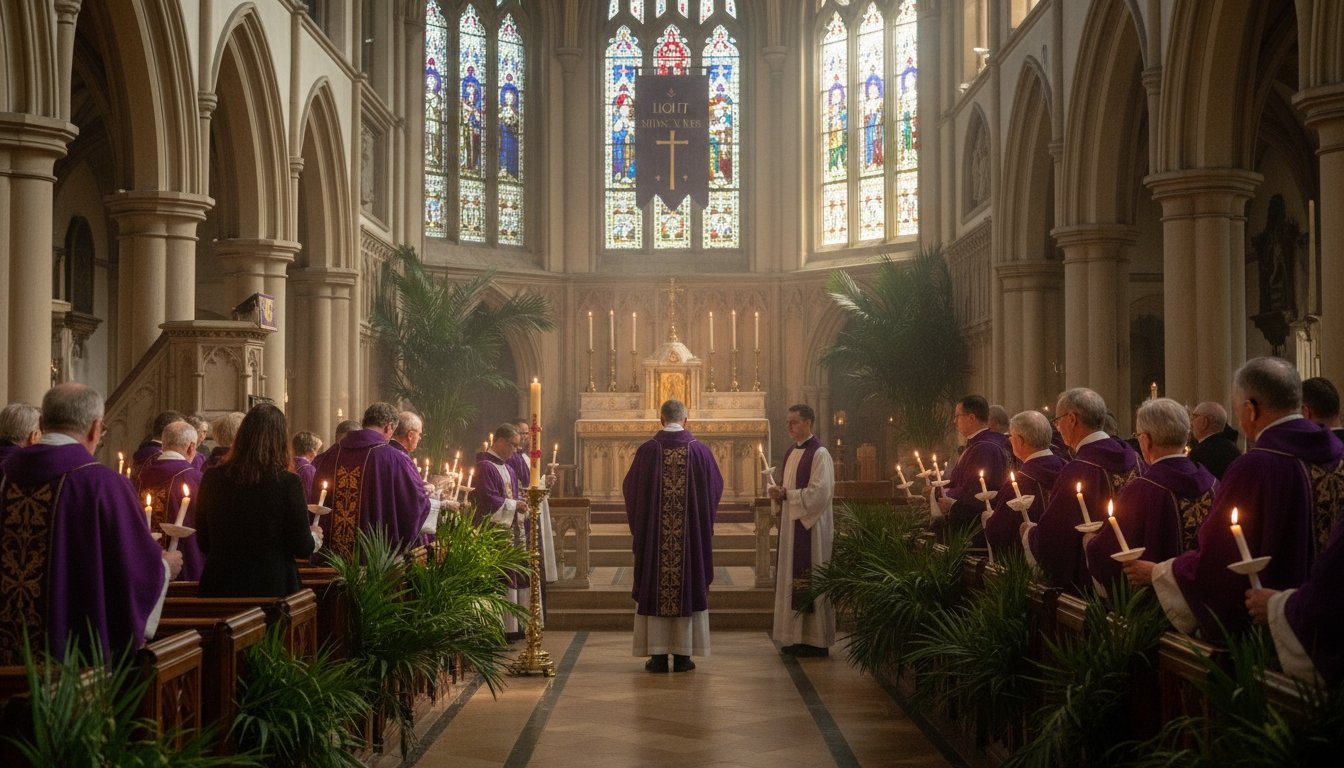
28 Feb Why Anglican Holy Week and Easter Rites Matter
The Anglican Holy Week and Easter rites matter because they guide you through the dramatic spiritual journey from Christ’s Passion to the joy of the Resurrection. These rites enact the Paschal mystery, inviting you to encounter the sacrificial love, redemptive power, and transformative light of the crucified and risen Lord. Delve further to explore how these holy rituals shape the cornerstones of Easter joy for Anglican believers.
Key Takeaways
- The Anglican Holy Week and Easter rites enact the Paschal mystery of Christ’s death and resurrection, making it real and transformative for worshippers.
- The liturgical rites and rituals throughout Holy Week, from Palm Sunday to Easter Sunday, guide believers through the dramatic journey of salvation.
- The vivid symbolism and embodied experiences of the Anglican rites, such as the veneration of the Cross and the lighting of the Paschal Candle, invite profound spiritual reflection.
- The renewal of baptismal vows during the Easter Vigil connects the worshipper’s own journey of faith to the central events of Christian salvation.
- The joyous celebration of Easter Sunday, with its triumphant hymns, flowers, and Eucharistic feast, culminates the Paschal mystery and frames the arc of Christian faith.
The Spiritual Journey of Anglican Holy Week
As you embark on the spiritual journey of Anglican Holy Week, you’ll find yourself immersed in a profound sequence of sacred rituals and reflections.
From Palm Sunday’s joyous procession to the somber observance of Good Friday, each day invites you to walk alongside Christ, contemplating the depth of His sacrifice.
In the quiet of Maundy Thursday, you’ll witness the powerful act of foot-washing, a humble reminder of servanthood.
As the week unfolds, the liturgy guides you through the dying and rising of the Lord, culminating in the triumphant celebration of Easter.
This sacred time invites you to surrender, to mourn, and ultimately, to rejoice in the transformative power of Christ’s resurrection.
The Paschal Mystery Enacted Through Liturgy
The Paschal Mystery is at the heart of the Anglican liturgy during Holy Week and Easter. Through the sacred rites, you’ll experience the drama of Christ’s death and resurrection. Worship becomes the means by which you proclaim the salvation won for you on the cross.
Paschal Mystery Revealed
How does the liturgy enacted during Holy Week and Easter reveal the Paschal Mystery? The solemn rites of this sacred season immerse you in the saving events of Christ’s passion, death, and resurrection. You participate in the dramatic reading of the Passion narratives, evoking the painful journey to Calvary. On Good Friday, you venerate the Cross, contemplating the mystery of redemption. Then, the Easter Vigil culminates in the joyful acclamation, “Christ is risen!” Through these rituals, you encounter the Paschal Mystery – the heart of the Christian faith. The liturgy doesn’t merely commemorate history; it makes present the transformative power of Christ’s paschal victory over sin and death.
Liturgy Enacts Redemption
Why does the liturgy enacted during Holy Week and Easter so powerfully reveal the Paschal Mystery? Through the ritual actions and symbols of the liturgy, the death and resurrection of Christ come alive. You don’t just hear about it – you experience it. The solemn procession with palms on Palm Sunday, the washing of feet on Maundy Thursday, the veneration of the cross on Good Friday, and the lighting of the Paschal candle at the Easter Vigil – these rituals allow you to enter into the drama of salvation. The liturgy doesn’t just tell the story; it makes the Paschal Mystery present and real, drawing you into the mystery of Christ’s redeeming love.
Worship Proclaims Salvation
Worship proclaims the salvation wrought by Christ’s Paschal Mystery. Through the solemn liturgies of Holy Week and Easter, the Church re-presents and participates in the death and resurrection of the Lord. You don’t just remember these events; you encounter them. The Cross and the Empty Tomb become powerfully real, transforming your heart and life.
Worship doesn’t merely commemorate salvation; it makes it present. In the sacred rites, you die and rise with Christ, receiving forgiveness, healing, and new life. The Paschal Mystery isn’t just a story but a mystery to be celebrated, a divine drama you enter. Worship proclaims this salvation, calling you to believe, repent, and live as a redeemed child of God.
Maundy Thursday and the Mandatum
On Maundy Thursday, the church commemorates Jesus’ mandate to his disciples to love one another. This day recalls the Last Supper, when Jesus washed the feet of his followers, demonstrating humble service. The term “Maundy” comes from the Latin “mandatum,” meaning “commandment.” Through this act, Jesus taught his disciples to love and serve one another. In Anglican churches, the Maundy Thursday liturgy often includes the washing of feet, reminding worshippers of Christ’s example. This sacred rite underscores the importance of sacrificial love and community in the Christian life. As you partake in this ritual, may it inspire you to emulate Jesus’ selfless service and deepen your commitment to loving your neighbor.
Good Friday and the Veneration of the Cross
On Good Friday, the Church remembers Christ’s suffering on the cross.
Through the solemn rite of the Veneration of the Cross, the faithful have the opportunity to honor the instrument of our salvation and adore the Crucified Lord.
This ancient practice is a powerful way to contemplate the mystery of the Passion and the depths of God’s love.
Remembering Christ’s Suffering
Why do Anglicans so reverently remember Christ’s passion and crucifixion on Good Friday? It’s a time to reflect on the immense suffering Jesus endured – the scourging, the crown of thorns, the nails through his hands and feet. Anglicans venerate the cross, kneeling before it and reverencing it, as a symbol of Christ’s ultimate sacrifice.
This solemn commemoration invites us to ponder the depth of God’s love, who gave his only Son to die for our sins. Good Friday’s rites impress upon our hearts the gravity of Jesus’ suffering and death, leading us to a deeper appreciation of his resurrection on Easter.
Venerating the Crucified Lord
The Good Friday rite of venerating the cross invites Anglicans to honor the Crucified Lord in a deeply profound way. You kneel before the cross, gazing upon the image of Christ’s suffering. This solemn act reminds you of the immense cost of your salvation. As you venerate the cross, you’re called to contemplate the weight of your sins and Christ’s selfless love. The wooden beams become a sacred space where heaven and earth intersect. Through this ritual, you pledge your allegiance to the Savior who died for your redemption. The veneration of the cross awakens your heart to the power of Christ’s sacrifice and the glory of his resurrection.
The Easter Vigil: Celebrating the Light of Christ
When does the Easter Vigil take place, and what purpose does it serve in the Anglican liturgical calendar?
The Easter Vigil is the culmination of the Triduum and is celebrated on the evening of Holy Saturday. It’s a joyous service that ushers in the dawn of the Resurrection. The Vigil begins in darkness, with the lighting of the new Paschal Candle, representing Christ, the Light of the World. This light is then shared, illuminating the assembly as they renew their baptismal vows. Readings recall God’s saving acts throughout history, and the first Eucharist of Easter is celebrated. It’s a powerful service that transitions the church from the solemnity of Good Friday to the exuberant joy of Easter Sunday, celebrating Christ’s triumph over sin and death.
The Joy of Easter Sunday Worship
Surely, the joy of Easter Sunday worship is unparalleled. As the church comes together to celebrate the resurrection of Christ, a palpable sense of triumph fills the air. The triumphant hymns, the radiant flowers, and the exuberant alleluias all contribute to an atmosphere of unbridled celebration. You can’t help but feel your spirits lift as you join your fellow believers in praising the one who’s conquered sin and death. The sermon, infused with the good news of the empty tomb, speaks directly to your heart, filling you with hope and renewed purpose. As you partake of the Eucharist, you’re reminded of the sacrificial love that made your salvation possible. The joy of Easter Sunday worship is a foretaste of the eternal celebration that awaits all who’ve placed their faith in Christ.
Frequently Asked Questions
Why Do Anglicans Follow a Specific Liturgical Calendar?
Anglicans follow a specific liturgical calendar to align their worship and spiritual practices with the rhythm of the Christian year. This calendar structures the church’s life around the pivotal events of Jesus’ life, death, and resurrection, allowing Anglicans to deeply engage with the mystery of salvation and the transformative power of the gospel.
How Do Anglican Holy Week and Easter Rites Differ From Other Christian Traditions?
Anglican Holy Week and Easter rites differ from other Christian traditions in their emphasis on the liturgical drama of the Passion and Resurrection.
You’ll find more elaborate services, from Maundy Thursday’s Eucharist and Stripping of the Altar to Good Friday’s Solemn Liturgy and Easter Vigil’s dramatic celebration of Christ’s triumph over death.
What Is the Significance of the Paschal Candle in Anglican Liturgy?
The paschal candle in Anglican liturgy represents the risen Christ, the light of the world.
It’s lit from the new fire at the Easter Vigil, symbolizing Christ’s victory over darkness and death.
It’s placed prominently in the church and used throughout the Easter season, reminding you of Christ’s enduring presence and the joy of the Resurrection.
Why Is Foot-Washing an Important Part of Maundy Thursday Observance?
Foot-washing is an important part of Maundy Thursday observance because it symbolizes Jesus’ humble service to his disciples. It’s a powerful reminder that, as followers of Christ, we’re called to serve one another in love. By participating in this ritual, you commemorate Jesus’ example and commit to following in his footsteps of selfless service.
How Do Anglican Churches Celebrate Easter Vigil Services?
Anglican churches typically celebrate the Easter Vigil service on Holy Saturday.
You’ll start in darkness, then light the Paschal candle and share the light with the congregation.
You’ll hear readings from the Bible, renew your baptismal vows, and celebrate the first Eucharist of Easter.
It’s a joyous service that marks the transition from Lent to the Easter season.
Conclusion
You shouldn’t overlook the Anglican Holy Week and Easter rites, as they offer a profound spiritual journey. These liturgies enact the Paschal mystery, from Maundy Thursday’s mandatum to Good Friday’s veneration of the cross. The Easter Vigil celebrates the light of Christ, culminating in the joyous worship of Easter Sunday. These rites matter, as they allow you to deeply experience the death and resurrection of Jesus.











No Comments