

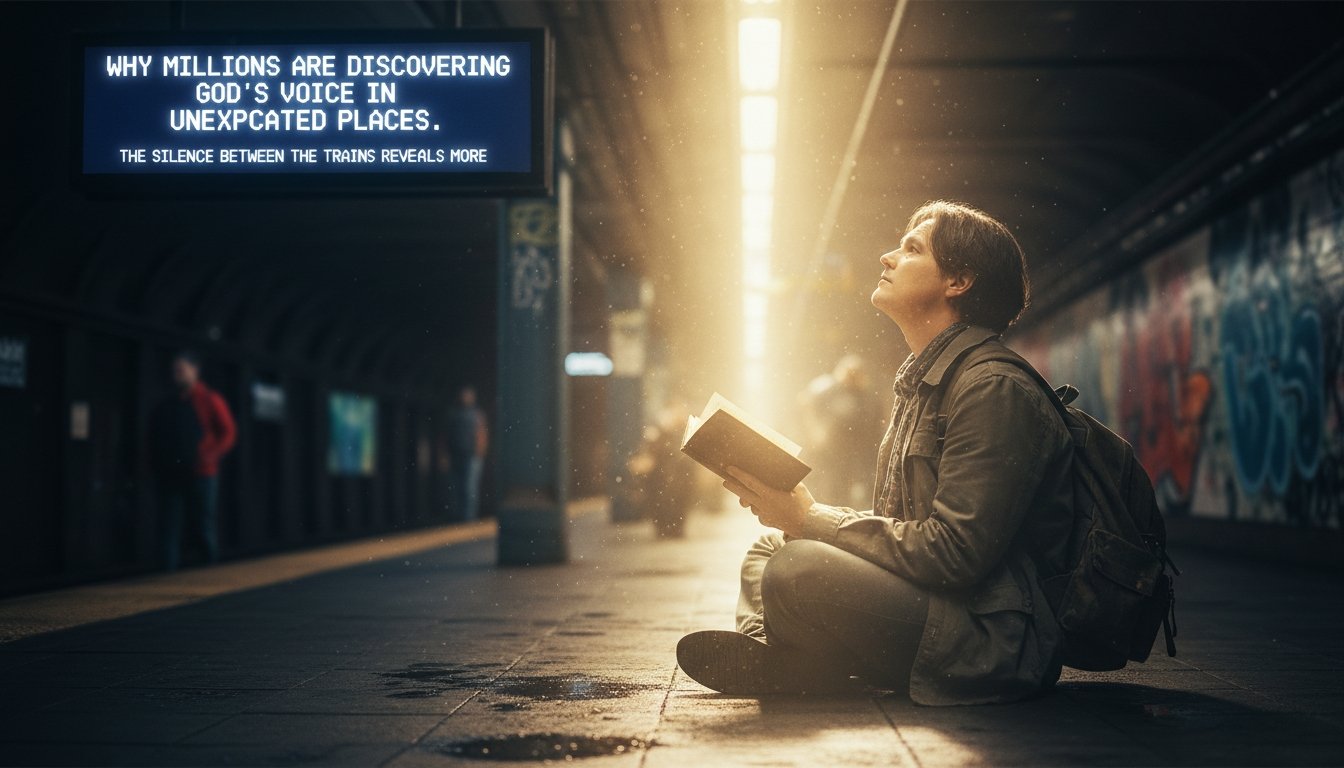
21 Jan Why Millions Are Discovering God’s Voice in Unexpected Places
You’re experiencing God’s voice more clearly outside traditional religious structures because divine communication isn’t confined to sanctuaries or liturgical frameworks. Like Moses encountering the burning bush in ordinary wilderness or Paul’s Damascus road revelation, you’re discovering that God’s omnipresence makes every space potentially sacred. Your coffee shop prayers and hiking trail encounters feel more authentic because they contrast rigid institutional formalism with spontaneous spiritual receptivity. This shift reflects your deeper hunger for participatory faith experiences that transcend denominational boundaries and hierarchical barriers, opening pathways to immediate spiritual engagement.
Table of Contents
Key Takeaways
- Traditional religious institutions often feel rigid and disconnected from contemporary spiritual needs, driving seekers toward more authentic encounters.
- Divine moments in ordinary places like commuter trains or grocery stores create powerful, lasting spiritual impressions through their unexpected authenticity.
- Biblical examples like Moses’ burning bush validate that sacred encounters happen outside formal religious buildings and structured worship settings.
- Cultivating daily spiritual awareness through mindful listening and surrender opens people to recognize God’s voice in everyday circumstances.
- The belief in God’s omnipresence empowers modern believers to experience immediate, relevant spiritual connection without institutional mediation.
Why Traditional Religious Spaces No Longer Meet Modern Spiritual Needs
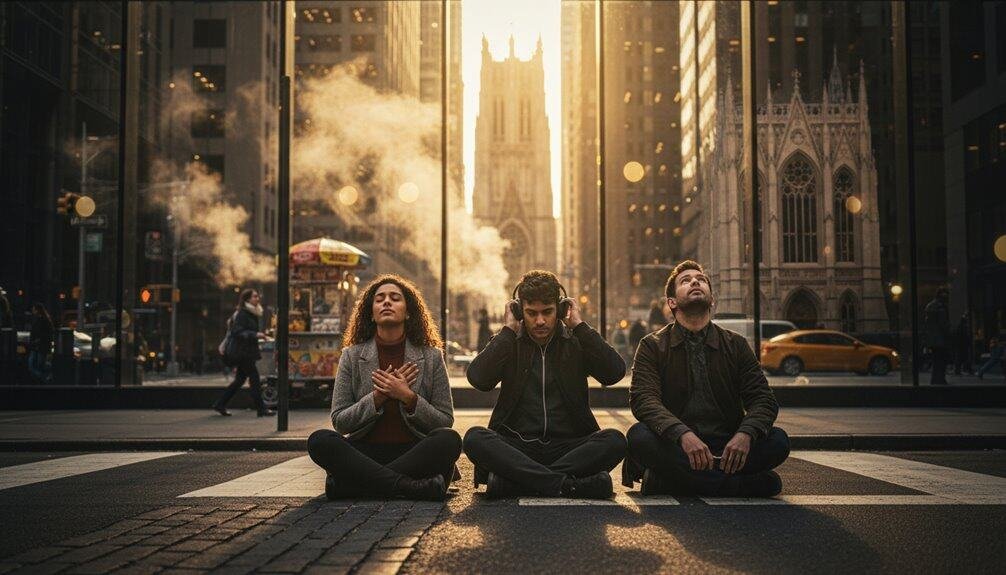
How can centuries-old ecclesiastical structures address the rapidly evolving spiritual hunger of a digitally native generation?
Traditional religious institutions must evolve beyond rigid liturgical formalism to meet digitally native seekers demanding authentic, participatory spiritual encounters.
You’re witnessing unprecedented spiritual dissatisfaction as traditional spaces struggle with theological rigidity and institutional frameworks that haven’t adapted to contemporary seekers’ needs.
Modern believers crave authentic encounters beyond liturgical formalism.
You’ll find that traditional denominational boundaries often restrict rather than facilitate genuine spiritual exploration.
The Berean model (Acts 17:11) exemplifies this hunger—believers who “searched the Scriptures daily” weren’t confined to synagogue walls for divine revelation.
Contemporary spiritual seekers reject passive religious consumption, demanding participatory faith experiences.
You’re observing how institutional hierarchies can impede direct access to God, contradicting Christ’s declaration that the temple veil was torn (Matthew 27:51).
This democratization of spiritual access drives millions beyond traditional spaces.
Your generation expects immediate, relevant spiritual engagement—something many established religious institutions haven’t successfully provided through conventional worship models and outdated communication methods.
5 Ordinary Places Where People Experience Divine Encounters
Beyond cathedral walls and sanctuary doors, divine encounters flourish in remarkably ordinary settings where God’s presence breaks through daily routines.
You’ll discover sacred moments during bus prayers, where commuter silence becomes contemplative space for communion with the Almighty.
The apostle Paul experienced divine revelation on Damascus’s dusty road, demonstrating that God’s voice transcends consecrated buildings.
Your local park transforms into holy ground during park epiphanies, where creation itself becomes scripture.
As Psalm 19:1 declares, “The heavens declare the glory of God; the skies proclaim the work of his hands.”
You encounter the divine in supermarket aisles, where gratitude prayers emerge spontaneously.
Kitchen counters become altars of thanksgiving, embodying Paul’s exhortation to “pray without ceasing” (1 Thessalonians 5:17).
These unexpected sanctuaries remind you that God’s omnipresence isn’t confined to ecclesiastical architecture.
You’re discovering that divine encounters await wherever hearts remain receptive to heaven’s whispers.
Why These Moments Feel So Powerful
When divine encounters occur in mundane settings, they possess extraordinary power because they shatter your preconceived notions about where God chooses to manifest His presence.
These moments create neural resonance that transcends ordinary spiritual experiences, etching themselves into your consciousness with remarkable clarity.
Scripture validates this phenomenon through Moses’ burning bush encounter (Exodus 3:1-6) and Jacob’s dream at Bethel (Genesis 28:16-17). Both patriarchs discovered sacred ground in unexpected wilderness locations, demonstrating God’s sovereignty over geographic boundaries.
The emotional imprint of such encounters stems from their authentic spontaneity.
Unlike orchestrated religious settings, these divine interruptions catch you spiritually unprepared, making you more receptive to God’s voice.
Your defenses remain lowered, allowing deeper spiritual penetration.
Furthermore, these experiences validate God’s omnipresence doctrine—He isn’t confined to sanctuaries or specific rituals.
When you recognize His voice amid life’s routine, you understand that every moment holds potential for divine communion, transforming ordinary existence into continuous sacred space.
How to Cultivate Openness to Divine Messages Anywhere
Understanding God’s omnipresence intellectually differs vastly from developing practical sensitivity to His communications throughout daily life.
You must cultivate disciplined spiritual receptivity through consistent practices that attune your heart to divine frequencies.
Mindful listening requires intentional silence before the Lord, creating space for His still, small voice (1 Kings 19:12).
Intentional silence creates sacred space where God’s whisper becomes audible above life’s relentless noise and endless distractions.
Begin each day surrendering your agenda to God’s sovereign will, asking Him to heighten your spiritual awareness.
Scripture meditation prepares your mind to recognize His voice, as Jesus declared, “My sheep hear my voice” (John 10:27).
Daily discernment develops through prayer-saturated moments throughout ordinary activities.
Whether commuting, working, or conversing, maintain an underlying dialogue with God.
Ask the Holy Spirit to illuminate His presence in circumstances, relationships, and decisions.
Practice gratitude consistently, recognizing God’s fingerprints in seemingly mundane experiences.
This spiritual discipline transforms your perspective, enabling you to perceive divine orchestration where others see mere coincidence.
Frequently Asked Questions
Are These Divine Experiences Real or Just Psychological Phenomena?
You’re encountering an evidence debate where neural correlates don’t negate divine reality.
Scripture affirms God works through natural means—He “breathed into man’s nostrils” (Genesis 2:7) and speaks through dreams, visions, and circumstances.
Your brain’s involvement doesn’t diminish authenticity; rather, it demonstrates God’s design for communication.
Test experiences against biblical truth (1 John 4:1), recognizing that psychological mechanisms can facilitate genuine spiritual encounters.
How Do I Distinguish God’s Voice From My Own Thoughts?
You’ll distinguish God’s voice through proven discernment techniques rooted in Scripture.
Test every impression against biblical truth (1 John 4:1), as God’s voice never contradicts His Word.
Use prayer prompts like “Is this from You, Lord?” while examining the fruit—does it produce peace, love, and righteousness?
God’s voice typically brings conviction without condemnation, aligns with His character, and often requires faith-steps beyond human reasoning.
What if My Unexpected Spiritual Experience Contradicts My Religious Upbringing?
You’re experiencing tradition conflict when spiritual encounters challenge inherited beliefs.
Doubt resolution requires careful discernment through Scripture’s lens (Acts 17:11).
Paul’s Damascus road experience contradicted his Pharisaical training, yet aligned with God’s broader redemptive plan.
Test your experience against biblical truth, seek wise counsel from mature believers, and remember that genuine spiritual encounters will ultimately harmonize with Scripture’s essential doctrines, even if they expand your understanding.
Can People From Different Faiths Experience God in the Same Places?
Yes, you’ll find sacred commonalities transcend denominational boundaries.
Scripture affirms God’s universal presence: “In him we live and move and have our being” (Acts 17:28).
Interfaith resonance occurs when believers encounter divine mystery in nature, service, or contemplation.
While theological interpretations differ, you’re experiencing what mystics across traditions recognize—God’s immanence isn’t confined to specific locations but manifests wherever hearts genuinely seek divine connection and truth.
Is It Disrespectful to Seek God Outside of Traditional Religious Settings?
No, respectful exploration of God’s presence isn’t disrespectful when approached with genuine faith.
Scripture demonstrates God’s omnipresence beyond temple walls—Moses encountered Him at a burning bush, Jacob wrestled with the divine in wilderness, and Christ taught on mountainsides.
Your nontraditional worship can complement institutional practice when rooted in biblical truth.
God’s voice transcends human-constructed boundaries, honoring sincere seekers wherever they pursue divine relationship with reverent hearts.
Conclusion
You’ll find that God’s presence isn’t confined to sanctuaries, as Scripture reveals He’s “not far from each one of us” (Acts 17:27). When you’re attuned to the Spirit’s promptings, you’ll discover that Christ fulfills His promise to be “with you always” (Matthew 28:20) in every context. Don’t limit your expectation of divine encounter to traditional spaces—remain vigilant for His voice in the mundane. Your spiritual sensitivity grows when you acknowledge that “the earth is the Lord’s” (Psalm 24:1).










No Comments