

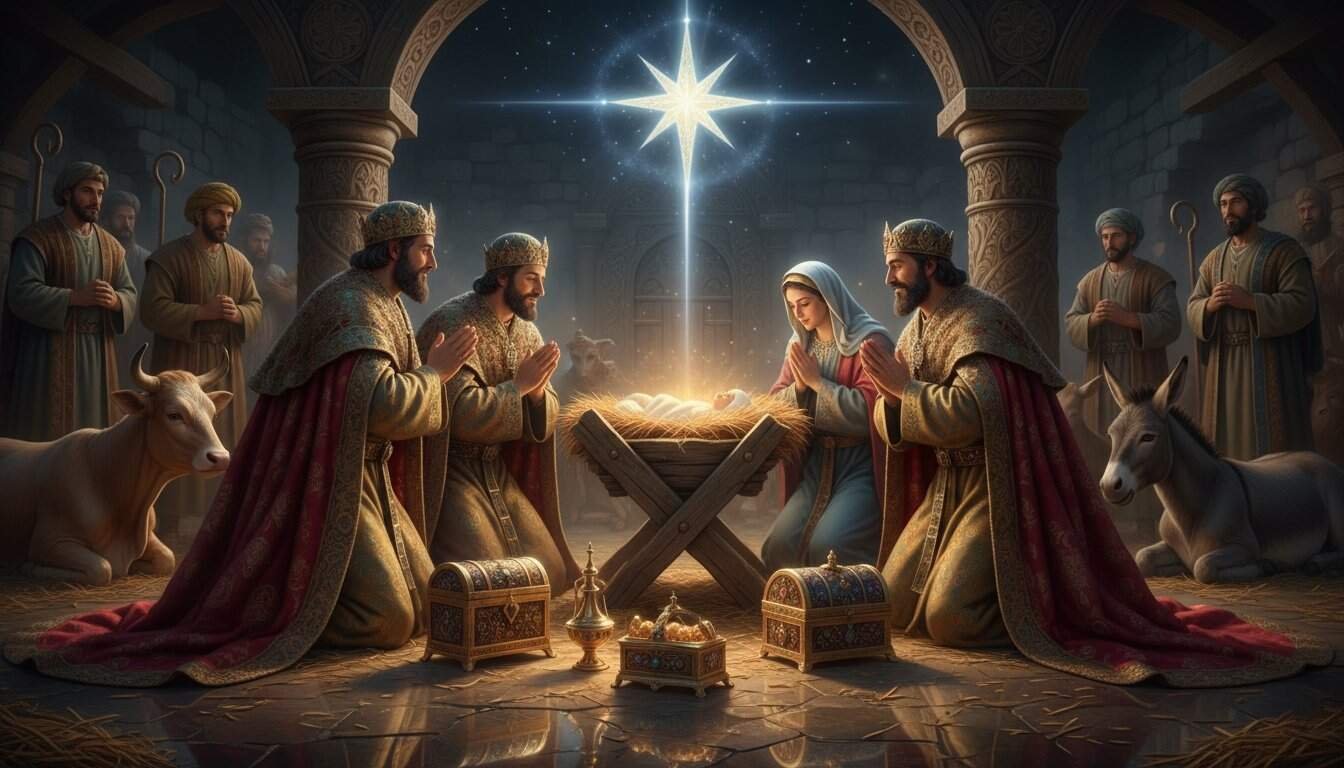
06 Jan Epiphany 2026: What the Wise Men Teach About Joyful Worship and Generous Giving
The Magi’s journey establishes worship’s fundamental cost structure—you can’t separate authentic devotion from significant sacrifice. Their gold, frankincense, and myrrh weren’t random gifts but intentional offerings acknowledging Christ’s kingship, priesthood, and sacrificial death. Divine guidance through the star transforms their generosity into sacramental acts, while their post-encounter transformation reveals how genuine worship produces immediate obedience and generous living. Their example illuminates deeper truths about joyful worship’s transformative power.
Key Takeaways
- The Magi’s arduous journey from the East demonstrates that authentic worship always requires significant personal sacrifice and investment.
- Their gifts of gold, frankincense, and myrrh symbolically acknowledge Christ’s kingship, priesthood, and prophetic suffering through costly offerings.
- Divine guidance through the star shows how God directs human generosity toward eternal purposes and sacred encounters.
- The Magi’s transformed post-encounter journey reveals how genuine worship produces immediate obedience and changed living patterns.
- Their example establishes worship and giving as sacramental acts that channel divine love through intentional material expressions.
The Costly Journey: When Worship Requires Sacrifice
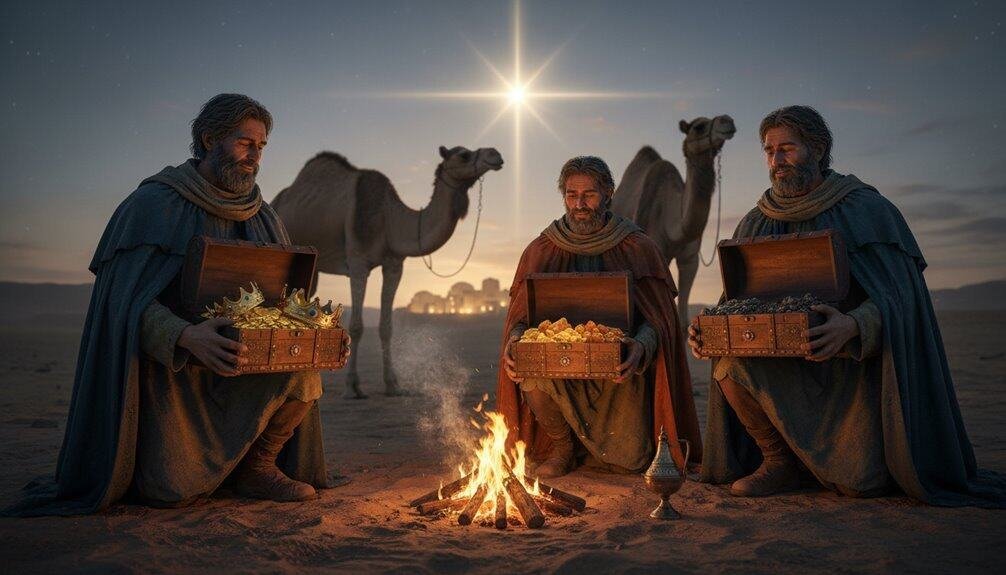
When Matthew records the Magi’s arduous trek from the East, he’s revealing worship’s fundamental cost structure—authentic devotion always demands significant personal investment. You can’t separate genuine worship from sacrifice; they’re theologically inseparable concepts throughout Scripture.
Consider what these Persian scholars abandoned: months of travel through treacherous terrain, astronomical resources for provisions, and professional obligations back home. Their heartfelt dedication wasn’t measured in convenient Sunday mornings but in radical life disruption.
Matthew’s narrative deliberately emphasizes the journey’s difficulty to establish worship’s inherent costliness.
You’re confronted with the same principle today. True worship transcends comfortable religious observance, demanding your time, resources, and priorities. The Magi understood what modern Christianity often forgets: worthwhile worship requires worthwhile sacrifice. Their personal investment validates the authenticity of their reverence.
When you approach God’s throne, you’re entering the same costly dynamic these ancient seekers embraced—worship that transforms both worshiper and worship itself.
Gold, Frankincense, and Myrrh: Understanding Symbolic Generosity
Matthew’s deliberate enumeration of the Magi’s threefold offering—gold, frankincense, and myrrh—reveals a sophisticated theology of generous giving that transcends mere material exchange. You’ll discover that each gift carries profound symbolic significance, pointing to Christ’s threefold office. Gold acknowledges His kingship, frankincense His priesthood, and myrrh His prophetic suffering and death.
This pattern challenges your own giving. You’re called to offer not merely from abundance but from significance. The symbolic significance extends beyond the gifts themselves to the heart posture they represent. True generosity mirrors the Magi’s intentionality, offering gifts that acknowledge Christ’s identity while demonstrating sacrificial devotion through meaningful, purposeful giving.
Your understanding deepens when you recognize that these material offerings weren’t randomly chosen luxuries. They represent the costliest expressions of worship available to these eastern dignitaries. The Magi didn’t offer what was convenient—they presented what was precious, rare, and personally valuable.
Following the Star: How Divine Guidance Transforms Our Giving
The star’s appearance represents far more than celestial navigation—it embodies God’s direct intervention in guiding human generosity toward its proper object. You witness here divine pedagogy at its most profound: the Father directing the Magi’s journey not merely to a geographic location, but to a divine destination where their generous gifts would find ultimate meaning.
This celestial guidance demonstrates how authentic generosity requires supernatural illumination. You can’t simply decide to give meaningfully—you need divine direction to understand the proper recipients and timing of your offerings. The star doesn’t just lead; it transforms the very nature of giving from human obligation to divine participation.
When you follow God’s guidance in your giving, you’re participating in the same cosmic drama that brought eastern sages to worship the Christ child. Your generosity becomes sacramental, channeling divine love through material means toward eternal purposes that transcend mere philanthropy.
From Encounter to Transformation: Living Out the Magi’s Example Today
Your participation in God’s cosmic drama through guided generosity leads naturally to a deeper question: how does encountering Christ transform your entire approach to worship and giving? The Magi’s post-encounter journey reveals profound theological principles. After witnessing divine incarnation, they “departed to their own country by another way” (Matthew 2:12). This alternate route represents more than geographical redirection—it signifies transformed existence.
Their heartfelt devotion to Christ fundamentally altered their spiritual trajectory. You’re called to similar transformation. The Magi’s gifts weren’t mere tribute but prophetic declarations: gold acknowledging kingship, frankincense recognizing divinity, myrrh foreshadowing sacrificial death. Your giving should likewise reflect theological understanding rather than obligatory ritual.
Their life changing impact extends beyond the nativity narrative. They model how genuine encounter with Christ produces immediate obedience—ignoring Herod’s request demonstrates newfound allegiance. You’re invited into this same pattern: encounter, worship, generous response, and transformed living. Your worship and giving become testimonies of Christ’s transformative power in contemporary discipleship.
Frequently Asked Questions
How Many Wise Men Actually Visited Jesus According to Historical Records?
You’ll find that historical records don’t specify the exact number of wise men who visited Jesus. Matthew’s Gospel mentions “magi from the east” without quantifying them. The traditional assumption of three stems from the three gifts presented—gold, frankincense, and myrrh—but this represents interpretive inference rather than explicit biblical testimony.
Eastern traditions sometimes suggest twelve magi, demonstrating how cultural contexts shape numerical interpretations beyond scriptural evidence.
What Countries Did the Magi Likely Travel From to Reach Bethlehem?
You’ll find scholars propose Persia, Babylon, or Arabia as the Magi’s origins, given ancient astronomical traditions there.
The routes traveled by magi likely followed established trade paths through Mesopotamia or Arabian Peninsula corridors. Their arrival timing of magi suggests extensive journey planning, as Matthew’s chronology indicates they reached Bethlehem when Jesus was a young child, not newborn, requiring months of preparation and travel.
Why Is Epiphany Celebrated on January 6th Instead of December 25TH?
You’ll find Epiphany’s January 6th date reflects profound theological significance rooted in ancient liturgical traditions. The Eastern Church originally celebrated Christ’s birth on this date, emphasizing the manifestation of God’s glory through the Incarnation.
When Western Christianity adopted December 25th for the Nativity, Epiphany retained its distinct focus on Christ’s revelation to the Gentiles through the Magi’s worship, creating a separate commemorative feast.
Did the Wise Men Visit Jesus as a Baby or Toddler?
You’ll find Matthew’s Gospel suggests the wise men visited Jesus as a toddler, not a newborn. The text indicates they found him in a “house” rather than the manger, and Herod’s subsequent massacre targeted boys “two years old and under.” Historical records of magi’s journey from distant lands would’ve required months of travel, making the Bethlehem visit during toddlerhood more plausible than infancy.
What Happened to the Gifts After the Magi Presented Them?
You’ll find no definitive biblical record of what happened to the magi’s gifts after their presentation. Historical accounts of gifts remain silent on their subsequent use, though early church fathers suggested they funded the family’s flight to Egypt.
The mythical fate of gifts spawned numerous legends—some claiming Mary preserved them, others proposing they were sold for sustenance. Scripture’s silence leaves you with theological speculation rather than documented fact.
Conclusion
You’ve witnessed how the Magi’s costly pilgrimage exemplifies authentic worship—one that demands your whole being, not mere convenience. Their gifts weren’t random offerings but prophetic declarations of Christ’s identity: kingship, divinity, and sacrificial death. As you follow God’s guidance in generous giving, you’re participating in the same transformative encounter. Let their example challenge you: worship that costs nothing accomplishes nothing. True devotion requires sacrifice, yielding joy that transcends earthly treasures.









No Comments