

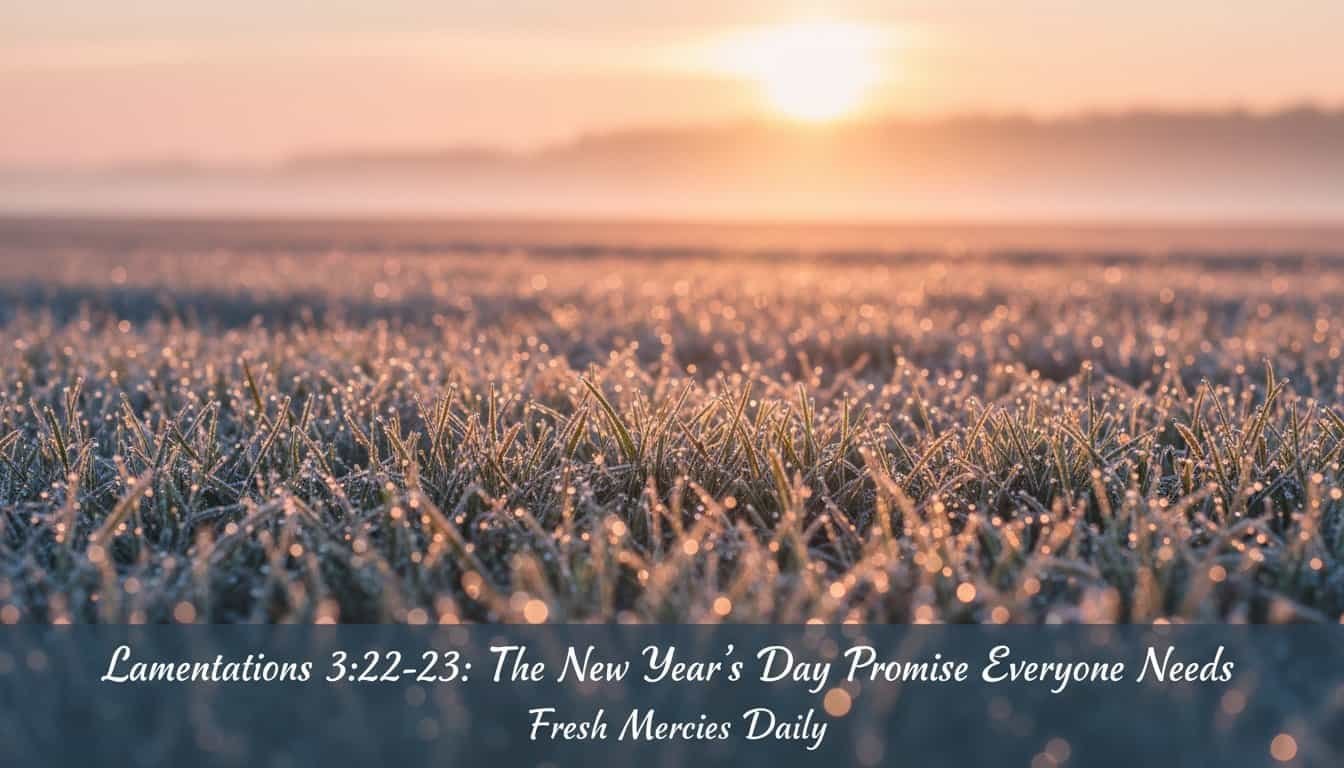
01 Jan Why Lamentations 3:22-23 Is the New Years Day Promise Everyone Needs: Fresh Mercies Daily
Lamentations 3:22-23 becomes your perfect New Year’s promise because it’s rooted in God’s chesed—His unwavering covenant loyalty that never fails. You’ll find fresh mercies waiting every morning, not because you’ve earned them, but because of His great faithfulness. Jeremiah discovered this hope amid Jerusalem’s destruction, proving God’s compassions transcend your darkest circumstances. These ancient words transform your ordinary mornings into sacred encounters with divine renewal, offering hope when you need it most.
Key Takeaways
- Lamentations 3:22-23 promises God’s chesed (covenant loyalty) that renews daily, providing unchanging hope regardless of circumstances.
- Fresh mercies arrive every morning like creation’s renewal cycle, offering divine grace independent of human effort or worthiness.
- Jeremiah declared God’s great faithfulness while Jerusalem burned, proving divine reliability transcends even the darkest life situations.
- Ancient words transform modern new beginnings by providing fresh strength for current challenges through Christ’s inexhaustible power.
- Daily mercy renewal transforms ordinary mornings into sacred encounters, making this the ultimate New Year’s promise of hope.
The Promise Born in Devastation: Understanding Lamentations 3:22-23
What follows transforms everything. The Hebrew word *chesed*—God’s covenant loyalty—anchors this promise. It’s the same unbreakable devotion revealed in Exodus 34:6, encompassing grace, mercy, and faithfulness. You’ll find this word used 250 times throughout Scripture, each instance affirming God’s unchanging nature.
These verses weren’t born from prosperity but forged in judgment’s fire. When everything collapsed, God’s character remained constant. His mercies aren’t depleted by your circumstances—they’re renewed daily, offering fresh hope even in your darkest moments.
This profound truth emerges from what begins as a classic lament, mirroring the painful cries found in Psalms 22 and 88, yet transforming despair into unshakeable hope.
Fresh Mercies Every Morning: God’s Daily Renewal Cycle
While darkness still blankets the earth, God’s mercies begin their quiet work of renewal. Just as sunrise carries fresh compassion each morning, you’re invited into nature’s renewal cycles that mirror God’s faithfulness. Lamentations 3:22-23 reveals this divine rhythm—mercies that never cease, renewed every morning because of His great faithfulness.
You don’t have to earn tomorrow’s grace today. God’s provision operates on spiritual renewal rhythms that match creation’s dependence on His timing (Psalm 104:27-28). Like trees budding in spring through divine truth, your inner self can be renewed daily even when your outer self faces decay (2 Corinthians 4:16).
This isn’t wishful thinking—it’s biblical promise. Each dawn brings fresh opportunities for transformation, new strength to soar like eagles (Isaiah 40:31), and times of refreshing from the Lord’s presence (Acts 3:19). God’s mercies aren’t recycled; they’re brand new every single morning.
Great Faithfulness That Transcends Circumstances
Behind this promise of fresh mercies stands something even more remarkable—God’s great faithfulness that doesn’t waver when your world falls apart. Jeremiah declared “Great is your faithfulness” while Jerusalem burned around him, proving that divine reliability transcends even the darkest circumstances.
When Jeremiah spoke these words, he wasn’t sitting comfortably in a peaceful garden. He was watching his nation crumble, experiencing personal anguish that paralleled his people’s suffering. Yet in that lowest moment, he recognized God’s steadfast compassion as unchanging reality.
This faithfulness doesn’t depend on your circumstances improving or your feelings aligning. Like Job declaring “Though he slay me, yet will I hope,” you can trust God’s character when everything else seems uncertain. His faithfulness operates independently of what you’re experiencing.
God’s reliability becomes your anchor when storms rage. His compassionate commitment to His promises remains constant through your highest highs and deepest valleys, making Him worthy of your trust today.
Living the Promise: How Ancient Hope Transforms Modern New Beginnings
The ancient words Jeremiah penned amid Jerusalem’s rubble now speak directly into your twenty-first-century struggles, transforming how you approach each new day. When you’re wrestling with adoption uncertainties or drowning in parenting doubts, God’s unending mercies hope meets you exactly where you are. His hesed—that tender, covenant love—doesn’t pause for your mistakes or failures.
You don’t need to carry yesterday’s shame into today’s challenges. Christ’s power working through you (Ephesians 1:19-20) delivers fresh strength for whatever you’re facing. Whether it’s relationship tensions, financial stress, or spiritual dryness, morning mercies wait specifically for your circumstances.
Like Jesus restoring Peter by Galilee’s shore, God’s compassions never fail you. Each sunrise whispers His faithfulness over your deepest fears. This isn’t mere positive thinking—it’s biblical reality. Your daily hope renewal flows from an inexhaustible source, transforming ordinary mornings into sacred encounters with divine grace.
Frequently Asked Questions
Did Jeremiah Actually Write Lamentations or Is Authorship Disputed Among Scholars?
Jeremiah’s authorship is widely disputed among scholars, though ancient traditions firmly attributed Lamentations to him. While modern scholarship questions this connection due to theological and stylistic differences, you can still trust the profound spiritual truths within these texts.
Whether Jeremiah penned every word doesn’t diminish God’s message of hope and restoration that speaks directly to your heart today.
How Do Other Ancient Near Eastern Lament Texts Compare to Lamentations?
Ancient Near Eastern lament traditions share remarkable similarities with Lamentations through common motifs in lament literature like destruction imagery and communal grief. However, you’ll find key differences that reveal God’s character.
While Mesopotamian laments begin with flattery and seek divine appeasement, Lamentations confidently approaches Yahweh, declaring innocence and seeking vindication. This shows you’re invited into honest relationship with a just, merciful God.
What Specific Hebrew Words Are Used for “Mercies” and “Compassions” in This Passage?
You’ll find two powerful Hebrew words in Lamentations 3:22-23: *chasdey* (mercies) and *rachamim* (compassions). *Chasdey* comes from *chesed*, meaning steadfast covenant love, while *rachamim* derives from *rechem* (womb), expressing tender maternal compassion.
Both appear in plural form, emphasizing God’s abundant, inexhaustible care for you. These aren’t just emotions—they’re God’s faithful actions renewed every morning for your life.
Are There Different Interpretations of This Passage in Jewish Versus Christian Traditions?
Yes, traditional Jewish views read these verses within Lamentations’ complete acrostic structure during Tisha B’Av, emphasizing covenant mercy that doesn’t cease amid communal lament.
Modern Christian interpretations often extract verses 22-23 as standalone promises of daily renewal and personal comfort. While you’ll find hope in both approaches, Jewish tradition maintains the tension between hope and despair, whereas Christian readings emphasize God’s unfailing compassion for individual encouragement.
How Did Early Church Fathers and Rabbis Historically Interpret These Verses?
Traditional rabbinic interpretations viewed these verses as Judah’s collective confession, affirming God’s mercies prevented total destruction despite deserved judgment.
Patristic exegetical approaches emphasized God’s hesed as an inexhaustible fountain, with “never cease” showing divine compassion’s triple intensification.
Both traditions saw hope amid suffering—you’re promised daily renewal of God’s faithfulness, whether facing personal trials or communal discipline, grounding unshakeable trust.
Conclusion
You don’t need to wait until next January to experience God’s fresh mercies—they’re yours every single morning. When you’re facing devastation like Jeremiah did, remember that God’s faithfulness doesn’t depend on your circumstances. His love never fails, and His compassion never runs dry. So step boldly into each new day, knowing you’re walking in the promise of divine renewal. Your fresh start isn’t just a calendar date—it’s God’s daily gift.












No Comments