

21 Dec Archaeologists Pinpoint the Jordan River Site: Where Jesus Was Baptized, and Why It Matters Now
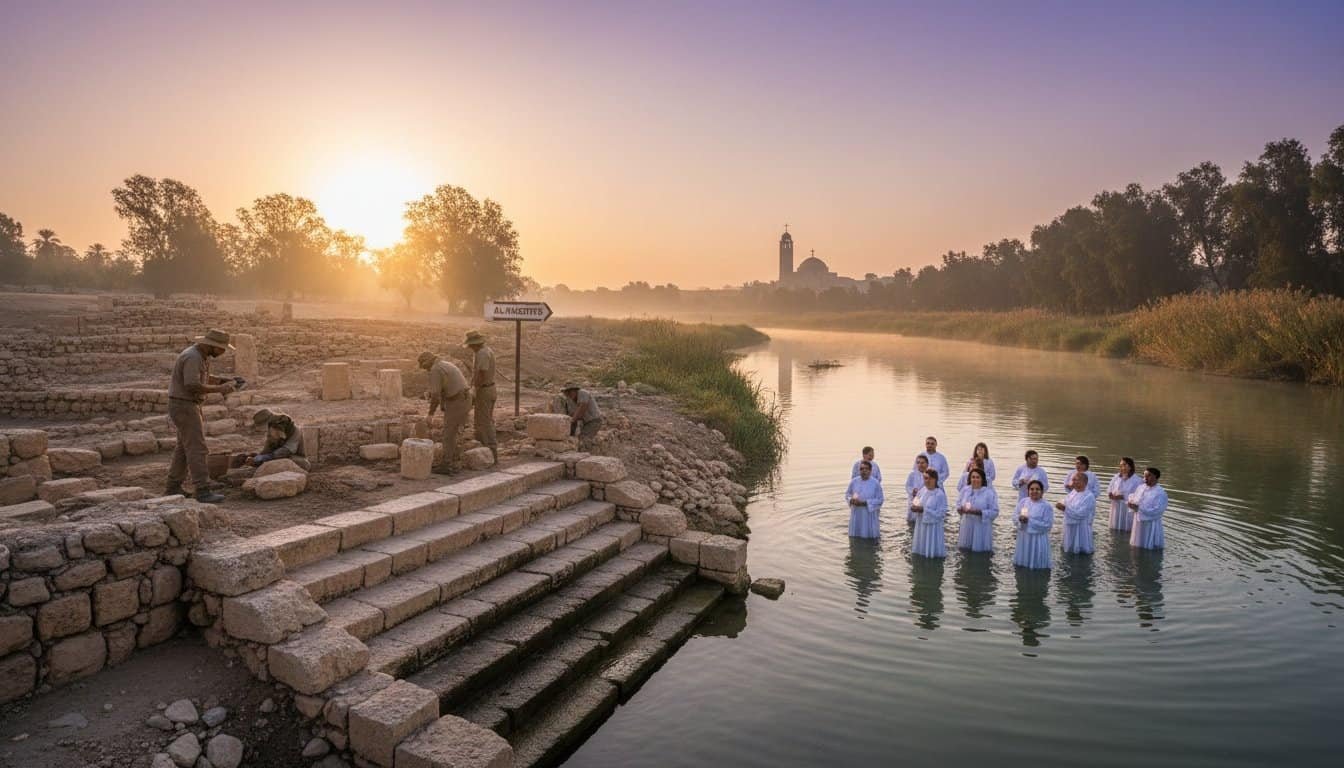
You’ll find Jesus’s baptism site at Al-Maghtas on Jordan’s eastern bank, where archaeologists uncovered 1,700 years of continuous Christian worship. Excavations revealed Byzantine churches, sophisticated baptismal pools with marble steps, and ceramic water systems dating to the 3rd century. Biblical evidence supports this “Bethany beyond the Jordan” location, with Gospel references indicating the eastern shore. UNESCO’s 2015 recognition validates the archaeological evidence spanning centuries of pilgrimage activity, establishing why this discovery transforms our understanding of Christianity’s most pivotal moment.
Key Takeaways
- Archaeological excavations at Al-Maghtas revealed Byzantine churches, baptismal pools, and continuous Christian worship from the 3rd century onward.
- Sophisticated water management systems channeled Jordan River water through ceramic pipes to cruciform baptismal pools with marble steps.
- Biblical evidence points to “Bethany beyond the Jordan” on the eastern bank, matching ancient pilgrimage accounts and travel patterns.
- UNESCO recognized the site in 2015, documenting archaeological evidence spanning 4th-15th centuries and boosting religious tourism development.
- Three papal visits and thousands of votive crosses confirm the site’s enduring significance for Christian pilgrimage and baptismal ceremonies.
Archaeological Discoveries Reveal Ancient Baptism Site at Bethany Beyond the Jordan
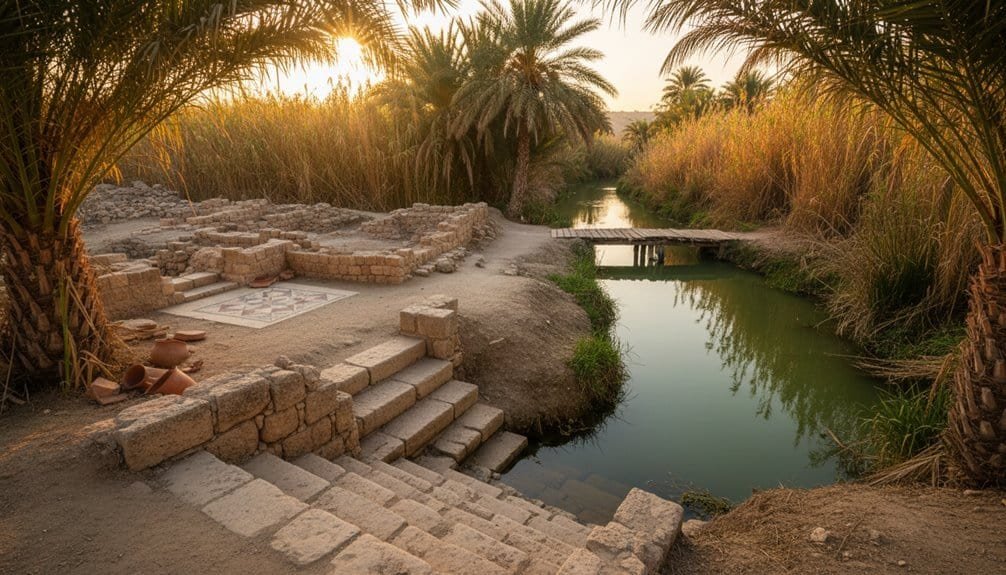
Archaeological excavations in the 1990s uncovered compelling evidence at Al-Maghtas, a site on the east bank of the Jordan River that’s transformed our understanding of early Christian baptismal practices. You’ll find remarkable Roman and Byzantine remains here, including churches, chapels, monasteries, and hermit caves that tell the story of continuous religious activity from the 3rd century onward.
The site’s hydraulic engineering reveals sophisticated water management systems connecting natural springs to baptismal pools through ceramic pipes—technology that’s still functional today. You can observe the unique cruciform baptismal pool with marble steps, designed specifically to channel Jordan River water for sacred rituals.
Ceramic analysis of the pipe systems confirms their ancient origins and remarkable preservation. Tell el-Kharrar features three churches and baptismal pools, while a 3rd-century rectangular prayer hall represents the earliest Christian worship site discovered at this location, providing tangible evidence of Christianity’s formative period. Archaeological investigations also revealed structures with features resembling Jewish mikveh that predate the later Christian baptismal installations. This remarkable continuity lasted until the 14th century when pilgrim activity declined as regional powers weakened. The site received UNESCO designation in 2015, recognizing its outstanding universal value to humanity.
Byzantine Churches and Pilgrimage Routes Confirm Sacred Location
While the archaeological remains provide compelling physical evidence, the extensive Byzantine church complexes constructed between the 5th and 7th centuries AD offer definitive confirmation of Al-Maghtas as Christianity’s most sacred baptismal site.
You’ll find at least five distinct memorial churches clustered around marble steps leading to the Jordan River, including a major Church of John the Baptist attributed to Emperor Anastasius I.
The Byzantine engineers built these structures on raised stone piers to protect against flooding—a practical solution that preserved the ritual topography for centuries.
You can still see the cruciform baptismal pools designed to use direct river water, along with marble staircases that match 6th-century pilgrim descriptions.
Most compelling is the votive graffiti: thousands of incised crosses on original plaster walls provide quantifiable evidence of repeated baptismal ceremonies.
This systematic pilgrimage infrastructure, from arrival areas to changing vestibules, demonstrates organized liturgical architecture specifically designed for Christian immersion rites. The Lower Basilica features intricate marble floors and distinctive architectural elements that further distinguish this sacred complex from typical Byzantine construction. The site’s authenticity is further reinforced by gospel testimonies, archaeological discoveries, and official endorsements from church leaders worldwide.
Biblical Evidence Points to Eastern Shore of Jordan River
Beyond the physical structures that pilgrims constructed to honor this sacred location, the biblical texts themselves provide compelling geographic indicators that point specifically to the eastern shore of the Jordan River.
You’ll find the most significant clue in the Gospel of John’s distinctive phrase “Bethany beyond the Jordan.” This Johnic terminology has been historically interpreted by scholars as referring to the eastern bank, where “beyond” indicates the far side from a western Palestinian perspective.
John’s phrase “Bethany beyond the Jordan” signals the eastern bank from a western Palestinian geographical viewpoint.
When you examine Gospel geography more closely, you’ll discover that travel patterns from Galilee to Judea often bypassed Samaria by crossing to the Jordan’s eastern corridor. This route made the eastern bank a logical convergence point for John the Baptist’s ministry.
The textual tradition linking Elijah’s ascension to nearby eastern hills reinforces this location’s sacred associations. Early pilgrimage accounts consistently describe markers and structures matching the eastern shore’s topography, creating a coherent geographic framework that supports the archaeological evidence you’ve already encountered.
Modern UNESCO Recognition and Contemporary Christian Significance
Since 2015, UNESCO’s formal inscription of Al-Maghtas as a World Heritage Site has transformed this ancient baptismal location into a recognized treasure of global cultural heritage.
You’ll find that this designation acknowledges archaeological evidence spanning the 4th-15th centuries, including Byzantine churches, baptismal pools, and monastic complexes that document continuous Christian veneration.
The inscription carries significant weight in Interfaith Diplomacy, as three papal visits have reinforced ecclesiastical recognition while UNESCO’s listing positioned the site as shared global property without adjudicating theological disputes.
However, you should understand that competing claims exist on the Israeli west bank, creating bilateral sensitivities during the nomination process.
Jordan has leveraged World Heritage status to boost Tourism Economics through cultural tourism promotion and pilgrimage-focused development.
This recognition has catalyzed renewed Christian pilgrimage while navigating complex regional heritage tensions and transboundary concerns raised by Palestinian and Israeli stakeholders.
Frequently Asked Questions
What Was the Exact Date When Jesus Was Baptized by John the Baptist?
You’ll find no exact date in the Gospels, creating ongoing Chronological Debates among scholars.
Most evidence points to AD 28-29, with some proposing Sunday, September 2, AD 29.
You’re dealing with Gospel Synchronization challenges when Luke’s fifteenth year of Tiberius provides the clearest timeframe.
Early church traditions varied widely—Eastern Christianity celebrates January 6, while Gnostics observed April 19/20, showing you can’t definitively pinpoint the precise calendar date.
How Deep Was the Jordan River at the Baptism Site 2000 Years Ago?
You’d find the Jordan River at the baptism site was likely 6-12 feet deep 2000 years ago.
Seasonal Variability meant springtime flooding created maximum depths, while summer brought shallower conditions.
The Riverbed Topography featured deeper pools and channels then, contrasting today’s 2-10 foot depths.
Archaeological evidence suggests the river averaged 100 feet wide with proportionally greater depth, especially during Jesus’s likely winter baptism timing when water levels peaked naturally.
What Happened to John the Baptist After He Baptized Jesus at This Location?
You’ll find that John’s ministry continued after baptizing Jesus, but his imprisonment outcome proved tragic. He boldly criticized Herod Antipas’s marriage to Herodias, leading to his arrest at Machaerus fortress.
Martyrdom accounts in Matthew and Mark describe his execution by beheading following Salome’s dance and Herodias’s vengeful request. Archaeological evidence and Josephus’s writings corroborate the Gospel narratives about his prophetic witness ending in death.
Can Modern Pilgrims Be Baptized in the Exact Same Jordan River Spot Today?
You can’t be baptized in the exact spot where Jesus was baptized because the Jordan River‘s course has shifted over centuries.
The original location at Al-Maghtas now sits inland, disconnected from today’s river.
Access restrictions within the military zone and environmental impact concerns further limit direct access.
However, you can still receive baptism in the modern Jordan River at designated areas near the authenticated archaeological site.
Why Did Jesus Choose to Be Baptized When He Was Already Sinless?
You’ll find Jesus chose baptism despite His sinlessness to demonstrate Divine Humility—identifying completely with humanity’s condition.
This act achieved Covenant Fulfillment by satisfying all righteousness requirements on your behalf.
He wasn’t baptized for personal sin cleansing but to inaugurate His redemptive mission, sanctify the sacrament for future believers, and publicly declare His solidarity with sinners He came to save through substitutionary atonement.
Conclusion
You’ll find that archaeological evidence, Byzantine ruins, and biblical texts converge to authenticate Bethany Beyond the Jordan as Christ’s baptism site. You’re witnessing how modern excavations have uncovered ancient pilgrimage infrastructure that’s supported this location for centuries. UNESCO’s recognition validates what you’ve seen through systematic archaeological methodology. You can’t ignore how this convergence of physical evidence, historical documentation, and contemporary scholarship definitively establishes this eastern Jordan River location’s biblical significance.










No Comments